
 en
en  English
 中文简体
中文简体 Español

Safety Valve: The Final Line of Defense for Extinguishers
What is the safety valve in a CO2 extinguisher?
A CO2 fire extinguisher cylinder is a powerful pressure vessel. If an extinguisher is left in a car under scorching sun or exposed to high temperatures at a fire scene, the internal pressure will increase exponentially. For example, when the temperature reaches 60°C, the pressure may exceed 150 bar.
Burst Disc Mechanism
Unlike spring-loaded safety valves on air compressors that automatically open and close, a CO2 extinguisher valve is typically equipped with a one-time-use burst disc:
- Construction: It is a high-precision thin metal diaphragm (usually made of nickel alloy or copper alloy) installed inside a pressure relief port on the side of the valve body.
- Operating Principle: When the internal pressure reaches a preset dangerous threshold (typically between 190 bar and 225 bar), the metal disc undergoes physical rupture.
- Result: The CO2 inside the cylinder is instantly discharged through the relief vent, preventing a catastrophic physical explosion of the cylinder due to overpressure.
Key Parameters of the Safety Valve
To ensure absolute safety, the design of the safety valve must follow strict standards (such as EN3 or DOT):
- Nominal Burst Pressure: 2500 psi (approximately 172 bar) is a common industrial set point.
- Discharge Capacity: The diameter of the relief vent must be sufficient to ensure that the gas discharge rate at the moment of rupture can counteract the pressure increase caused by rising temperatures.
CO2 Valve Operating Mechanism: Internal Mechanics Analysis
How does a CO2 valve work?
A deep study of its working mechanism reveals a mechanical process that skillfully utilizes pressure balance.
Mechanical Balance of Sealing and Opening
In the closed state, an internal spring provides upward pre-tension, pressing the Seat Seal firmly against the valve seat. Simultaneously, the high-pressure gas inside the cylinder exerts upward pressure on the seal. This pressure-assisted sealing design ensures that the higher the pressure, the tighter the seal. When the operator presses the handle, the following occurs:
- Overcoming Resistance: The handle, through lever action, transmits force to the Plunger.
- Breaking Balance: The plunger must overcome the spring pressure and partial gas pressure to push the seat seal downward.
- Fluid Channel: Once the seat seal leaves the valve seat, liquid CO2 is driven by high pressure and rushes into the internal channels of the valve body.
The Critical Role of the Dip Tube
A Dip Tube is connected below the valve, reaching directly to the bottom of the cylinder:
- Liquid Output: Since the density of liquid CO2 is much higher than that of gas, the dip tube ensures that liquid CO2 is discharged first.
- Phase Change: Liquid CO2 only undergoes a violent expansion phase change at the moment it leaves the valve, enters the discharge horn, and contacts the atmosphere. If pure gas were discharged, the fire suppression efficiency would drop by more than 80%.
Core Components: CO2 Fire Extinguisher Valve Detailed Breakdown
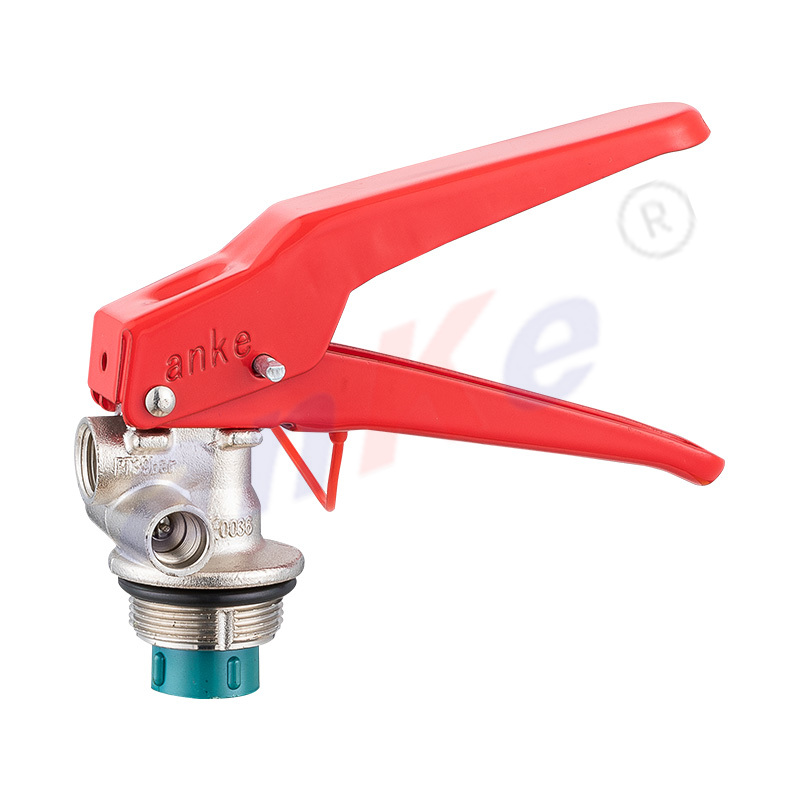
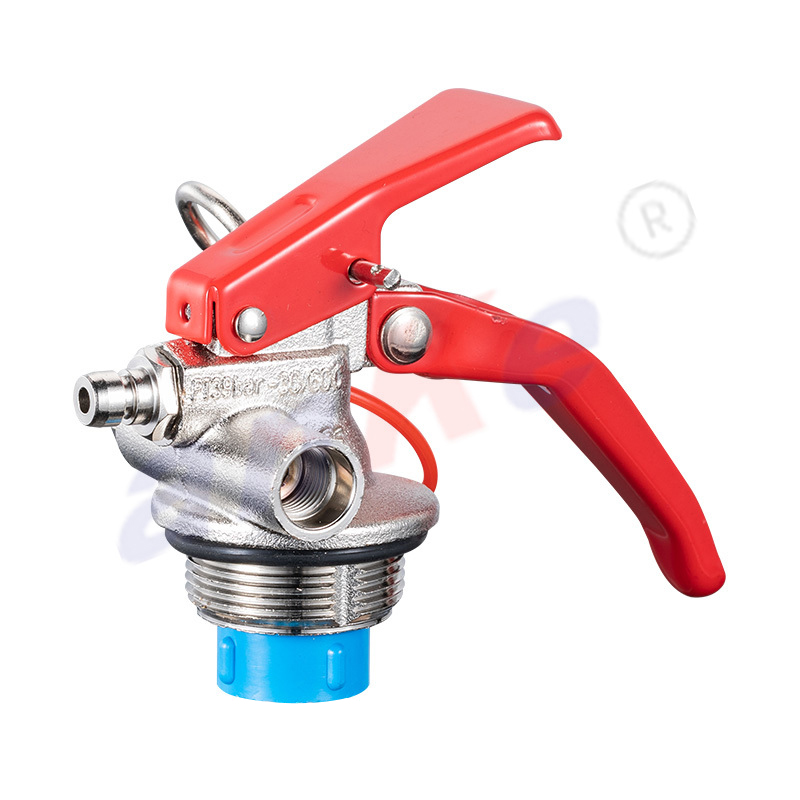
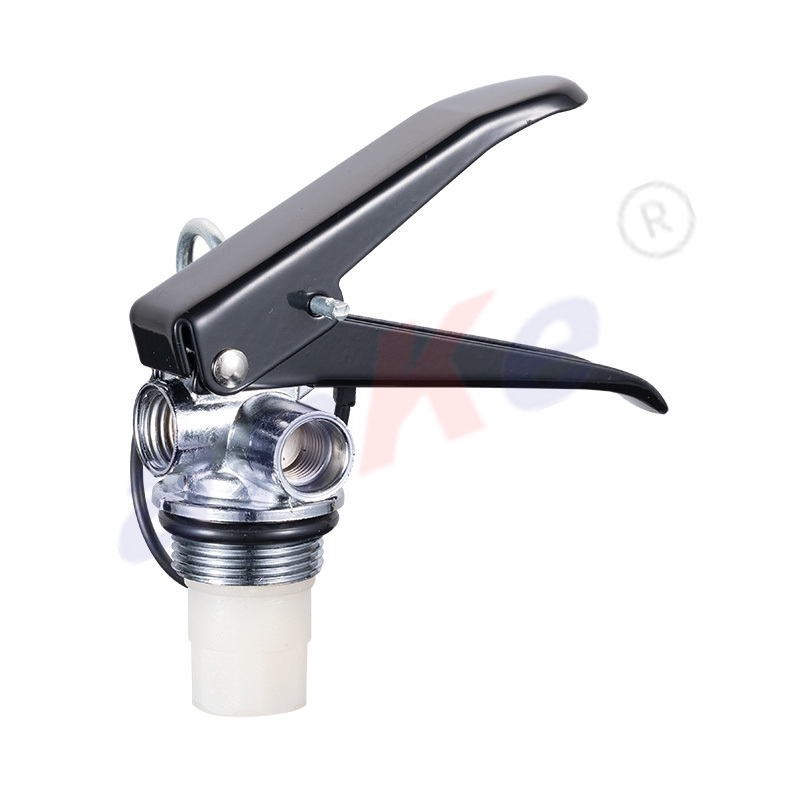
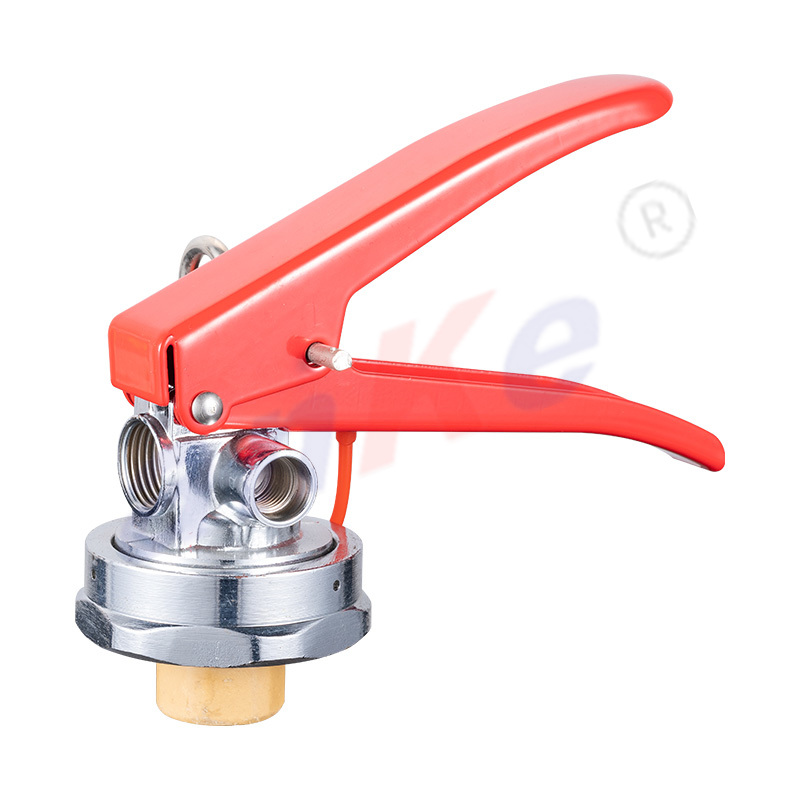
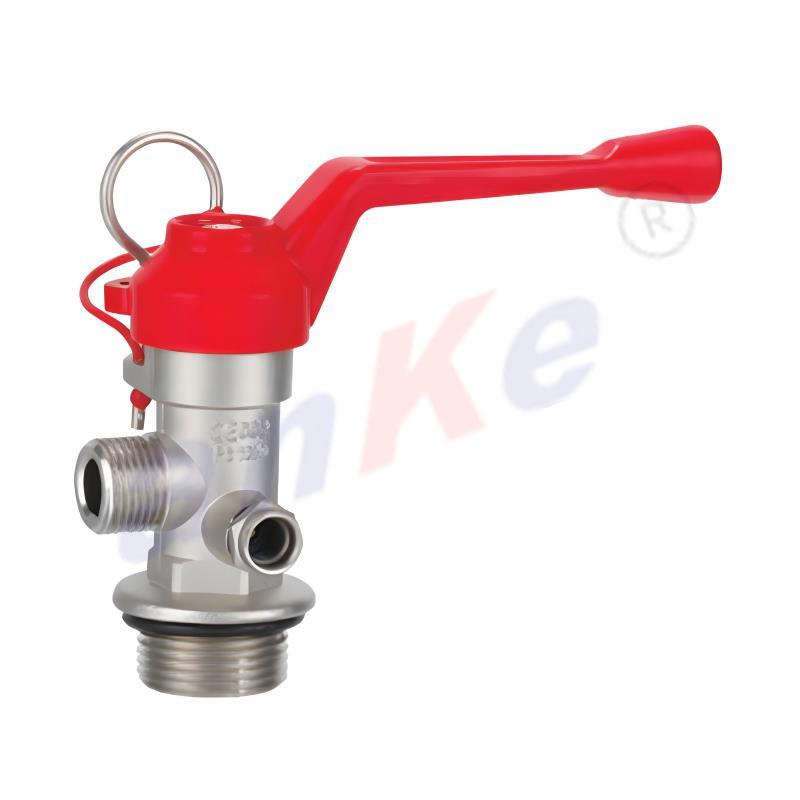
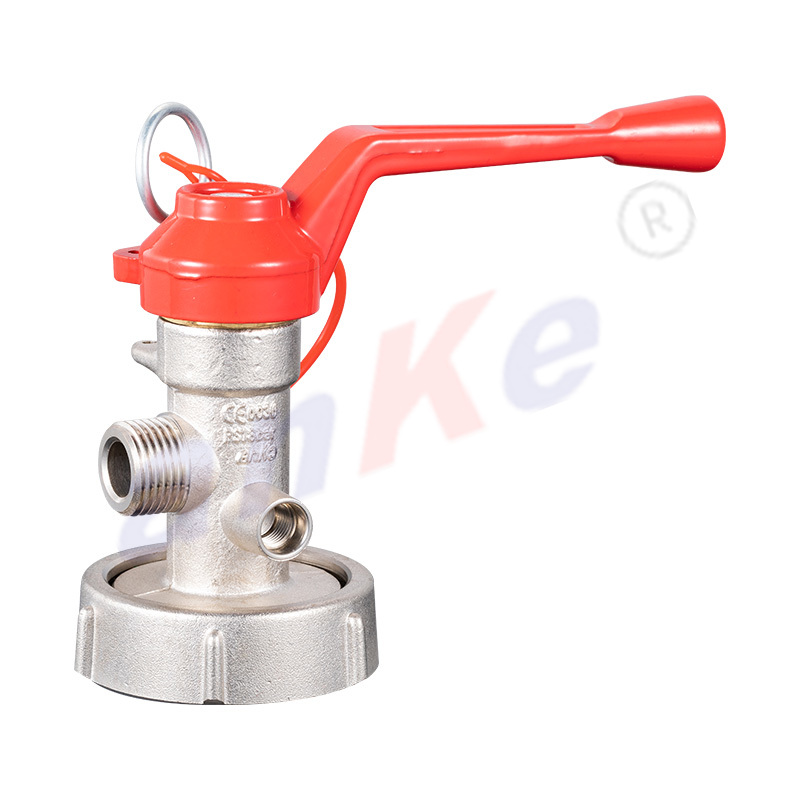
Valve Body
The valve body is the heart of the extinguisher. Valve bodies made of forged brass are not only strong but also have extremely high density.
- Inlet Thread: Typically uses 25E or M25x2 standards to bond tightly with the cylinder neck.
- Outlet Port: Usually features tapered threads for connecting high-pressure hoses or directly attaching the discharge horn.
Sealing Elements
In the process of How does a CO2 valve work?, the material of the seals determines the long-term reliability of the extinguisher.
- Main Seat: Usually made of Polytetrafluoroethylene (PTFE) or reinforced nylon. These materials maintain hardness and sealing elasticity even at -50°C.
- O-Rings: Primarily made of Ethylene Propylene Diene Monomer (EPDM). Unlike standard nitrile rubber, EPDM has excellent resistance to CO2 and does not suffer from CO2 swelling.
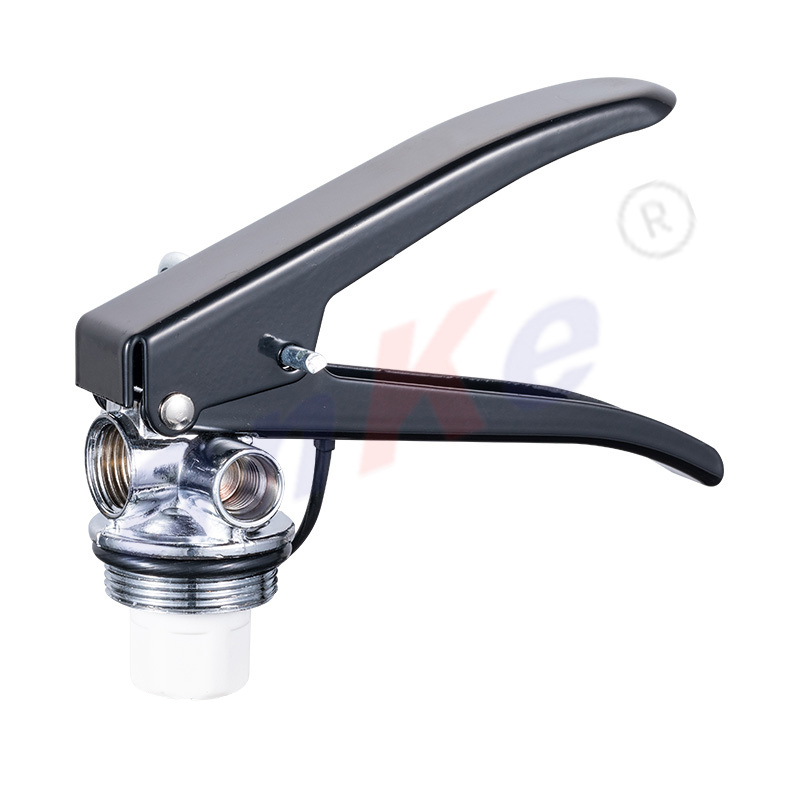
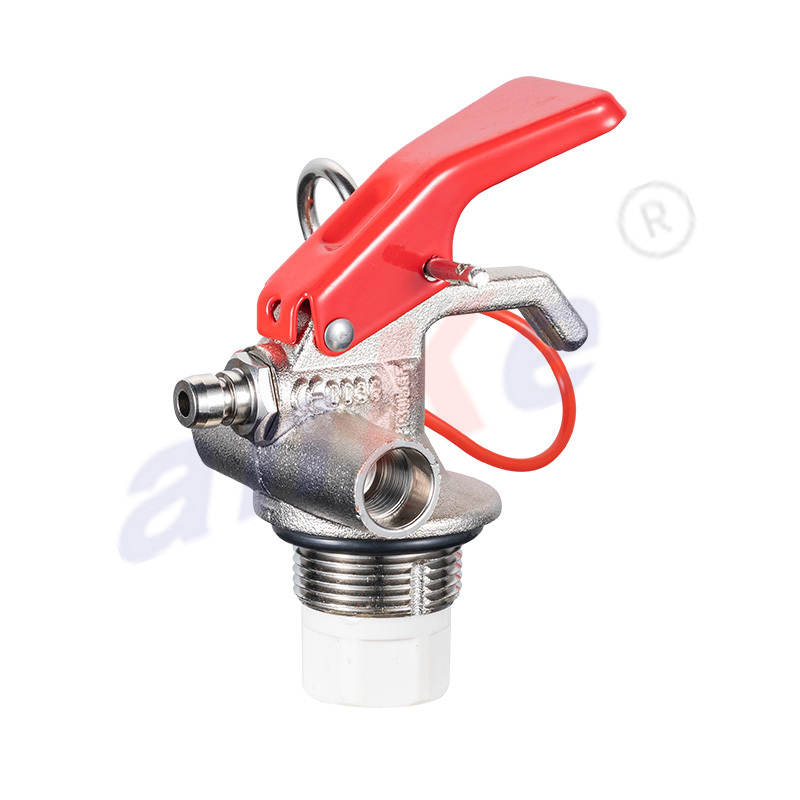
Lever and Safety Pin
This is the physical interface for human interaction.
- Safety Pin: Made of stainless steel or galvanized steel, it acts as a mechanical blocker to ensure the plunger is not accidentally triggered or pressed in a non-use state.
- Tamper Seal: A plastic seal whose breakage is a visual indicator of whether the CO2 Fire Extinguisher Valve has been triggered.
The Myth of Pressure Gauges: Why CO2 Extinguishers Lack Them
Saturated Vapor Pressure Principle
CO2 inside the cylinder exists in a saturated state of gas-liquid coexistence. At a constant temperature, the gas phase pressure remains unchanged as long as there is a single drop of liquid left in the cylinder.
- Meaning: Even if only 10% of the agent remains, a pressure gauge needle would still stay in the Green Normal Zone.
- Failure Risk: Using a pressure gauge would give users a false sense of sufficient agent, leading to insufficient discharge time during an actual fire.
The Correct Detection Method: Weighing
Since remaining capacity cannot be determined by pressure, all CO2 Fire Extinguisher Valve necks or bodies are stamped with the Gross Weight and Tare Weight.
The calculation follows this logic: Remaining Agent = Measured Gross Weight - Tare Weight. When the measured weight decreases by more than 10% of the rated charge, it must be refilled.
Installation, Maintenance, and Troubleshooting
Valve Replacement and Refilling Process
Because CO2 is a high-pressure gas, the refilling process must be handled by professionals:
- Residual Pressure Discharge: Empty residual gas through the valve.
- Weight-Based Refilling: Use a high-pressure pump to inject liquid CO2 while placing the unit on an electronic scale.
- Leak Testing: Submerge the valve area in a water tank to observe for air bubbles.
Common Troubleshooting Table
| Symptom | Possible Cause | Solution |
| Handle fails to reset after pressing | Internal spring fatigue or plunger scaling | Must replace the complete valve assembly |
| Leakage at the horn interface during discharge | Outlet O-ring aging or loose threads | Replace seal and retighten |
| Sudden rupture of the burst disc | High ambient temperature or metal fatigue | Move to a cool area and have a professional replace the disc |
| White frost blockage at the valve outlet | Moisture in agent or excessive intermittent firing | Ensure gas purity and avoid high-frequency switching |
FAQ
Q: Why does the discharge pressure of a CO2 extinguisher decrease in cold winter?
A: This is determined by the physical properties of CO2. Pressure is proportional to temperature. At 0°C, the internal pressure drops to about 35 bar. Although pressure decreases, as long as liquid CO2 is sufficient, the fire extinguishing effectiveness remains, though the discharge distance may shorten slightly.
Q: What is the safety valve in a CO2 extinguisher? Can it trigger accidentally?
A: Rupture of the burst disc (Safety Valve) is rare. It typically only occurs if: 1. Ambient temperature exceeds 60-70°C; 2. The disc is thinned by chemical corrosion; 3. The cylinder suffers a violent impact causing a sudden liquid hammer effect.
Q: What are the valves on a CO2 tank? Are all valves universal?
A: No. Although they look similar, valves for different specifications (e.g., 2kg, 5kg, 45kg) may have different internal diameters, dip tube lengths, and burst disc pressure ratings. Always use a matching CO2 Fire Extinguisher Valve during repairs.
Q: How does a CO2 valve work? Why should it be closed immediately after discharge?
A: You should evacuate as soon as the fire is out. Once the valve is opened, oxygen levels in the vicinity drop sharply. Additionally, the valve body becomes extremely cold after discharge; leaving it open too long may cause the valve to fail to close completely due to icing, resulting in slow leakage.
Q: Why does the CO2 extinguisher horn handle have an insulated design?
A: This is a critical safety design. When CO2 is discharged at high speeds through the valve, friction generates significant static electricity. Without an insulated handle, static buildup could cause an electric shock to the operator.
 Phone: +86-13456107058/+86-15967800709
 Tel: +86-574-62010128/+86-574-62010688
 E-mail:
  Factory: Huilong Village, Huangjiabu Town, YuyaoCity,Zhejiang Province, China





 Domestic Trade Manager
 Foreign Trade Manager
 VR Catalogue
