
 en
en  English
 中文简体
中文简体 Español

A delivery driver noticed smoke rising from a cardboard pallet near the loading bay. He grabbed the nearest extinguisher, pulled the pin, and squeezed the handle. Foam sprayed across the smouldering packaging and knocked the fire down in seconds. The right extinguisher made the difference between a quick recovery and a costly building claim.
The five main types of fire extinguishers are water, foam, dry powder, carbon dioxide, and wet chemical. Each one uses a different extinguishing agent, and each one is designed for a specific group of fire classes. Choosing the wrong type can allow a fire to grow, spread, or re-ignite after the discharge stops. This article explains what each type does, where it should be installed, and what to check before you rely on it during an emergency.
Water
Uses pressurised water to cool burning solids. Best for Class A materials such as wood, paper, cloth, and plastics.
Foam
Forms a film over burning liquids and cools solid fuels. Suitable for Class A and Class B fires.
Dry Powder
Interrupts the chemical reaction of fire. Multi-purpose ABC powder covers Class A, B, and C hazards.
Carbon Dioxide
Displaces oxygen and leaves no residue. Designed mainly for Class B and C risks, especially electrical equipment.
Wet Chemical
Reacts with cooking oils and fats to form a soap-like blanket. Used in commercial kitchens for Class K fires.
Understanding Fire Classes Before Choosing an Extinguisher
Fire extinguishers are not rated by size alone. They are rated by the type of fire they can control. International standards group fires into classes according to the fuel involved. The class marking on the extinguisher body tells you which fires the unit has been tested against.
Most portable extinguishers carry one or more letters such as A, B, C, D, or K. A extinguisher rated 2-A:10-B:C is tested for ordinary combustibles, flammable liquids, and energised electrical equipment. Matching the extinguisher to the fire class is the first rule of fire safety.
| Fire class | Fuel involved | Typical location | Suitable extinguisher type |
|---|---|---|---|
| Class A | Wood, paper, cloth, rubber, many plastics | Offices, warehouses, schools, retail areas | Water, foam, dry powder, wet chemical |
| Class B | Flammable liquids and gases | Workshops, fuel storage, paint areas | Foam, dry powder, carbon dioxide |
| Class C | Energised electrical equipment | Server rooms, switchgear rooms, control panels | Carbon dioxide, dry powder |
| Class D | Combustible metals | Foundries, metalworking, laboratories | Special dry powder only |
| Class K | Cooking oils and fats | Commercial kitchens and catering facilities | Wet chemical |
Class C is often misunderstood. In many national systems, Class C refers to fires involving gases, while electrical fires are covered by a separate rating. In North American marking, Class C refers to energised electrical equipment. The practical point is the same: an extinguisher marked for electrical risks must use an agent that does not conduct electricity, such as carbon dioxide or dry chemical powder.
The chart below shows how many standard fire classes each of the five main extinguisher types is normally rated to cover. A wider bar means the extinguisher can be used against more classes, not that it is more powerful.
An extinguisher marked ABC is versatile, but versatility does not mean it is the best choice for every environment. Water remains the most economical and effective agent for large areas of ordinary solid fuel. Carbon dioxide remains the cleanest option for electronics. The five main types exist because real buildings contain different fuels, different ignition sources, and different levels of trained user access.
Water Fire Extinguishers
Water extinguishers are the most familiar and the most straightforward. The cylinder is filled with water and pressurised with an inert gas, usually air or nitrogen. When discharged through the nozzle, the water lands on the burning material and absorbs heat faster than the fire can generate it. Once the fuel drops below its ignition temperature, the fire goes out.
Water is highly effective on Class A fires. It is also cheap to refill and simple to maintain. A 9-litre water extinguisher can deliver around 60 seconds of discharge time and is often the first unit installed in corridors, storage rooms, and office areas.
Where water should be used
- Timber and pallet storage areas
- Paper records and archive rooms
- Office furniture and partition areas
- Retail premises with large amounts of packaging
- Hotels, schools, and institutional buildings
Where water must not be used
- Energised electrical equipment because water conducts electricity
- Flammable liquid fires because water can spread the liquid surface
- Kitchen oil and fat fires because water causes explosive steam expansion
- Metal fires because water can produce flammable hydrogen gas
Water extinguishers are available in stored-pressure and cartridge-operated designs. In a stored-pressure unit, the pressure gauge on the valve should sit in the green zone during routine inspection. In a cartridge-operated unit, the gas cartridge must be weighed and replaced according to the manufacturer’s service schedule.
One common purchasing mistake is buying a water extinguisher for a mixed-risk room that also contains electrical panels. A better approach is to install a water unit for the general combustibles and place a small carbon dioxide unit near the electrical equipment.
Water mist extinguishers are sometimes grouped with water types. They discharge very fine droplets that cool the fire and create a localised steam atmosphere. Some water mist models are tested for limited use on electrical fires, but the approval marking must be checked before relying on that capability.
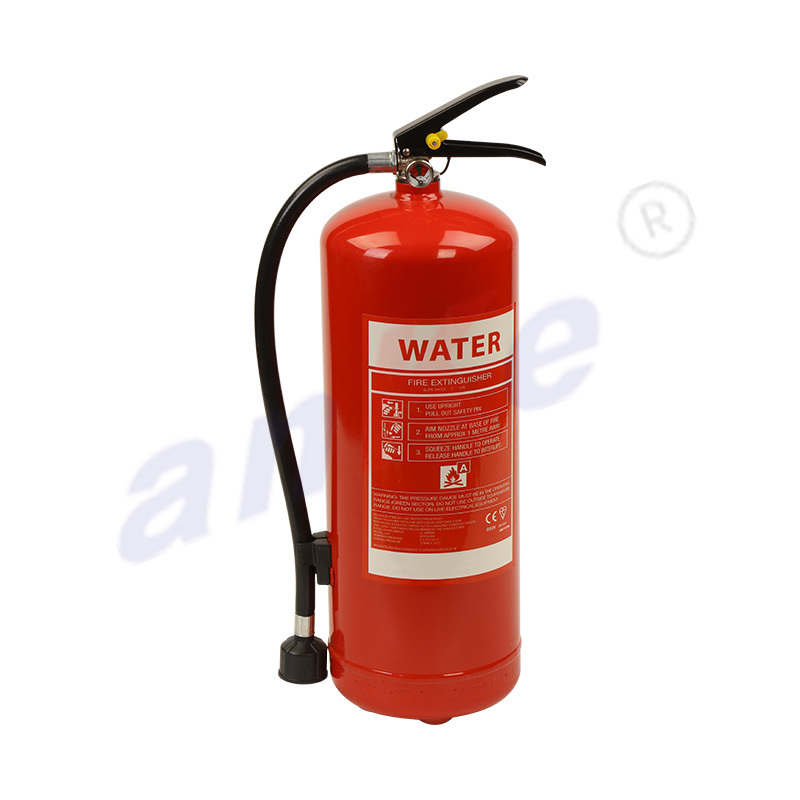 9L Commercial Water Fire Extinguisher for Class A and B FiresThis 9L water extinguisher suits commercial settings, tackling initial fires in solid materials like wood and paper as well as liquid fires. Its corrosion-resistant build and pressure gauge support reliable operation.View Product →
Foam Fire Extinguishers
Foam extinguishers combine water with a foam concentrate. When the solution is discharged, it forms a blanket on the surface of a burning liquid and stops the release of flammable vapour. The water content also cools solid fuels, which makes foam effective on both Class A and Class B fires.
Foam is the preferred choice for areas where flammable liquids are stored or handled. It is widely used in warehouses, workshops, vehicle maintenance bays, fuel storage areas, and production lines. A 6-litre or 9-litre foam extinguisher is the usual replacement for an older water unit in a mixed commercial building.
What to look for in a foam extinguisher
- A fire class rating of at least 13A and 89B for a 6-litre model
- A corrosion-resistant valve body, preferably brass or stainless steel
- A pressure gauge that can be read without removing the unit from its wall bracket
- A discharge hose that allows the user to stand at a safer distance
Foam concentrates are divided into film-forming and non-film-forming types. Film-forming foam creates a water-bearing film that spreads across a flammable liquid and seals the surface. This film improves knock-down speed and reduces the chance of re-ignition. Some modern foam concentrates are designed to meet environmental restrictions on persistent chemicals, so the buyer should ask for the current safety data sheet and check the local regulations that apply at the point of use.
Foam should never be used on energised electrical equipment. Although some foam solutions have been tested at a safe distance under laboratory conditions, the general safety rule is to avoid foam where live circuits may be exposed. In a room with electrical panels, keep a carbon dioxide extinguisher nearby.
Foam extinguishers also require more careful maintenance than dry powder units. The concentrate can separate, evaporate, or become contaminated over time. Routine monthly checks should confirm that the discharge hose is clear, the safety pin is intact, and the pressure gauge remains in the green zone.
Dry Powder Fire Extinguishers
Dry powder extinguishers are the most common type in many countries because they offer the widest single-unit coverage of ordinary fire risks. An ABC dry powder unit contains finely ground monoammonium phosphate. When discharged, the powder interrupts the chemical chain reaction of the flame. It also forms a crust on hot solid surfaces, which helps prevent re-ignition.
The main advantage of dry powder is versatility. A single 6 kg ABC unit can handle a Class A fire in waste paper, a Class B fire in a fuel spill, and a Class C fire in an electrical cabinet. This makes it a popular choice for general-purpose protection in commercial buildings, vehicles, and small workshops.
Important characteristics of dry powder units
- High knock-down speed on most surface fires
- Wide operating temperature range compared with water or foam
- Long service life if the valve and seals remain intact
- No pressure loss after partial use, because the valve seals against the cartridge or stored pressure
There are two different powder families. Multi-purpose ABC powder is suitable for homes, offices, warehouses, and vehicles. Specialist dry powder is required for Class D metal fires and must be matched to the specific metal risk, such as magnesium, sodium, or titanium. Standard ABC powder must never be used on metal fires because it can react violently.
Dry powder has one major disadvantage: clean-up. The fine powder travels through the air and settles on every surface in the room. It can damage electronic equipment, clog ventilation filters, and irritate the throat and eyes. For this reason, many property managers prefer carbon dioxide for computer rooms and control rooms even though dry powder gives a wider fire class rating.
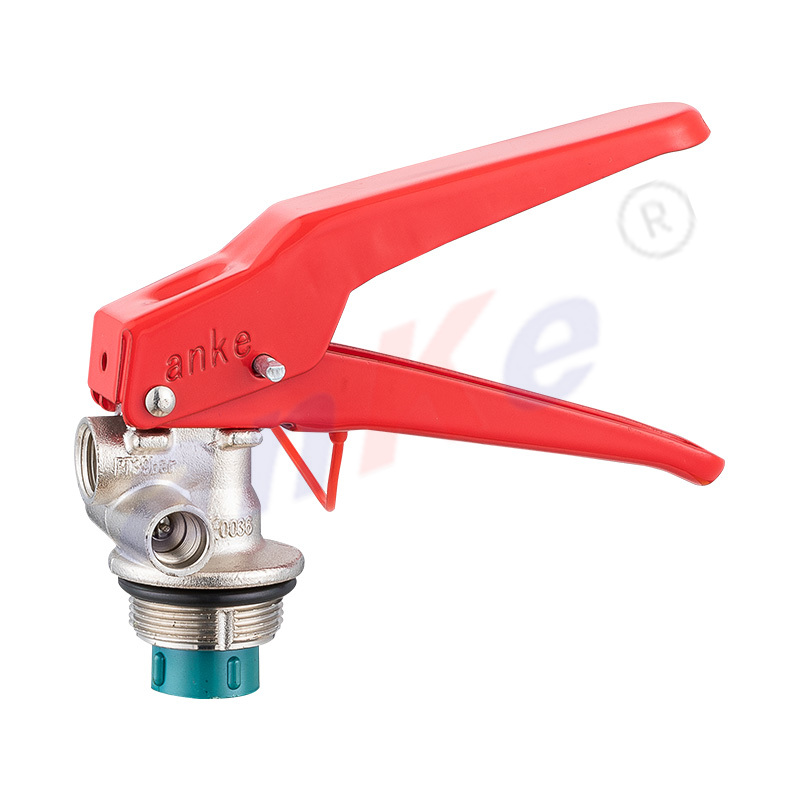
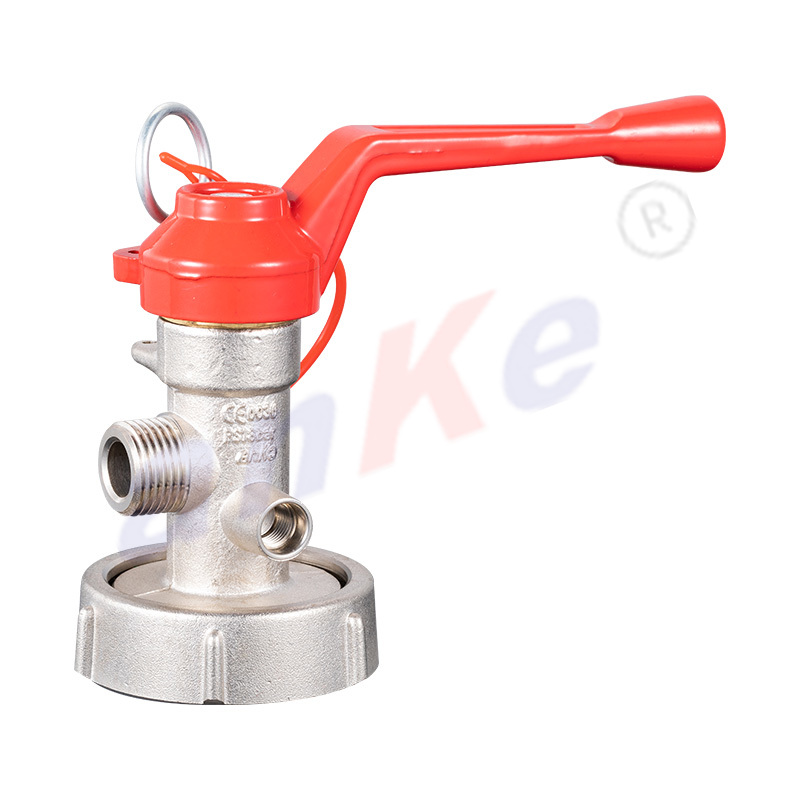
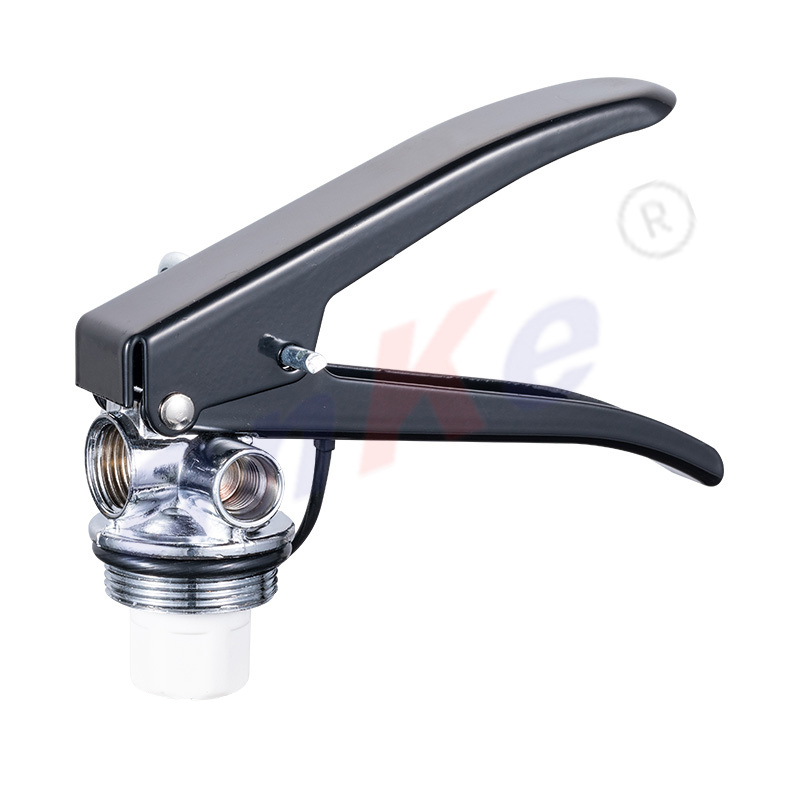
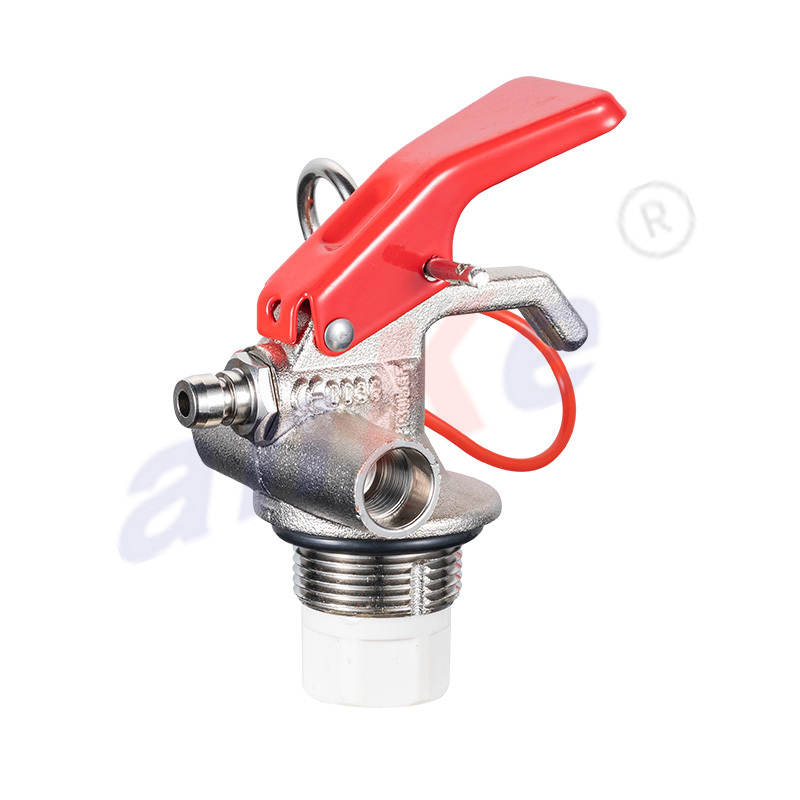
From a manufacturing point of view, the valve is the most critical part of a dry powder extinguisher. The valve must seal the stored pressure throughout the service life, release the powder quickly when the handle is squeezed, and allow the pressure gauge to give an accurate reading. Brass valve bodies and stainless steel valve stems are preferred in demanding environments because they resist corrosion and maintain a consistent seal.
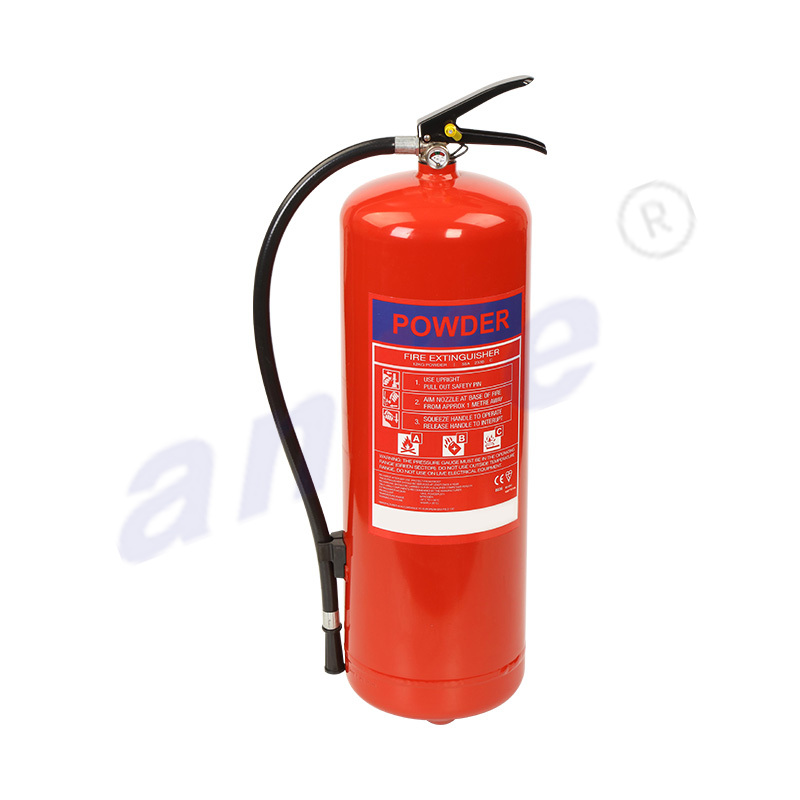 12KG ABC Dry Powder Extinguisher with 20% FormulaWith a 20% ABC dry powder charge, this 12KG unit addresses flammable liquids, gases, and electrical fires. Its simple operation and pressure gauge make it practical for quick response in emergencies.View Product →
Carbon Dioxide Fire Extinguishers
Carbon dioxide fire extinguishers discharge gas that displaces oxygen around the fire. The gas also cools the immediate area because it expands rapidly and drops the temperature of the discharge horn. Without oxygen, the flame cannot continue to burn. Because the agent is a gas, it leaves no residue behind.
CO2 extinguishers are essential for electrical risks. They are used in server rooms, telephone exchanges, laboratories, switchgear rooms, museums, and anywhere that water or powder would cause unacceptable damage. Most portable CO2 units are rated for Class B and Class C fires. Some larger units also carry a Class A rating, but the limited discharge range makes CO2 less practical for large open fires.
How to identify a well-built CO2 extinguisher
- The cylinder is seamless alloy steel or aluminium alloy and carries a stamped test date
- The valve has a safety diaphragm that releases pressure under abnormal heat
- The discharge horn is connected by a reinforced hose assembly
- The handle is ergonomic and allows operation with one hand
- The unit has a pressure indicator or a weighing-in-service inspection label
CO2 extinguishers are available in capacities from 2 kg to 9 kg for portable use. A 2 kg unit is often chosen for small electrical panels and vehicles. A 5 kg unit is more common in server rooms and workshops. Larger units are used where the fire may be deeper or the distance to the hazard is greater.
The key limitation of CO2 is discharge distance. The gas leaves the horn at high velocity but quickly loses momentum in the open air. The user must stand close to the fire, which increases the risk of the fire growing before it can be controlled. CO2 is also an asphyxiant in enclosed spaces. The room should be ventilated after discharge, and users should not attempt to control a large fire inside a confined area without breathing protection.
Because CO2 cylinders operate under very high pressure, the valve and seal materials are different from those used in stored-pressure water or foam units. The valve seat must resist low temperatures caused by gas expansion, and the safety burst disc must open before the cylinder pressure reaches a dangerous level. Buyers should verify that the valve carries a recognised product standard and that the test date is still current.
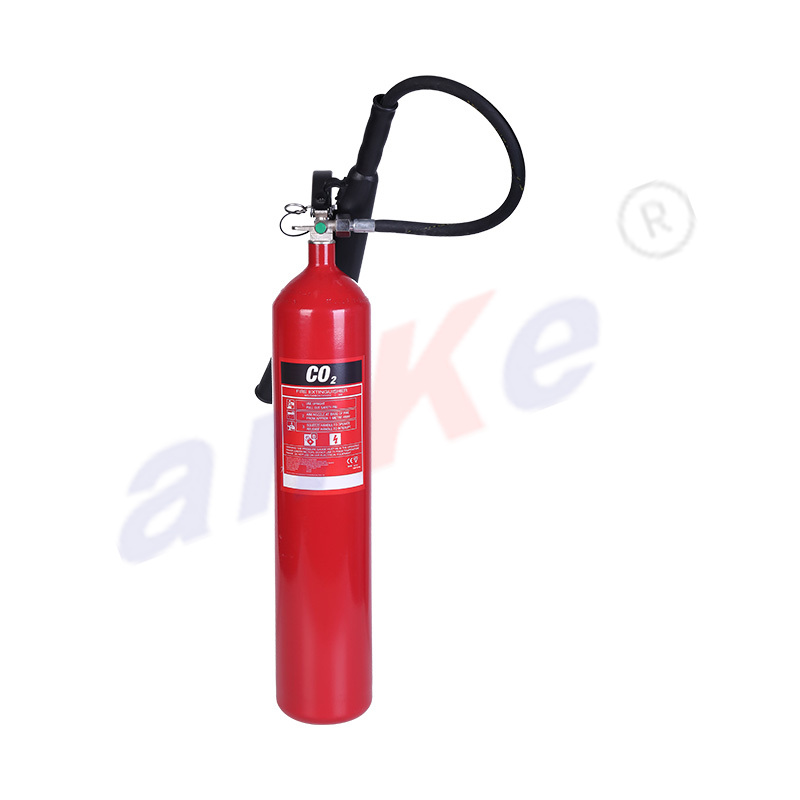 5KG Portable CO2 Extinguisher with Alloy Steel BodyThis 5KG CO2 extinguisher uses an alloy steel body for corrosion resistance and durability. It discharges gas that displaces oxygen, leaving no residue, and suits electrical or flammable liquid fires.View Product →
Wet Chemical Fire Extinguishers
Wet chemical extinguishers are designed for commercial cooking environments. The agent is a solution of potassium salts that is sprayed as a fine mist. When it hits hot cooking oil or fat, it creates a soap-like layer through a process called saponification. This layer cools the oil surface and seals it from oxygen, preventing re-ignition.
Commercial kitchens are among the most difficult fire environments because the fuel is hot liquid oil, the ventilation system can spread the fire, and staff may be moving quickly to evacuate. A standard ABC powder unit may knock down the flame but leave high-temperature oil that can re-ignite. Wet chemical is specifically designed to manage this situation.
Where wet chemical extinguishers are required
- Restaurant kitchens and hotel catering kitchens
- Food courts and central production kitchens
- Canteens with open deep-fat fryers
- Bakeries with high-temperature oil baths
- Mobile catering units and industrial food processing lines
Wet chemical extinguishers also carry a Class A rating, which makes them useful in a kitchen where cardboard packaging, paper towels, and wooden surfaces may be involved. The discharge should be applied as a gentle spray across the surface of the oil, not directed straight into the liquid, to avoid splashing.
The wet chemical agent is alkaline and conductive, so it must not be used on electrical fires. In commercial kitchens, electrical cooking equipment must be isolated before wet chemical is applied. Many kitchen installations include a fire suppression system in the canopy and ductwork, with portable wet chemical extinguishers mounted as backup for smaller fires.
Comparing the Five Main Types
Each of the five extinguisher types has a clear role. The comparison below helps explain what changes when you move from one agent to another.
| Type | Common sizes | Fire classes | Main advantage | Main limitation |
|---|---|---|---|---|
| Water | 3 L, 6 L, 9 L | A | Low cost and effective on solid fuels | Dangerous on electrical and liquid fires |
| Foam | 2 L, 3 L, 6 L, 9 L | A, B | Blankets flammable liquids | Not safe on energised electrical equipment |
| Dry powder | 1 kg, 2 kg, 6 kg, 9 kg, 12 kg | A, B, C | Wide coverage and fast knock-down | Powder residue can damage electronics |
| Carbon dioxide | 2 kg, 3 kg, 5 kg, 9 kg | B, C | Clean agent with no residue | Short range and risk of asphyxiation |
| Wet chemical | 6 L, 9 L, 11 L | A, K | Safe for commercial cooking oils | Not designed for general industrial risks |
The comparison also shows why some buildings need more than one extinguisher type. A modern workshop may have timber storage, flammable cleaning solvents, and electrical machinery in the same building. No single unit can provide the ideal protection for all three risks. The correct approach is to map each room to its main fire hazard and place the corresponding extinguisher within the required travel distance.
Selecting the Right Extinguisher for a Building
Most national fire codes give a simple rule: extinguishers should be selected according to the class of fire that is most likely in each area. The number and location of units are then determined by floor area, extinguisher rating, and travel distance. These variables are best handled by a fire safety engineer, but every person responsible for a building should understand the logic behind them.
Step 1. Identify the fuel in each room
Walk through the building and note the main combustible materials. A warehouse full of cardboard and wooden pallets has a Class A hazard. A paint store has a Class B hazard. A server room has a Class C hazard. A kitchen has a Class K hazard. A workshop that stores metal dust may need specialist Class D protection.
Step 2. Calculate the required extinguisher rating
The fire rating on the label is not arbitrary. It represents the size of fire that a trained operator can reasonably extinguish. A higher rating means a larger and more powerful extinguisher. Increasing the rating also increases the physical weight, so the installed units must remain manageable for the people who will use them.
Step 3. Choose between single-purpose and multi-purpose units
A multi-purpose ABC dry powder unit is convenient for a mixed-risk area. A kitchen needs a wet chemical unit. A room full of electrical equipment needs carbon dioxide. The safest policy is to place the correct single-purpose unit for the dominant hazard and add a secondary unit where more than one fire class is present.
Step 4. Check the mounting location and travel distance
Extinguishers should be mounted where they are visible and accessible. The travel distance to a Class A extinguisher should normally be no more than 30 metres. For flammable liquid risks, the travel distance is typically closer, around 15 to 20 metres. The unit should be mounted at a height that allows a standing person to pull the pin without bending.
Building size is not the only factor. A small store with a large furnace room may need more extinguishers than a large office with no obvious fuel beyond paper and furniture. Fire risk assessment is a process of looking at actual activities, not just reading a floor plan.
Inspection, Maintenance, and Correct Operation
An extinguisher that cannot be operated in an emergency is little better than no extinguisher at all. Pressure leaks, blocked hoses, broken safety pins, and seized valve handles are common maintenance issues that can be identified with routine checks.
The PASS technique for using an extinguisher
- Pull the safety pin from the handle to break the tamper seal.
- Aim the nozzle or hose at the base of the fire, not at the flames.
- Squeeze the handle slowly and evenly to release the agent.
- Sweep from side to side along the base of the fire until the flame goes out.
During operation, the operator should leave a clear exit behind them and never allow the fire to come between them and the door. If the fire does not respond quickly, the operator should withdraw and let the fire service handle it.
Monthly inspection checks
| Inspection point | What to verify |
|---|---|
| Location | Extinguisher is mounted in its designated position and not obstructed |
| Pressure gauge | Needle is in the green zone for stored-pressure types |
| Safety pin and tamper seal | Pin is present and seal is unbroken |
| Discharge hose and horn | No cracks, kinks, or blockages |
| Cylinder condition | No dents, corrosion, welding repairs, or leaked powder |
| Weight | CO2 extinguishers should be weighed regularly to detect slow leaks |
| Inspection tag | Signed and dated by the responsible person |
CO2 extinguishers have no pressure gauge on most models, so a low weight is often the first sign of a leak. A CO2 cylinder should be weighed on a regular schedule and replaced if the weight loss exceeds the limit set by the manufacturer. The valve should also be examined for damage around the safety burst disc area.
Hydrostatic testing is required after a certain number of years for every pressurised extinguisher. The interval varies by cylinder type and national regulation. A professional service company will stamp the new test date on the cylinder or provide a certificate. The test is not only about strength; it also checks the valve seat, the neck thread, and the internal condition of the cylinder.
If an extinguisher has been used, even for a few seconds, it should be taken out of service and refilled immediately. Partial discharge may allow pressure to drop and can also allow foreign material to enter the valve. Refilling must be done with the approved agent specified on the nameplate, not simply filled with a similar-looking powder or liquid.
Frequently Asked Questions About Fire Extinguisher Types
What are the five main types of fire extinguishers?
The five main types are water, foam, dry powder, carbon dioxide, and wet chemical. Water cools ordinary combustibles. Foam blankets flammable liquids. Dry powder interrupts the flame reaction. Carbon dioxide smothers the fire and leaves no residue. Wet chemical handles cooking oil and fat fires.
Which fire extinguisher should I put in a home?
A multi-purpose ABC dry powder extinguisher is the most practical choice for most homes because it covers wood, paper, flammable liquids, and electrical risks. A 2 kg or 6 kg unit is usually enough for a flat or small house. A unit should be placed near the kitchen exit and one near the main sleeping area.
Can one fire extinguisher be used on all types of fire?
No single portable extinguisher is suitable for all fire classes. ABC dry powder covers three classes but is not suitable for metal fires or cooking oil fires. Wet chemical covers Class K but is not suitable for electrical fires. The label on the cylinder always states the classes for which the unit is tested.
What is the difference between dry powder and dry chemical?
Dry chemical is the common term used in North America for extinguishing powders based on monoammonium phosphate or sodium bicarbonate. Dry powder more often refers to specialist powders used on Class D metal fires. The two categories are not interchangeable, and the correct type must match the fire classification on the label.
Can I use water on an electrical fire?
No. Water conducts electricity and creates a serious shock risk. Carbon dioxide or dry powder should be used on energised electrical equipment. If the power supply can be disconnected quickly, the fire may be reclassified as Class A and a water extinguisher can then be considered.
What does the PASS acronym mean?
PASS stands for Pull, Aim, Squeeze, and Sweep. Pull the pin, aim at the base of the fire, squeeze the handle, and sweep from side to side. The technique is simple, but it should be practised in training so that it can be performed under pressure.
How often should a fire extinguisher be inspected?
A quick visual check should be done monthly. A full professional inspection is usually required once a year. The hydrostatic test must be carried out less frequently, typically every 5, 10, or 12 years depending on the cylinder type and the local code. Always follow the schedule on the service tag and the applicable national standard.
Why do commercial kitchens need wet chemical extinguishers?
Commercial cooking oils burn at very high temperatures and can re-ignite after a flame is knocked down. Wet chemical converts the oil surface into a soap-like layer that cools it and seals it from oxygen. No other portable agent is as effective for deep-fat fryers and range-top cooking fires.
Are foam extinguishers suitable for petrol fires?
Yes. Foam is one of the best portable agents for flammable liquid fires because it forms a blanket that stops vapour release. The discharge should be applied gently so that the foam lands on the surface rather than being driven into the liquid.
What should I do with an old extinguisher?
An expired or damaged extinguisher should be depressurised and disposed of according to local waste rules. Unused powder or liquid must not be poured into drains. A professional service company can confirm whether the cylinder can be reconditioned or whether it should go to metal recycling.
What to Look For When Sourcing Fire Extinguishers
When you are purchasing extinguishers as part of a building project, an equipment replacement, or a fleet upgrade, the label on the cylinder is only the starting point. The reliability of the extinguisher depends on the quality of the valve, the accuracy of the pressure gauge, the condition of the discharge hose, and the traceability of the manufacturing batch.
Checklist for reviewing extinguisher supply quality
- Does the unit carry the required national or international approval mark?
- Is the valve body made from brass, stainless steel, or another corrosion-resistant material?
- Does the pressure gauge provide a clear and calibrated reading?
- Is the discharge hose flexible, crack-free, and securely connected?
- Are the safety pin and tamper seal properly fitted?
- Does the cylinder have a stamped serial number and hydrostatic test date?
- Is the agent name and rating clearly printed on the label?
- Can spare parts such as valves, hoses, horns, and gauges be sourced when needed?
Inspection of incoming goods is especially important when purchasing from a long-distance supplier. A container of extinguishers can sit in a warehouse for months before installation. Valves with poor plating can corrode in humid storage. Rubber seals can harden in high temperatures. A few simple checks at the point of delivery can prevent a large number of failures later.
For facilities that need a dependable supply of extinguisher bodies, valves, pressure gauges, hoses, and mounting brackets, working with a producer that controls the full assembly process gives better consistency than buying separate parts from multiple sources. This is also useful information for maintenance teams, because replacement parts are traceable to one specification.
 Phone: +86-13456107058/+86-15967800709
 Tel: +86-574-62010128/+86-574-62010688
 E-mail:
  Factory: Huilong Village, Huangjiabu Town, YuyaoCity,Zhejiang Province, China





 Domestic Trade Manager
 Foreign Trade Manager
 VR Catalogue
