
 en
en  English
 中文简体
中文简体 Español

In modern industrial, commercial, and residential fire safety systems, the reliability of fire extinguishing equipment directly impacts the safety of lives and property. As the central control component of fire extinguishing systems, the fire extinguisher valve and fire suppression valve bear the critical responsibilities of sealing the extinguishing agent, controlling precise release, and monitoring internal pressure. Facing different types of extinguishing agents and complex application environments, a deep understanding of the technical characteristics, structural differences, and application standards of various valves is essential for ensuring the long-term stable operation of fire safety systems.
Core Classifications and Mechanical Principles of Extinguisher Valves
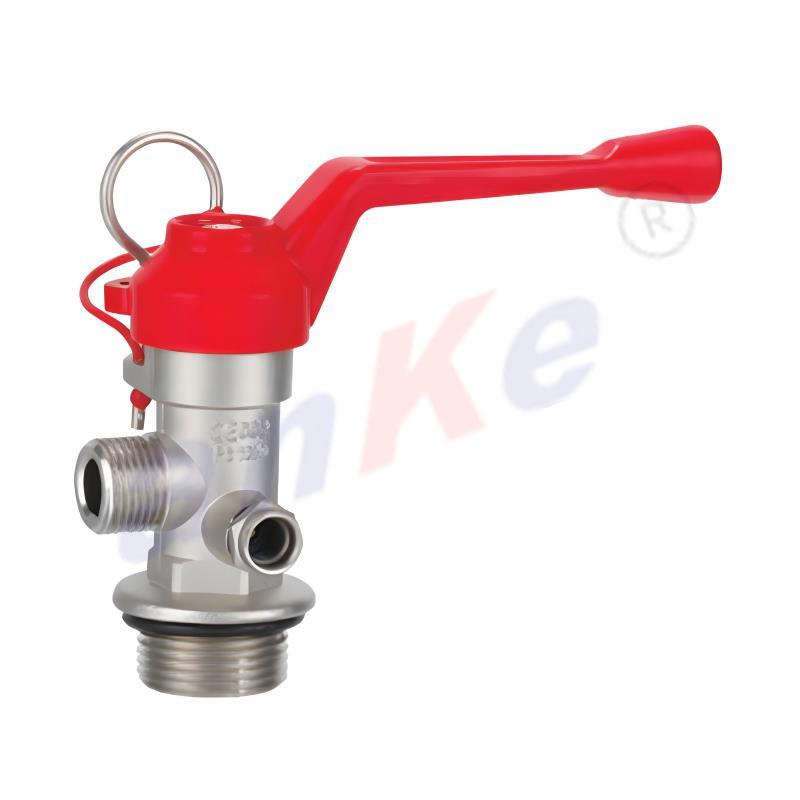
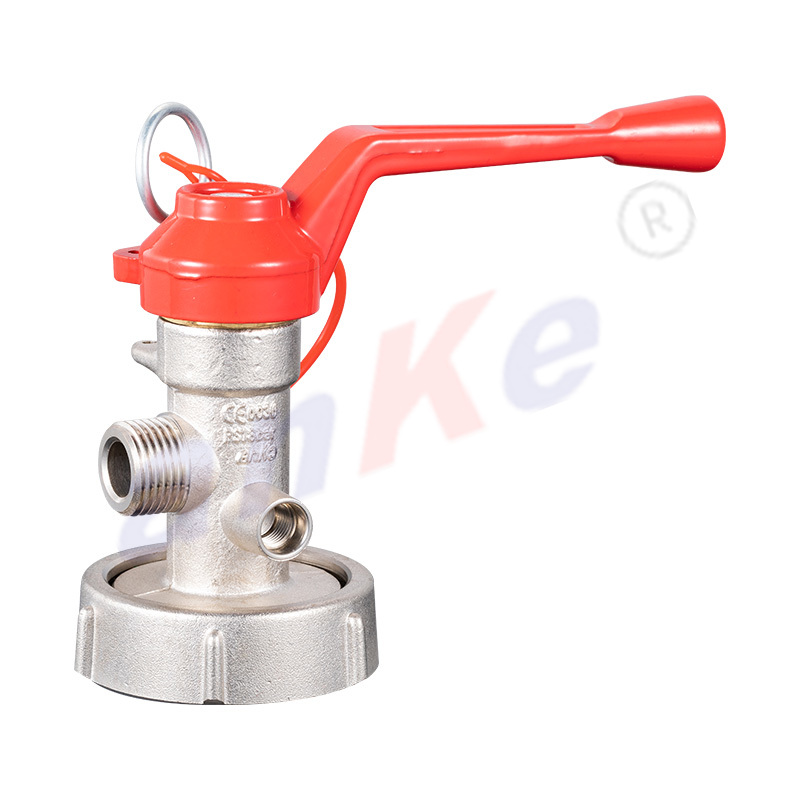
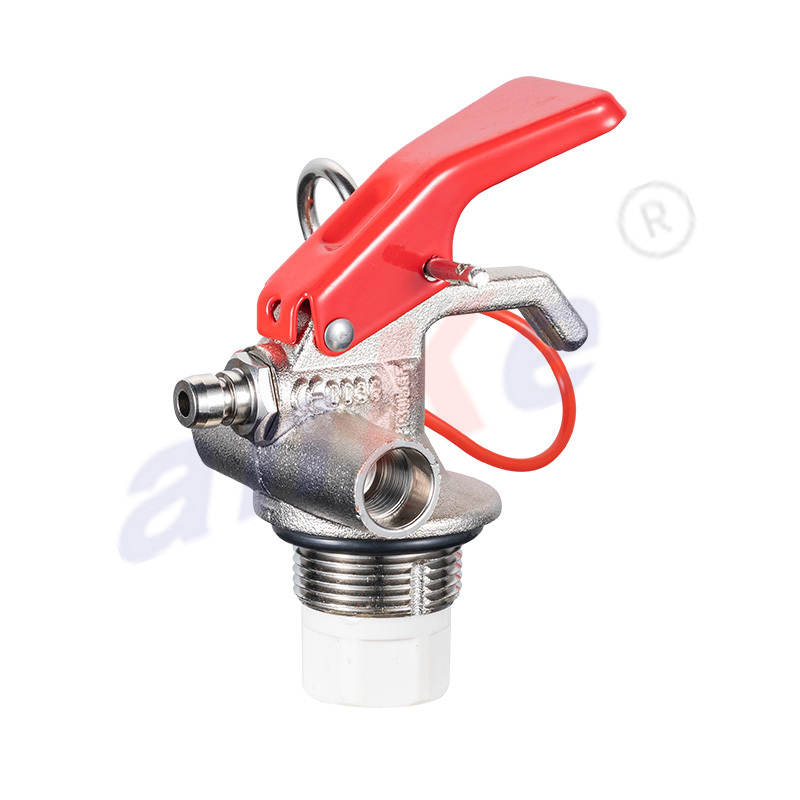
The design of an extinguisher valve must match the physical properties of the extinguishing agent filled inside it. The two most common industrial-grade valves in the market are the abc fire extinguisher valve and the co2 fire extinguisher valve, which have fundamental differences in structural design and pressure-bearing capacity.
Structural Characteristics of the abc fire extinguisher valve
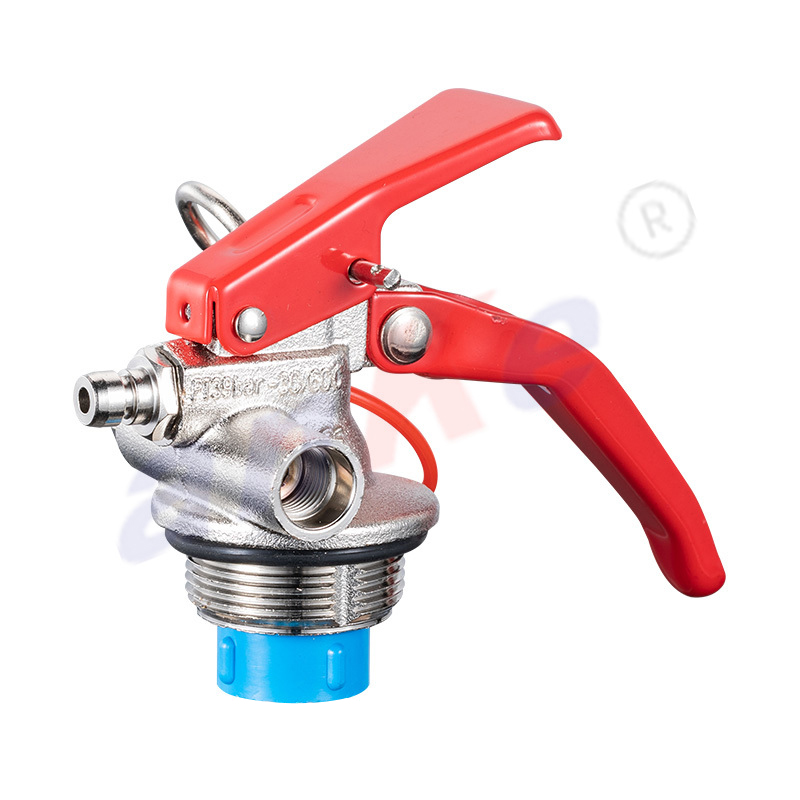
The abc fire extinguisher valve is primarily used for dry chemical powder fire extinguishers. These extinguishers are filled with ammonium phosphate dry chemical powder and utilize nitrogen as the driving gas, with a standard working pressure usually between 1.2 MPa and 1.5 MPa.
* Valve Body Material: Typically made of high-strength forged brass or precision-cast aluminum alloy, offering excellent pressure resistance and anti-corrosion properties. * Sealing Structure: Because dry chemical powder particles are extremely fine, they easily deposit on the sealing surface and cause gas leakage. Therefore, this type of extinguisher valve often utilizes wear-resistant synthetic rubber (such as Nitrile Rubber NBR) or Fluororubber (FKM) as sealing gaskets, paired with a strong reset spring to ensure rapid closure and a tight seal after activation. * Safety Device: A safety release disc (burst disc) is integrated into the valve body. When the internal pressure rises abnormally due to high temperatures, the safety disc bursts automatically to relieve pressure, preventing the cylinder from physical explosion.
High-Pressure Design of the co2 fire extinguisher valve
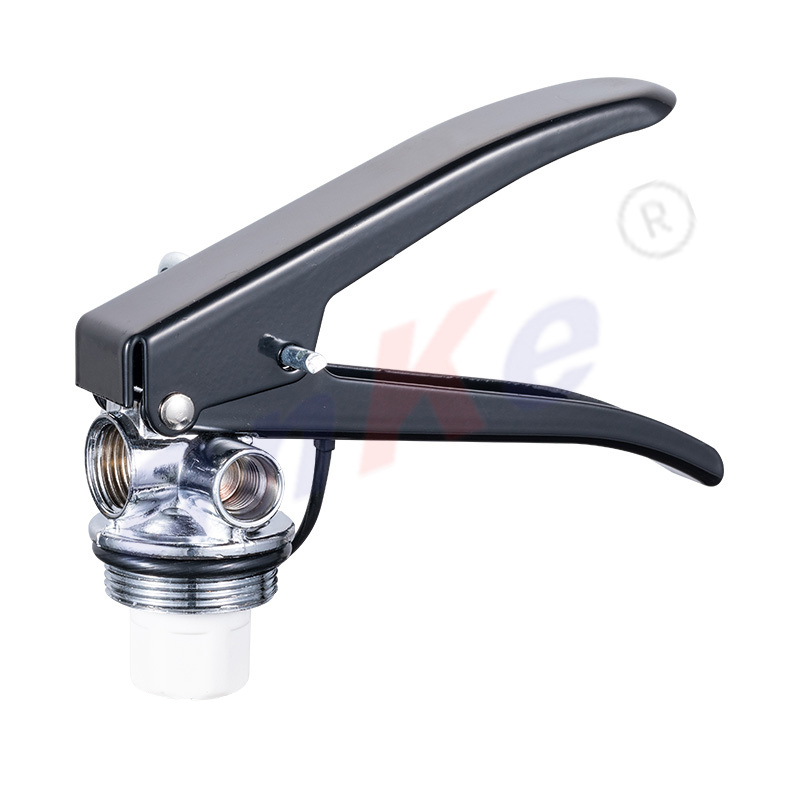
Unlike dry powder fire extinguishers, carbon dioxide fire extinguishers store liquid carbon dioxide inside, which is a high-pressure liquefied gas. Its vapor pressure reaches up to 5.7 MPa at room temperature and can exceed 15 MPa in high-temperature environments. Therefore, the design requirements for the co2 fire extinguisher valve are much more stringent.
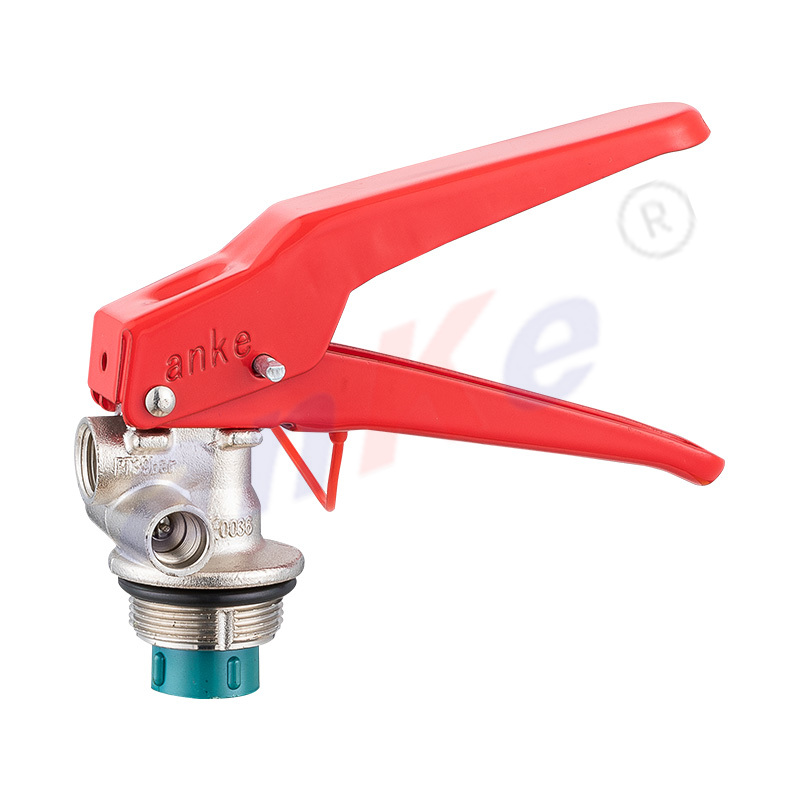
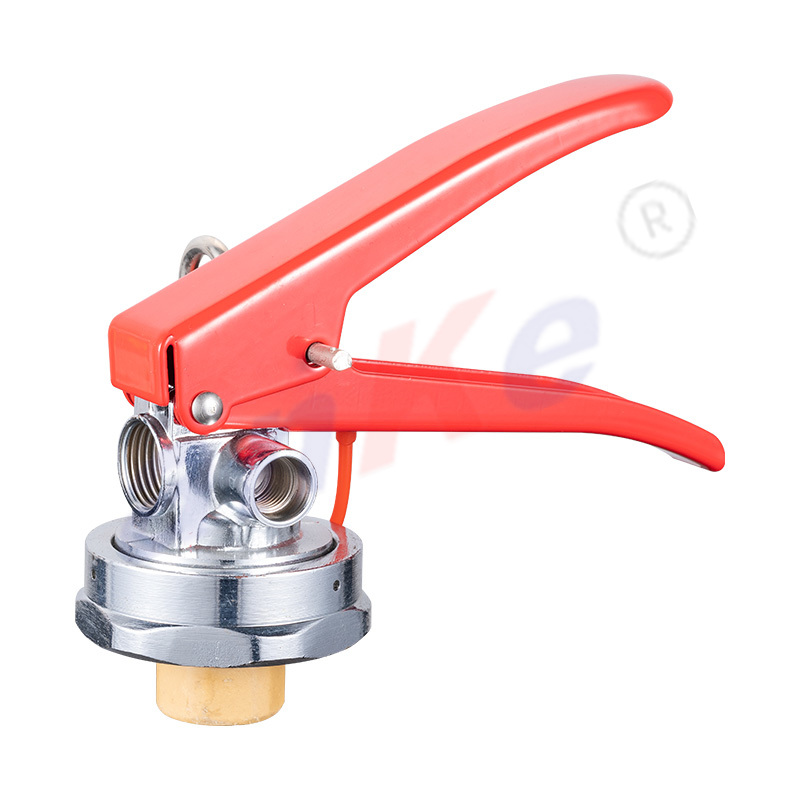
* Ultra-High Pressure Bearing Capacity: The valve body is widely manufactured using heavy-duty forged brass with significantly increased wall thickness to withstand extreme high pressure. * Handwheel and Squeeze-Grip Designs: Common designs include the handwheel type equipped for workshops or large equipment, and the squeeze-grip type designed for quick operation. The internal valve needle and valve seat undergo high-precision grinding to achieve zero leakage even under high pressure. * Safety Relief Standard: The equipped safety burst disc relief pressure is usually set around 22 MPa, which is much higher than the set value of the abc fire extinguisher valve. ---
Differences Between Industrial fire suppression valve and Conventional Extinguisher Valves
In high-risk areas such as large server rooms, petrochemical plants, and power distribution rooms, automatic fire suppression systems are usually deployed. The control core used in these systems is the fire suppression valve. Compared with the extinguisher valve found on portable equipment, it has higher technical requirements regarding triggering mechanisms and flow control.
The fire suppression valve is typically connected to piping network systems or storage cylinder groups of extinguishing agents. Its triggering methods not only support manual mechanical emergency activation but also integrate multiple automatic trigger control modules such as electromagnetic drive, pneumatic drive, or pyrotechnic drive. Upon receiving commands from the fire control center, the valve must open completely within milliseconds. This ensures that the extinguishing agent (such as Heptafluoropropane, IG541 mixed gas, or high-pressure carbon dioxide) rushes into the protected area at an extremely high flow rate and designed discharge pressure, reaching the fire suppression concentration within a very short timeframe.
---
Core Parameter Comparison: Technical Indicators of Different Fire Valves
To assist fire protection engineering technicians and procurement personnel with intuitive system selection, the core technical parameters comparing the common extinguisher valve and fire suppression valve options are listed below:
| Parameter Item | abc fire extinguisher valve | co2 fire extinguisher valve | Gas Network fire suppression valve |
| Applicable Extinguishing Agent | ABC Dry Chemical / Ammonium Phosphate Powder | Liquid Carbon Dioxide (CO2) | Heptafluoropropane / IG541 / High-pressure CO2 |
| Normal Working Pressure | 1.2 MPa - 1.5 MPa | 5.7 MPa (At room temperature) | 2.5 MPa / 4.2 MPa / 15 MPa |
| Main Valve Body Material | Forged Brass / Aluminum Alloy | Heavy-duty Forged Brass | High-strength Alloy Steel / High-quality Forged Brass |
| Safety Relief Pressure | 2.0 MPa - 2.5 MPa | 22 MPa +/- 1.5 MPa | Customized based on system design (1.5 times the working pressure) |
| Activation / Trigger Method | Mechanical squeeze-grip manual trigger | Squeeze-grip / Handwheel manual trigger | Electromagnetic activation / Pneumatic activation / Mechanical emergency activation |
| Main Sealing Material | Nitrile Rubber (NBR) | Polytetrafluoroethylene (PTFE) / Fluororubber | Polytetrafluoroethylene (PTFE) / Polyimide |
| Nominal Diameter (DN) | 10 mm - 16 mm | 8 mm - 12 mm | 25 mm - 50 mm (Depending on piping network scale) |
---
Common Fault Analysis and Professional Maintenance Recommendations for Fire Valves
In practical deployment, the fire extinguisher valve and fire suppression valve remain in a standby state for long periods. Regular technical inspection and maintenance are key to ensuring 100% successful release at critical moments.
Abnormal Pressure Gauge Indicator and Micro-leakage Phenomenon
For the abc fire extinguisher valve, the most common fault is a low pressure indication on the pressure gauge. This is usually caused by aging valve seals, valve stem deformation, or micro-leakage resulting from a tiny amount of powder adhering to the sealing surface during dry powder filling. Resolving this issue requires using professional depressurization equipment to safely discharge the driving gas, disassembling the valve to clean the valve seat, replacing the seal with high-specification fluororubber gaskets, and re-conducting airtightness pressure tests.
Valve Body Frosting and Discharge Freezing Resistance
When the co2 fire extinguisher valve opens for discharge, the liquid carbon dioxide vaporizes rapidly and absorbs heat, causing the valve body temperature to drop below -70 degrees Celsius instantly. If the internal design of the valve is unreasonable or processing precision is insufficient, the low temperature can cause the valve stem to freeze and fail to reset, or even cause physical brittle fracture of the valve body. Therefore, high-quality extinguisher valve products must pass strict ultra-low temperature operation tests before leaving the factory to ensure that the internal mechanical structure can still operate smoothly under extreme freezing discharge conditions.
Actuator Failure and Interlocking Malfunctions
For the fire suppression valve within automatic fire suppression systems, the reliability of the electromagnetic actuator is vital. Maintenance personnel should regularly check whether the input voltage and current of the solenoid valve meet the standards to prevent the valve from failing to open electrically due to wiring aging or unstable voltage when a fire occurs. At the same time, the actuation pipeline of the pneumatic cylinder group must be kept absolutely dry to prevent internal water accumulation from freezing at low temperatures, which blocks the pipeline and affects the transmission of the control airflow.
 Phone: +86-13456107058/+86-15967800709
 Tel: +86-574-62010128/+86-574-62010688
 E-mail:
  Factory: Huilong Village, Huangjiabu Town, YuyaoCity,Zhejiang Province, China





 Domestic Trade Manager
 Foreign Trade Manager
 VR Catalogue
