
 en
 English
 中文简体
 Español


Why a Portable Fire Extinguisher Is the First Line of Defense
A portable fire extinguisher is designed to suppress a fire during its incipient stage, usually within the first three minutes after ignition. In this window the fire is still small enough for one person to handle it, and the extinguishing agent can reach the fuel directly. After this window the heat release rate climbs quickly, and the same fire becomes too large for any handheld unit. This is why codes require portable extinguishers in buildings, workshops, vehicles, boats and kitchens.
A portable unit is a self-contained pressure system: a cylinder, a valve assembly, a pressure gauge or gas cartridge, a siphon tube, and a discharge nozzle or horn. It does not depend on the water supply, electricity or a pump. That independence makes it the most practical tool for a person who detects a fire early and needs to act before the fire service arrives.
Because the unit sits unused for long periods, its mechanical reliability is as important as its fire rating. A valve that leaks, a gauge that reads green when the pressure is low, a hose that cracks, or powder that has compacted will turn the device into decoration at the exact moment it is needed. The following sections cover agent types, ratings, component quality, inspection and operating technique, so the selection process is based on facts rather than habit.
Main Types of Portable Fire Extinguishers and Where Each One Works
Portable extinguishers are classified by the agent inside the cylinder. The agent determines which fire classes the unit can handle, how fast it discharges, what residue it leaves, and how it must be serviced. Five agent families cover almost all applications.
ABC Dry Powder
Multi-purpose ammonium phosphate powder handles Class A, B and C fires. It is the most widely used portable agent because one unit can serve mixed risks. Sizes range from 1 kg to 12 kg, with discharge times of roughly 8 to 20 seconds. The residue needs cleaning after use.
Carbon Dioxide (CO2)
CO2 is a clean agent that leaves no residue and does not damage electronics. It works on Class B and C fires and on energized electrical equipment. Sizes of 2 kg and 5 kg are common. The discharge is cold and loud, and the cylinder operates at high pressure.
Water and Water Mist
Water extinguishers cool the fuel and work on Class A fires. They are simple and inexpensive. Water mist versions produce finer droplets, which improves cooling efficiency and reduces electrical risk at a limited distance. Because water freezes, these units have clear temperature limits.
Foam
Foam creates a blanket that seals the fuel surface and suppresses vapors. It works on Class A and B fires, which makes it popular in fuel storage, workshops and vehicles. Foam units discharge longer than dry powder, typically 30 to 50 seconds.
Wet Chemical
Wet chemical, usually potassium-based, is purpose-built for cooking oils and fats. It reacts with hot oil to form a saponification layer that blocks oxygen. It also works on Class A fires and is the required unit in commercial kitchens.
Multi-purpose ABC dry powder is the default choice in most general-purpose environments because one size covers several hazards. For a closer look at construction, ratings and available sizes, see the portable ABC dry powder extinguisher product page.
 9 kg ABC Dry Powder Fire Extinguisher for Multi-Hazard UseThis compact 9 kg ABC dry powder unit covers solid, liquid, gas and electrical fires, making it a practical choice for homes, offices and small shops.View Product →
Discharge duration values are indicative, based on stored-pressure portable extinguishers; real duration depends on valve characteristics, hose assembly and operator technique. Dark red bars indicate dry powder units, lighter red bars indicate CO2, and pale bars indicate water and foam.
Discharge duration matters more than it seems. A short discharge forces the operator to be accurate in the first seconds, while a long discharge gives time to sweep across a larger surface. For dry powder units, the trade-off is between extinguishing speed and agent cost; for water and foam, the longer discharge is a practical advantage against deep-seated fires.
| Agent | Typical sizes | Fire classes | Typical discharge | Residue | Preferred applications |
|---|---|---|---|---|---|
| ABC dry powder | 1 - 12 kg | A, B, C | 8 - 20 s | Powder residue | Buildings, workshops, vehicles |
| CO2 | 2 - 5 kg | B, C, electrical | 8 - 15 s | None | Electrical rooms, laboratories, servers |
| Water / water mist | 6 - 9 L | A | 40 - 60 s | Water | Offices, warehouses with solid fuels |
| Foam | 3 - 9 L | A, B | 30 - 50 s | Foam blanket | Fuel storage, workshops, marine use |
| Wet chemical | 2 - 6 L | F (K), A | 30 - 60 s | Saponified film | Commercial kitchens, catering |
Fire Classes and How the Agent Matches the Burning Material
An extinguisher only works if the agent is compatible with the fuel. The most common reason a portable extinguisher fails in a real incident is not mechanical failure; it is the wrong agent being aimed at the wrong fire class.
| Fire class | What burns | Suitable portable agents | Not suitable |
|---|---|---|---|
| A | Wood, paper, textiles, plastics | Water, foam, ABC dry powder, wet chemical | CO2 alone, because cooling is weak and re-ignition is likely |
| B | Flammable liquids, petrol, oils, solvents | ABC dry powder, foam, CO2 | Water, which spreads the burning liquid |
| C | LPG, methane, acetylene and other gases | ABC dry powder | Water, foam and CO2; the gas supply must be shut off first |
| D | Combustible metals, such as magnesium and sodium | Special dry powder for metal fires | Water, ABC powder, CO2, because of violent reaction |
| F / K | Cooking oils and fats | Wet chemical | Water, CO2 and standard dry powder, which can splatter or re-ignite |
In many European rating codes, an E marking indicates that the agent is non-conductive and can be used on energized equipment. CO2 is preferred in enclosed switch rooms because dry powder can infiltrate electronics and create long-term corrosion; ABC powder is acceptable for outdoor or low-value electrical risks when no clean agent is available.
What the Rating on the Nameplate Really Tells You
The rating is not marketing. In the North American system it follows the format 1A:10B:C. The number before A is a Class A performance value derived from a standardized wood crib test. The number before B indicates the approximate area, in square feet, of a flammable liquid pan fire that an average operator can extinguish. The letter C means the agent is non-conductive and can be used while the equipment is energized.
In the European EN 3 system, the rating is different in form but the logic is the same. A unit marked 13A 55B has passed the wood crib test at the 13A level and can extinguish the 55B liquid pan fire. EN 3 also adds F ratings for cooking oil fires, such as 75F.
| Unit | Common rating (EN / ISO) | Typical use |
|---|---|---|
| 1 kg ABC dry powder | 8A 34B | Small vehicles, home corners |
| 2 kg ABC dry powder | 13A 55B | Home, small office |
| 4 kg ABC dry powder | 21A 89B | Workshop, retail |
| 6 kg ABC dry powder | 27A 144B | Service stations, warehouses |
| 9 kg ABC dry powder | 34A 144B | Industrial buildings |
| 2 kg CO2 | 55B E | Electrical rooms |
| 5 kg CO2 | 89B E | Server rooms, laboratories |
| 6 L water | 8A | Corridors, offices |
| 9 L foam | 13A 89B | Fuel storage, vehicles |
Values in the table are indicative and vary with agent formulation, valve throttling and test conditions. Always read the rating printed on the nameplate of the specific unit.
How to Select a Portable Fire Extinguisher for a Specific Location
Selection starts with the worst credible fire on the premises, not with the cheapest unit or the size that fits on a shelf. Walk the site, identify the dominant fuel, then choose the agent, size, rating and mounting accordingly.
Home and Apartment
Main risks are furniture, textiles, electrical outlets and cooking oil. A 2 kg ABC dry powder unit near the exit covers general risks, and a 6 L wet chemical unit in the kitchen handles cooking fat. Mount units where a fire will not block access to the door.
Kitchen and Catering
Cooking oils require wet chemical. A Class F or K unit with a 30 to 60 second discharge gives the operator time to cover the pan. Add a fire blanket for small pan fires and keep the extinguisher near the kitchen exit, not directly over the stove.
Garage and Workshop
Solvents, fuels, charged batteries and welding sparks create B, C and A risks. A 4 to 6 kg ABC unit is the primary choice; a CO2 unit is useful for live electrical panels and electronic equipment. Store both close to the door so they stay reachable when smoke starts to build.
Vehicle
A 1 to 2 kg ABC unit secured with a proper bracket inside the cabin gives the driver access without opening the hood. Vibration, heat and humidity make the bracket and the valve quality as important as the agent. Marine-approved units are preferred on boats.
Commercial and Public Buildings
Regulations usually specify types, travel distances and mounting heights. In practice, a combined arrangement of ABC dry powder and water extinguishers, placed according to the fire load, keeps corridors and common areas compliant and usable.
Marine and Offshore
Saltwater corrosion and motion put additional stress on cylinders and valves. Marine-approved CO2 and ABC units with corrosion-resistant brackets are the standard. Rating printing, valve seals and bracket materials must survive a humid, vibrating environment.
For mounting, a fire extinguisher bracket keeps the cylinder secure but instantly removable, and a fire cabinet protects the unit from impact, dust and unauthorized use. These accessories are not optional extras; they are part of a usable installation. The bracket must match the cylinder diameter and weight so the release action works in a hurry and the unit does not fall during transport or seismic events.
| Location | Primary risk | Recommended unit | Placement note |
|---|---|---|---|
| Home | A (furniture, paper) plus F (cooking oil) | 2 kg ABC plus 6 L wet chemical | Near the kitchen exit, not over the stove |
| Workshop | B, C (fuels, electrical) | 4 - 6 kg ABC plus CO2 | Near the work area exit |
| Vehicle | B (fuel), A (cables) | 1 - 2 kg ABC | Inside the cabin with a secure bracket |
| Commercial corridor | A (finishes, furniture) | 6 - 9 kg ABC or water | Within 20 - 30 m travel distance, wall-mounted |
Standards and Certification: What to Verify Before You Purchase
Portable extinguishers are regulated products, and the legal requirement is not just to sell a cylinder with powder inside. The certificate is evidence that the unit passed performance tests under controlled conditions. A nameplate without a standard reference, a valve without a pressure test record, or a cylinder without a traceable batch number is reason to reject the unit.
| Standard / approval | Region | What it governs |
|---|---|---|
| EN 3 | Europe | Performance ratings, label content, hose and valve function |
| ISO 7165 | International | Technical requirements and test procedures |
| NFPA 10 | North America | Selection, installation, inspection and maintenance |
| UL / ULC | North America | Product listing and certification |
| MED (marine equipment directive) | Europe | Type approval for marine service |
| USCG | United States | Marine approval |
| PED 2014/68/EU | Europe | Pressure equipment safety for the cylinder and valve |
When a production facility makes extinguisher valves, complete extinguishers and related components in-house, every step from material batch to pneumatic test can be traced. Traceability is what makes certification meaningful. It also affects service: a unit whose producer can supply matching valves, gauges, hoses and seals is much easier to maintain over a ten-year service life than one assembled from uncontrolled parts.
Do not confuse a printed sticker with an approved product. Check the notified body number on CE-marked units, confirm that the certificate is valid for the specific model, and ask for the factory certificate and test records when the application is critical.
Anatomy of a Portable Fire Extinguisher: Which Components Decide Whether It Works
A portable extinguisher is a system of seven components, and the weakest one sets the standard for the whole unit. The cylinder, valve, safety pin, pressure gauge or cartridge, siphon tube, hose and nozzle or horn, and nameplate all have distinct functions and failure modes.
| Component | Function | Typical failure mode |
|---|---|---|
| Valve assembly | Seals the cylinder, opens with the handle, controls discharge rate | O-ring wear, stem seizure, internal corrosion |
| Safety pin and tamper seal | Prevent accidental operation and show that the unit is unused | Missing after inspection, broken seal |
| Pressure gauge | Shows stored pressure at a glance | Stuck pointer, broken glass, moisture ingress |
| Siphon tube | Carries agent from the bottom of the cylinder to the valve | Blockage from compacted powder, cracks |
| Hose and nozzle / horn | Direct the agent onto the fire | Cracking, clogging, delamination |
| Nameplate | States rating, agent weight, dates, instructions | Illegible, missing, or not matching the unit |
| Cylinder | Contains the pressure | Corrosion, dent, weakening at the neck |
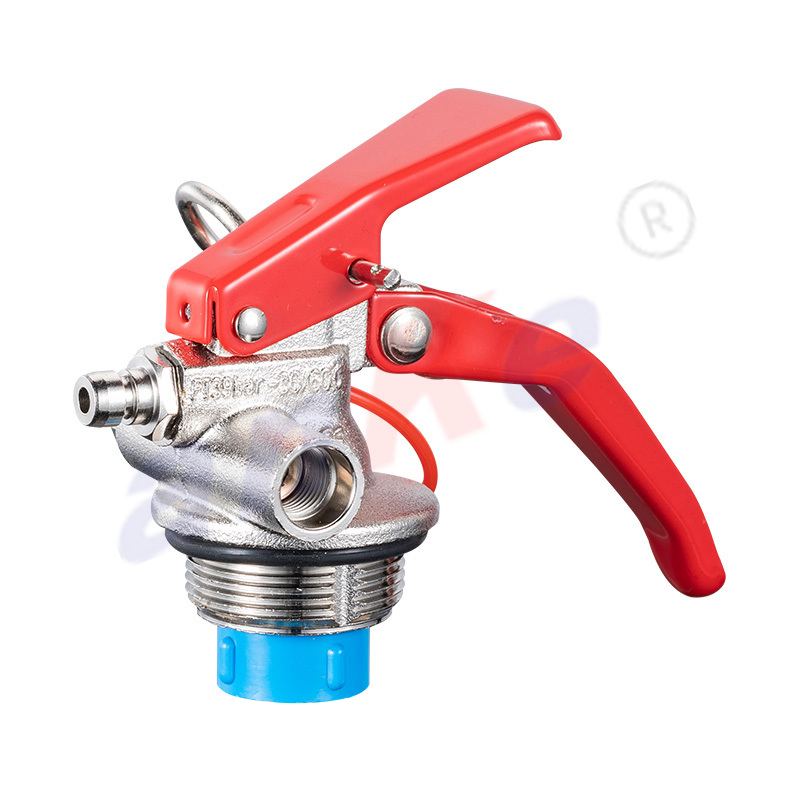
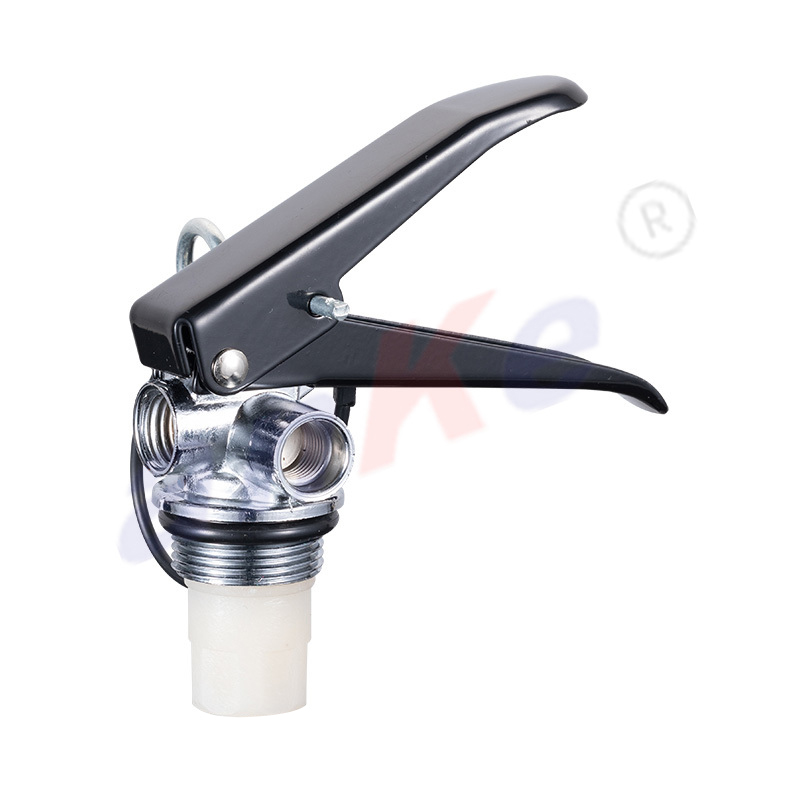
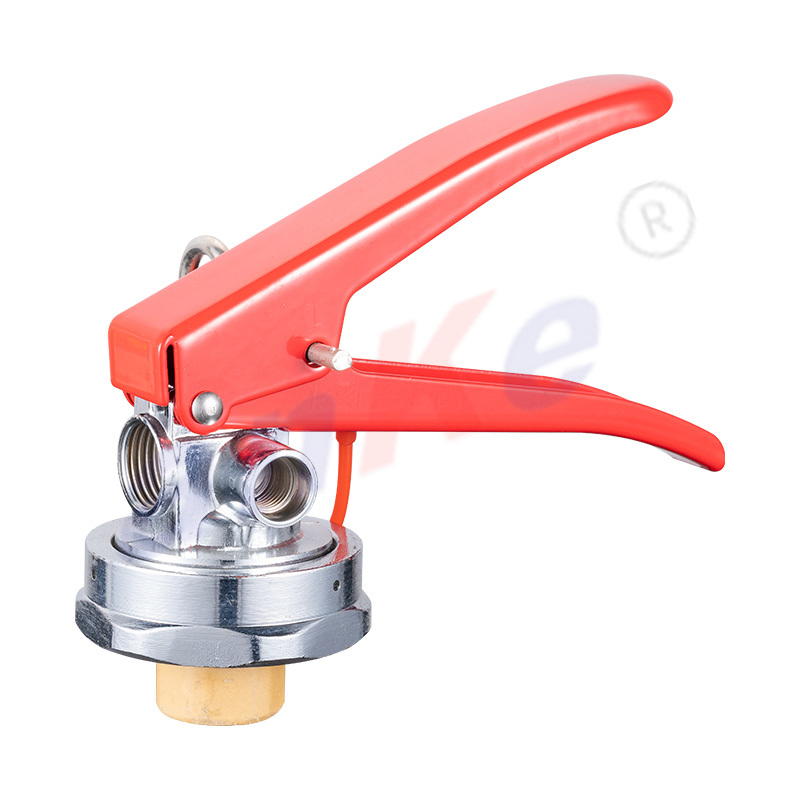
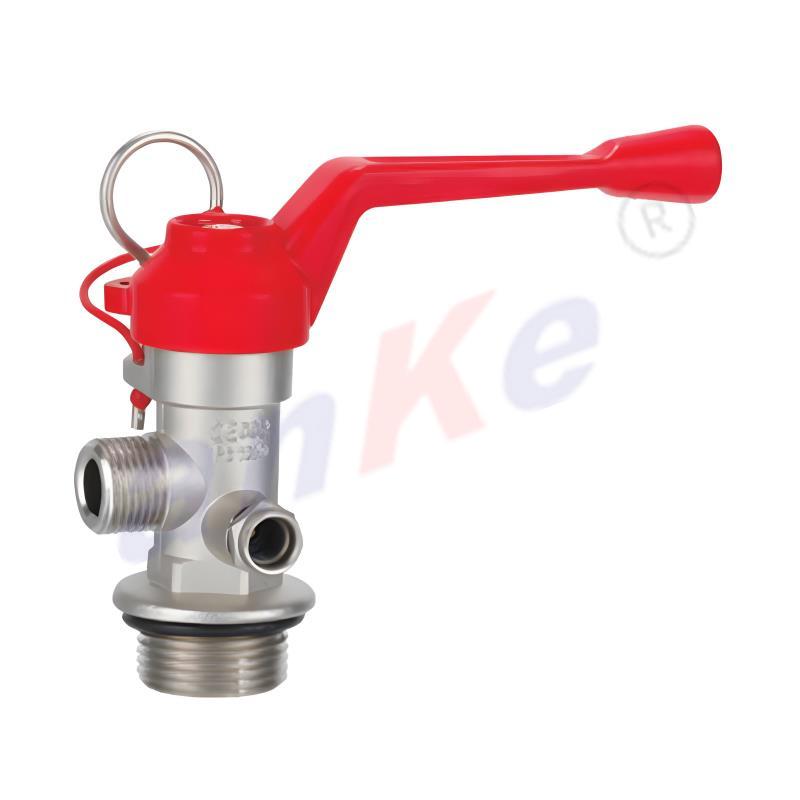
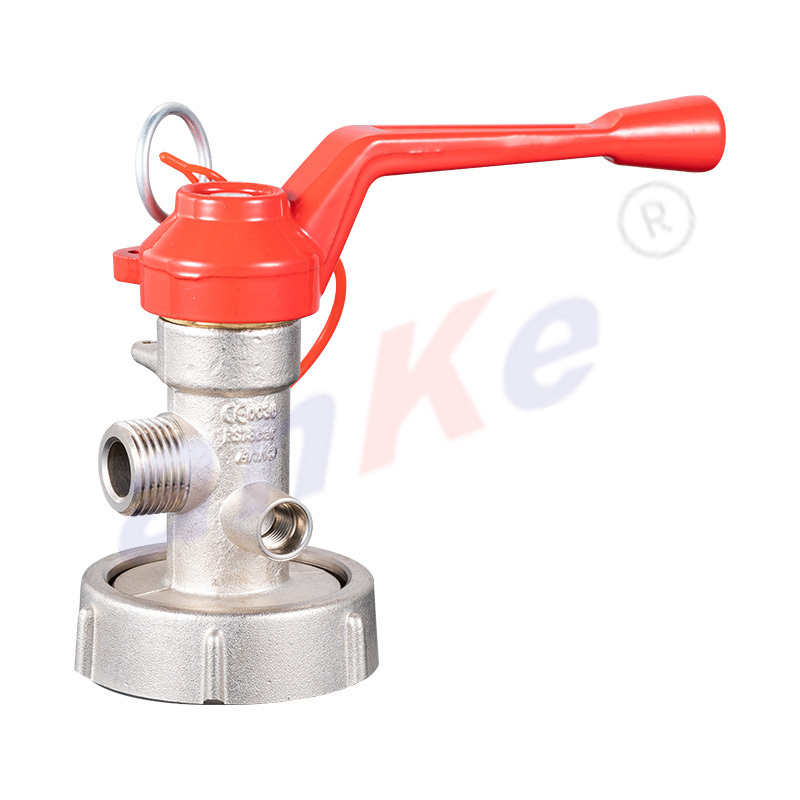
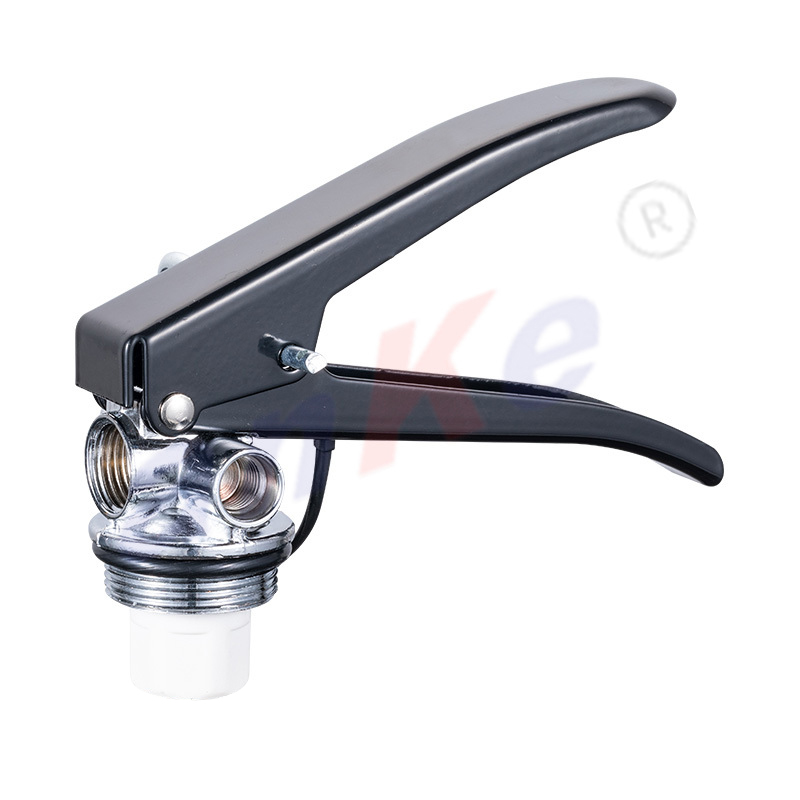
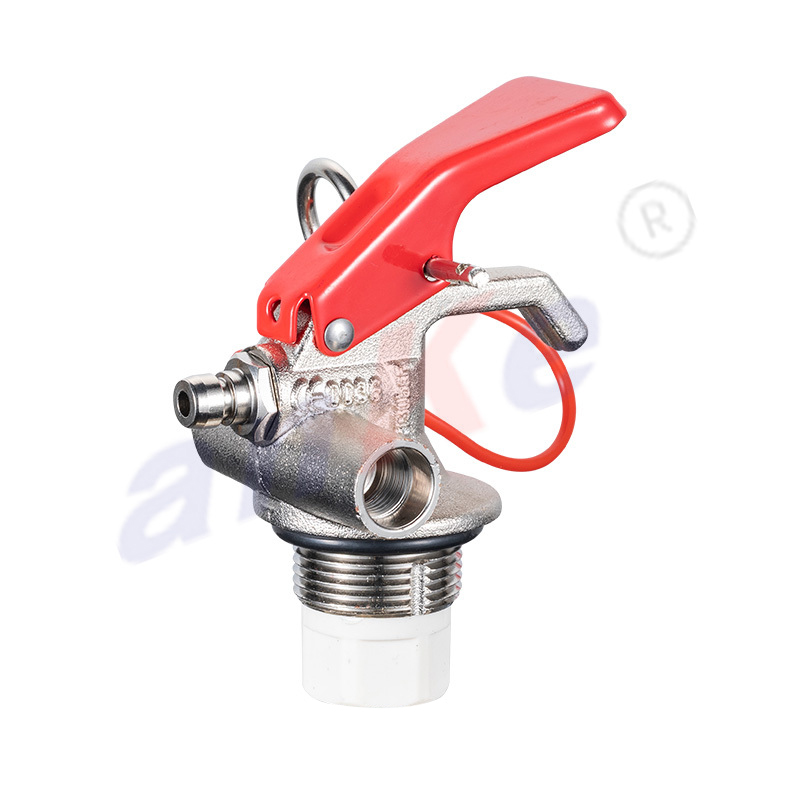
The valve is the most stressed component. In a stored-pressure unit, it holds full internal pressure for years across a temperature range that can reach from -30°C to +60°C, and it must still open smoothly the instant the pin is pulled. Valve body material matters. Brass bodies offer reliable sealing surfaces and consistent machining, stainless steel adds strength and corrosion resistance for marine or humid environments, and aluminum reduces weight but demands tighter control of the sealing face. The valve also carries the pressure relief function: a burst disc or relief valve that releases gas before the cylinder can fail.
For stored-pressure dry powder units from 4 to 12 kg, the valve must match the cylinder neck thread, siphon tube length and hose connection, and it is pressure-tested before leaving the factory. A valve that is visually similar but manufactured to a different tolerance can leak at high temperature or seize after months of storage.
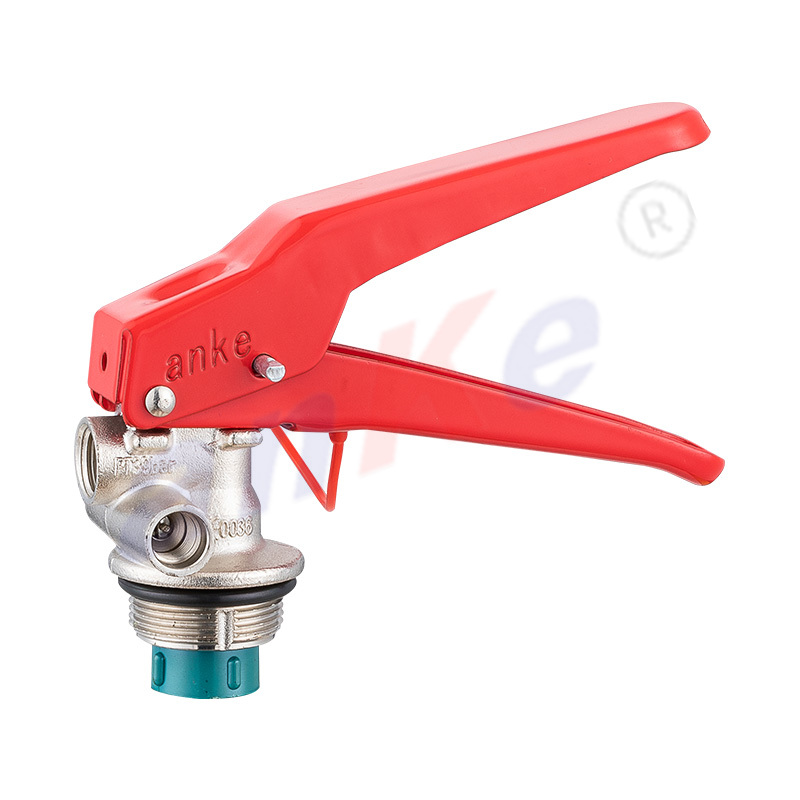 Brass Dry Powder Extinguisher Valve for 4–12 kg CylindersThis pressure-tested brass valve fits 4–12 kg dry powder cylinders with reliable sealing and an integrated gauge, essential for maintaining extinguisher readiness.View Product →
The pressure gauge is the only component that tells the operator whether the unit is ready. Diaphragm gauges are preferred in humid environments because the pressure element is isolated from the internal atmosphere, which reduces corrosion and sticking. A gauge with a stuck pointer or a cracked window effectively removes the unit from service even if the pressure is correct.
Inspection and Maintenance: Keeping Portable Extinguishers Ready Over Time
A portable extinguisher is an engineered product with a limited service life. Pressure drops, seals dry out, powder absorbs moisture, and moving parts corrode if the unit is never exercised. Regular inspection is not a formality; it is the only way to discover a hidden fault before a fire does.
| Interval | Action | Responsible party |
|---|---|---|
| Monthly | Visual check: pin and seal intact, gauge in the green zone, cylinder and hose undamaged, unit accessible and unobstructed | Owner or designated staff |
| Quarterly | Full visual inspection, verify mounting, label legibility, no corrosion, no leaking | Trained staff |
| Annual | Inspection per national standard, internal check, weigh CO2 units, verify operation | Authorized service technician |
| 5 years | Internal examination and recharge for stored-pressure dry powder and water types | Service station |
| 10 years or per regulation | Hydrostatic test of the cylinder | Certified test station |
| After any discharge | Immediate recharge or replacement; inspect valve and hose before return to service | Service station |
CO2 extinguishers are checked by weight because they have no pressure gauge. The nameplate prints the agent weight. If the measured loss exceeds 10 percent of that agent weight, the unit must be recharged. The same logic applies to a discharge test: never test a CO2 unit by squeezing the handle without verifying the weight first.
Pressure gauges deserve particular attention. The gauge must settle back to zero slowly, must stay in the green zone at normal temperature, and must not show moisture droplets inside the glass. A gauge that reads falsely can be more dangerous than no gauge, because it creates false confidence.
Operating a Portable Fire Extinguisher: Pull, Aim, Squeeze, Sweep
Memory of the operating sequence saves time under stress. The PASS technique is universal across portable extinguishers.
- Pull the safety pin and break the tamper seal. Keep the hose or horn aimed away from your body.
- Aim at the base of the fire, not at the visible flame. The agent must land on the fuel, not pass through the flame.
- Squeeze the handle smoothly. A full squeeze from the start gives the maximum discharge rate.
- Sweep from side to side, moving gradually forward until the entire burning surface is covered.
| Error | Result | Correct approach |
|---|---|---|
| Aiming at the flame | The agent heats up in the flame and extinguishes nothing; the fire re-ignites behind | Aim at the base of the fuel |
| Standing too close | Intense heat and pressure force the operator back | Start 2 to 3 m away, move in as the discharge progresses |
| Discharging a test shot too early | Wastes limited agent | Do a one-second test immediately before approaching |
| Sweeping too quickly | Leaves burning patches on the surface | Sweep slowly and systematically |
| Turning away too soon | The fire re-ignites from residual heat | Watch the area, keep the unit ready, retreat only when the fire is fully out |
A portable extinguisher is sized for incipient fires only. If the fire has grown beyond a small waste-bin size, if there is heavy smoke, or if the cylinder already shows signs of damage, evacuate immediately and close doors behind you. The legal and practical role of a handheld unit is to protect the escape route and to knock down a small fire while it is still small.
A detailed step-by-step breakdown, including what to check before discharge and how to re-use or recharge the unit, is covered in how to use a fire extinguisher correctly.
Placement, Temperature Limits, and the Physics Inside the Cylinder
Correct placement puts an extinguisher where a person can reach it while the fire is still small. International installation guidance recommends maximum travel distances of roughly 23 m for Class A hazards and 15 to 20 m for Class B hazards, and the carrying handle of a portable unit should sit no higher than about 1.5 m above the floor. The unit must be visible, unobstructed, and placed near exits so the user never has to move toward the fire to reach it.
Temperature is the factor most often ignored. Stored-pressure dry powder units generally operate from -40°C to +60°C, water and foam units from +5°C to +60°C, and CO2 units depend on the pressure rating of the valve and cylinder. Heat, direct sunlight and freezing all change the internal state of the extinguisher.
Approximate saturated vapor pressure of CO2 in a closed cylinder. At 20°C the pressure is near 57 bar; at 50°C it rises above 120 bar. These values explain why CO2 cylinders use high-pressure-rated valves and must be protected from heat sources.
The curve explains several design rules. Because CO2 pressure rises steeply with temperature, the valve must seal against high-pressure gas at both low and high temperatures, and the relief device must open at a pressure well below the burst limit of the cylinder. Storing a CO2 extinguisher next to a radiator, in a closed vehicle cabin in summer, or in direct sunlight is a real safety issue, not a guideline preference.
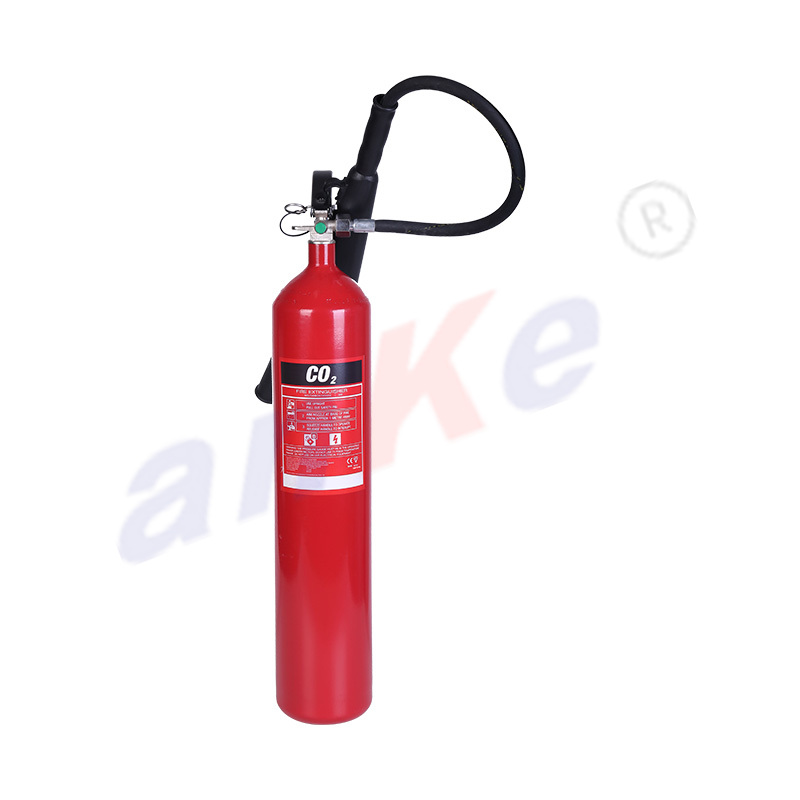 5 kg Portable CO2 Alloy Steel Fire ExtinguisherThis 5 kg CO2 extinguisher uses high-strength alloy steel to withstand high internal pressures, with corrosion-resistant finish and clear operating diagrams for safe use.View Product →
Portable CO2 extinguishers use alloy steel cylinders and valves rated for high-pressure service, precisely because the stored gas can reach severe pressure with a modest rise in ambient temperature. The same unit that holds 57 bar at 20°C may exceed 120 bar at 50°C, and the cylinder, valve and horn all have to remain safe across that range.
Common Purchasing Mistakes and How to Avoid Them
- Buying an agent that does not match the dominant fire class. A water unit in a room full of energized equipment can cause as much damage as the fire.
- Judging the value by price per kilogram of the agent. Certification, valve quality, service life and spare-parts availability determine the real cost.
- Ignoring the temperature range of the location. A water-based unit mounted in an unheated warehouse will freeze and fail.
- Buying a replacement valve or gauge that is visually similar but not designed for that cylinder thread and pressure rating.
- Choosing a unit with a painted label instead of a certified nameplate with a rating, standard reference and serial number.
- Forgetting mounting accessories. An extinguisher without a bracket tends to be stored on the floor at the back of a shelf, exactly where nobody will find it during a fire.
- Overlooking the date of manufacture and the remaining service interval. A so-called bargain unit may already be closer to its required recharge or hydrostatic test.
- Assuming that one unit can cover a large building. Distribution, travel distance and redundancy matter more than the capacity of any single cylinder.
A production facility that tests each valve and each complete cylinder pneumatically before packing can point to those records. The difference in cost between a certified unit and an unmarked one is small compared with the consequences of finding an empty gauge or a seized handle during a fire. Verify the certificate, the pressure-test record and the availability of spare parts instead of relying on a glossy catalog.
Frequently Asked Questions About Portable Fire Extinguishers
What is the service life of a portable fire extinguisher?
Most portable cylinders have a design service life between 10 and 15 years, depending on the standard and the cylinder material. The extinguisher must be recharged immediately after any discharge, inspected annually, and subjected to a hydrostatic test at the intervals defined by the local code. Reaching the service-life limit does not automatically mean the cylinder is unsafe; it means the unit should be replaced as a matter of policy.
Can one ABC extinguisher cover all fire classes?
ABC dry powder works on Class A, B and C fires, but it is not suitable for Class D (combustible metals) and is not effective on Class F (cooking oils and fats). It also leaves a corrosive residue that can damage electronics. Where electrical equipment is dominant, CO2 is a better choice; where cooking oil is the main risk, wet chemical is required.
Why does the pressure gauge show different positions in winter and summer?
The pressure inside a stored-pressure cylinder follows the gas law: in cold weather the nitrogen propellant contracts, and the gauge reading drops toward the red zone even though the agent quantity is unchanged. The gauge green zone is calibrated for a defined temperature range, usually about 20°C. If the gauge drops only during cold weather, check the manufacturer's temperature specification before recharging; if it stays low at normal temperature, the cylinder is leaking and must be serviced.
How often should a CO2 extinguisher be weighed?
CO2 units must be weighed on a regular schedule, typically every six to twelve months depending on the standard. The recharge point is reached when the measured weight loss exceeds 10 percent of the nominal agent weight stated on the nameplate. Because CO2 has no pressure gauge, weight is the only reliable indicator of charge state.
Can a fire extinguisher be recharged by the owner?
Proper recharge requires the correct agent grade, clean dry air or nitrogen, a calibrated filling station and a leak test of the valve. A unit recharged without these steps can underperform, leak or fail to open when needed. Recharging by an authorized service firm with the original manufacturer's parts keeps the certification valid.
Should private vehicles carry a portable fire extinguisher?
Many jurisdictions require extinguishers on commercial vehicles, and it is a sensible practice on private cars as well. A 1 to 2 kg ABC unit stored in the cabin, secured with a proper vehicle bracket, gives the driver the chance to act on an engine or fuel fire while it is still minimal. Engine bays are dangerous to open during a fire, so the bracket position has to allow the driver to grab the unit without leaning into the hazard.
What is the difference between stored-pressure and cartridge-operated extinguishers?
Stored-pressure units keep the propellant inside the same cylinder as the agent, and the gauge shows the pressure. Cartridge-operated units keep a small separate gas cartridge that is punctured when the valve opens; the gauge is replaced by a different operating sequence. Stored-pressure designs dominate portable extinguishers because they are easier to inspect and operate.
Does wet chemical work on ordinary Class A fires?
Wet chemical is optimized for cooking oils, but it also quenches Class A fires, and its potassium-based solution leaves a residue that prevents re-ignition. In a commercial kitchen, a wet chemical unit is the primary extinguisher for fryers, while a Class A unit may still be needed for paper, cardboard and structural finishes.
Portable Fire Extinguisher Quick Reference for Common Risk Scenarios
Use this table as a starting point, then confirm the exact model, rating and approval against local requirements.
| Scenario | Recommended unit | Typical rating reference |
|---|---|---|
| Bedroom or living room | 2 kg ABC dry powder | 13A 55B |
| Residential kitchen | 6 L wet chemical plus fire blanket | 75F |
| Garage or workshop | 4 - 6 kg ABC dry powder | 21A 89B / 27A 144B |
| Small office | 2 kg CO2 | 55B E |
| Electrical room | 5 kg CO2 | 89B E |
| Vehicle cabin | 1 - 2 kg ABC dry powder with bracket | 8A 34B |
| Retail or commercial corridor | 6 - 9 kg ABC dry powder | 27A 144B / 34A 144B |
| Marine / boat cabin | Marine-approved CO2 or ABC with marine bracket | Type-approval marking |
 Phone: +86-13456107058/+86-15967800709
 Tel: +86-574-62010128/+86-574-62010688
 E-mail:
 Factory: Huilong Village, Huangjiabu Town, YuyaoCity,Zhejiang Province, China





 Domestic Trade Manager
 Foreign Trade Manager
 VR Catalogue
