
 en
en  English
 中文简体
中文简体 Español

During a factory fire pump test at a food processing plant, the local fire marshal found that the main supply line had a standard plumbing gate valve instead of an OS&Y rising-stem valve. Because the stem position could not be seen from outside, no one could confirm whether the line was fully open. That single detail delayed commissioning until the valve was replaced. This scenario illustrates a simple but important truth: a fire fighting system is engineered, not assembled, and the valves you choose determine whether the system will operate predictably in an emergency.
So what type of valve is used in a fire fighting system? The short answer is that the right valve depends on where it is installed, what fluid or agent it controls, and which standard the system must meet. A sprinkler riser and a portable extinguisher cylinder do not use the same type of valve, and neither does a foam deluge header. This guide explains the main valve families used across modern fire protection, how to tell them apart, and how to make a selection that will stand up to inspection, maintenance, and the pressure of a real fire event.
Where Valves Fit in a Fire Fighting System
Valves are the control points of a fire protection network. They do far more than start or stop flow. In a well-designed system, valves perform several distinct jobs at the same time:
- Isolation: section valves allow parts of the system to be shut down for repair without draining the entire building.
- Flow regulation: valves maintain the correct pressure and flow rate at sprinkler heads, hose reels, and monitor nozzles.
- Backflow prevention: check valves keep contaminated or reversed water from entering the potable supply.
- Automatic release: deluge and pre-action valves open when a detection system triggers them, admitting water or foam into piping.
- Pressure relief: relief valves protect cylinders, pumps, and distribution piping from overpressure conditions.
- Manual override: valves give firefighters and occupants the ability to control water on demand.
Because the valve is often the only moving part in a normally dormant fire protection line, it also represents the most likely point of failure. Seals age, stems corrode, and internal diaphragms can stick after long periods without operation. For this reason, valve construction, material, and design are just as important as the specifications of the pump or extinguisher they serve.
| Valve Type | Main Function | Typical Location |
|---|---|---|
| Gate valve / OS&Y | Isolation with visible open/closed position | Sprinkler system main supply line |
| Butterfly valve | Flow control in larger-diameter pipes | Riser mains, pump headers, sectional control |
| Swing check valve | Backflow prevention | Pump discharge, backflow assembly, sprinkler riser |
| Deluge valve | Automatic high-volume water release | Deluge and foam systems for industrial hazards |
| Pre-action valve | Smart release to reduce water damage | Data centers, museums, archives |
| Alarm check valve | Waterflow alarm and system pressure maintenance | Wet-pipe sprinkler riser |
| Pressure reducing valve | Lower and stabilize downstream pressure | High-rise buildings, standpipe outlets |
| Ball or angle valve | On/off control at point of use | Extinguisher cylinder, hose outlet |
Primary Valve Types Used in Fire Fighting Systems
Different branches of a fire protection network demand different valve designs. The paragraphs below walk through each major type, the engineering idea behind it, and where it should or should not be used.
Gate Valves and OS&Y Valves
A gate valve uses a flat or wedge-shaped gate that slides perpendicular to the flow path. When fully open, the gate retracts completely, leaving a clear bore with minimal pressure loss. This makes the gate valve a natural choice for isolation duty on sprinkler and standpipe mains.
Fire protection engineers prefer the outside screw and yoke (OS&Y) version because the threaded stem moves outward as the valve opens. A quick glance at the protruding stem tells an inspector or firefighter whether the valve is open or closed. Ordinary gate valves without this feature hide their status behind a handwheel, and that ambiguity is considered a safety risk. International standards such as NFPA 13 and EN 12845 generally require the use of indicating-type valves for system isolation. The OS&Y valve remains the most widely recognized solution for this requirement.
As a factory that machines valve bodies from brass and alloy materials, we at Ningbo Kaituo Valve have seen the consequences of cheap gate valves in high-pressure fire lines: bent stems, stripped threads, and gate corrosion that prevents full closure. For a fire main that will sit untouched for years, the mechanical margin of a properly machined valve is directly related to long-term reliability.
Butterfly Valves
A butterfly valve uses a rotating disc set on a central shaft. Quarter-turn operation makes it compact, light, and faster to use than a multi-turn gate valve. Butterfly valves are common in large-diameter fire water mains, pump suction and discharge connections, and sectional control where space is tight.
There are two relevant subtypes. A lug-type butterfly valve has threaded inserts on both sides of the body, allowing dead-end isolation. A wafer-type valve is sandwiched between pipe flanges and cannot isolate one side independently. In fire protection, dead-end capability matters because maintenance teams often need to close off a section while the rest of the system remains pressurized.
Butterfly valves do create a small pressure drop even when open because the disc remains in the flow path. They also introduce more turbulence than a gate valve. This is rarely a problem on large mains, but it must be accounted for in hydraulic calculations. When selecting a butterfly valve, check that the disc and seat materials are compatible with the water quality, and that the valve has a clear position indicator and tamper switch provision for supervisory signalling.
Check Valves and Backflow Control
A check valve allows flow in one direction only and closes automatically when flow reverses. Fire pump discharge, sprinkler risers, foam proportioning lines, and standpipe systems all use check valves to prevent water from taking the wrong path. Without them, a fire pump could push water backward through another pump, or residual hose water could siphon contaminated fluid into the municipal supply.
The most common options are swing check, dual-disc check, and silent check valves. A swing check valve has a hinged disc that opens like a door; it offers low pressure loss but can slam when flow suddenly stops. A dual-disc check valve closes more quickly, reducing water hammer. A silent check valve uses a spring-assisted axial design that keeps the disc moving with the flow and returns it smoothly when flow ceases.
For fire fighting systems, spring-loaded or tilting-disc designs are generally preferred on pump discharge lines because they minimize slam and the associated pressure surges that can damage piping. The check valve must be installed in the correct orientation, and it must be accessible for periodic inspection and cleaning.
Deluge Valves
Deluge systems are used in high-hazard areas where the entire protected zone must receive water simultaneously. Crash below, a deluge valve is held closed by system pressure acting on a diaphragm or clapper. When a fire detection network activates, the valve releases, pressurizes the piping, and water flows through all open nozzles or sprinklers at once.
The valve itself can be hydraulic, pneumatic, or electric release depending on how the detection signal reaches it. A hydraulically released deluge valve uses a small pilot valve that dumps pressure from the diaphragm chamber. An electrically released valve uses a solenoid actuated by a fire alarm control panel. Pneumatic release is often used in hazardous zones where electrical signals could be unsafe.
Because the deluge valve sits dormant for long periods, internal sealing and corrosion resistance are critical. The valve should be sized correctly for the flow demand of the system, and it must allow testing without actually flooding the protected area. Many modern deluge valves are designed with trimmable bypass lines for functional testing.
For specifiers looking for a dedicated line of deluge hardware, our deluge valve systems page covers the complete assembly including the main valve body, trim, pilot solenoids, and pressure gauges.
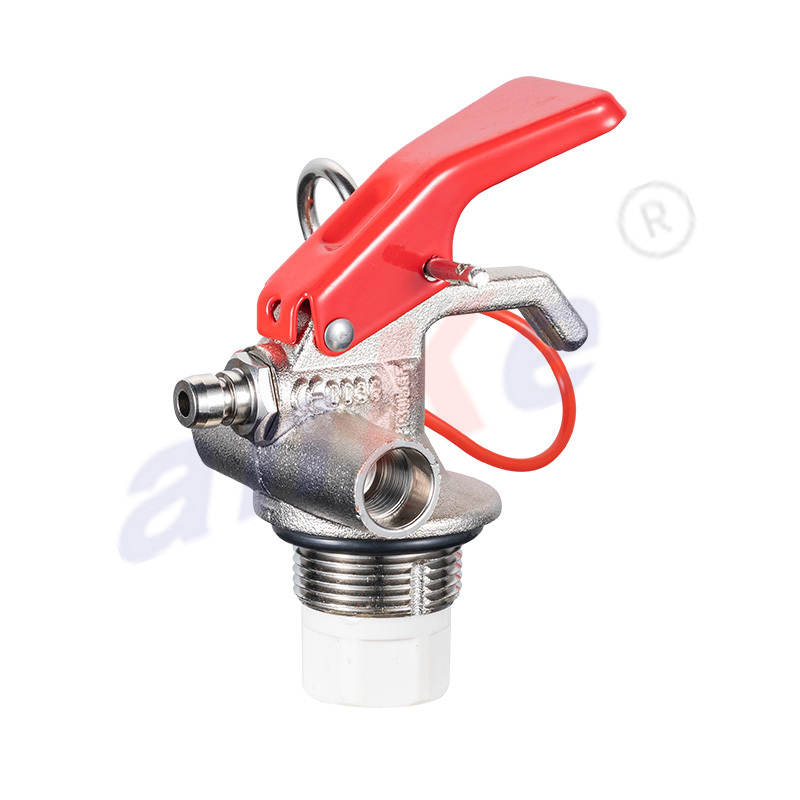
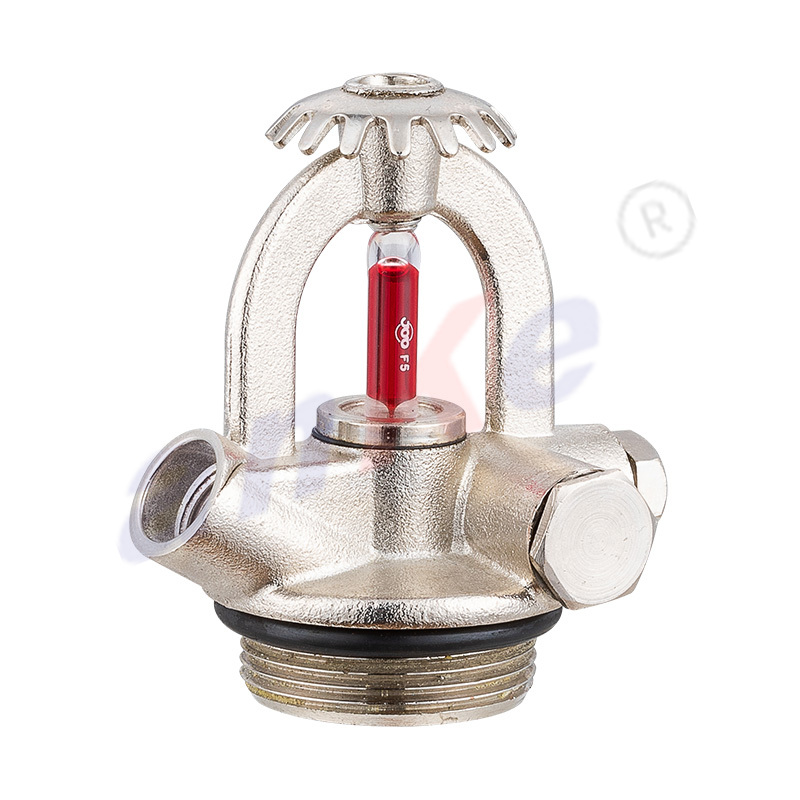 Automatic Fire Extinguisher Valve 3024 with M30x1.5 ThreadMade from durable copper alloy with optional chrome or nickel plating, this valve is designed for automatic extinguishers. Its standard M30X1.5 bottle thread ensures reliable sealing and smooth agent flow for dependable fire suppression.View Product →
Pre-action Valves
A pre-action system adds a second layer of protection against water damage. The sprinkler piping remains dry until both a detection event and at least one sprinkler fuse occur. This makes pre-action systems popular in data centers, libraries, cold storage, and museum storage rooms where accidental discharge is unacceptable.
The pre-action valve is a specialized control valve that works in conjunction with a release panel. In a single-interlock arrangement, the valve opens when detection operates, filling the pipe with water, but water does not flow until a sprinkler head in the area also bursts. In a double-interlock system, both detection and a sprinkler operation must be confirmed before water enters the piping. The latter provides even higher security because the system stays dry if a sprinkler pipe is mechanically damaged without a fire.
Pre-action valves demand rigorous inspection routines. The valve trim includes solenoid valves, pressure switches, and air maintenance devices, and all of these need to be tested on a schedule that satisfies the local authority. Selection should consider whether the system is expected to remain dry for long periods, whether the building is heated, and whether the fire alarm design will provide the required release signals.
Alarm Check Valves and Wet-Pipe Riser Valves
In a wet-pipe sprinkler system, the alarm check valve is the heart of the riser. It maintains water pressure in the sprinkler piping while allowing a controlled passage of water to a mechanical or electric alarm when flow occurs. Internally, the valve contains a clapper held closed by spring force and system water pressure. When a sprinkler head opens, the drop in pressure lifts the clapper, and water flows to the system. At the same time, a small port lets water enter the alarm line, driving a mechanical water motor gong or activating a pressure switch.
Alarm check valves are not used on dry-pipe systems, because there is no water column to operate the alarm mechanism. In those systems, a dry pipe valve releases air pressure first, and a differential valve arrangement admits water once the air pressure falls below a threshold.
When choosing an alarm check valve, look for a body with generous flow area, a maintenance-friendly clapper assembly, and a trim kit with test connections. The manufacturer should provide clear instructions for adjusting the alarm retard chamber to avoid false alarms caused by pressure surges.
Pressure Reducing Valves
Tall buildings create a hydraulic challenge: the pressure at the base of a standpipe can exceed the safe operating pressure for hose valves and sprinklers on the upper floors. Pressure reducing valves (PRVs) are installed to limit downstream pressure to a set value regardless of inlet pressure changes. They are also used at fire department connections and at the discharge of fire pumps where overpressure could damage equipment.
There are two main architectures. A direct-acting PRV uses a spring-loaded diaphragm to regulate pressure, and it works well for moderate flow and stable inlet conditions. A pilot-operated PRV is more accurate over a wide range of flows and is the preferred choice for fire protection mains.
Pressure reducing valves for fire systems must be listed for the duty, and they require periodic verification that the outlet pressure remains within the design range. Because a stuck PRV can starve a fire fighting system, modern designs include safeguards such as bypass lines, monitoring switches, and multiple valves in parallel.
Ball Valves and Angle Valves for Extinguishers
At the device level, a portable fire extinguisher uses a valve that is compact, reliable, and easy to operate under adrenaline stress. Dry powder and water extinguishers typically use a squeeze-grip valve, where pressing a lever lifts a valve stem and allows the propellant gas to push agent through the siphon tube. Carbon dioxide extinguishers use a similar lever-operated valve that releases high-pressure gas through a horn assembly.
Angle valves are also common in some extinguisher types, particularly larger wheeled units and CO2 extinguishers. The angled body directs the discharge path efficiently and keeps the operating handle in a natural position. Material selection is important because the valve must hold the cylinder pressure for years without leaking. Brass bodies are standard for dry powder and CO2 applications, while stainless steel is used where corrosion resistance or compatibility with certain agents is required.
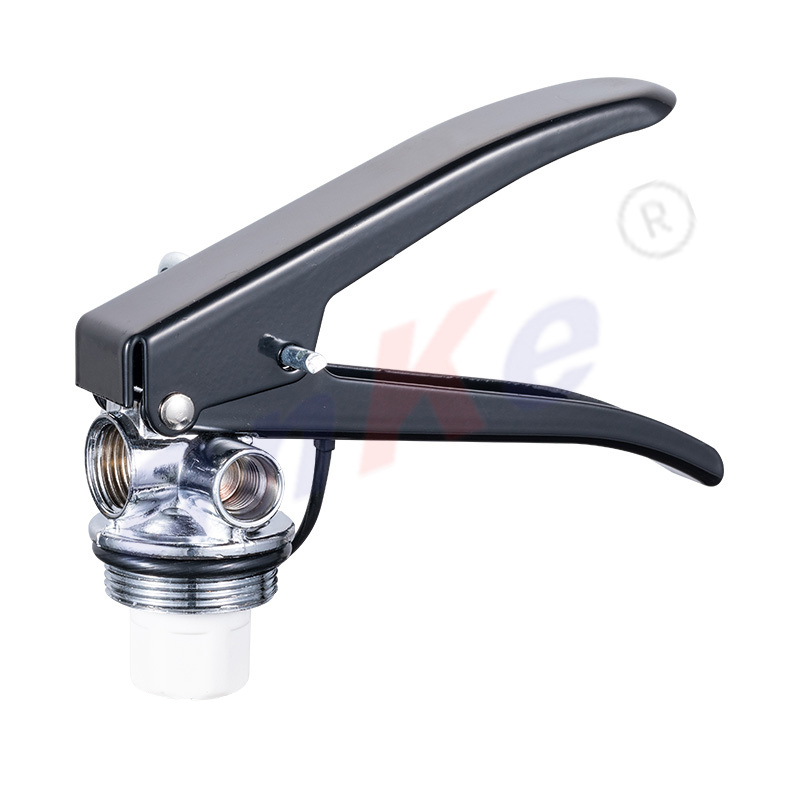
Choosing the right extinguisher valve starts with matching the valve body and thread form to the cylinder neck, then verifying the operating pressure range and the design of the safety relief mechanism. Our fire extinguisher valves range includes models for 1 kg to 12 kg cylinders, and the squeeze-pinch valve category shows how handle geometry changes the level of effort required to discharge the unit. The product highlighted below is a representative 4-12 kg powder extinguisher valve that demonstrates the typical body construction.
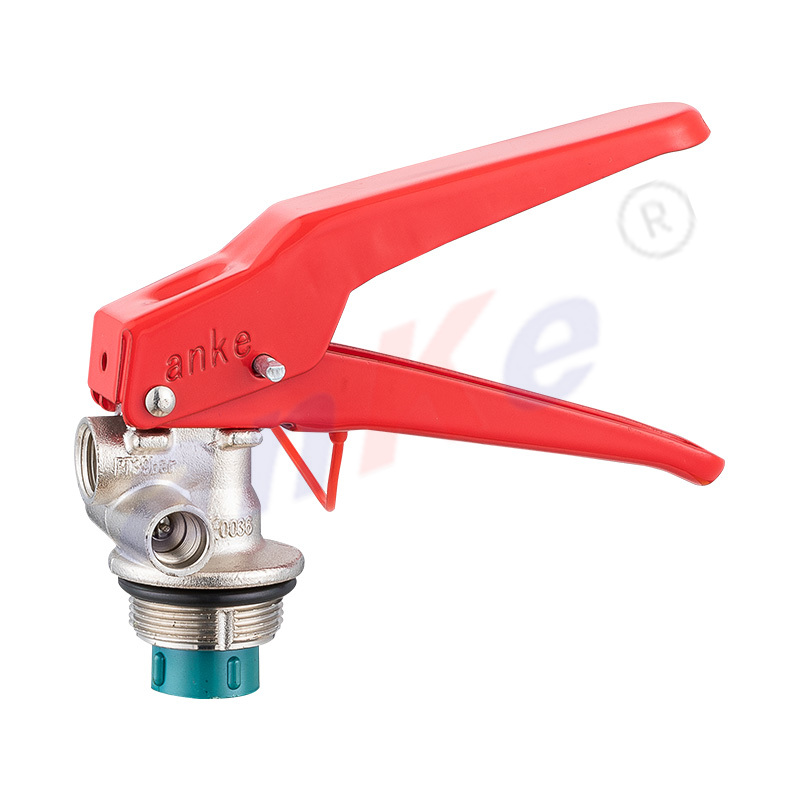 4-12KG Dry Powder Fire Extinguisher Valve 1001 Brass ConstructionThis brass valve is built for 4-12kg dry powder extinguishers. It includes eight components that hold pressure and discharge on demand, featuring a hand-operated grip, safety pin tamper seal, and spring-return stem.View Product →
CO2 Cylinder Valves and High-Pressure Valves
Carbon dioxide extinguishing systems use cylinder valves designed for very high storage pressure, often 54 to 60 bar in ambient temperature. These valves must seal the cylinder hermetically, allow rapid discharge when operated, and vent safely in the event of overpressure. The internal structure includes a poppet or disc held by a spring-loaded mechanism, an actuating piston or lever, and a safety burst disc integrated into the body.
CO2 cylinder valves are different from powder or foam valves because the high-pressure gas requires tighter dimensional tolerances and better seals. The valve body is usually machined from solid brass or stainless steel, with a PTFE or equivalent seat that resists both cold temperature and chemical attack. Because CO2 is stored as a liquid above 31°C, valves for warm climates may also include a liquid dip tube to ensure that gas, not liquid, is expelled through the horn.
Selecting a CO2 fire extinguisher valve means looking at the cylinder specification first. Inlet thread, valve outlet connection, discharge coefficient, and burst pressure all need to match the cylinder design and the expected fire risk. A well-built CO2 valve also makes routine weight checks easier, because the valve handle and discharge assembly do not create false leakage paths.
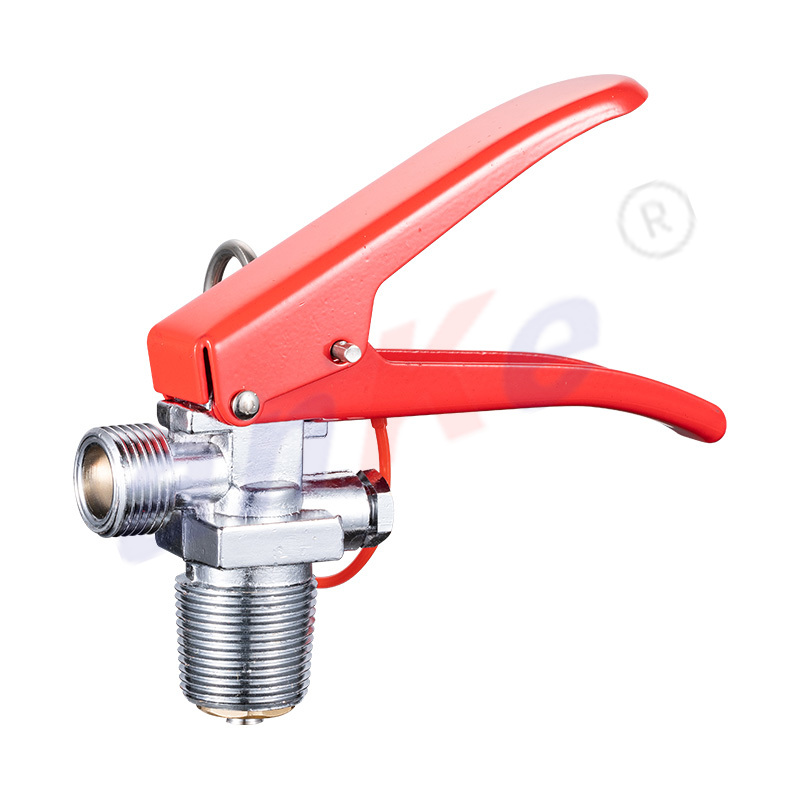 2-7KG CO2 Fire Extinguisher Red Handle Valve 2061A high-quality CO2 valve with red handle for 2-7kg cylinders. It features 25E/PZ28.8 inlet and W21.8-14 outlet threads, plus an M10*1 dip tube thread for consistent discharge at any tilt angle, suitable for electrical and oil fires.View Product →
How to Match Valves to Fire Fighting System Applications
The correct answer often depends less on the valve itself and more on the hazard it protects. Use the following application cards as a quick reference when defining a project. Each card lists the recommended valve set and the design rationale behind it.
Office and Business Buildings
Hazard level: ordinary. Wet-pipe sprinkler systems are the norm because ambient temperatures remain above freezing. Specify an OS&Y gate valve for the main isolation, an alarm check valve on the riser, and a check valve at the pump discharge. Butterfly valves are acceptable for zone control where space is limited.
Industrial Plants and Warehouses
Hazard level: high. Deluge or pre-action systems are common for flammable liquid storage, aerosol warehouses, and high racking. The deluge valve should have a fast electric or pneumatic release, and the control valve set should include strainers and pressure gauges that allow weekly testing. In plastic storage areas, specify K-factor and water density carefully.
Data Centers and Electrical Rooms
Hazard level: high potential for water damage. Use double-interlock pre-action valves with air supervision and electric release. The valve manifold should include a solenoid valve, pressure switches, and a backup manual release. Alert staff and clear signage are essential because a pre-action system requires people to know what to expect when the alarm operates.
Marine and Offshore Oil & Gas Facilities
Hazard level: extreme. Valves must resist saltwater corrosion and operate under ship motion. Stainless steel or nickel-aluminum-bronze bodies are common, and check valves should be swing or tilting-disc type with corrosion-resistant trim. Deluge valves on offshore platforms are typically explosion-proof, and the entire valve train must be compatible with the platform's fire and gas detection logic.
Commercial Kitchens and Restaurants
Hazard level: cooking oil fires. Wet chemical systems use a specialized extinguishing agent, and the system valve is usually part of a pre-engineered package. The valve must actuate quickly to release the wet chemical, and it must have a mechanical manual release as a backup. Although the valve is a small component, its reliability determines whether the whole system operates in a grease fire.
High-Rise Standpipes
Hazard level: varying by floor. Pressure reducing valves are required where static pressure exceeds the maximum allowed at a hose valve connection. Use pilot-operated, listed PRVs and install them so they can be isolated and tested without draining the entire riser. Each floor connection should also have a check valve to prevent backflow from a fire department pumper.
Selecting the Right Materials for Fire Fighting Valves
Material selection is where the economic pressure of a construction budget often pushes back against the long-term performance of a fire protection system. The right material must resist corrosion, survive mechanical stress, and remain serviceable for decades.
Brass and Copper Alloys
Brass is the workhorse material for extinguisher valves, alarm check valve trim, and small-diameter fittings. It machines easily, resists dezincification in most fresh water supplies, and provides a reliable sealing surface. For CO2 service, brass is chosen because it can withstand the pressure without galling on the threaded connections. The main limitation of brass is that it is not suitable for aggressive soils or seawater; in those environments, the surface may suffer pitting.
Stainless Steel
Stainless steel is used where corrosion resistance or compatibility with special extinguishing agents is required. Stainless valves appear in marine extinguishers, high-end CO2 systems, and in piping systems that handle foam concentrate or other chemically active agents. The higher material cost and machining effort are justified when the installation is exposed to humidity, chemical fumes, or salt.
Ductile Iron and Carbon Steel
Large main system valves are often cast in ductile iron, with a fusion-bonded epoxy coating that resists corrosion inside the water column. Ductile iron delivers high strength and can be configured as a gate valve or butterfly valve in 4 inch to 12 inch or larger sizes. Carbon steel is used when the valve must be welded into a piping system, though flanged and grooved connections are far more common in fire protection because they simplify maintenance.
Elastomers and Sealing Materials
Valve seats and O-rings are typically NBR (nitrile), EPDM, Viton, or PTFE. NBR is a general-purpose elastomer for water and dry chemical service. EPDM performs well in ozonated water and many dilute chemicals but is not compatible with hydrocarbons. Viton is specified for higher temperatures and aggressive fluids. PTFE offers broad chemical compatibility and low friction, making it the default choice for CO2 valve seats. The elastomer specification should always be checked against the fire fighting medium used on site.
| Application | Recommended Material | Reason |
|---|---|---|
| Portable extinguisher valve (powder/water) | Brass body, aluminum handle or brass handle | Machinability, cost efficiency, reliable sealing |
| CO2 extinguisher valve | Brass or stainless steel body, PTFE seat | High pressure resistance, gas tightness, corrosion control |
| Main sprinkler isolation valve (indoor) | Ductile iron with epoxy coating | Strength, corrosion resistance, listing compliance |
| Marine or saltwater environment | Stainless steel or nickel bronze | Resistance to chloride pitting and crevice corrosion |
| Deluge valve body | Cast iron or ductile iron, epoxy lined | Large flow path, pressure rating, cost efficient in large sizes |
Standards, Test Requirements, and Approval Marks
The question of which valve type is acceptable in a fire fighting system is largely controlled by standards. A valve may perform perfectly in your test bench, but if it lacks the required listing, an authority having jurisdiction will not approve the installation.
- NFPA 13: standard for the installation of sprinkler systems. It specifies the types of control valves, their locations, and the requirement for position indication.
- NFPA 20: standard for the installation of stationary pumps. It governs valves on the pump suction, discharge, and bypass lines.
- NFPA 25: standard for the inspection, testing, and maintenance of water-based fire protection systems. It defines valve inspection frequencies.
- EN 12845: the European standard for automatic sprinkler systems. It contains specific requirements for valve types and pressure ratings.
- FM Global and UL: third-party approval schemes for valves used in sprinkler systems. They require verification of flow capacity, pressure rating, and fire exposure.
- CE and ISO: product conformity marks that may be required depending on the destination market.
For a factory supplying valves internationally, the practical challenge is that each target market has its own acceptance framework. A valve approved to UL/FM is generally accepted in North America and many Asian projects, while EN 12845 is more relevant in Europe, the Middle East, and some Commonwealth countries. It is common for a manufacturer to maintain multiple variants of the same valve to meet these certification differences.
When reviewing a valve datasheet, do not stop at the pressure rating. Check the temperature range, the flow coefficient (Cv), the end connection standard, and the evidence of third-party testing. The certificate number and the approved body should be stated on the product nameplate, not just in the brochure.
Sizing, Flow Capacity, and Pressure Considerations
A valve can be the right type but the wrong size. Hydraulic performance in a fire fighting system is governed by the relationship between flow rate, pressure loss, and the system demand.
The flow coefficient, or Cv, indicates how many US gallons per minute flow through the valve at a pressure drop of one psi. A higher Cv means less restriction for a given flow. For a sprinkler system main, the acceptable friction loss through a fully open gate or butterfly valve is generally low, but it still contributes to the overall hydraulic calculation. On a fire pump discharge, oversized check valves and butterfly valves help keep friction loss within the pump performance window.
Water hammer is another sizing consideration. When a check valve closes quickly, the momentum of the water column creates a pressure surge that can rupture piping or damage pump components. The critical variable is the length of the piping between the pump and the check valve. A longer run allows more energy to accumulate. Silent check valves and controlled-closing check valves reduce the surge by allowing the disc to seat gradually. For long pumping runs, a surge analysis should include valve response time as an input.
Pressure ratings of valves used in fire fighting systems should exceed the maximum static and surge pressure in the system. A typical wet sprinkler system is designed to 175 psi, so valves are rated to 175 or 250 psi. High-rise systems with pressure reducing valves can see pressures above 500 psi at the pump, so the pump discharge check valve must be selected for that extreme condition.
Common Valve Selection Mistakes
Years of factory experience and commissioning reports reveal the same selection errors again and again. Avoiding these mistakes saves time, money, and safety approvals.
Installing Non-Listing Valves on Fire Mains
The most common error is using a standard plumbing ball valve or inexpensive gate valve on a fire sprinkler main. The valve may hold water, but it lacks an indicating mechanism and has not been listed for fire protection duty. This is a code violation that will be flagged at inspection.
Choosing Wafer-Type Butterfly Valves for Dead-End Isolation
A wafer butterfly valve cannot isolate one side of the pipe for maintenance. When a section is closed, the downstream line cannot be drained safely because the valve will not hold against an empty pipe. Use a lug-type or a valve with a flanged face that provides dead-end capability.
Orientating Check Valves Incorrectly
Check valves must be installed with the flow arrow matching the actual flow direction. A spring-loaded check valve installed backward prevents flow entirely, stopping the fire pump discharge even during a test. An induced flow arrow may be ambiguous, so always confirm against the system design drawing.
Overlooking Environmental Temperature
Dry pipe systems rely on air pressure to hold back water. If the dry pipe valve room is unheated and the ambient temperature can drop, the air supply must be dried to prevent frost formation. The valve itself should be of a design rated for the lowest expected temperature.
Using Valves Without Position Feedback
Supervisory switches on gate and butterfly valves send a signal to the fire alarm panel when the valve is less than fully open. Many building owners skip this feature on smaller systems to reduce cost, but then no one knows when a valve has been left partly closed after maintenance. The requirement for valve supervision increases with the risk level of the occupancy.
Neglecting Strainers on Deluge and Pre-Action Systems
Deluge valves have small internal orifices that can be blocked by debris from the water main. A strainer on the upstream side of the valve is not optional; it must be included and cleaned on the same schedule as the valve trim test.
Installation, Inspection, and Maintenance Workflow
Even the most robust valve will fail prematurely if it is not installed and maintained properly. Below is a simplified workflow that reflects common requirements for water-based systems.
- Pre-installation: Verify the valve model, end connections, and pressure class against the approved submittal. Check that the valve body and trim have not been damaged in transit.
- Flush the line: Before installing the valve, flush the piping to remove dirt and scale. Debris is the primary cause of leaking seats and stuck pressure relief devices.
- Position correctly: Install the valve in the orientation shown on the manufacturer's drawing. Some valves are sensitive to orientation; a swing check valve may not close properly if mounted vertically without a hinged disc designed for vertical flow.
- Support the valve: Heavy valves must be supported independently of the adjacent piping. Adjacent pipe stress can distort the valve body and cause leakage.
- Torque the bolts properly: Over-tightening flange bolts can deform the valve body and damage the seat; uneven tightening can cause external leakage.
Inspection schedules are typically defined in NFPA 25 or the local code equivalent. Gate and butterfly valves should be operated through their full travel at least annually, and weekly on critical valves in high-occupancy buildings. Check valves should be tested on a schedule that verifies the clapper moves freely. Deluge valves are typically tested weekly in hazardous industrial sites, with a full-flow functional test performed at least quarterly. Pressure reducing valves must be checked annually with a calibrated gauge to confirm that outlet pressure remains within tolerance.
Why a Valve Manufacturer's Engineering Support Matters
When you buy a fire fighting valve, you are buying a piece of safety engineering. A manufacturer with real production experience can help in ways that a general trading listing cannot. First, the factory can adapt the valve to the exact cylinder neck dimensions, thread form, and pressure class required by your extinguisher design. Second, a factory can supply the correct elastomer and seat material for the specific fire fighting agent, whether that is ABC dry powder, CO2, foam, or wet chemical. Third, the manufacturer is the best source of technical advice about torque specifications, pressure testing procedures, and field troubleshooting.
At Ningbo Kaituo Valve Co., Ltd., we manufacture fire valves, extinguisher valves, sprinkler components, and the associated trim parts from our own factory in Ningbo. Our production program includes aluminum, brass, copper, and stainless steel valves used across the fire protection industry. Because we control the machining and assembly process, we can provide documentation, dimensional reports, and pressure test records for each batch. We also produce complete extinguishers and hoses, which gives us a practical understanding of how a valve behaves on the end device, not just on a test bench.
When evaluating a supplier, ask for evidence of production capability. Look for factory inspection equipment, certifications, and the willingness to answer technical questions about your specific installation. A factory that hides behind a generic catalog should be treated with caution, because in a real fire emergency, the valve is the component that must work on the first attempt.
Frequently Asked Questions
What type of valve is used in a fire fighting system to isolate the main water supply?
An OS&Y gate valve is the most common answer. It provides a rising stem that clearly indicates whether the valve is open or closed, and it offers low pressure loss in the fully open position. Some installations also accept listed butterfly valves with a supervisory switch.
Can I use a normal ball valve on a sprinkler system main?
Not as a primary control valve. Ball valves lack a visual indicating feature and are rarely listed for fire protection duty. They are acceptable only on small branch lines where the code permits a ball valve as an isolation means, and they must be accessible.
What is the difference between a deluge valve and a pre-action valve?
A deluge valve releases water into empty piping when a detection signal is received, so all sprinklers are open and discharge water simultaneously. A pre-action valve holds water until both detection and a sprinkler head release occur, preventing accidental water damage.
Do all fire pumps need a check valve on the discharge line?
Yes. A check valve prevents water from flowing backward through the pump when the pump is not running. It is required by NFPA 20 and most other pump installation standards. The check valve should be located close to the pump discharge and sized to minimize pressure loss.
How often should fire system valves be inspected?
NFPA 25 recommends that control valves be checked weekly for position and annual operation, while check valves are typically tested on a five-year cycle for internal condition. Deluge and pre-action valves often have more frequent test requirements because they contain moving parts that can seize.
What valve material is best for a marine fire fighting system?
Stainless steel or nickel-aluminum-bronze is preferred because these materials resist saltwater corrosion. Brass and cast iron are more vulnerable to chloride attack. The valve seat material should also be compatible with the marine environment, with Viton or PTFE being common choices.
Why does a CO2 extinguisher need a special valve?
CO2 is stored as a liquefied gas under high pressure. The valve must seal the cylinder completely to prevent slow gas escape, release quickly when operated, and include a burst disc to vent overpressure. A standard powder valve cannot handle the pressure and sealing requirements of CO2 service.
Should the valve be opened fully or partially for fire fighting flow?
Gate and butterfly valves used for system isolation should be opened fully. Operating at a partially open position increases turbulence, vibrations, and erosion, and for a fire main it reduces the flow capacity exactly when maximum flow is needed.
Conclusion
The most reliable way to answer the question of what type of valve is used in a fire fighting system is to start with the system architecture, not with the valve. Identify the service: wet sprinkler, dry pipe, pre-action, deluge, standpipe, or extinguisher cylinder. Then select the valve family that meets the code requirement and the functional need. Add the correct material, sizing, and third-party approvals, and you have a specification that will survive an inspection and respond when it matters.
Valves are not the most expensive component in a fire protection system, but they are the component most likely to be ignored until the day they have to act. Spending a little more time on valve selection is a direct investment in system reliability. Work with a manufacturer that can demonstrate production experience, certification compliance, and a genuine understanding of how each valve interacts with the rest of the system.
If you are developing a new fire extinguisher model, replacing a problematic valve, or planning a fixed suppression system that needs a dependable valve source, contact the engineering team at Ningbo Kaituo Valve. We supply fire valves to customers worldwide, with production experience spanning extinguisher valves, CO2 cylinder valves, deluge and pre-action system components, and related fire protection hardware.

 Phone: +86-13456107058/+86-15967800709
 Tel: +86-574-62010128/+86-574-62010688
 E-mail:
  Factory: Huilong Village, Huangjiabu Town, YuyaoCity,Zhejiang Province, China





 Domestic Trade Manager
 Foreign Trade Manager
 VR Catalogue
