
 en
en  English
 中文简体
中文简体 Español

Yes, fire extinguishers are equipped with release valves. This is not an accessory or an optional feature — it is a fundamental part of the extinguisher's design. The release valve keeps the extinguishing agent sealed inside the cylinder when the unit is idle, and it opens in a controlled way when the operator activates the handle, lever, or wheel. Without a properly designed release valve, a fire extinguisher would be unsafe to fill, difficult to operate, and impossible to certify against modern safety standards.
Whether you are a fire safety officer, an equipment distributor, a maintenance technician, or a plant engineer responsible for production line supply, the practical question is not just whether extinguishers have release valves. The more useful question is how those valves are designed, how they behave under pressure, and what you need to check before you install, refill, or replace one. This article answers those questions from a manufacturer's point of view.
What Does a Release Valve Actually Do in a Fire Extinguisher?
A release valve in a fire extinguisher is a pressure-containing component mounted at the top of the cylinder. In most portable extinguishers, the valve assembly performs four functions at the same time:
- It seals the internal pressure so the extinguishing agent does not leak or evaporate.
- It provides a controlled opening for the agent to leave the cylinder when actuated.
- It connects the operating mechanism — handle, lever, squeeze grip, or handwheel — to the internal valve stem.
- It protects the cylinder against overpressure through a built-in safety release path or a separate relief component.
The word "release" is used in two different senses in the industry. The first sense is operational: the operator releases the agent by pressing the handle or turning the wheel. The second sense is protective: a safety release device opens automatically if the internal pressure becomes dangerously high. Both functions exist on commercial fire extinguishers, but they are not always the same physical component.
If you look at the range of fire extinguisher valves, you will notice that each valve body is designed for a specific extinguisher size, agent type, and pressure range. A valve for a 1 kg dry powder extinguisher is not the same as a high-pressure CO2 valve, even though both are release valves in the broadest sense.
Main Types of Release Valves Found on Fire Extinguishers
Fire extinguisher manufacturers use several valve architectures depending on the extinguishing agent, the cylinder pressure, and the regional certification standard. The most common release valve types are described below.
Direct-Action Lever Valves
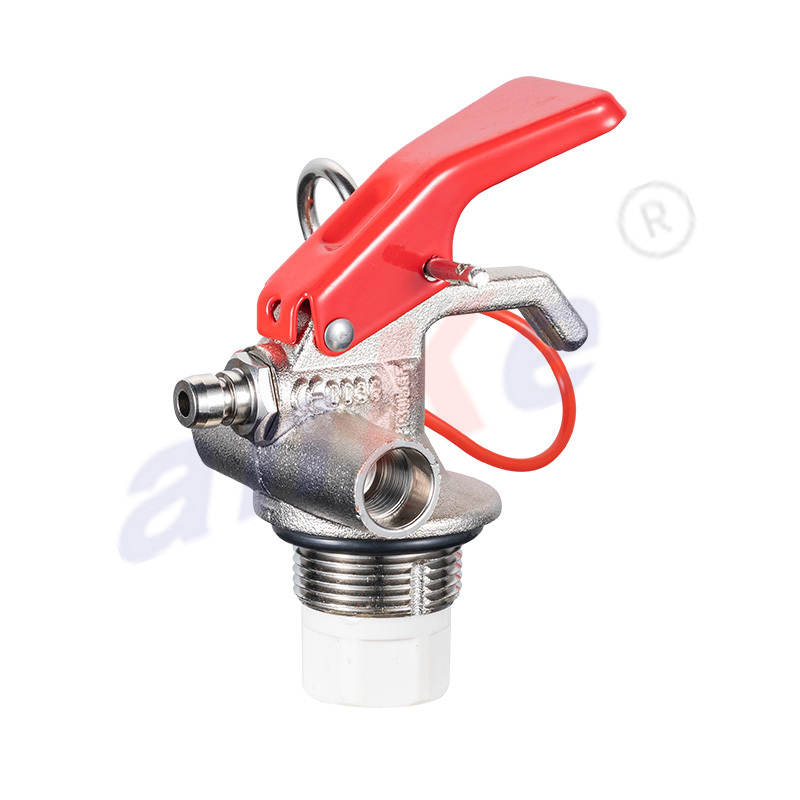
Direct-action lever valves are common on dry chemical, water, and foam extinguishers. The operator pulls the safety pin and squeezes the handle. This action rotates the valve stem, lifts the internal plunger, and opens the discharge passage. When the handle is released, a return spring closes the valve and stops the flow. These valves are simple, predictable, and easy to operate even while wearing firefighting gloves.
Squeeze-Grip and Pinch Valves
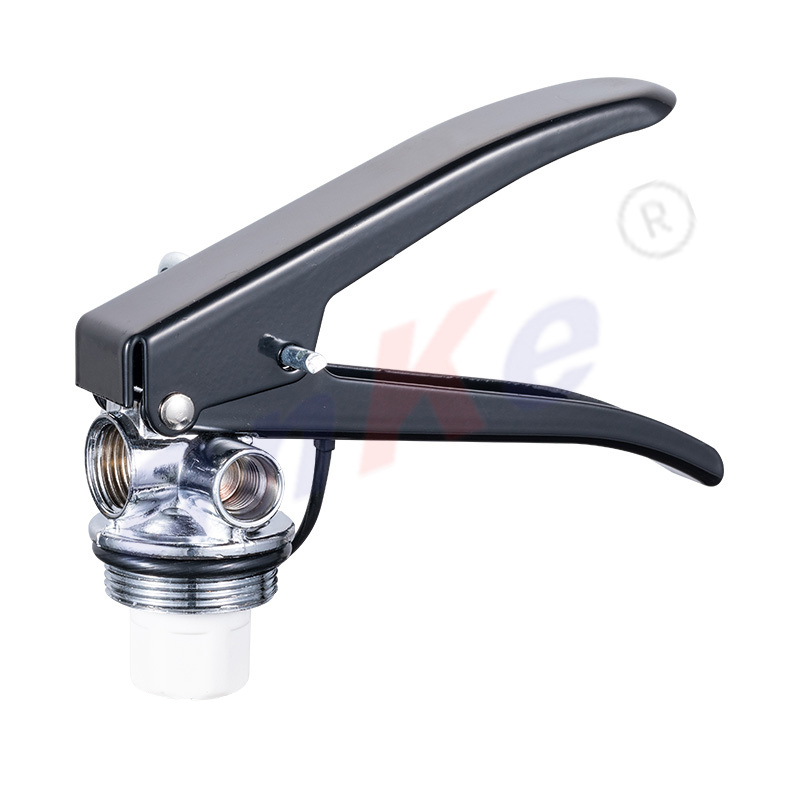
Squeeze-grip valves use a curved handle that presses down on a spring-loaded valve stem. This design is widely used on 1 kg to 12 kg stored-pressure extinguishers. The pinch mechanism gives a natural one-hand operation and is the standard on most ABC dry powder units exported from our factory. The internal components include an anti-rotation pin, pressure gauge port, and siphon tube connection.
Handwheel Valves for CO2 Extinguishers
CO2 extinguishers hold much higher internal pressure — around 5.7 MPa at 21°C, compared with 1.2 to 1.4 MPa for dry powder units. For this reason, CO2 cylinders are fitted with heavy-duty valves that use a handwheel or a lever-operated spindle to open a high-pressure seal. The valve must handle extreme discharge temperatures and rapid gas expansion without freezing or losing seal integrity.
Cartridge-Operated Release Valves
Cartridge-operated extinguishers store the expelling gas in a separate small cartridge inside the cylinder. When the operator pierces the cartridge, gas flows into the main body and pushes the agent out. The release valve in this case often includes a piercing mechanism and a separate discharge valve. This design is used for some industrial dry powder units where long shelf life and low internal pressure are desired.
Automatic Release Valves for Suspended Extinguishers
Suspended automatic extinguishers are used above cooking equipment, electrical panels, or other hazard areas. These units have a release valve that opens automatically when a heat-sensitive glass bulb bursts or a fusible link melts. The valve must react quickly but remain leak-tight for years without maintenance. Our production line also supplies suspended automatic valves for powder and clean-agent systems.
| Valve style | Typical extinguisher type | Actuation method | Pressure class |
|---|---|---|---|
| Direct-action lever | Dry powder, water, foam | Handle / lever | Stored pressure up to 1.5 MPa |
| Squeeze-grip pinch | 1–12 kg stored-pressure units | Squeeze handle | Stored pressure |
| Handwheel spindle | CO2 extinguishers | Handwheel or lever | High pressure, 5.7 MPa class |
| Cartridge piercing | Cartridge dry powder units | Puncture cartridge | Gas cartridge |
| Automatic bulb / link | Suspended extinguishers | Heat response | Low / medium pressure |
How Release Configurations Differ by Extinguisher Type
Every type of fire extinguisher has a slightly different release path. The general principle is the same — the valve opens, the agent moves up through a siphon tube, and it exits through the nozzle or horn. But the mechanical details are specific to the agent and the applications.
Dry Chemical and Powder Extinguishers
In a stored-pressure ABC dry powder extinguisher, the release valve sits on top of the cylinder and connects to a siphon tube that extends to the bottom. When the lever is squeezed, the valve stem lifts, allowing nitrogen or air pressure to push the powder up through the siphon tube and out through the hose and nozzle. The valve also contains a pressure gauge port so that the internal pressure can be checked at a glance. The same architecture applies to 1 kg, 2 kg, 3 kg, 4 kg, 6 kg, and 9 kg portable units.
Water and Foam Extinguishers
Water and foam extinguishers use similar release valves to dry powder units, but the internal seal design differs. Water-based agents require seals that remain stable in contact with moisture and foam concentrate. The valve body may include an anti-siphon device or a flow stabilizer for consistent discharge. Foam units are often more sensitive to seal quality because the agent can dry out and form deposits around the valve stem.
CO2 Fire Extinguishers
CO2 extinguishers have a completely different release system. Because CO2 is stored as a liquid under high pressure, the valve must resist much higher loads. The valve connects to a dip tube that feeds liquid CO2 to the discharge horn. When the valve opens, the liquid CO2 flashes into gas and expands rapidly. The resulting cold discharge creates a distinctive snow-like cloud. This process puts severe thermal and mechanical stress on the release mechanism.
CO2 valves are usually made from brass or stainless steel, and they may include a safety burst disc to protect the cylinder. The discharge horn assembly is connected to the valve through a high-pressure hose. If you work with portable CO2 units, you should always check that the valve specification matches the cylinder capacity — a 2 kg valve is not interchangeable with a 5 kg valve without reviewing the pressure and thread dimensions.
Trolley and Large-Capacity Extinguishers
Trolley-mounted extinguishers from 25 kg to 100 kg use bigger valves with larger flow passages and sturdier handles. In these units, the release valve may have a piston or balanced seal design so that the operator does not need excessive force to open the valve under full pressure. Our factory produces trolley valves for dry powder, water, foam, and CO2 systems, with copper, brass, and stainless steel body options.
Suspended Automatic Units
Suspended extinguishers installed over commercial cooking equipment or industrial machinery use a release mechanism triggered by heat. The sensitive bulb holds the valve closed under spring force. When the ambient temperature reaches the rated value, the bulb breaks and the valve opens automatically. This type of valve must be tested for both temperature response and long-term seal stability.
| Extinguisher type | Release path | Critical internal components |
|---|---|---|
| Dry powder | Lever → stem → siphon tube → nozzle | Pressure gauge port, anti-rotation pin |
| Water / foam | Lever → stem → siphon tube → hose | Water-compatible seals, flow stabilizer |
| CO2 | Handwheel → spindle → high-pressure seal → horn | Burst disc, high-pressure O-rings, hose connection |
| Trolley / large capacity | Handle → piston or balanced valve → delivery hose | Heavy-duty spring, large bore |
| Suspended automatic | Heat bulb → release lever → free flow | Glass bulb, spring-loaded pintle |
Pressure-Relief Function and Safety Release Devices
A fire extinguisher is a pressure vessel, and like all pressure vessels, it must have a way to relieve excess pressure. This is where many people become confused about the term "release valve". There is a clear distinction between the operating release and the overpressure safety release.
Every commercial fire extinguisher is designed with a safety release mechanism. The most common designs are:
- A spring-loaded safety valve that opens at a preset pressure;
- A burst disc or rupture disc that fractures at the rated pressure;
- A fusible plug that melts at a specific temperature; and
- For CO2 cylinders, a combination of burst disc and relief valve.
The safety release is separate from the operator-controlled release path. Its job is to protect the cylinder from rupture during exposure to high temperatures, such as a building fire in the storage area. If the internal pressure rises beyond the safe limit, the relief device activates and vents the agent, preventing the cylinder from exploding.
The pressure values matter. For a standard stored-pressure dry powder extinguisher, the normal internal pressure at 20°C is usually around 1.2 to 1.5 MPa. When the cylinder is exposed to severe heat, the pressure increases with temperature. The hydrostatic test pressure for such cylinders is typically 2.1 MPa or higher, depending on the standard. The safety relief is set so that it opens below the point where the cylinder material would yield.
Typical internal pressure comparison by extinguisher type
Approximate filled pressures for portable extinguishers. Always confirm the nameplate data supplied by the cylinder manufacturer.
The pressure gauge is the external indicator of internal pressure on stored-pressure extinguishers. If the gauge needle is not in the green zone, the release valve system may not deliver the full discharge performance. In our experience, many customer complaints about weak or intermittent discharge come not from a clogged nozzle but from a slow pressure loss at the valve seat or through the gauge connection. For this reason, the pressure gauge is not just a visual aid — it is part of the seal integrity chain.
The fire extinguisher pressure gauges used on our production lines are subjected to calibrated testing before assembly, and the gauge port is included in the final leak test of each valve.
Valve Materials and Their Effect on Release Performance
The material of the release valve determines how long the extinguisher lasts in service, how reliably it seals, and how safely it behaves in high-pressure applications. Not all valve bodies are equal, even when they look similar from the outside.
Brass and Copper Alloys
Brass is the most common material for fire extinguisher valves because it machines well, resists corrosion, and provides a stable base for sealing surfaces. For dry powder, water, and foam extinguishers, brass valve bodies offer a good balance of cost, durability, and pressure resistance. Copper alloy valves are often used for trolley-type units and smaller CO2 valves where the material strength matters under repeated use.
Stainless Steel
Stainless steel valves are preferred for CO2 extinguishers and for marine or high-humidity environments. Stainless steel offers higher tensile strength and better resistance to pitting corrosion. It is also more forgiving when the extinguisher is exposed to chemical agents, salt spray, or temperature fluctuation. The additional material cost is justified for high-pressure applications or for customers who require long service intervals.
Aluminum Alloys
Aluminum valve bodies reduce the total weight of a portable extinguisher and are easy to form into complex shapes. They are commonly used on economy-oriented product lines, especially for 1 kg to 6 kg dry powder extinguishers. The quality of an aluminum valve depends heavily on the alloy grade and the surface treatment. A lower-grade alloy can form oxide layers that affect sealing over time. When selecting an aluminum valve, the buyer should always ask about the alloy specification and the anodizing or coating process.
Plastic Handles and Over-Molded Components
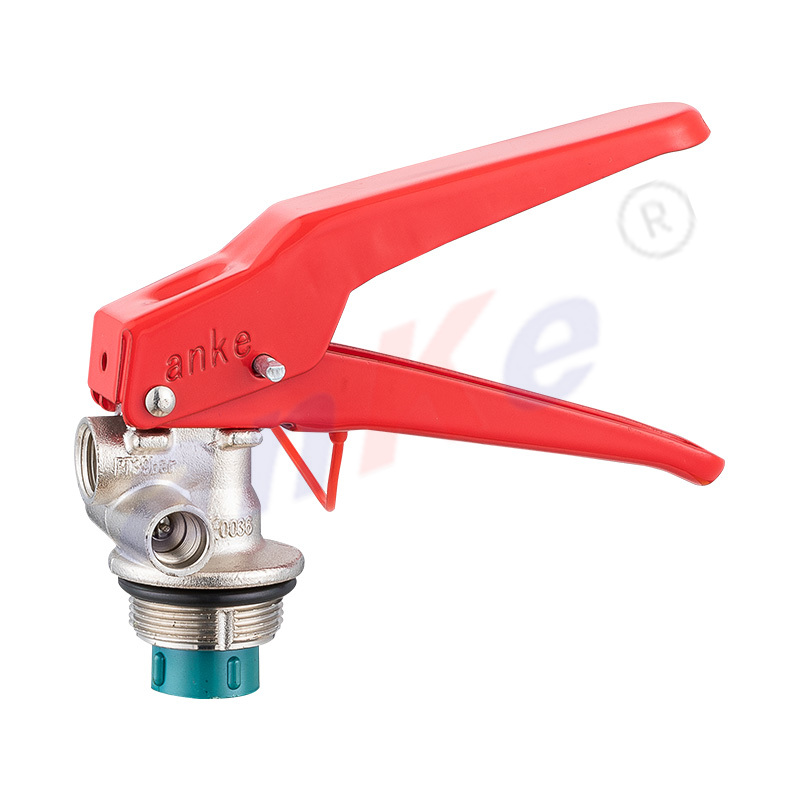
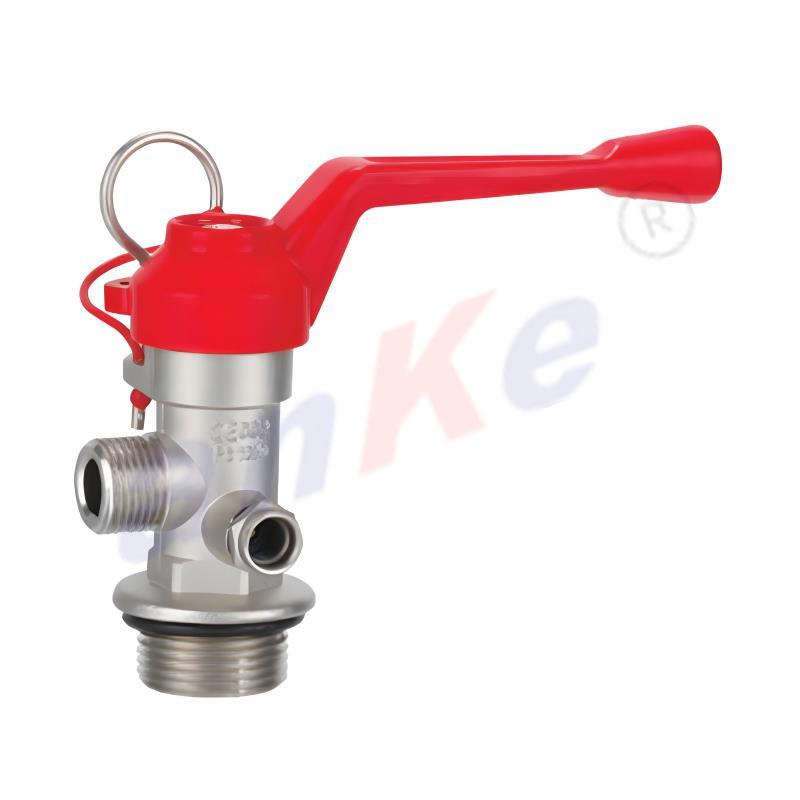
Modern release valves often use plastic handles over a metal core to improve grip and reduce weight. The plastic handle must not interfere with the metal-to-metal sealing function. On our 4–12 kg dry powder valve line, the red plastic handle is designed to fit securely onto the steel stem and to release the valve with a clear, predictable lever motion.
| Material | Common applications | Key advantages | Points to verify |
|---|---|---|---|
| Brass / copper alloy | Dry powder, water, foam, trolley units | Good corrosion resistance, reliable sealing, cost-effective | Alloy composition, plating thickness |
| Stainless steel | CO2 units, marine, chemical environments | High strength, excellent corrosion resistance | Grade certification, surface finish |
| Aluminum alloy | Economy dry powder extinguishers | Light weight, easy forming | Alloy grade, protective coating, thread quality |
Standards, Testing, and Certification of Release Valves
A release valve can look good in a catalog photograph, but the real proof of quality is in the testing. Fire extinguisher release valves are manufactured against international standards that define dimensions, pressure ratings, leak rates, and material properties.
In Europe, portable fire extinguishers are covered by the EN 3 series, and the valve assembly is tested as an integral part of the complete extinguisher. In the North American market, UL 299 is a common reference for dry chemical extinguishers, while DOT / Transport Canada requirements govern high-pressure CO2 cylinders. For many export destinations, the extinguisher manufacturer must demonstrate that the valve and cylinder combination has passed hydrostatic testing, leak testing, drop testing, and temperature cycling.
From a production point of view, the most important tests for a release valve are:
- Hydrostatic test: the valve body and cylinder are pressurized to a defined test pressure to ensure they can withstand severe overpressure without deformation.
- Leak test: the assembled valve is checked for leakage across the seat, around the stem, and through the gauge connection at both low and high pressure.
- Functional test: the valve is opened and closed repeatedly to simulate long service life.
- Temperature test: the valve is subjected to heat and cold to confirm that O-rings and seals remain effective.
- Drop test: the complete extinguisher is dropped from a specified height to verify that the valve handle, pressure gauge, and safety release are not damaged in a way that would cause injury.
As an exporting manufacturer, our factory keeps batch inspection records for each valve model. Buyers should request the inspection report together with the material certificate, especially when purchasing high-pressure CO2 valves. It is not unusual for cheaper valves to pass a visual inspection but fail on seat leak rate or thread tolerances after a few temperature cycles.
Common Release Valve Issues and How to Identify Them
Even a well-designed release valve can fail over time if it is neglected. The following table lists the most common problems we see in repaired extinguishers and the recommended actions.
| Observed problem | Most likely cause | Recommended action |
|---|---|---|
| Pressure gauge shows empty on a stored-pressure unit | Leakage through valve seat, stem seal, or gauge O-ring | Perform a leak test. Replace the valve or rebuild the seat with the correct service kit. |
| Handle moves but no agent is discharged | Discharge passage blocked, siphon tube detached, or valve stem not lifting far enough | Disassemble the head assembly and verify the internal travel of the valve stem. |
| Agent leaks around the valve body after refilling | Damaged O-ring, cross-threaded valve, or wrong seal material for the agent | Replace the sealing elements with the correct material and re-test. |
| CO2 handwheel is hard to turn | Contamination on the spindle threads or damaged high-pressure packing | Clean the threads and replace non-metallic packing components. |
| Pressure steadily decreases during storage | Micro-leak at the seat or gauge connection | Check with a calibrated pressure test station. Replace the valve if the leak rate exceeds the limit. |
Some valve problems become obvious only during discharge. A release valve that opens slowly will produce weak and prolonged discharge, reducing the extinguisher's fire-fighting performance. A valve that opens too quickly may create a hard blast that can blow burning material away from the seat of the fire. The internal flow area and spring force are precisely matched to the extinguisher size. This is why replacing a valve with an unmatched model is never recommended.
Inspection and Maintenance of Release Valves
Routine inspection of the release valve is one of the most cost-effective ways to extend the life of a fire extinguisher. The interval depends on the standard and the environmental conditions, but the basic checks are consistent.
Monthly and weekly checks
- Check that the safety pin is in position and the tamper seal is unbroken.
- Confirm that the handle or lever is not bent, loose, or partially depressed.
- Look for powder, moisture, or corrosion around the valve body and discharge hose.
- Check the pressure gauge needle on stored-pressure units.
- For CO2 units, verify that the discharge horn is properly connected and free of ice damage.
Annual and maintenance service checks
- Remove the head assembly carefully and inspect the valve stem, spring, and seal components.
- Check the siphon tube for cracks or blockages.
- Service the valve with the manufacturer-approved O-ring kit.
- Carry out a pressure leak test after re-assembly.
- If the cylinder is in a corrosive environment, inspect the valve thread for pitting.
Practical tip from our workshop
When an extinguisher has been stored outdoors in winter, moisture can freeze around the valve stem and prevent the handle from returning to the closed position. Before refilling or retagging the unit, always cycle the valve several times and confirm that the spring returns the stem completely. A valve that stays partly open will drain the cylinder pressure in a few hours.
If a release valve has been damaged by a fall or by rough handling during transport, do not simply tighten the valve and put the extinguisher back into service. The internal sealing geometry may have changed. In that case, the safe procedure is to discharge the unit in a controlled environment, remove the valve, and replace it with a certified component.
What Buyers and Specifiers Should Check When Selecting a Release Valve
Choosing a release valve is different from choosing a simple plumbing fitting. The valve is the main interface between the user and the extinguisher, and it carries the full responsibility of a pressure-retaining component. Whether you are sourcing valves for a new production line, refilling station, or maintenance inventory, the following points deserve close attention.
Thread compatibility and cylinder connection
The valve thread must match the cylinder neck thread exactly. Different countries and cylinder manufacturers may use different thread standards. A valve that appears to fit but has a slightly oversized pitch can damage the cylinder neck and create a dangerous hidden defect.
Seal material compatibility
The O-rings and gaskets inside the release valve must be compatible with the extinguishing agent. Nitrile, EPDM, and silicone have different resistance profiles. Using a seal that is not compatible with foam concentrate or CO2 can lead to swelling, hardening, or cracking.
Certification paperwork
Ask the supplier for a dimensional drawing, material certificate, and the latest inspection report. For factory production, it is also wise to request batch samples for an independent pressure test before approving a large order.
Spare parts availability
A release valve design that uses standard O-ring kits and commercial springs is easier to maintain in the long run. If the manufacturer can provide spare seals and service instructions, the service life of each valve increases significantly.
Visual inspection criteria
- Check for porosity or surface cracks in cast valve bodies.
- Verify that the handle is free of burrs and deformations.
- Confirm that the safety pin is retained securely by the handle design.
- Inspect the pressure gauge port for clean threads.
Release Valve Options from Our Factory
Our factory designs and produces release valves for the full range of portable extinguishers, CO2 cylinders, trolley units, and suspended automatic systems. The three models below are representative of the product line and are frequently used by original equipment manufacturers and maintenance companies. If you are looking for a specific valve configuration, contact our engineering team with the extinguisher model, agent type, and target standard.
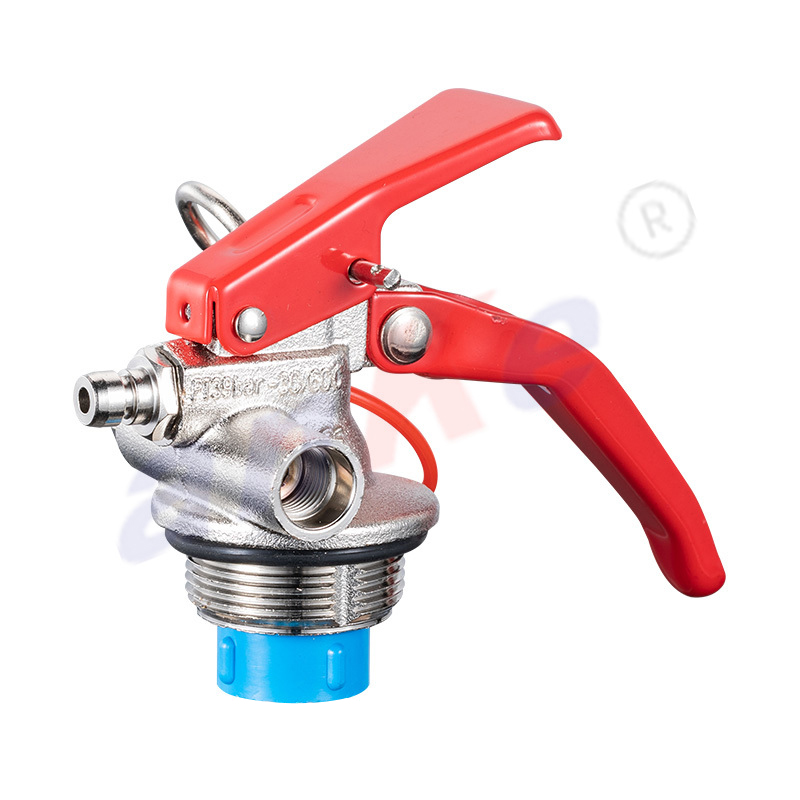
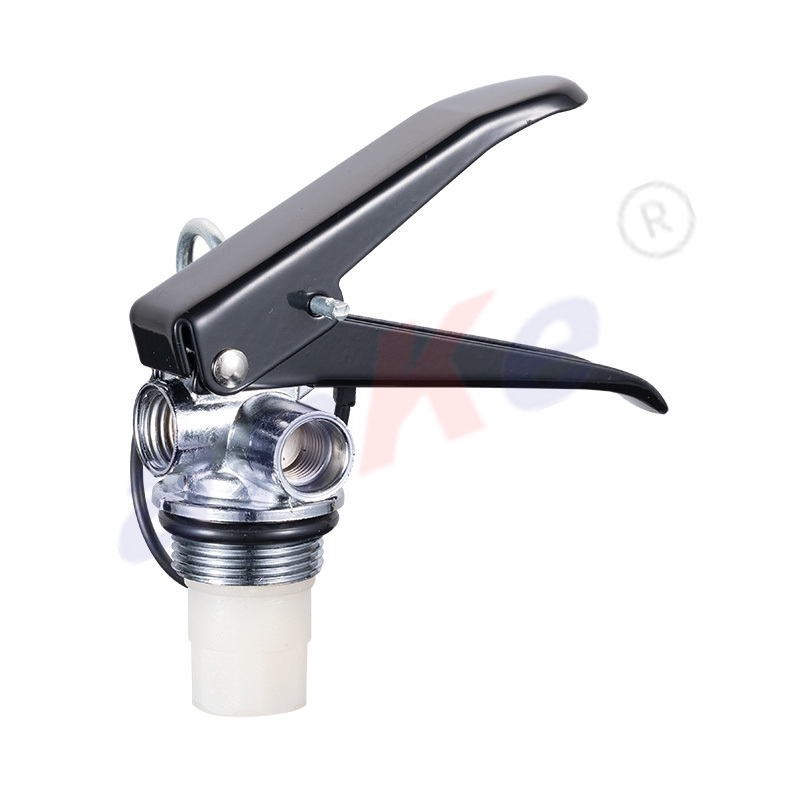
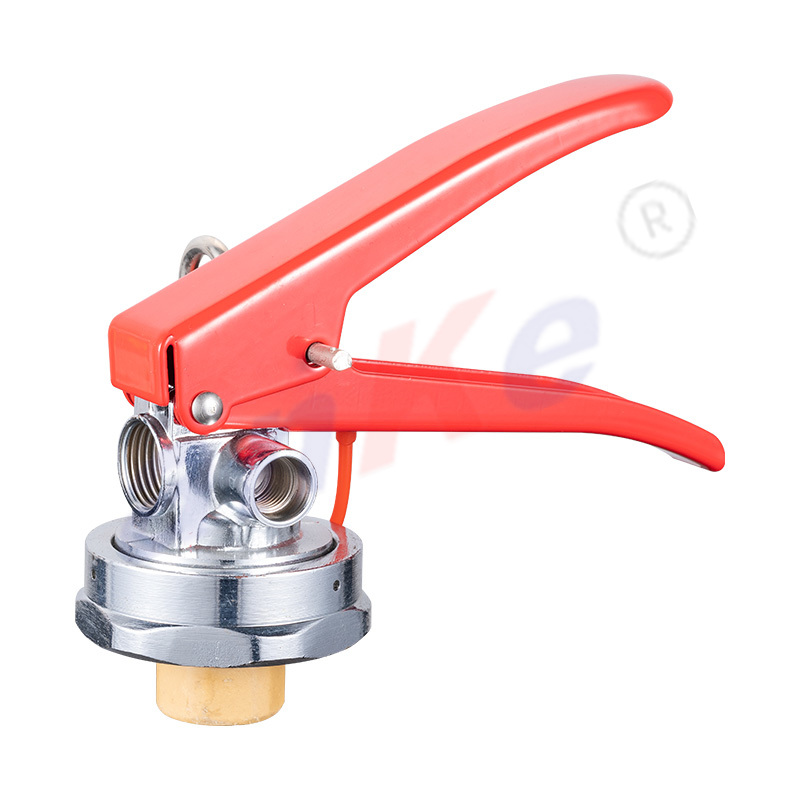
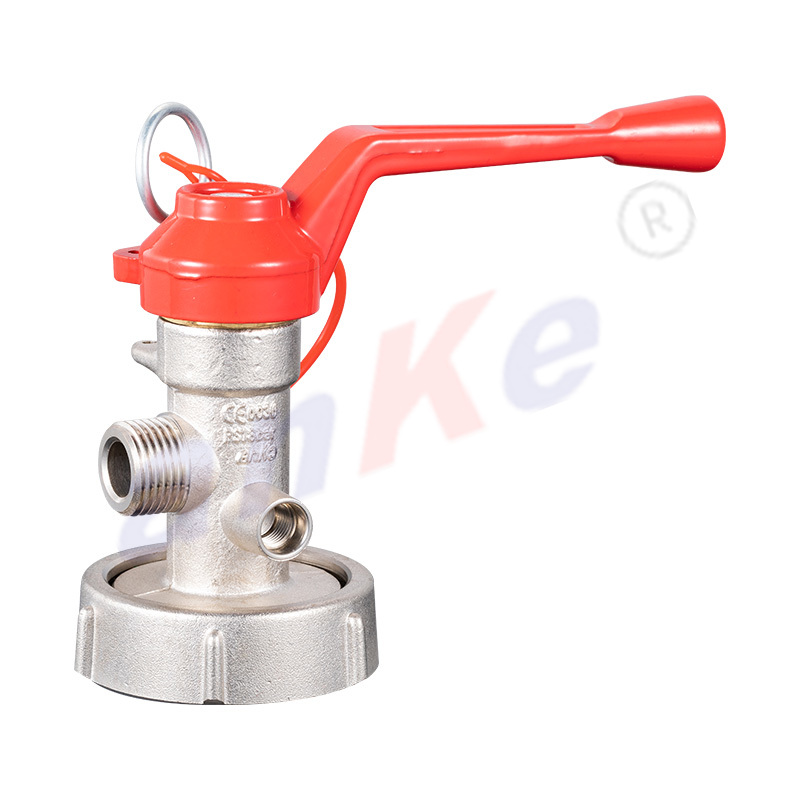
4–12kg Red Plastic Handle Valve Dry powder and stored-pressure applications. Reliable lever action with integrated pressure gauge port. Stainless Steel CO2 Valve 2060 Practical safety design for 2–7kg CO2 extinguishers. High-strength body with dependable sealing. CO2 Safety Release Cylinder Valve 2076 Combined operating and pressure-release function for high-pressure CO2 service.Frequently Asked Questions About Fire Extinguisher Release Valves
Is every fire extinguisher required to have a release valve?
Yes. Every commercially manufactured fire extinguisher is equipped with a release mechanism that is part of the valve assembly. In addition, pressurised extinguishers are equipped with a pressure-relief device to protect against overpressure.
What is the difference between a release valve and a safety valve?
A release valve is the operator-controlled device that allows the extinguishing agent to be discharged. A safety relief device is an automatic protection feature that opens when the internal pressure exceeds the rated limit. Both are usually incorporated into the same valve body on a modern fire extinguisher.
Can a fire extinguisher release valve be repaired?
Minor repairs are possible when the valve body is intact and only O-rings, springs, or seals need replacement. A valve with a cracked body, damaged threads, or a bent stem must be replaced. Repair work should only be carried out by technicians who are trained in pressurised equipment servicing.
How often should the release valve be replaced?
There is no universal timeline. In standard service, the valve should function for the entire life of the extinguisher if it is inspected and serviced according to the manufacturer's instructions. However, aggressive environments, rough handling, or repeated discharge can shorten its life. If a leak test fails, replacement is normally safer than repair.
What pressure rating should I look for in a dry chemical release valve?
For a standard stored-pressure dry powder extinguisher, the working pressure is usually 1.2 to 1.5 MPa at 20°C. The valve must have an appropriate seat design and a gauge port that matches the cylinder pressure. Always compare the valve specification to the cylinder nameplate and the applicable standard.
Do water-based extinguishers also use release valves?
Yes. Water, foam, and water-mist extinguishers all use release valves to control discharge. The main difference is the seal material and the design of the internal passages, which must remain effective when the extinguisher is filled with water-based agents.
How can I tell whether a CO2 valve has a safety release?
CO2 valves commonly incorporate a burst disc or a combination relief path. The presence and location of the relief element are described in the valve documentation. If the original documentation is missing, the valve should be removed from service and inspected by a qualified workshop.
Final Takeaway
Fire extinguishers are equipped with release valves as a core requirement of their design. The release valve controls normal discharge, maintains the internal seal, provides a mounting point for the pressure gauge, and houses or connects to the overpressure safety function. Each extinguisher type — dry powder, water, foam, CO2, trolley, or suspended automatic — uses a valve configuration matched to its pressure class, agent chemistry, and operating environment.
From a manufacturer's perspective, the quality of the release valve determines how safely and dependably the extinguisher will perform. Careful selection, proper certified testing, and regular servicing of the release valve are the most practical ways to ensure that an extinguisher does its job when it matters most.
 Phone: +86-13456107058/+86-15967800709
 Tel: +86-574-62010128/+86-574-62010688
 E-mail:
  Factory: Huilong Village, Huangjiabu Town, YuyaoCity,Zhejiang Province, China





 Domestic Trade Manager
 Foreign Trade Manager
 VR Catalogue
