
 en
en  English
 中文简体
中文简体 Español

If you manage a CO2 fire extinguisher, you already know it has no pressure gauge. So how can you tell whether it is still charged? You check the proper weight of the CO2 fire extinguisher. Carbon dioxide is stored as a liquid inside the cylinder, and as long as liquid remains, the internal pressure stays relatively stable. A pressure gauge would not show how much agent is left. Weight does. This guide covers why weight is the only reliable check, what the stamped markings mean, how to weigh the extinguisher correctly, and what to do when a unit no longer meets its rated weight.
If you are not yet familiar with these units, read our overview of CO2 fire extinguishers first. Then come back to the weighing procedure below.
Why Weight Is the Only Reliable Check for CO2 Extinguishers
Unlike dry chemical or foam extinguishers, a CO2 unit does not have a gauge that indicates remaining charge. The reason is physical. CO2 exists as a liquid and vapor inside the cylinder. At room temperature, the vapor pressure above the liquid is determined by temperature, not by the amount of liquid. As long as a small amount of liquid CO2 remains, the pressure read on a gauge would look nearly identical to a full cylinder. The gauge would only drop sharply when the liquid is almost gone. By then the extinguisher is effectively empty.
CO2 also leaks slowly through valve seals, hoses, and tiny imperfections—invisibly and silently. Weight captures that cumulative loss, which is why facility inspection routines rely on weighing. A full cylinder has a known total weight, and any significant decrease means lost agent. Weighing is quick, objective, and can be done by anyone with a suitable scale.
Understanding the Markings on a CO2 Cylinder
Before judging a reading, you need to know what the stamped numbers mean. Cylinders carry three key values: TARE weight, charge weight, and GROSS weight. Always use the values marked on your own cylinder, not a generic chart.
TARE Weight vs. GROSS Weight vs. Charge Weight
TARE weight is the weight of the empty cylinder plus the valve and any dip tube, before CO2 is added. Charge weight is the amount of CO2 gas placed into the cylinder. GROSS weight is the total weight of a full, ready-to-use extinguisher, calculated as TARE plus charge weight. When you weigh a CO2 extinguisher, compare the reading against the GROSS weight, or subtract TARE from the reading and compare the result with the charge weight.
| Marking | Meaning | Example Value |
|---|---|---|
| TARE | Empty cylinder + valve weight | 12.55 kg |
| Charge weight | Weight of CO2 agent inside | 5.00 kg |
| GROSS | TARE + charge weight (full weight) | 17.55 kg |
Where to Find the Weight Markings
Most cylinders have TARE stamped near the neck or shoulder. Charge and GROSS may appear on the label or require a simple calculation from TARE and charge weight. If markings are worn or illegible, contact the manufacturer or a certified service provider before weighing.
Step-by-Step: How to Weigh a CO2 Fire Extinguisher
What You Need
- A calibrated platform scale or hanging scale with an accuracy of 0.1 kg (0.2 lb) or better.
- A scale capacity greater than the GROSS weight of the extinguisher. Most portable units weigh less than 25 kg, but large trolley units can be much heavier.
- A record sheet, inspection tag, or digital log to note the measured weight and date.
- Optional: a pen or marker to label the cylinder with the next check date.
The exact GROSS weight varies by model and capacity. For instance, portable 5kg CO2 fire extinguishers are a common commercial choice, but a 2kg home unit will be considerably lighter. Always use the stamped values on the cylinder.
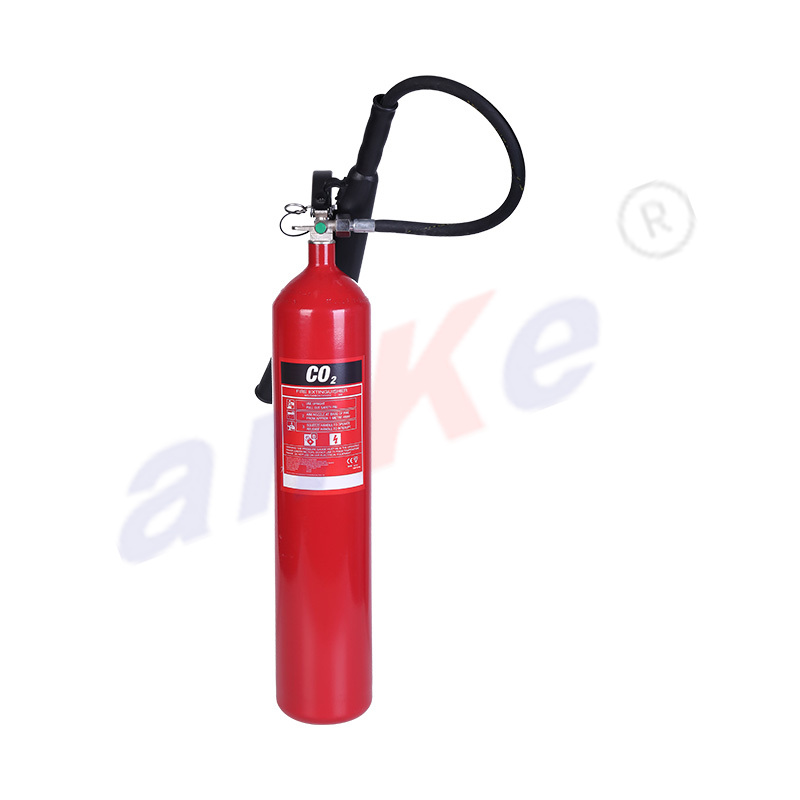 Custom 5KG Portable CO2 Alloy Steel Fire Extinguisher Suppliers, OEM/ODM FactoryNingbo Kaituo Valve Co., Ltd. is China 5KG Portable CO2 Alloy Steel Fire Extinguisher Suppliers and Custom 5KG Portable CO2 Alloy Steel ...View Product →
The Weighing Procedure
- Remove the extinguisher from its wall bracket or vehicle mount. Handle it carefully and keep it upright.
- Wipe away any dirt or moisture from the cylinder body, particularly around the valve. A clean surface prevents extra weight from being counted.
- Place the scale on a firm, level floor. If using a hanging scale, hang the extinguisher by its handle or lifting bracket and let it hang freely.
- Set the extinguisher centrally on the scale platform. Make sure the valve, hose, or horn does not touch the ground or any nearby object.
- Wait for the reading to stabilize. For a digital scale this takes a few seconds; for a mechanical scale, check that the needle is steady.
- Record the measured weight, the date, and the extinguisher identification number. Take a photo if your facility uses photo-based logs.
How to Interpret the Result
Compare the measured value with the GROSS weight stamped on the cylinder. If it matches within the scale tolerance, the extinguisher is considered full. If the reading is slightly below GROSS but within the manufacturer's acceptable range, record the value and schedule a recheck. If the reading falls significantly below GROSS—typically more than 5–10 percent—treat the extinguisher as in need of service: tag it, remove it from service, and arrange professional refilling.
Alternatively, subtract TARE from the measured weight to find the remaining CO2. For example, 16.50 kg minus a TARE of 12.55 kg leaves about 3.95 kg of CO2, compared with a rated 5 kg charge. Use the same method every time, and follow the manufacturer's tolerance guidance.
Beyond Weight: Complete CO2 Extinguisher Inspection Checklist
Weight is the core test for charge level, but a proper CO2 extinguisher check combines weighing with a quick physical inspection. A full cylinder with a damaged valve or cracked hose may still fail when you need it most.
Visual Checks on the Cylinder and Valve
- Check the cylinder body for dents, deep scratches, corrosion, or bulging. Any of these defects can weaken the pressure vessel.
- Inspect the valve area for frost, ice, oil stains, or a white powder residue. These signs can indicate a slow CO2 leak around the valve sealing area.
- Confirm the safety pin and tamper seal are present and intact.
- Operate the valve handle or lever briefly. It should move smoothly and spring back without sticking.
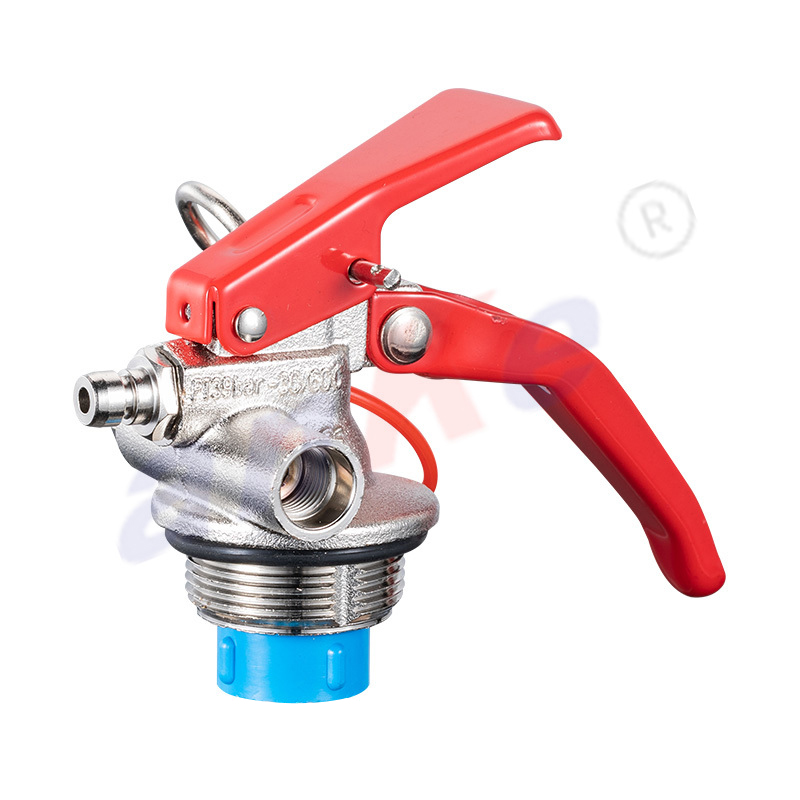
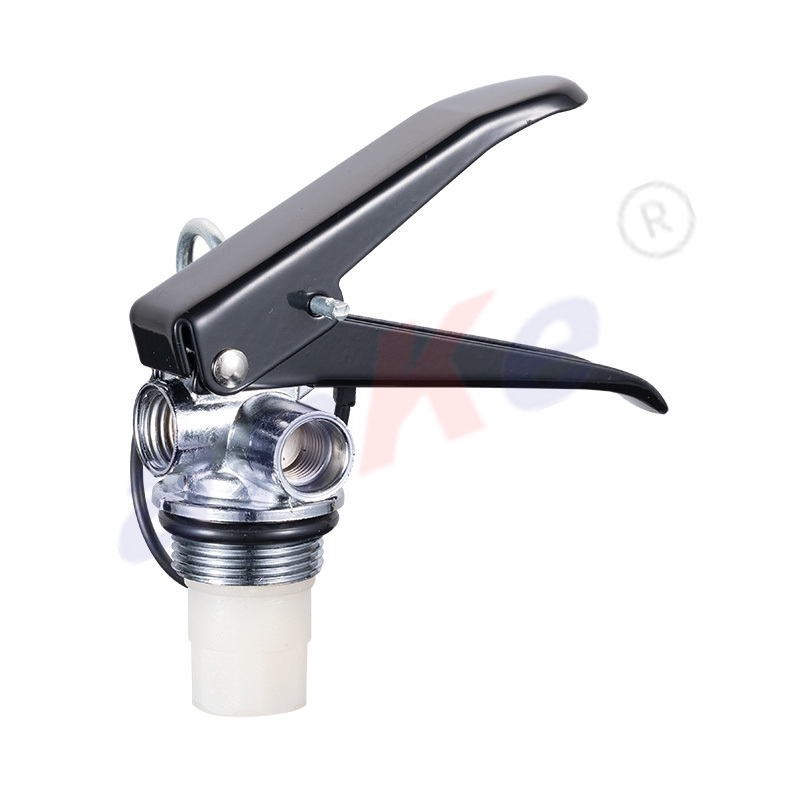
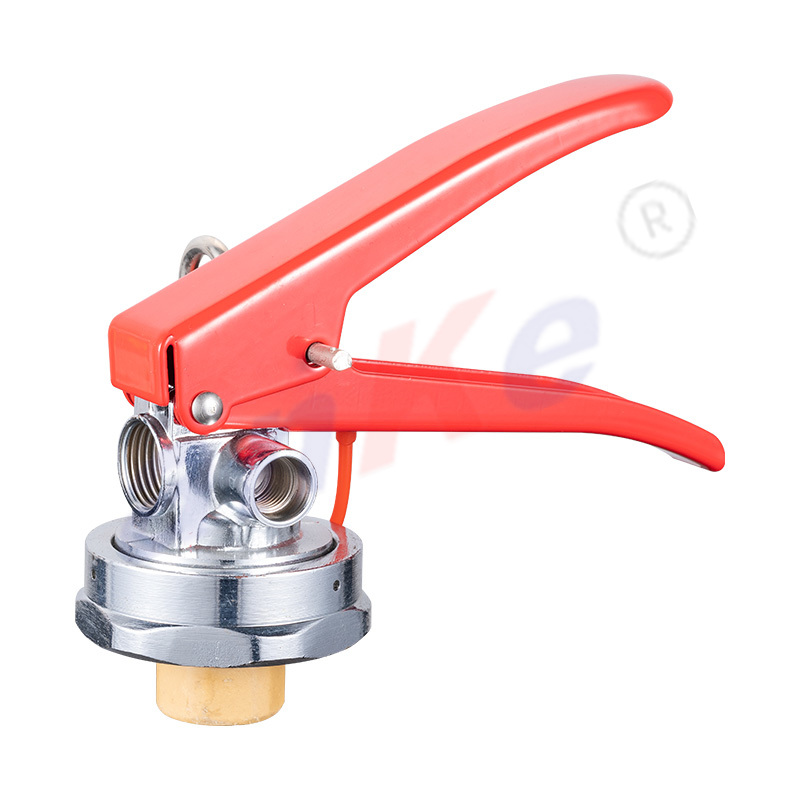
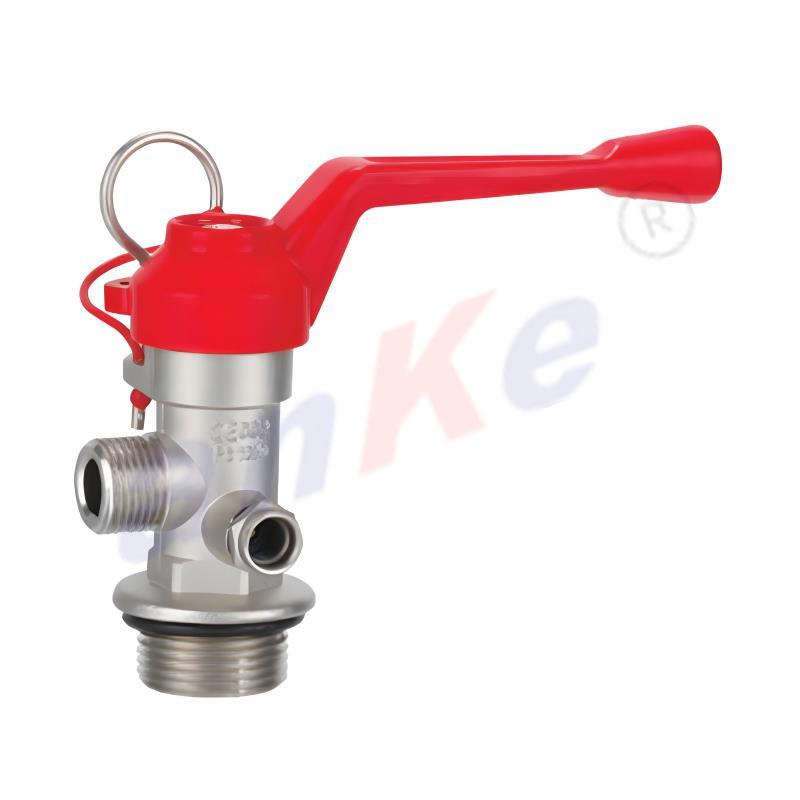
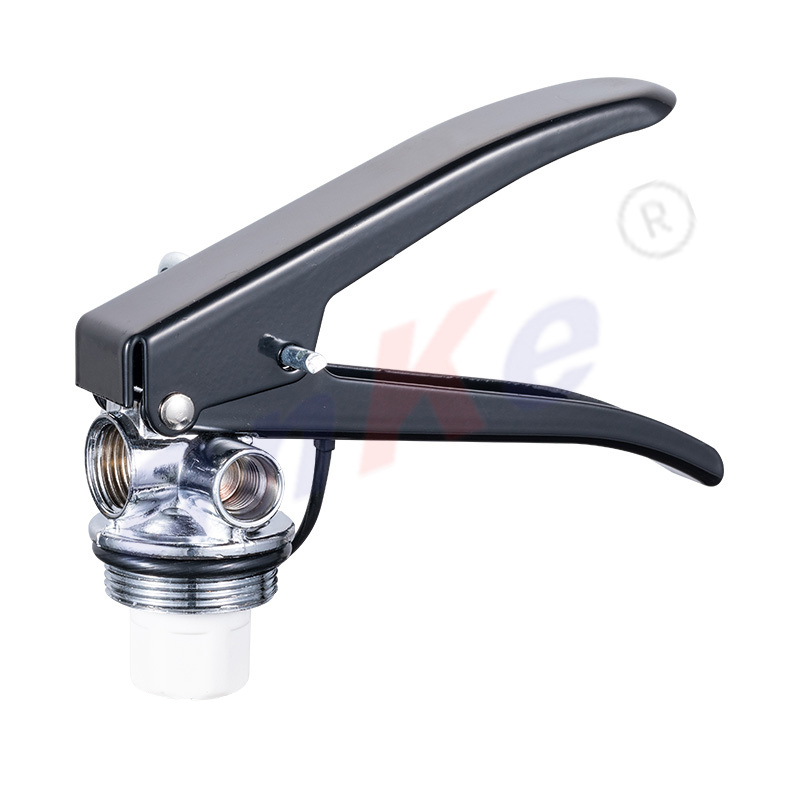
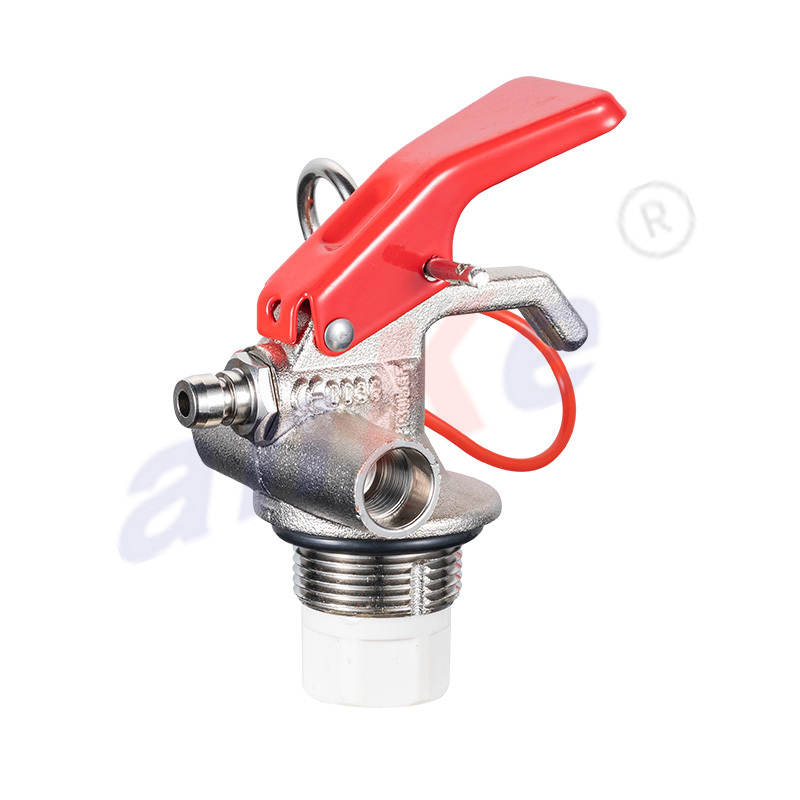
If you find a valve that is cracked, corroded, or fails to operate smoothly, do not return the extinguisher to service until the valve has been inspected or replaced. For replacement units, consider high-quality CO2 fire extinguisher valves designed for the same service pressure.
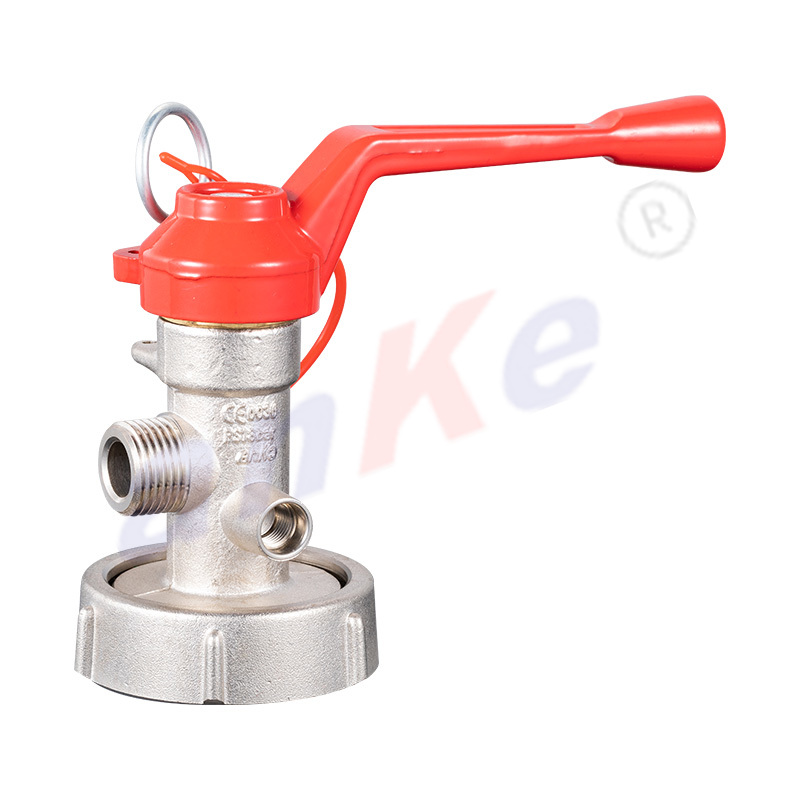
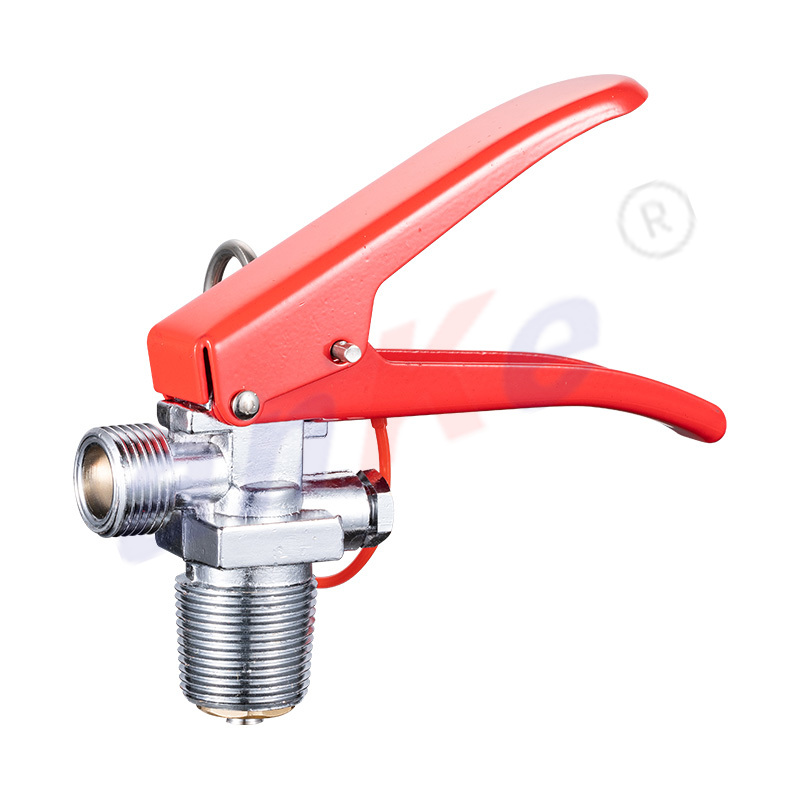 Custom 2-7KG CO2 Fire Extinguisher Red Handle High quality Valve 2061 Suppliers,Ningbo Kaituo Valve Co., Ltd. is China 2-7KG CO2 Fire Extinguisher Red Handle High quality Valve 2061 Suppliers and Custom 2-7KG CO2 Fir...View Product →
Hose and Horn (Discharge Nozzle) Checks
- Inspect the discharge hose from valve to horn for cracks, cuts, brittleness, or loose connections.
- Check the horn for debris, cracks, or a loose fit. A blocked horn can create dangerous back pressure.
- Make sure the horn is firmly attached to the hose and that the hose is securely connected to the valve outlet.
Old or damaged hoses and horns should be replaced immediately. If you need a replacement part, look for replacement CO2 discharge horns that match the connection thread and size of your unit.
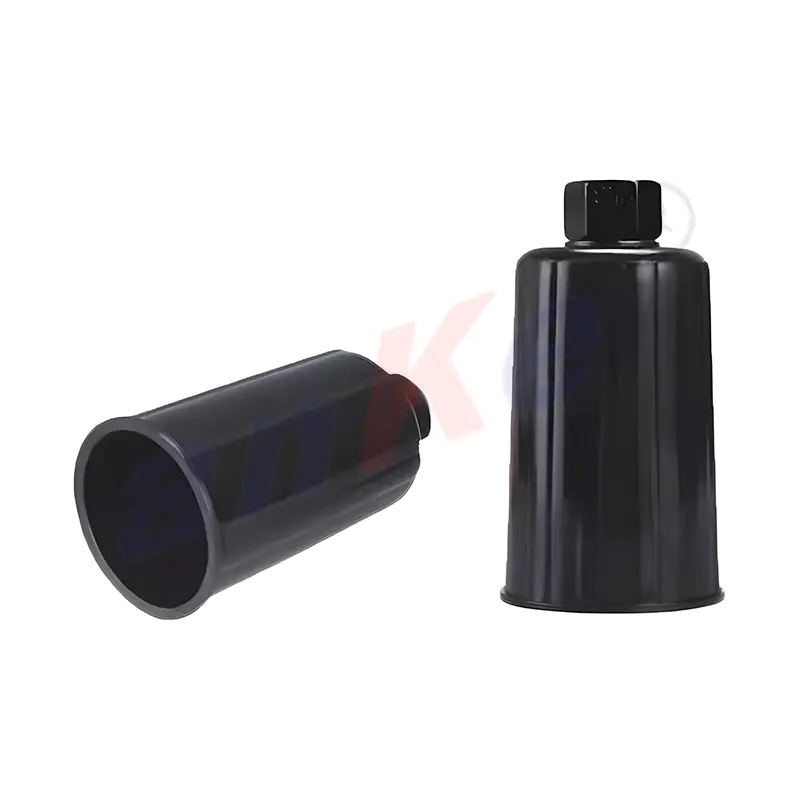 Custom CO2 Fire Extinguisher Spare Parts 1-3KG CO2 HORN 19-31 Suppliers, OEM/ODMNingbo Kaituo Valve Co., Ltd. is China CO2 Fire Extinguisher Spare Parts 1-3KG CO2 HORN 19-31 Suppliers and Custom CO2 Fire Extinguisher...View Product →
Position and Accessibility
- Verify the extinguisher is at its designated location and clearly visible.
- Check that the wall bracket or vehicle mount holds the unit securely.
- Ensure nothing blocks or hides the extinguisher, and that the operating instructions label is facing outward and readable.
How Often Should You Check the Weight?
The right inspection frequency depends on the environment, applicable regulations, and how critical the unit is. Most facilities combine quick visual checks with periodic weight checks on a fixed schedule.
Monthly Visual Inspections
Once a month, verify each CO2 extinguisher is in place, unobstructed, and visually normal. Confirm the pin and seal are intact. This quick check catches obvious problems early.
Periodic Weight Checks (Quarterly to Annual)
Weigh at least once a year, and quarterly in high-temperature, humid, vibrating, or frequently moved environments. Many industrial facilities follow broadly accepted maintenance frameworks such as those referenced by NFPA 10. If local rules demand a stricter schedule, follow them.
After Any Use or Suspected Leak
Weigh immediately after any discharge, even a short burst. Also reweigh after moving, after a fall, or whenever you suspect a leak. Frost, hissing, or an unusual odor near the valve are warning signs.
What to Do If Your CO2 Extinguisher Fails the Weight Check
A failing weight check is not something to fix with a casual top-up. Follow these steps to keep the unit out of service until it is professionally handled.
Tag and Remove from Service
Attach a clearly visible "DO NOT USE" tag, remove the unit from its mounting, and store it where nobody can mistake it for working equipment. Tell the people who rely on it.
Arrange Professional Refilling or Replacement
Contact a qualified service provider to identify the cause of the loss, refill the cylinder to the correct charge, and verify the new weight. If the cylinder is damaged, expired, or has failed pressure testing, replace it instead.
Check Related Components Before Reinstalling
Before returning a refilled unit to service, inspect or replace the valve seal, hose, and horn. A cylinder that leaked once may leak again if the root cause was not fixed. Confirm a new safety pin and seal are in place and that the valve operates smoothly.
Make the Weight Check Part of Your Routine
CO2 extinguishers have no pressure gauge, so weight is the only reliable check. Learn your cylinder's TARE, charge, and GROSS values, keep a calibrated scale ready, and combine weighing with a quick visual inspection. A few minutes per month or quarter can mean the difference between a functional extinguisher and one that silently fails.
 Phone: +86-13456107058/+86-15967800709
 Tel: +86-574-62010128/+86-574-62010688
 E-mail:
  Factory: Huilong Village, Huangjiabu Town, YuyaoCity,Zhejiang Province, China





 Domestic Trade Manager
 Foreign Trade Manager
 VR Catalogue
