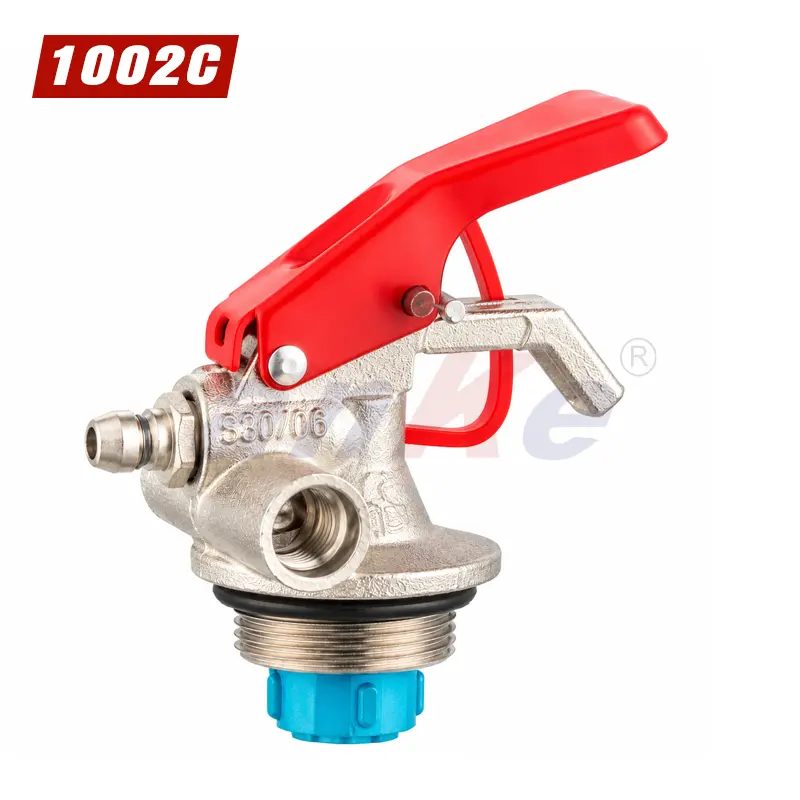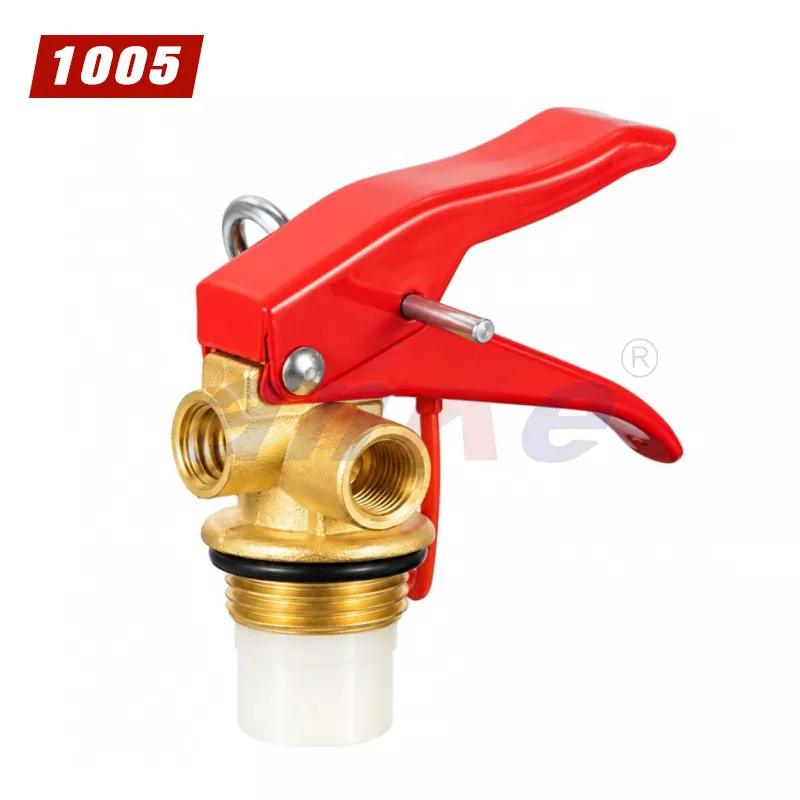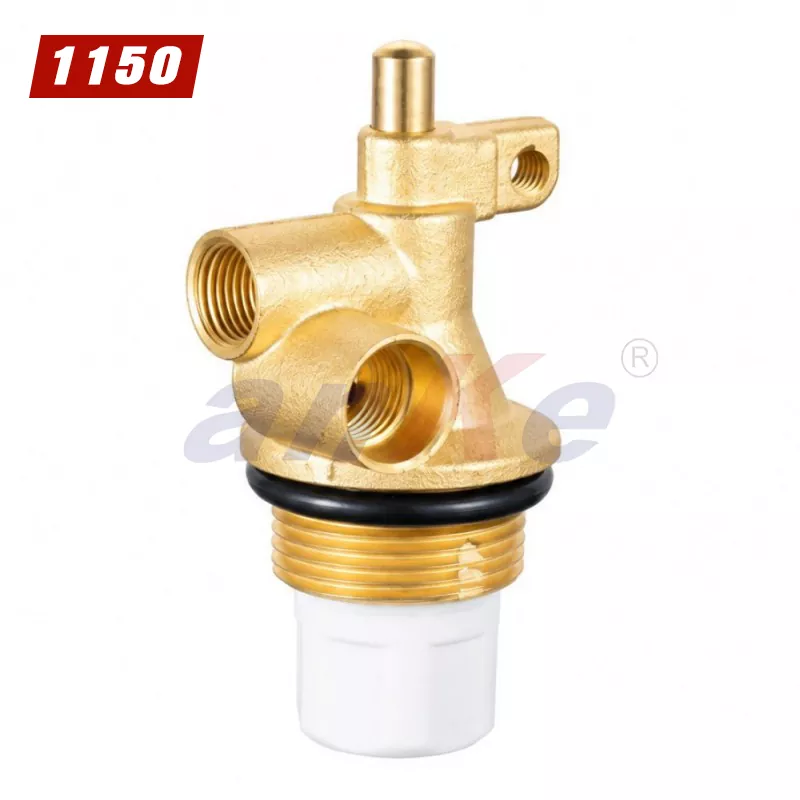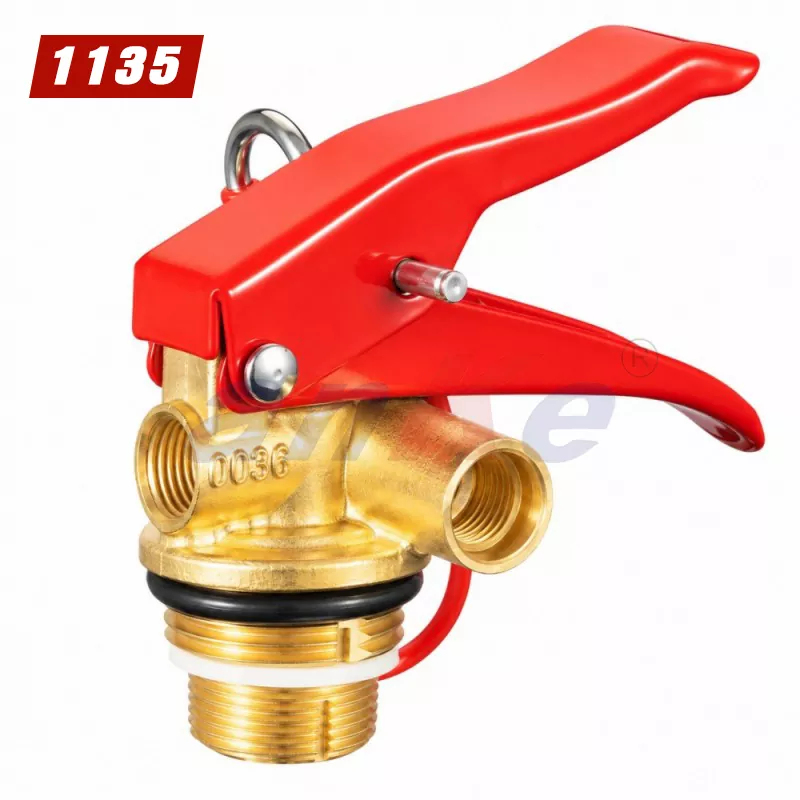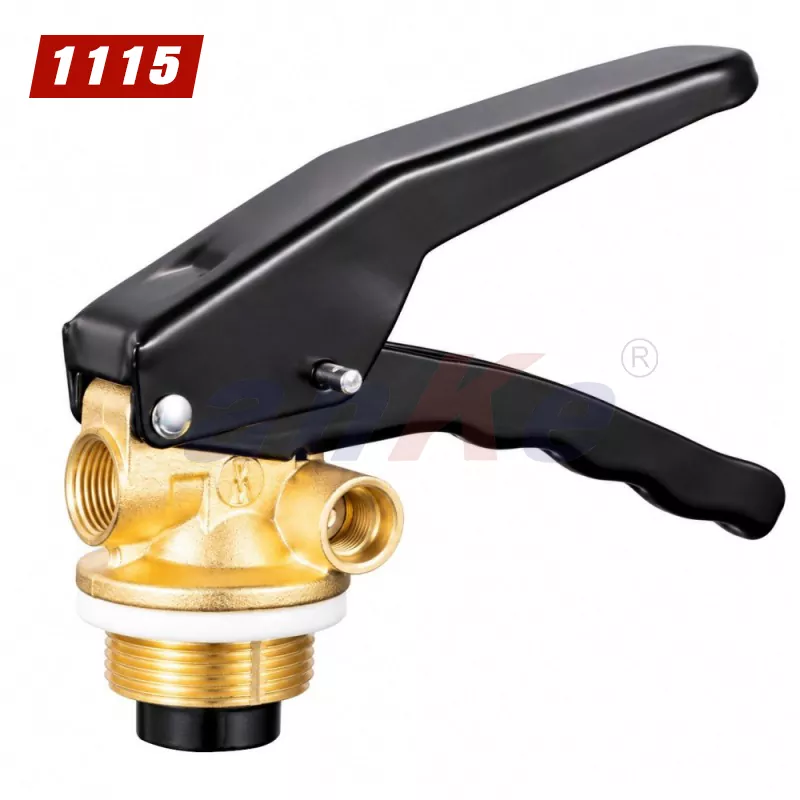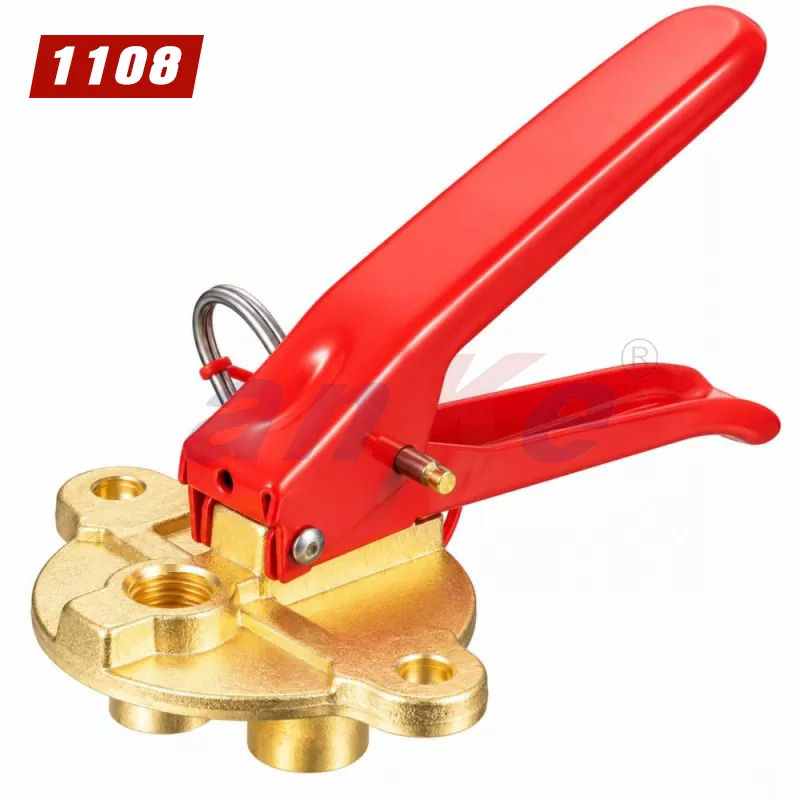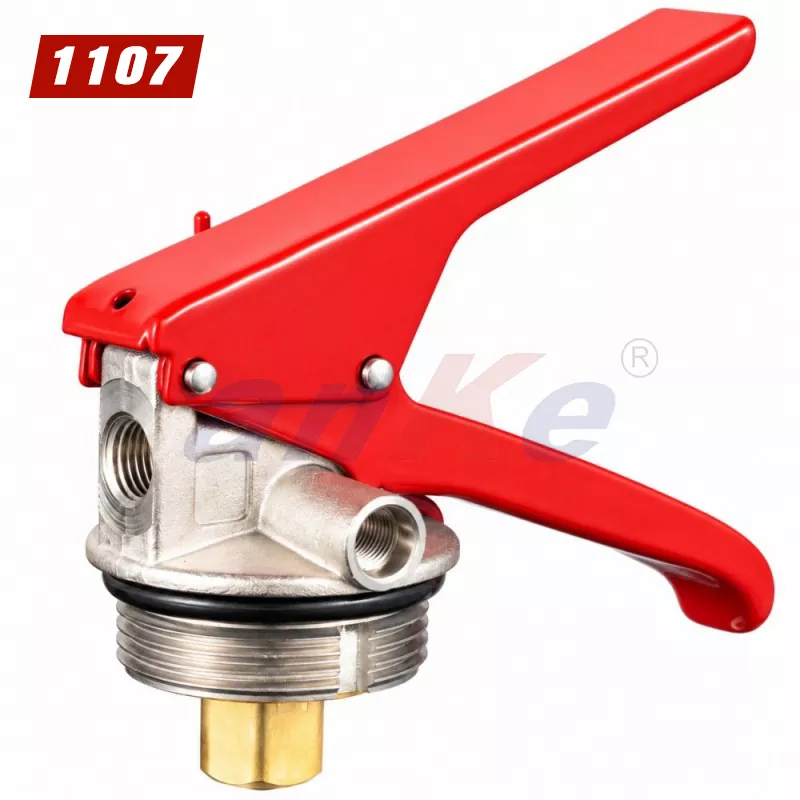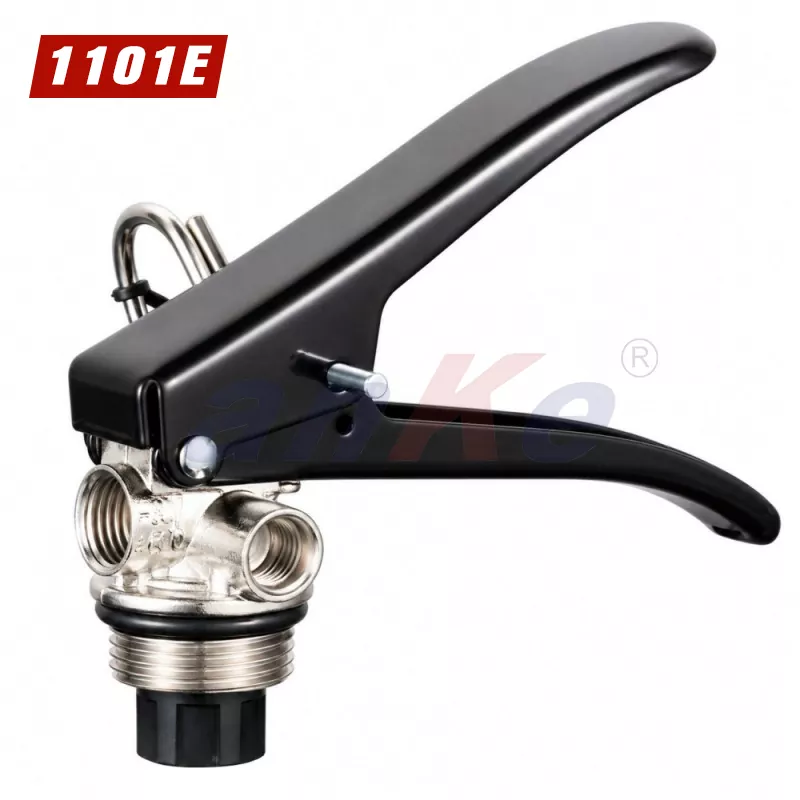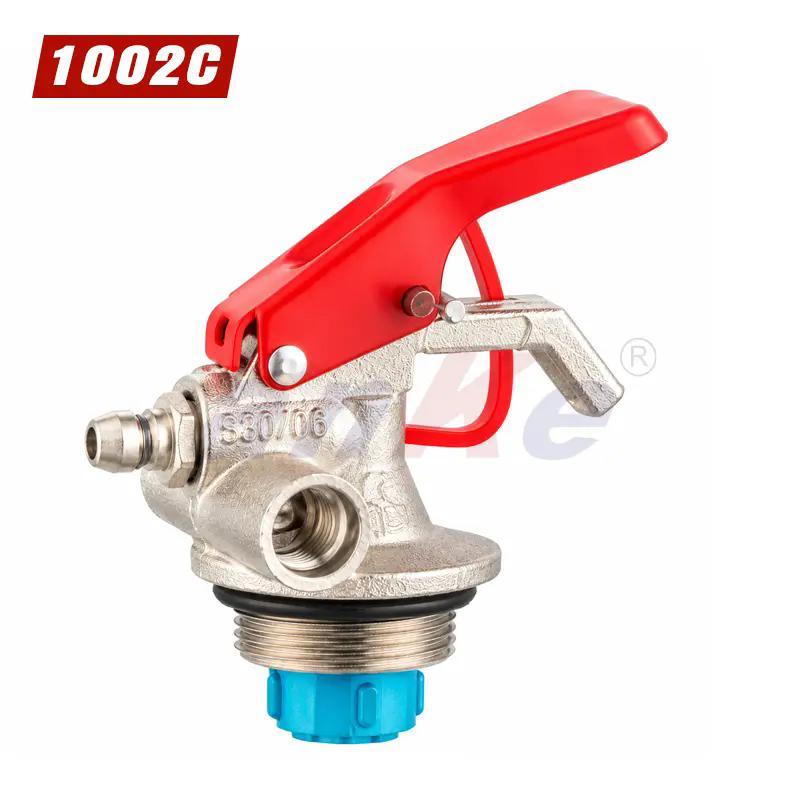
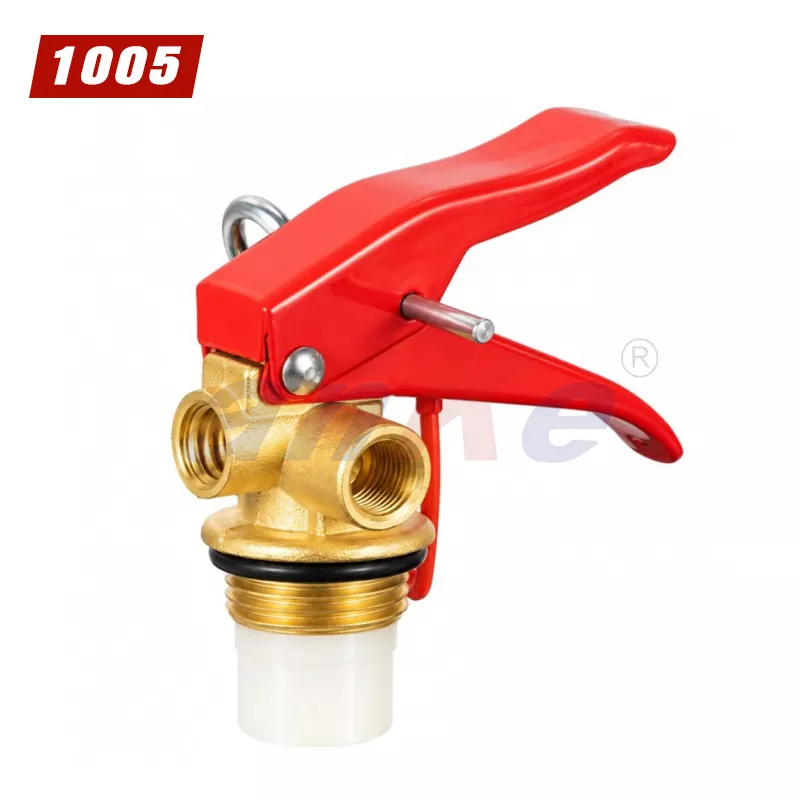
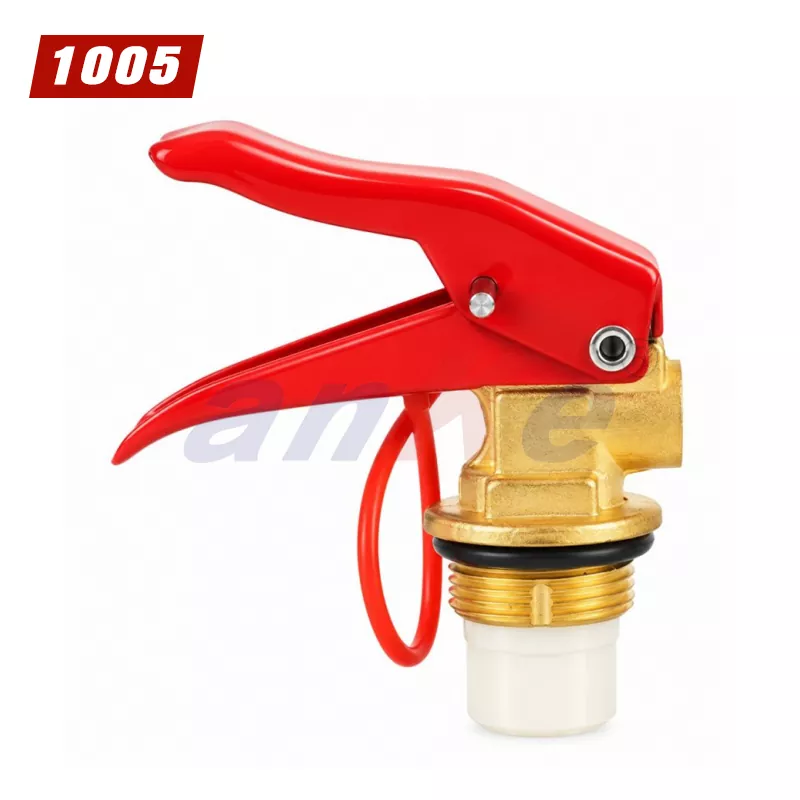
The 1KG powder extinguisher valve 1005 is intended for 1 kg fire extinguisher cylinders. It serves as the operating interface between the extinguisher cylinder, pressure gauge, dip tube, and discharge assembly. When correctly matched with the cylinder and other components, the valve allows the extinguishing medium to be retained during storage and released through the outlet when the extinguisher is activated.
The valve body is manufactured from high-quality copper. This material provides a practical balance between machinability, durability, and corrosion resistance for portable extinguisher components. The surface can be supplied in a standard finish or customized with chrome or nickel plating according to the buyer’s requirements.
Compared with models equipped with a safety device or check valve, the 1005 specification does not list either component. Therefore, the valve should be selected only when the complete extinguisher design and applicable technical requirements are consistent with this configuration.
| Parameter | Specification |
| Valve Type | 1KG powder extinguisher valve |
| Material | High-quality Copper |
| Surface treatment | According to customer requirements (chrome/nickel plated) |
| Inlet thread | M24X1.5 |
| Outlet thread | G1/8 |
| Gauge Connection thread | M10X1-12.5 |
| Dip tube pipe thread | M16X1.5 |
| Safety Device (Bar) | No |
| Check Valve | No |
| Applicable Cylinder | 1 KG fire extinguishers |
| Customization | Thread configuration, surface finish, handle style, and other parameters upon request |
The 1005 valve specification does not itself declare a working pressure or a cylinder test value. Those figures belong to the cylinder the valve is fitted to. For 1 kg stored-pressure dry powder extinguishers, published data commonly lists an operating pressure around 14 bar at 20°C and a cylinder pressure test (PT) of 27 bar[reference:0][reference:1]. One 1 kg model lists an operating pressure of 1.4 MPa (14 bar), a casing test pressure of 2.6 MPa (26 bar), and a spring safety valve setting of 2.2 ± 0.2 MPa (22 ± 2 bar)[reference:2]. The valve body must be able to contain the cylinder’s PT, but the valve alone does not establish that the assembled extinguisher has overpressure protection.
Because the 1005 carries neither an integrated safety device nor a check valve, the overpressure function and any anti-backflow function must be located elsewhere in the finished assembly, or the cylinder design must provide them. Before selecting the 1005, the buyer should confirm where those functions sit in the assembly and whether their operating ranges are consistent with the cylinder’s stamped PT. A valve that passes a burst test on its own does not confirm that the finished extinguisher will vent before the cylinder is exposed to a pressure approaching its test value.
M24×1.5 is a metric fine parallel thread. It seals at a face or with a gasket at the cylinder neck, not on the thread flanks. The tightening torque therefore affects both joint retention and gasket compression, and the correct value is narrower than a general thread chart suggests.
General mechanical fitting data for M24×1.5 lists approximately 100 Nm[reference:3]. That figure is not an extinguisher neck value. For 1 kg EN 3-7 powder extinguishers, published assembly data for a comparable valve lists a tightening torque range of 40–68 Nm[reference:4]. The upper end of the general fitting range exceeds the upper end of the extinguisher-specific range, and applying it to a thin-walled portable cylinder neck can over-compress the gasket or distort the sealing seat.
The applicable torque should come from the cylinder manufacturer’s assembly specification for the specific neck design. The condition of the sealing face — flatness, absence of scratches, and freedom from corrosion — should be checked in the same step as the thread match, because a parallel thread does not compensate for an imperfect sealing surface.
The 1 kg cylinder leaves limited internal volume for the dip tube and the powder charge. The M16×1.5 dip tube connection defines the fitting, not the tube length or the bottom clearance. In a powder extinguisher, the dip tube must reach close enough to the cylinder base to draw the powder down during discharge, while leaving enough clearance that the tube does not sit buried in compacted powder after long storage[reference:8].
The G1/8 outlet and the discharge path downstream of it are also part of the same flow problem. On a 1 kg unit, the agent volume is small and the discharge time is short. A restriction at the outlet or in the hose, or a dip tube cut at the wrong angle, changes the discharge pattern even when the valve itself is functioning. Buyers specifying the 1005 across more than one cylinder supplier should confirm the dip tube dimensions against the actual cylinder drawing, and should treat the outlet, hose, and nozzle as a matched set rather than as independent selections.
Dry powder extinguishers are commonly maintained on an annual basic inspection and a longer-interval internal examination. The internal maintenance interval for dry chemical and dry powder units is commonly six years in frameworks that distinguish agent types, while water-based and foam units follow a shorter interval. Valve replacement or overhaul is not an annual action; it is tied to the internal examination or to findings such as corrosion at the inlet seat, a gauge port that does not hold pressure, a lever that does not return cleanly, or powder that has caked visibly in the cylinder[reference:10].
Because the 1005 has no integrated safety device, the service inspection should separately confirm that whatever overpressure function the assembly relies on remains present and unobstructed. A safety device located on the cylinder or another component can be painted over, corroded, or previously vented without the 1005 showing any external sign. The valve appearing intact on its own is not evidence that the finished extinguisher retains its overpressure protection.
The 1KG powder extinguisher valve 1005 may be suitable for buyers who:
1. Manufacture or assemble 1KG powder fire extinguishers.
2. Need a compact copper valve with a defined M24X1.5 inlet.
3. Require a G1/8 outlet and M10X1-12.5 gauge connection.
4. Need a valve without an integrated safety device or check valve, subject to their approved design.
5. Want to discuss customized surface finish or connection details.
A: The supplied product information identifies it for 1KG fire extinguishers.
A:The specification states “No” for the safety device and “No” for the check valve. Confirm the complete extinguisher's safety configuration before use.
A: M24X1.5.
A: Yes. Chrome or nickel plating is listed as available according to customer requirements.
A: The buyer should request the current technical drawing and confirm all connection dimensions before placing a bulk order.
A: The 1005 body does not integrate a safety device, so the relief function must be provided by another component in the finished assembly, or by the cylinder design. Published 1 kg EN 3-7 powder extinguishers commonly list a cylinder PT of 27 bar and a safety valve setting of 20–26 bar[reference:11]. The buyer should confirm where that function sits in their assembly and that its setting is consistent with the cylinder’s stamped PT before selecting the 1005.
A: Published assembly data for a comparable 1 kg EN 3-7 powder extinguisher valve lists 40–68 Nm[reference:12]. General mechanical fitting data for M24×1.5 is higher, but a portable extinguisher neck has a thinner wall and a different sealing geometry. The cylinder manufacturer’s assembly specification is the controlling value.
A: NBR is a common base elastomer for dry powder valve seals, but single NBR-only seals without a secondary stem seal can lose elasticity sooner and allow slow propellant loss. A NBR O-ring paired with a PTFE stem seal is the more durable arrangement for the dynamic interface[reference:13][reference:14]. The seal compound should be confirmed against the specific powder formulation the extinguisher will carry.
A: Valve replacement is not an annual action. Internal examination of dry powder extinguishers is commonly scheduled at six-year intervals in frameworks that separate agent types, and valve replacement or overhaul is tied to that intervention or to findings such as seat corrosion, a leaking gauge port, a binding lever, or visibly caked powder. Because the 1005 has no integrated safety device, the overpressure function provided elsewhere in the assembly should be verified at the same service point.
Address
Factory: Huilong Village, Huangjiabu Town, Yuyao City, Zhejiang Province, China
Branch Office: Hengye Building 509, No.158 Tai'an Middle Road, Yinzhou District, Ningbo, Zhejiang, China
Tel