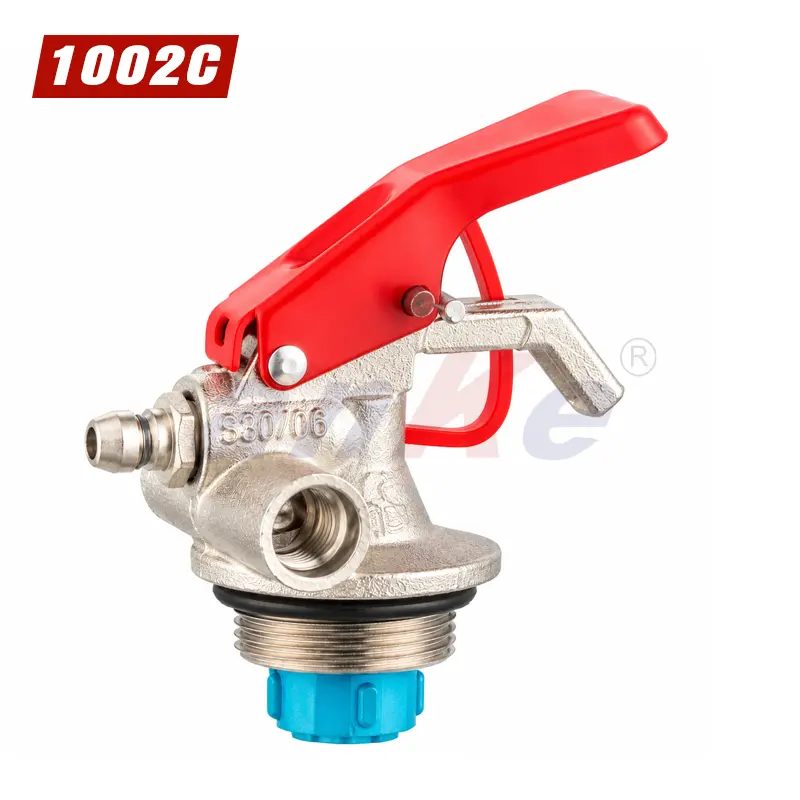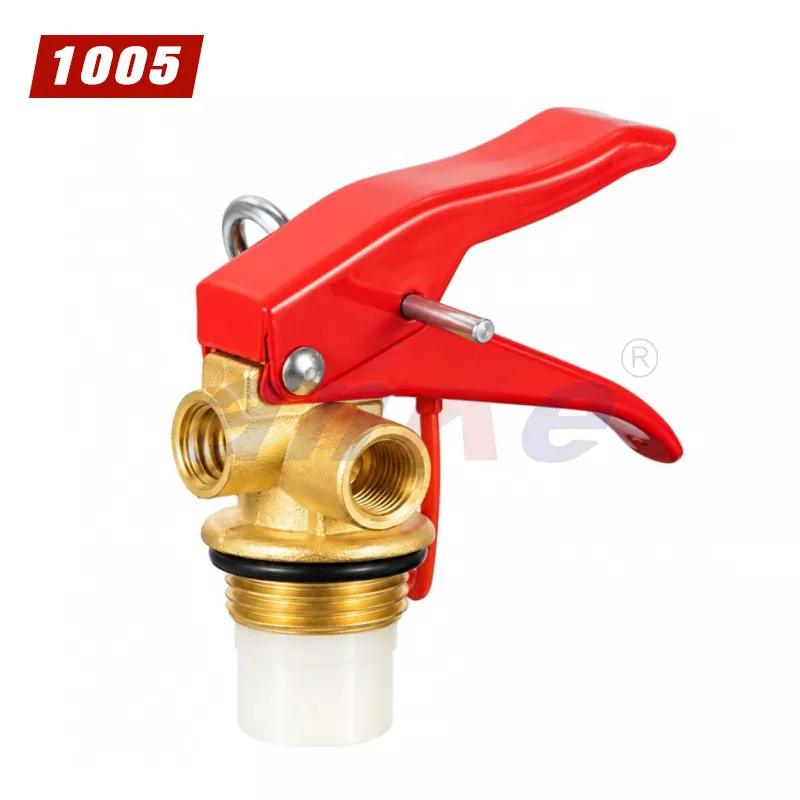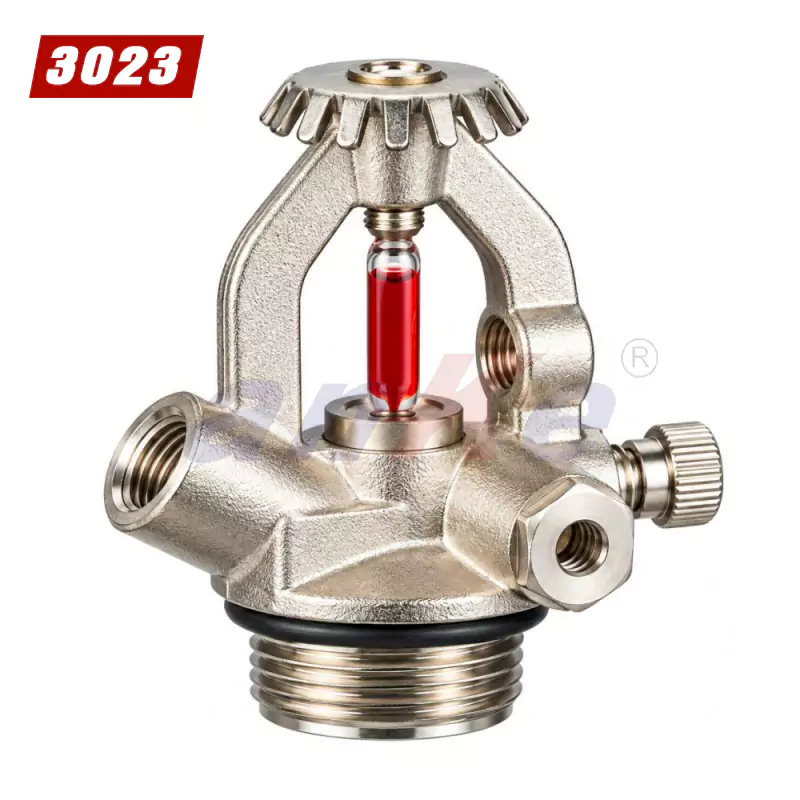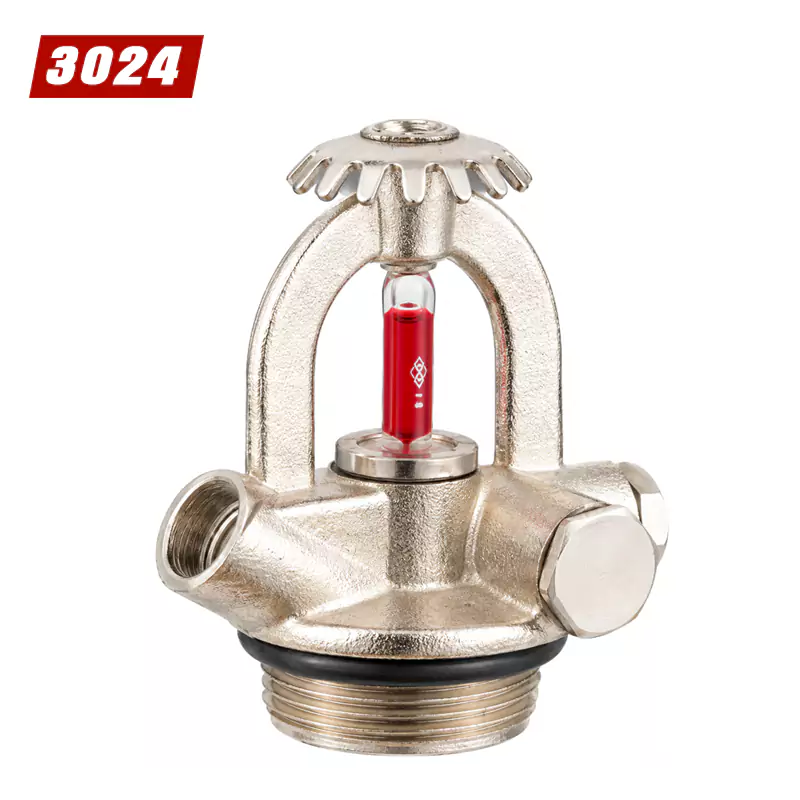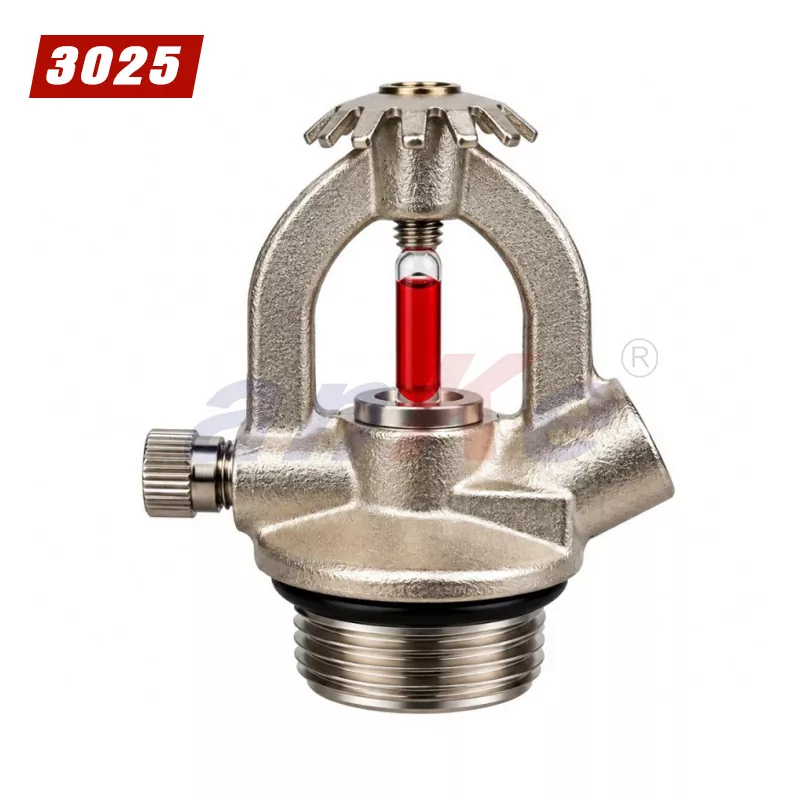
Fire sprinklers are heat-activated discharge devices installed on sprinkler piping. Each unit opens independently when the surrounding temperature reaches its rated activation point, then distributes water in a designed pattern to control or suppress fire at an early stage. They are widely used in automatic water-based fire protection systems for commercial, residential, industrial, and storage occupancies.
Choosing a sprinkler requires more than matching the inlet thread. The discharge coefficient, thermal response, activation temperature, installation orientation, deflector design, finish, and product approval status should all be checked against the occupancy hazard, ceiling conditions, and the fire protection design. For contractors, distributors, and system designers, clear technical data and verifiable product approval are essential for correct specification.
Product Overview
What Is a Fire Sprinkler?
A fire sprinkler is an automatic nozzle kept closed by a heat-sensitive element. In a glass-bulb design, the bulb contains a liquid that expands when heated until the bulb breaks and releases the seal. In a fusible-link design, a temperature-sensitive link separates at its rated point. Water then flows through the orifice and strikes the deflector, forming a spray pattern over the protected area.
The sprinkler operates individually according to local ceiling temperature rather than relying on smoke detection or a central command signal. This allows water to be applied only where fire conditions have developed. Its hydraulic capacity is described by the K-factor, while its thermal sensitivity is described by the response characteristic.
Key Performance Parameters
K-Factor and Discharge Capacity
The K-factor is the nominal discharge coefficient of the sprinkler. It links flowing pressure to flow rate through the relationship Q = K√P, where Q is flow rate and P is flowing pressure. A larger K-factor generally means a larger orifice and greater flow capacity at a given pressure.
Common nominal K-factors include 2.8, 4.2, 5.6, 8.0, 11.2, and larger values for extended coverage or storage applications. The required K-factor is determined by the design discharge density, minimum operating pressure, and coverage area specified for the hazard.
Response Type and Thermal Sensitivity
Thermal response describes how quickly the heat-sensitive element reacts to a changing gas temperature. A lower response time index indicates faster activation; a higher value indicates slower activation. Industry practice generally separates quick-response, special-response, and standard-response categories, but the exact classification should be confirmed from the product data and the applicable design requirements.
Response type is separate from activation temperature. Two sprinklers with the same temperature rating can open at noticeably different times if their thermal response characteristics differ.
Temperature Rating and Bulb Color
The temperature rating is the activation temperature of the sprinkler. It should be selected above the maximum expected ceiling temperature, with a suitable margin determined by the design requirements. Common ratings include 57°C, 68°C, 79°C, 93°C, and higher values for elevated-temperature environments.
Glass-bulb color coding gives a visual indication of the rating. Typical color associations vary by product and market, so the actual color scheme should always be checked against the specific sprinkler data sheet rather than assumed from a general table.
Sprinkler Types and Orientations
| Type / Orientation | Installation Position | Typical Use |
|---|---|---|
| Pendent | Deflector points downward from the pipe | Common exposed ceiling installation; spray pattern develops below the deflector |
| Upright | Deflector points upward from the pipe | Exposed piping arrangements where water is directed upward toward the ceiling for distribution |
| Conventional / Old-Style | Pendent or upright with a bidirectional spray pattern | Legacy configurations; generally not used in new standard spray designs |
| Sidewall | Mounted on a wall or side of a beam with a horizontal deflector | Areas where ceiling piping is impractical; spray projects outward and downward |
| Recessed / Concealed Pendent | Partially or fully recessed into the ceiling | Finished ceilings where a low-profile appearance is required; a cover plate conceals the unit |
| Extended Coverage | Various orientations | Larger coverage areas per sprinkler, subject to product approval and design criteria |
| Residential | Pendent, sidewall, or concealed | Dwelling units; designed to improve wall wetting and limit fire spread in residential fire tests |
Orientation and K-factor alone do not establish suitability for a given hazard. The deflector listing, coverage limits, and installation rules for the exact model must be checked against the ceiling construction and the fire protection design.
Technical Specifications to Confirm
Before ordering, confirm the following for each specific sprinkler model:
- Nominal K-factor and thread size: Orifice capacity and inlet thread, commonly 1/2 in., 3/4 in., or 1 in. NPT or metric equivalent.
- Response type: Quick, special, or standard response, with the published thermal sensitivity value where available.
- Temperature rating: Activation temperature and corresponding bulb color or link classification.
- Orientation and deflector design: Pendent, upright, sidewall, recessed, concealed, or extended coverage.
- Maximum working pressure: Confirm the rated pressure for the specific model.
- Factory test pressure: Confirm the hydrostatic test pressure applicable to the product.
- Body and deflector materials: Brass, copper alloy, stainless steel, or another approved material combination.
- Finish: Natural brass, chrome, painted, or another available finish.
- Product approval: Confirm that the exact model, K-factor, temperature rating, and finish are covered by the required market approvals.
- Coverage and spacing limits: Maximum coverage area, minimum and maximum spacing, and ceiling clearance per the product documentation.
Applications and Occupancy Considerations
Sprinklers are selected according to the occupancy hazard and the system design. Light hazard occupancies such as offices, schools, hospitals, and residential spaces often use quick-response sprinklers where permitted. Ordinary hazard occupancies may use quick or standard response depending on the design method and applicable requirements. Extra hazard occupancies and areas with significant flammable liquids or combustible dusts generally restrict the use of fast-response sprinklers in density/area designs.
Typical application categories include:
- Commercial buildings: Offices, retail premises, hotels, and mixed-use buildings.
- Residential and mixed occupancies: Dwelling units and residential portions where residential sprinklers are specified.
- Industrial and warehousing: Manufacturing, storage, and logistics environments, with sprinkler type depending on commodity classification and storage height.
- Specialized occupancies: Areas requiring extended coverage, concealed appearance, corrosion-resistant finishes, or high-temperature ratings.
Sprinkler selection and spacing should follow the product approval, the fire protection design, and the requirements of the authority having jurisdiction. Minimum spacing rules may also apply unless the specific product documentation permits otherwise.
How to Select the Right Fire Sprinkler
- Determine the occupancy hazard classification: Light, ordinary, extra hazard, or storage, according to the governing design requirements.
- Establish the design discharge density and K-factor: Use the hydraulic design method and minimum pressure requirements for the system.
- Confirm the required response type: Check whether quick, special, or standard response is required or restricted for the specific occupancy and design method.
- Select the temperature rating: Based on maximum ceiling temperature, with the required margin above ambient conditions.
- Choose the orientation and deflector type: Match the ceiling construction, piping layout, and architectural requirements.
- Verify product approval scope: Confirm that the specific model, K-factor, temperature rating, and finish are covered by the required approvals for the destination market.
- Check coverage and spacing limits: Confirm maximum coverage area, spacing, and obstruction rules per the product documentation and design requirements.
Quality Verification and Documentation
Reliable sprinkler procurement depends on verifiable product approval and consistent manufacturing quality. Suppliers should provide, for the specific model:
- Technical data sheet with K-factor, temperature ratings, finishes, and thread specifications.
- Product approval certificates covering the exact configuration being purchased.
- Material specifications for the body, deflector, bulb, and sealing assembly.
- Factory hydrostatic test records and performance data.
- Product identification and traceability information.
- Installation, spacing, and maintenance documentation.
Product identification codes assigned by the manufacturer help confirm that the correct K-factor, application, and response characteristics are supplied and installed. Buyers should verify that the documentation covers the exact product and configuration being ordered.
OEM/ODM and Wholesale Supply
For sprinkler manufacturers, distributors, and private-label buyers, sourcing may involve configuration and volume requirements. Potential project requirements include:
- Specified K-factor, temperature rating, and response type.
- Orientation, deflector design, and finish selection.
- Thread specification and connection standard for the target market.
- Brand marking, packaging, and labeling coordination.
- Product approval documentation for the destination market.
- Sample evaluation and qualification testing.
- Order quantity, delivery schedule, and batch inspection records.
Customization availability, minimum order quantities, lead times, and the scope of product approval for customized configurations should be confirmed for each project.
Frequently Asked Questions
What does the K-factor of a fire sprinkler mean?
The K-factor is the nominal discharge coefficient that relates flow rate to the square root of flowing pressure: Q = K√P. A higher K-factor indicates a larger orifice and greater flow at a given pressure. The required K-factor is determined by the system hydraulic design and discharge density requirements.
What is the difference between quick-response and standard-response sprinklers?
Quick-response sprinklers use a more thermally sensitive element and generally activate faster than standard-response sprinklers. The exact response category depends on the published thermal sensitivity value and the applicable design requirements. Response type affects activation speed and is regulated by occupancy and design method; it is separate from the temperature rating.
Can I replace a sprinkler with a different K-factor or temperature rating?
Not without engineering review. The replacement should match the system design, product approval, and coverage criteria. A different K-factor changes hydraulic demand, and a different temperature rating may not suit the ceiling environment or may fall outside the approval for the application.
What information is needed for a quotation?
Provide the required K-factor, response type, temperature rating, orientation, thread specification, finish, approval requirements, target market, estimated quantity, and delivery destination. The specific model reference, if available, helps ensure an accurate quotation.
Are all fire sprinklers suitable for all occupancies?
No. Product approval and application limits are specific to the model and configuration. A sprinkler intended for light hazard or residential use is not automatically acceptable for storage or extra hazard occupancies. The approval chart and design criteria for the exact model must be checked against the intended application.