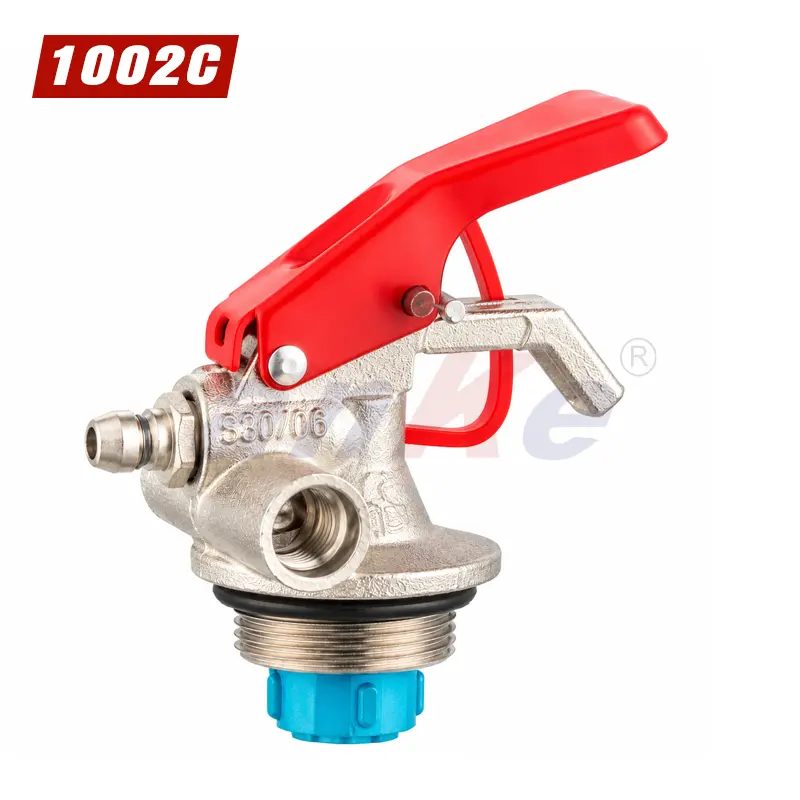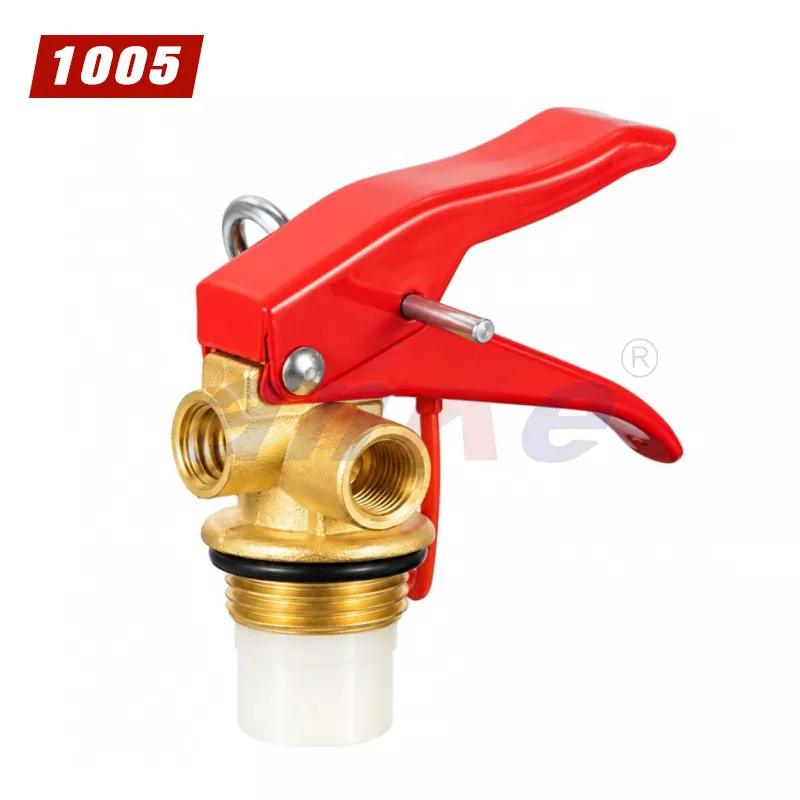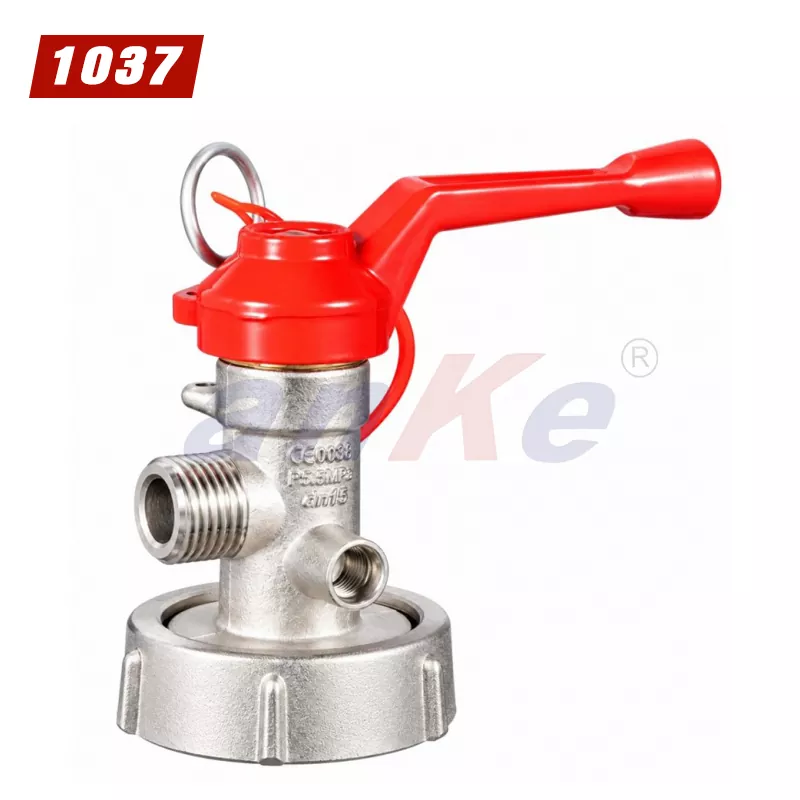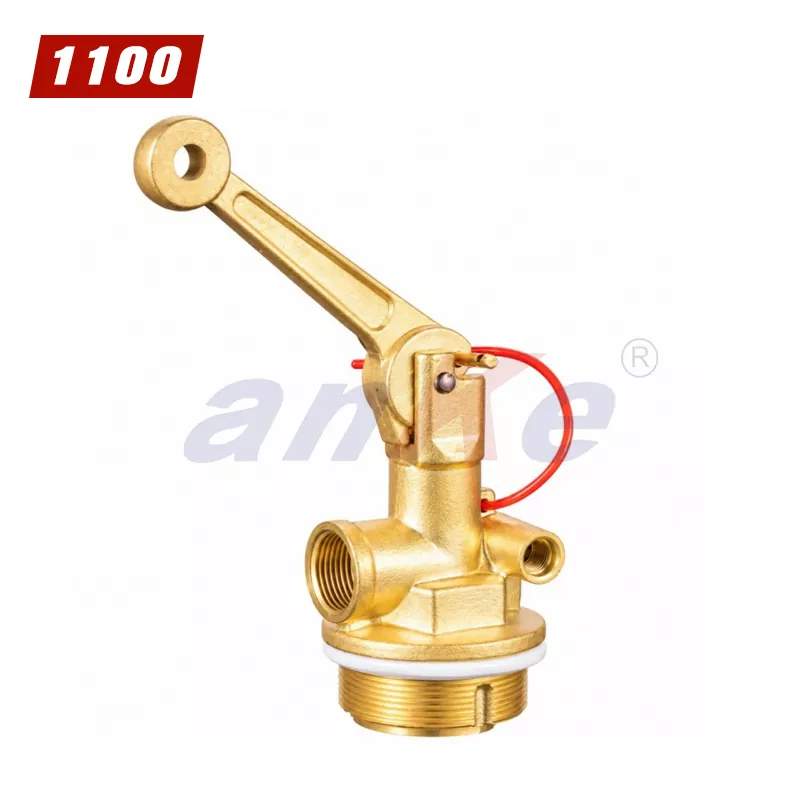
Wheeled extinguisher units demand a valve that can handle far more than a handheld model ever would. Trolley fire extinguisher valves sit at the heart of these mobile assemblies, managing agent release from cylinders that commonly range from 25 L to 100 L. They must cope with larger flow passages, heavier operating forces, and the practical realities of moving equipment across industrial sites before it is even used.
Getting the valve right means looking beyond the cylinder size. Agent chemistry, discharge hardware, pressure ratings, and the way operators will actually use the unit all shape the specification. For manufacturers and buyers alike, a valve that looks adequate on paper can fall short if these factors are not checked together.
Why Trolley Units Need a Different Valve Approach
A portable extinguisher is carried to the fire. A trolley unit is wheeled, often across rough ground, and may discharge for considerably longer. That changes what the valve has to do. The flow path must be generous enough to avoid choking the discharge, the operating mechanism must remain workable under load, and the whole assembly must tolerate the vibration and handling that come with mobile service.
Where a handheld valve might use a simple lever, a trolley valve often employs a handwheel or a heavier lever arrangement. The goal is not complexity for its own sake but control: the operator needs to open, modulate, and close the valve reliably while managing a hose or monitor at the same time.
Flow Path and Discharge Performance
Restriction inside the valve is one of the quiet causes of poor trolley performance. If the internal passage or outlet is undersized, the unit may struggle to achieve its intended throw distance, particularly with foam or water. The outlet connection should match the hose, reel, or monitor that the unit is designed to feed.
It is worth remembering that the valve is only one part of the discharge chain. Hose diameter, nozzle design, and agent viscosity all interact. A valve that performs well on one unit may behave differently when paired with a different hose arrangement, so the complete discharge path deserves attention rather than the valve in isolation.
Pressure Ratings and What They Actually Mean
Trolley valves are pressure-containing components, and the ratings must reflect the full assembly rather than the valve alone. Working pressure, test pressure, and any relief provisions depend on the cylinder design, the propellant system, and the standard the unit is built to.
Buyers sometimes assume that a higher-rated valve is automatically the safer choice. In practice, the valve should match the assembly it is fitted to. An over-specified valve may add cost and weight without benefit, while an under-specified one introduces risk. The manufacturer's documentation for the complete unit is the right reference point.
Materials and Agent Chemistry
Brass, copper alloy, aluminum alloy, and stainless steel all appear in trolley valve bodies. The choice is driven by the agent, the environment, and the manufacturing route. Foam concentrates are the most demanding in this respect, because surfactants and additives can attack unsuitable elastomers over time.
Seal selection deserves particular scrutiny. A seal that works acceptably with plain water may swell, harden, or degrade when exposed to an alcohol-resistant foam. The same logic applies to internal components such as stems and seats. Material compatibility should be confirmed against the specific agent formulation, not just the general category.
Common Configurations
| Configuration | Typical Unit | Practical Focus |
|---|---|---|
| Foam trolley valve | 25 L to 100 L foam units | Elastomer compatibility, wide flow path, foam expansion |
| Water trolley valve | Large water or water-additive units | Corrosion resistance, sealing integrity, hose interface |
| Dry powder trolley valve | 25 kg to 50 kg mobile powder units | Powder flow, moisture exclusion, propellant handling |
| Handwheel operation | General industrial units | Operating effort, wheel size, clearance for gloved hands |
| Lever operation | Units needing quicker actuation | Lever travel, mechanical advantage, reset reliability |
| With relief device | High-risk or hot environments | Set pressure, device type, compatibility with cylinder |
Specification Checklist
The following points are worth pinning down with the supplier before any order is placed:
- Agent type and any special formulation details.
- Inlet thread, diameter, pitch, and sealing method.
- Working pressure and test pressure for the complete unit.
- Body material, internal component materials, and surface finish.
- Seal material and its confirmed compatibility with the agent.
- Outlet size and connection type for hose, reel, or monitor.
- Operating mechanism type and physical dimensions.
- Relief device presence, type, and set pressure if fitted.
- Dip tube or siphon arrangement.
- Standards and approvals relevant to the destination market.
Where Trolley Units Are Used
These valves appear wherever larger agent quantities and longer discharge times matter. Fuel depots, chemical plants, airports, marine terminals, and large warehouses are common settings. The hazard itself shapes the choice: flammable liquid risks tend to point toward foam, while solid combustible risks may suit water or powder.
Site layout matters too. A unit that must be wheeled some distance to reach the hazard may benefit from a different operating arrangement than one stationed at a fixed point. The valve should be considered alongside the trolley frame, hose storage, and nozzle so that the whole unit works as intended when it is actually needed.
Choosing the Right Valve
- Confirm the agent and unit type before anything else.
- Match the inlet connection to the cylinder, including thread and seal.
- Check working and test pressure against the complete assembly.
- Review every wetted component for agent compatibility.
- Verify the outlet suits the discharge hardware.
- Assess the operating mechanism against expected use and access.
- Confirm approvals for the target market.
Documentation and Traceability
For trolley valves, paperwork matters as much as the hardware. Drawings, material records, dimensional checks, function tests, leak tests, and pressure test records all help confirm that the valve matches its specification. Certificates and declarations of conformity should cover the exact model being supplied.
Traceability is particularly useful for units in high-risk locations, where maintenance planning and replacement-part identification depend on knowing precisely which valve is installed. Batch records and product identification help avoid mix-ups when several similar-looking valves are in circulation.
OEM, ODM, and Volume Supply
Customization is common in this category. Thread specifications, cylinder connections, material and finish choices, handwheel or lever dimensions, and branding all vary between projects. Sample evaluation and qualification testing are often part of the process before volume production begins.
Minimum order quantities, lead times, and production capacity should be confirmed for each project rather than assumed. Batch quality requirements and inspection documentation should also be agreed in advance, particularly where the units will be deployed in demanding environments.
Questions Buyers Often Ask
Can a trolley valve be swapped onto a different unit?
Not safely without checking the full assembly. Cylinder connection, pressure rating, outlet arrangement, and agent compatibility all need to line up. External dimensions alone tell very little about whether a swap is appropriate.
How do I know which seal material to specify?
The starting point is the agent formulation. Standard water and basic foam mixtures may suit common elastomers, while alcohol-resistant and fluorine-free foams often need more resistant materials. The supplier should confirm compatibility for the specific concentrate being used.
What is the most commonly overlooked specification?
Outlet sizing and the matching discharge hardware are frequent blind spots. A well-made valve paired with an undersized hose or unsuitable nozzle can still deliver disappointing performance.
What should a quotation request include?
Agent type, cylinder connection details, required pressure ratings, material preference, operating mechanism, outlet size, target market, approval needs, quantity, and delivery destination. Drawings are helpful where available.
Are approvals transferable between markets?
Not automatically. Approval scope depends on the specific model, its testing, and the market in question. Buyers should confirm that the documentation covers the exact product being purchased and the requirements of the destination country.