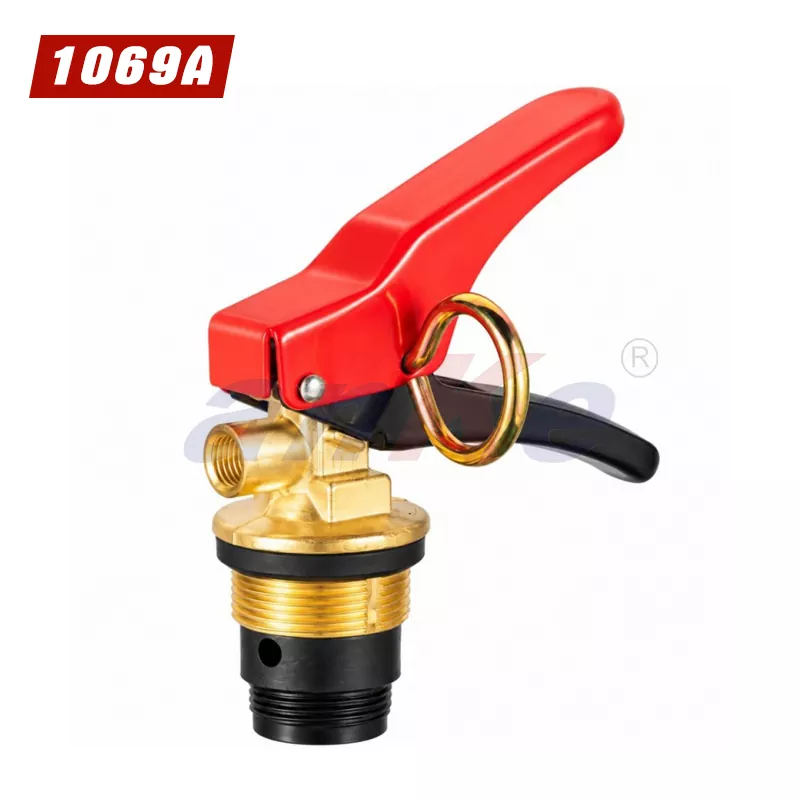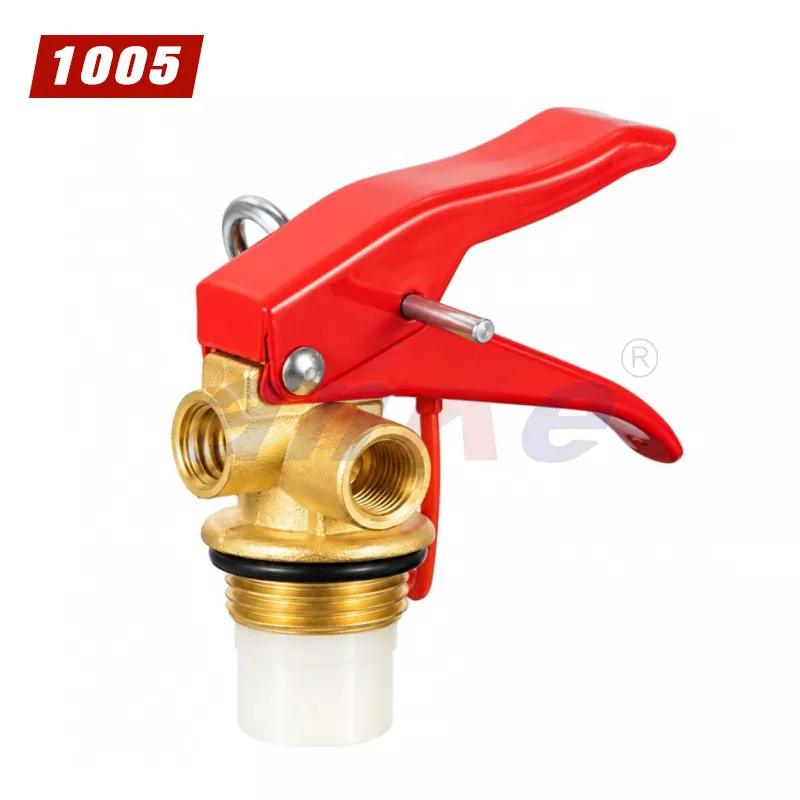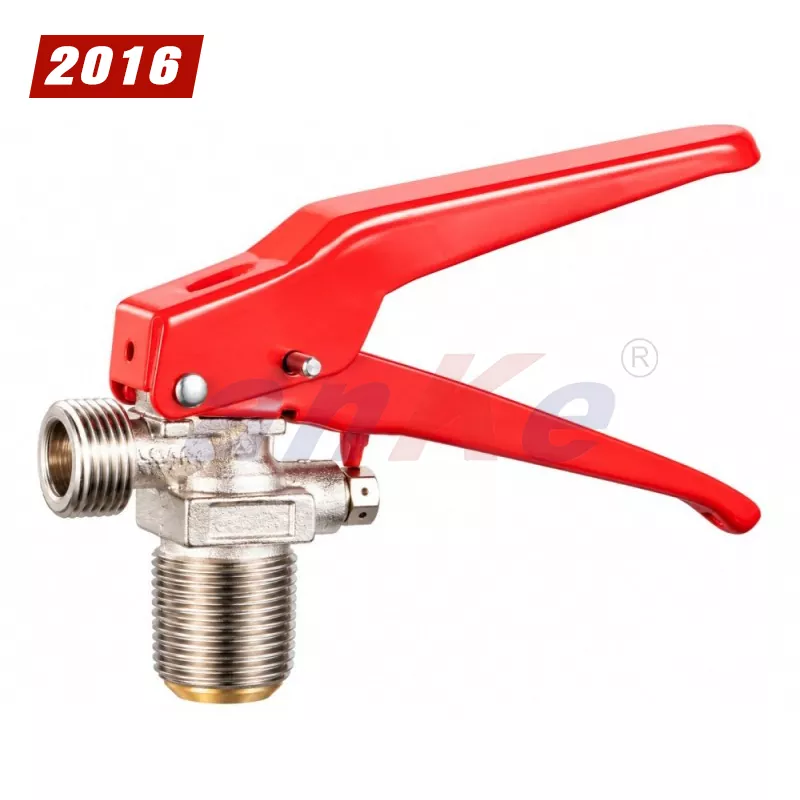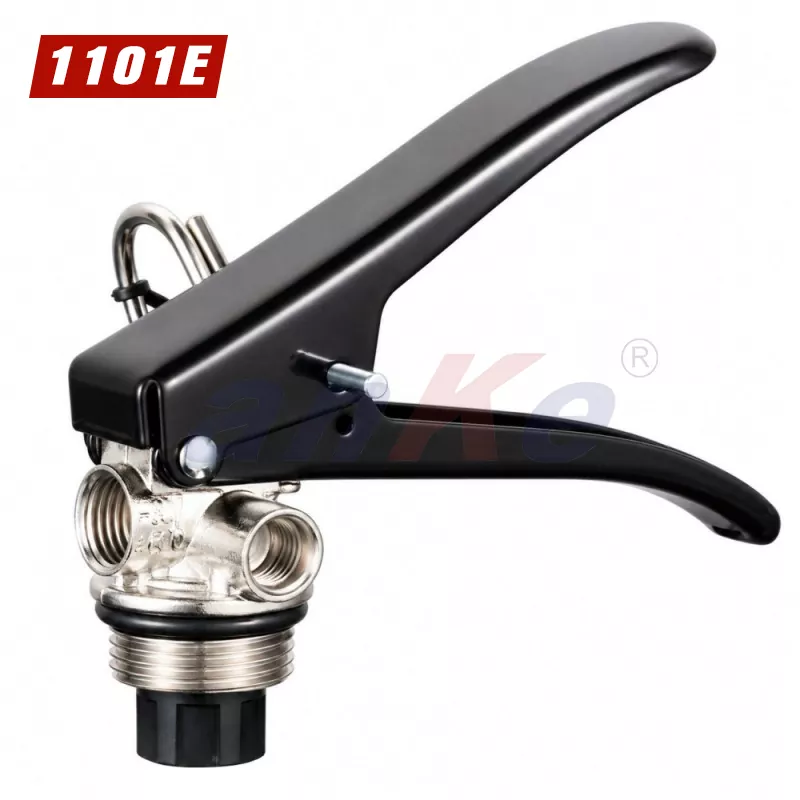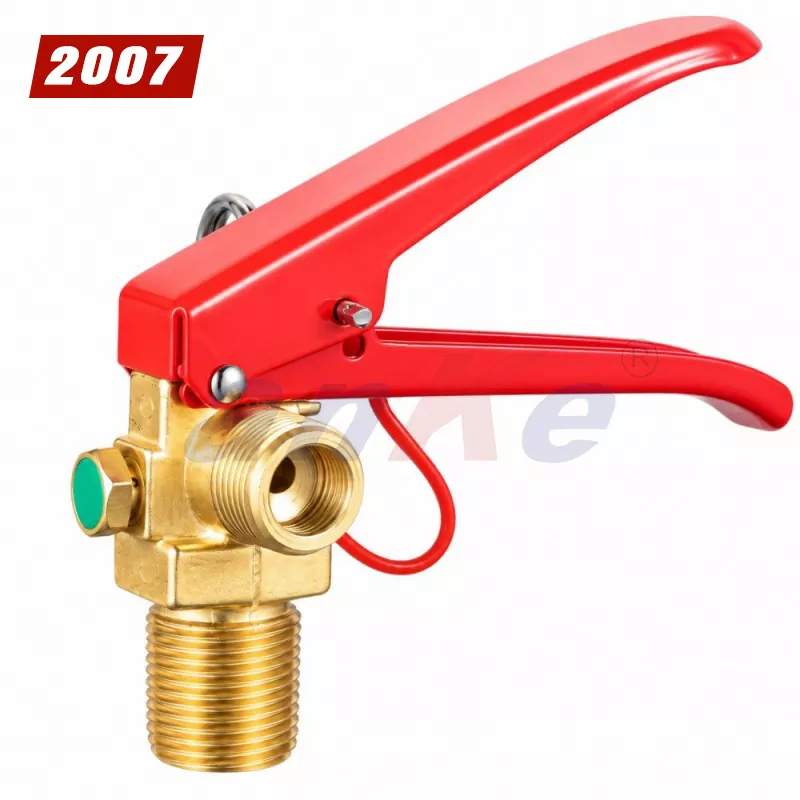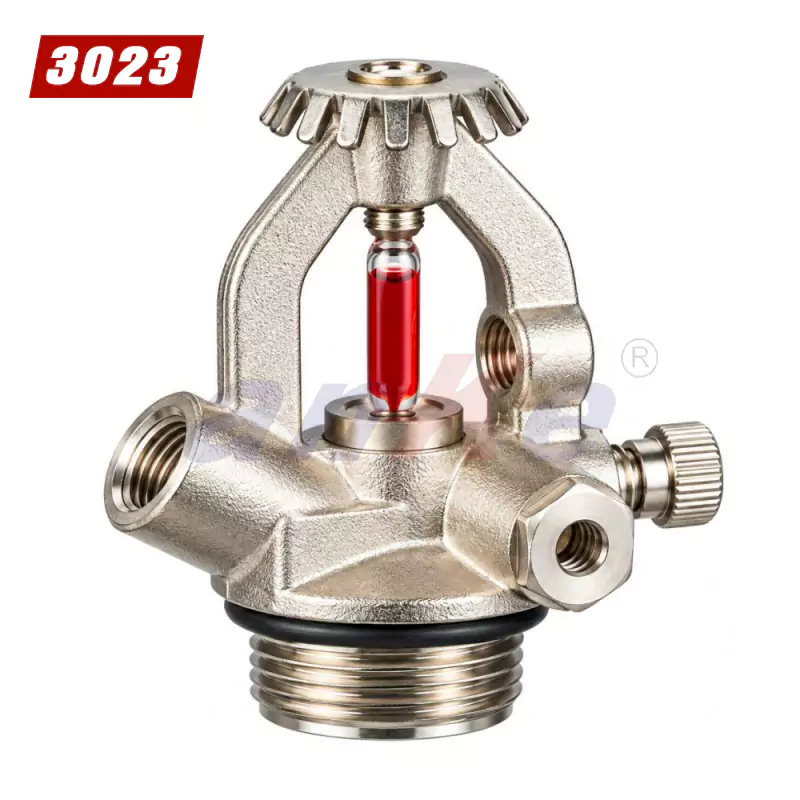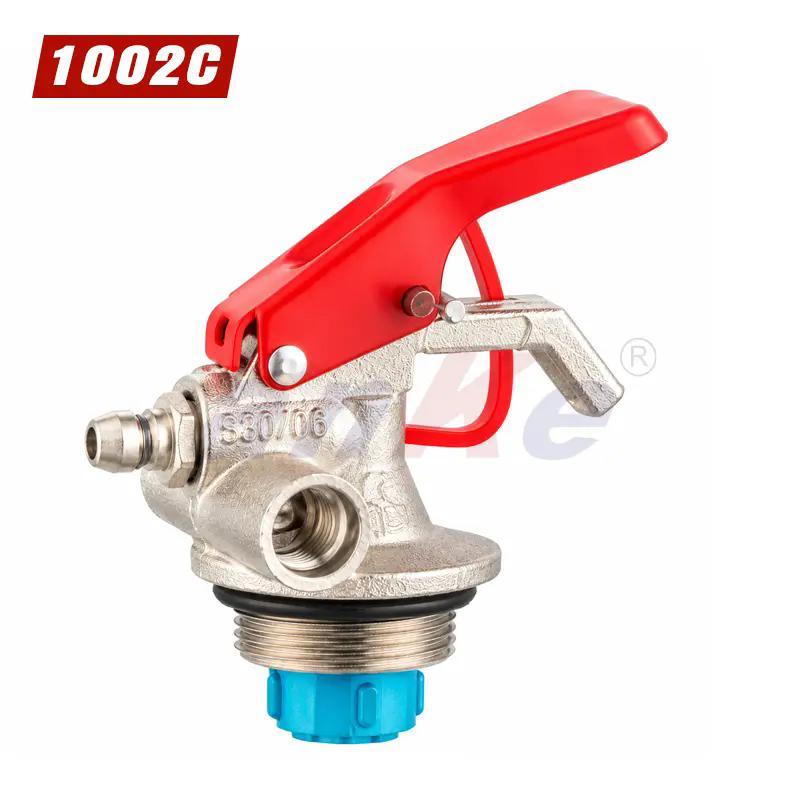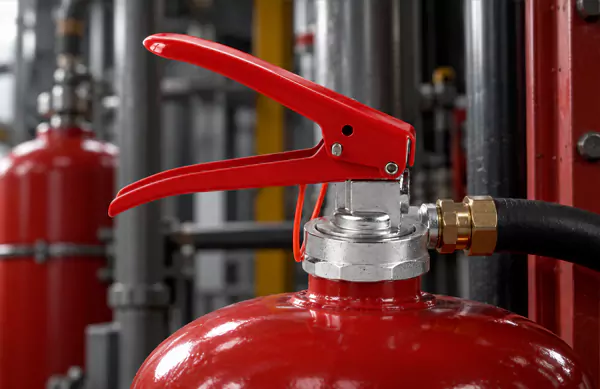
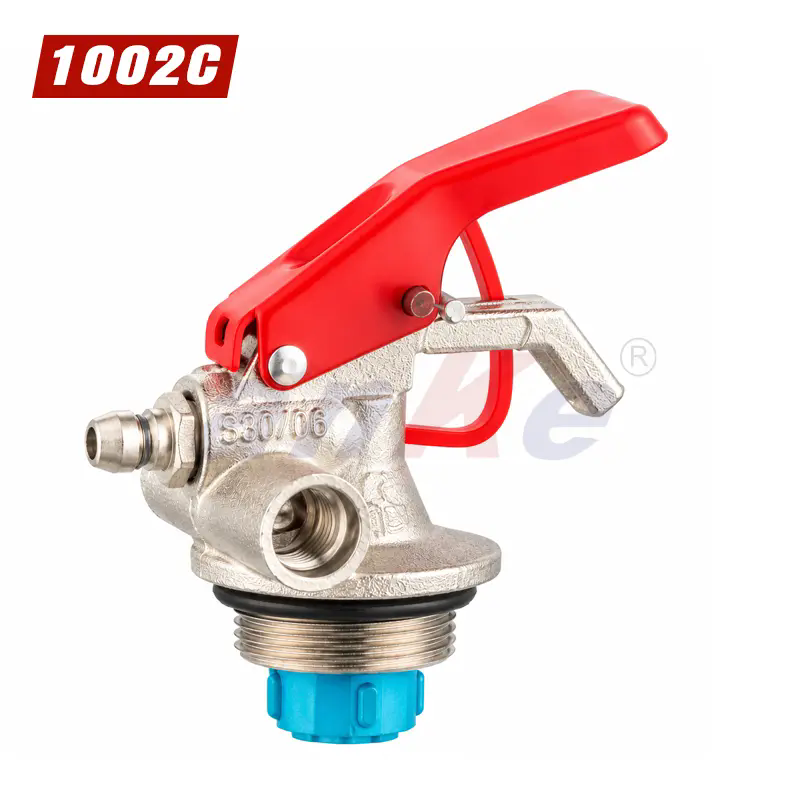
A fire extinguisher valve is more than a simple opening and closing mechanism. It is a functional assembly that connects the extinguisher cylinder with the discharge system, controls the release of extinguishing powder, maintains the required sealing condition, and incorporates safety features to manage internal pressure. Its main components generally include the valve body, operating handle, pressing mechanism, valve stem, sealing elements, safety pin, discharge outlet, cylinder connection, pressure gauge connection, and, where specified, a pressure relief device. Each component has a different responsibility, but their performance must work together to ensure controlled discharge and reliable operation.
For distributors, fire extinguisher manufacturers, and industrial purchasing teams, understanding these components is essential when evaluating Dry Powder Fire Extinguisher Valves. Material selection, threaded connection dimensions, sealing performance, pressure protection, and compatibility with the extinguisher cylinder all influence the suitability of a valve for a particular application. Ningbo Kaituo Valve Co., Ltd. offers the 4-12KG Dry Powder Fire Extinguisher Valve 1001 with copper or aluminium construction, multiple connection options, and a safety pressure relief device rated at 24±2 bar. This guide explains the relevant component functions and provides practical purchasing criteria for comparing valve configurations and suppliers.
1. What Are the Main Components of a Dry Powder Fire Extinguisher Valve?
2. How Do the Different Valve Components Work Together During Operation?
3. What Technical Specifications Should Buyers Check Before Purchasing?
4. How Can Buyers Evaluate Valve Quality and Choose the Right Supplier?
5. Conclusion: What Should Buyers Prioritize?
Understanding the physical construction of a fire extinguisher valve is the first step in making an informed purchasing decision. Although different manufacturers may use different structural arrangements, most conventional stored-pressure powder extinguisher valves share several functional components. These parts form a compact assembly that must withstand internal pressure, provide a dependable seal, and allow the operator to release the extinguishing agent when necessary.
When examining a valve for procurement, buyers should distinguish between external operating components, internal flow-control components, connection interfaces, and pressure protection components. This distinction makes it easier to compare technical drawings, product samples, and supplier quotations without assuming that valves with similar external appearances have identical internal structures.
The valve body is the central structural component of the assembly. It houses the internal operating mechanism and provides the necessary passages for connecting the extinguisher cylinder, discharge outlet, and other functional interfaces. It also supports the mechanical loads generated by internal pressure and repeated operation.
Material selection is particularly important because the valve body remains in contact with the pressurized environment throughout the extinguisher's service life. Copper alloy and aluminium are two material options identified for the 4-12KG Model 1001 offered by Ningbo Kaituo Valve Co., Ltd.
When comparing these materials, purchasing teams should consider the following factors:
Buyers should not select a body material based solely on its purchase price. The correct choice depends on the cylinder design, applicable standards, pressure requirements, and the intended operating environment.
The operating handle is the part that allows an extinguisher user to activate the discharge mechanism. In a conventional lever-operated design, the operator applies force to the handle, causing an internal mechanism to move and open the valve's flow passage.
The handle and pressing mechanism are closely related, but they perform different functions. The handle provides the external contact point, while the pressing mechanism transfers the applied force to the internal valve assembly.
Several construction details deserve attention during purchasing inspections:
A handle that appears visually acceptable may still have poor mechanical alignment or an unsuitable operating feel. Buyers should therefore request representative samples and evaluate the complete assembled valve rather than relying exclusively on product photographs.
The valve stem is an important internal component that transfers movement from the operating mechanism to the sealing or opening element. Depending on the specific valve design, the assembly may include a stem, plunger, sealing seat, spring, and related mechanical parts.
When the operator activates the handle, the mechanism moves the relevant internal element away from its sealing position, allowing the extinguishing agent to flow through the designed passage. When the operating force is released, the mechanism returns to its closed position according to the valve's structural design.
From a procurement perspective, internal component quality is difficult to judge through external inspection alone. Buyers should pay attention to the following:
These details influence operating reliability and the ability of the valve to maintain its intended function over time.
Sealing elements prevent unwanted leakage at critical interfaces. They may be installed around the stem, between the valve body and connected components, or at other locations specified by the design.
Depending on the construction, seals can include O-rings, gaskets, packing elements, or other engineered sealing components. Their materials must be suitable for the pressure, temperature, extinguishing agent, and expected storage conditions.
Buyers should investigate:
It is important not to assume that every valve uses the same sealing material. The exact seal composition should be confirmed through the manufacturer's technical documentation.
The safety pin is an external locking component designed to prevent accidental operation before the extinguisher is intentionally used. It normally passes through designated parts of the operating assembly and restricts handle movement.
A tamper-evident seal or safety tie may be used alongside the pin. It provides a visible indication that the locking arrangement has been disturbed. These parts are particularly relevant for fire extinguishers installed in commercial buildings, warehouses, vehicles, and public facilities, where unauthorized handling must be identifiable during routine inspections.
For procurement teams, the important considerations include correct pin dimensions, suitable retention, easy removal during emergency operation, and compatibility with the handle structure. The pin should not be so loose that it falls out during normal handling or so difficult to remove that it interferes with intended operation.
These connection interfaces determine how the valve integrates with the wider extinguisher assembly.
The discharge outlet provides the connection for the discharge hose or nozzle arrangement. The cylinder connection secures the valve to the extinguisher cylinder neck. The gauge port provides an interface for installing a pressure gauge when the selected extinguisher configuration includes one.
Although these interfaces may appear to be relatively simple threaded openings, incorrect dimensions can prevent proper assembly or create leakage risks.
Purchasers should distinguish between thread diameter, thread pitch, thread form, and sealing method. Two connections that appear similar in diameter may not be interchangeable.
A pressure relief device is an additional safety component fitted to valve configurations that include this feature. Its purpose is to provide a controlled means of relieving excessive internal pressure when the specified activation conditions are reached.
The 4-12KG Model 1001 configuration from Ningbo Kaituo Valve Co., Ltd. is listed with a safety pressure relief device rated at 24±2 bar. This value is a product-specific specification and should not automatically be applied to other valve models.
When evaluating this component, buyers should verify its specified activation range, compatibility with the extinguisher design, applicable safety requirements, and inspection or replacement procedures.
Ultimately, the valve body, actuator, stem, sealing arrangement, connections, and safety device should be assessed as one engineered assembly. A high-quality individual component cannot compensate for an incorrectly matched or poorly assembled valve.
A fire extinguisher valve must perform several functions in a coordinated sequence. It must maintain a sealed condition during storage, prevent unintended activation, respond to the operator's action, provide a controlled discharge path, and maintain the required mechanical integrity under its specified operating conditions.
For buyers, understanding this sequence is more useful than simply memorizing component names. It helps explain why seemingly minor differences in handle alignment, sealing design, internal movement, and connection dimensions can affect the performance of the complete extinguisher.
During normal storage, the valve remains in its closed position. The internal sealing arrangement prevents the pressurized extinguishing agent from escaping through the discharge passage or other controlled openings.
At this stage, several components contribute to maintaining the required condition:
These components perform different tasks, so a procurement inspection should not focus on just one visible feature. A secure safety pin does not demonstrate that the internal sealing arrangement is satisfactory, while an apparently well-finished valve body does not establish that all threaded connections are compatible.
For commercial buyers, storage conditions also matter. Long periods of exposure to moisture, corrosive environments, temperature changes, or unsuitable handling can affect external surfaces and some internal materials. Supplier documentation should identify the intended service conditions and relevant material specifications.
When an extinguisher is required, the operator follows the instructions applicable to the specific extinguisher model. In a conventional pin-and-lever arrangement, the safety pin is removed before the operating handle is pressed.
The handle then transfers force to the internal opening mechanism. The valve stem or associated moving element changes position, opening the designed passage between the pressurized cylinder and the discharge outlet.
The extinguishing powder is then propelled through the discharge system by the pressure inside the cylinder. The valve does not independently create the pressure needed to discharge the powder. Instead, it controls access to the flow passage and provides the connection through which the agent is released.
This distinction is important when comparing extinguishing systems. A stored-pressure powder extinguisher, a cartridge-operated extinguisher, and a CO2 extinguisher can use different internal arrangements and pressure-control principles. A valve should therefore be selected for its intended extinguisher type rather than assumed to be universally interchangeable.
The discharge outlet and its connected hose or nozzle arrangement determine the route through which the extinguishing agent travels after the valve opens.
Purchasing teams should examine the complete connection arrangement rather than considering the outlet thread in isolation. A valve may have a suitable cylinder connection but still be incompatible with the customer's existing hose, nozzle, or pressure gauge configuration.
Important evaluation points include:
It is also necessary to distinguish between a valve's connection size and its actual discharge performance. Thread dimensions alone cannot establish discharge rate, discharge distance, or extinguishing effectiveness. Such performance characteristics require the relevant system-level test data.
Pressure protection is a separate consideration from normal discharge control. The operating mechanism is intended to release the extinguishing agent when activated by the user, whereas a pressure relief device is designed to respond to specified excessive-pressure conditions.
For a configuration equipped with this feature, buyers should confirm:
The Model 1001 specification lists a pressure relief device at 24±2 bar. Buyers should confirm that this setting is appropriate for the intended extinguisher system and its applicable regulatory requirements rather than treating it as a universal setting for powder extinguishers.
In a conventional operating arrangement, releasing the operating force allows the mechanism to return toward its designed closed position. The exact movement and return arrangement depend on the specific valve construction.
However, a used fire extinguisher should not be treated as ready for service simply because its handle appears to have returned to its original position. Discharge, internal contamination, loss of pressure, damaged seals, and other conditions may affect its serviceability.
After use, inspection, servicing, recharging, and testing must follow the applicable extinguisher manufacturer's procedures and local requirements. The valve should not be disassembled or adjusted by unqualified personnel.
A valve is a collection of interacting mechanical and sealing components. For this reason, purchasing evaluations should consider the complete operating cycle, including the initial sealed condition, activation, discharge, and subsequent inspection.
For example, a handle that moves smoothly during a simple manual check does not prove that the valve can maintain pressure. Similarly, a body with accurate external dimensions does not establish that its internal sealing surfaces have the required finish.
Our procurement recommendation is to request technical drawings, connection specifications, material information, applicable test records, and representative samples before approving a new valve model. Ningbo Kaituo Valve Co., Ltd. identifies its Model 1001 as a 4-12KG dry powder extinguisher valve, allowing purchasers to begin their assessment with a defined application range and documented connection interfaces.
The most useful purchasing decision is therefore based on compatibility, documented performance, and the consistency of the assembled product rather than on external appearance or the number of components alone.
Technical specifications are the foundation of a successful fire extinguisher valve purchase. A valve can have a suitable material, an attractive finish, and a competitive quotation but still be unsuitable for the intended extinguisher if its connection dimensions, pressure protection arrangement, or application range do not match the customer's requirements.
For manufacturers assembling complete extinguishers, specification accuracy directly affects cylinder compatibility, component sourcing, assembly procedures, and finished-product inspection. For distributors and importers, it influences product positioning, replacement compatibility, technical documentation, and the risk of receiving products that cannot be integrated into existing inventory.
Instead of comparing suppliers using general descriptions such as brass valve or standard fire extinguisher valve, buyers should prepare a specification checklist that covers the following technical areas.
The valve body material affects structural properties, corrosion behaviour, weight, manufacturing processes, and total product cost.
The Model 1001 offered by Ningbo Kaituo Valve Co., Ltd. lists copper and aluminium as available material options. These should be treated as separate configurations rather than interchangeable descriptions of one finished product.
When comparing material options, buyers should consider:
Surface treatment should not be viewed as a substitute for selecting an appropriate base material. It is an additional consideration that must be compatible with the manufacturing process and application.
Thread compatibility is one of the most important factors when purchasing replacement or assembly valves. Even a small difference in thread pitch, profile, or tolerance can create installation problems.
The following table summarizes the published connection specifications for the 4-12KG Model 1001.
| Specification | Model 1001 Parameter | Procurement Consideration |
| Applicable extinguisher capacity | 4-12KG | Confirm compatibility with the cylinder and complete extinguisher design. |
| Body material | Copper / Aluminium | Confirm the selected material and exact material grade. |
| Surface treatment | Chrome / Nickel plating according to customer requirements | Confirm finish requirements and whether the quotation includes the selected treatment. |
| Cylinder inlet thread | M30 × 1.5 | Verify the cylinder neck thread and applicable tolerances. |
| Discharge outlet thread | M14 × 1.5 / G1/4-19 / 9/16UNF | Specify the required outlet configuration before ordering. |
| Pressure gauge thread | M10 × 1-12.5 / NPT1/8 | Confirm the required gauge interface and thread standard. |
| Dip tube pipe thread | M16 × 1.5 | Check compatibility with the intended internal tube connection. |
| Pressure relief device | 24±2 bar | Verify the required pressure setting and applicable system requirements. |
One important detail is that the slash-separated thread specifications indicate available connection options, not necessarily a single valve carrying every thread configuration simultaneously. Buyers should identify the exact required version in their purchase order.
Thread designations also require careful interpretation. M-series metric threads, G-series pipe threads, NPT threads, and UNF threads belong to different thread systems. Buyers should not assume that similar nominal dimensions make these connections interchangeable.
Pressure-related information needs to be reviewed in the context of the complete extinguisher system. The valve, cylinder, sealing components, pressure gauge, and relief arrangement must be suitable for the specified operating conditions.
When a supplier provides a pressure figure, buyers should clarify what that value represents:
These values are not equivalent. A pressure relief setting of 24±2 bar, for example, does not automatically represent the valve's maximum allowable working pressure or its hydrostatic test pressure.
Purchasers should request the applicable test documentation and verify that the pressure protection arrangement meets the requirements for the complete extinguisher assembly. The test procedure, test medium, acceptance criteria, and relevant standard should be clearly identified.
Technical documentation helps purchasing teams determine whether a supplier can provide consistent products and support the customer's quality-control process.
A practical document request list includes:
CE marking, EN 3 references, and other compliance claims should be checked against the exact product, applicable standard, and supporting documentation. A certificate relating to another valve model should not automatically be accepted as evidence for the selected configuration.
The following comparison illustrates how a procurement team can organize its evaluation. It is a selection framework rather than a claim that all valve models have identical construction.
| Evaluation Area | Configuration A | Configuration B | What Buyers Should Verify |
| Body material | Copper or copper alloy | Aluminium | Exact alloy, material properties, and intended application. |
| Surface finish | Chrome or nickel plated | Specified alternative finish | Customer requirements and compatibility with the base material. |
| Outlet interface | Metric thread | Pipe or UNF thread option | Exact thread type, dimensions, and mating component. |
| Pressure protection | With safety relief device | Without safety relief device, where available | Applicable design requirements and approved configuration. |
| Gauge connection | M10 × 1-12.5 | NPT1/8 | Gauge compatibility and specified sealing arrangement. |
For a purchase order, the selected combination should be written as a complete technical specification. Avoid descriptions such as 4-12KG brass valve with standard threads because they leave too much room for interpretation.
Before confirming a production order, procurement teams should resolve several practical issues that are frequently overlooked during the quotation stage.
Answering these questions before mass production helps reduce component mismatch, assembly delays, and avoidable quality disputes. A technically complete specification is also more useful than a general product catalogue description when requesting quotations from multiple manufacturers.
Choosing a fire extinguisher valve supplier requires more than comparing unit prices. The valve is a pressure-related safety component, and its quality depends on material selection, machining accuracy, assembly consistency, sealing performance, and appropriate inspection procedures. A supplier that provides attractive pricing but cannot clearly explain its product configuration may create additional costs during assembly, testing, or after-sales handling.
For international buyers, the challenge is to identify a manufacturer that can understand the technical requirements of the target market and supply the correct configuration consistently. This is particularly important for OEM extinguisher manufacturers, wholesalers, importers, and distributors purchasing several valve models for different extinguisher capacities.
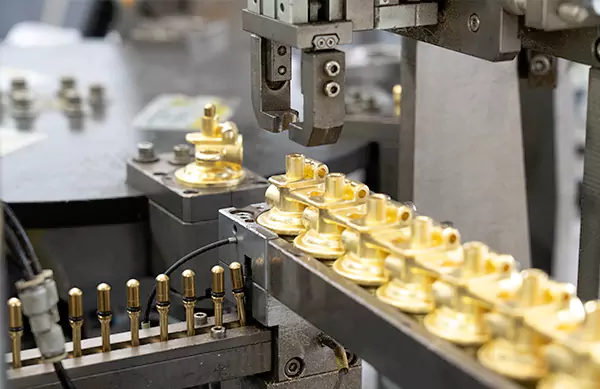
The first area to investigate is the supplier's ability to manufacture the specified components consistently.
Valve bodies contain several functional interfaces, and the quality of these areas influences assembly accuracy and sealing performance. Buyers should ask how the supplier controls critical dimensions, threaded connections, internal surfaces, and component alignment.
Useful questions include:
Where possible, buyers should request sample measurements and compare them with the approved drawing. A product sample should be evaluated against documented specifications rather than visual appearance alone.
Inspection and testing are essential when evaluating a pressure-containing valve. However, buyers should distinguish between different types of tests because each one examines a different performance characteristic.
Depending on the product design and applicable requirements, the inspection plan may include:
Buyers should request information about sampling frequency, acceptance criteria, inspection records, and the applicable test standard. A statement that products are quality tested is less useful than a documented inspection procedure with identifiable acceptance requirements.
Traceability allows manufacturers and buyers to connect finished products with relevant production and inspection information. This is especially valuable when a customer receives several shipments over an extended purchasing cycle.
A practical traceability arrangement may include:
Without sufficient identification, investigating a quality complaint can become difficult because the buyer may not be able to determine which production batch or configuration is involved.
For OEM projects, the supplier should also have a clear process for managing engineering changes. A change to the material, thread configuration, surface treatment, or safety device should not be made without the required customer approval.
A reliable supplier should be able to explain its product range and identify which configuration is suitable for a customer's stated requirements. This does not mean that every manufacturer must offer every possible valve design. It means that the supplier should clearly communicate the limits of its products and avoid recommending a configuration without checking compatibility.
When evaluating Ningbo Kaituo Valve Co., Ltd., purchasing teams can begin with the published Model 1001 information and request confirmation of the required material, surface treatment, connection arrangement, and safety device configuration.
For an effective supplier evaluation, consider these questions:
Clear technical communication is particularly valuable for overseas buyers because misunderstandings about thread systems, product capacity, and safety configurations can lead to expensive shipping and replacement problems.
The lowest quoted unit price does not necessarily represent the lowest total procurement cost. Buyers should consider the expenses associated with product integration, inspection, storage, logistics, and potential quality issues.
For example, a valve with an incorrect outlet thread may require an alternative hose assembly or additional engineering work. A product supplied with an unexpected surface treatment may not meet the customer's appearance or environmental requirements. Unclear pressure relief specifications can also delay approval of the complete extinguisher design.
A more comprehensive purchasing calculation should include:
Buyers should also clarify minimum order quantities, production lead times, payment arrangements, packaging specifications, and shipping terms before confirming a purchase.
Before issuing a purchase order, use the following checklist to confirm that the technical and commercial requirements have been addressed.
Product configuration
Technical compatibility
Quality assurance
Commercial arrangements
This approach makes supplier comparisons more objective and reduces the possibility of purchasing a product that meets the general description but fails to satisfy the actual assembly requirements.
For buyers sourcing Dry Powder Fire Extinguisher Valves in bulk, the most important principle is to establish a clear relationship between the technical drawing, approved sample, production specification, and delivered product. Ningbo Kaituo Valve Co., Ltd. can be evaluated against these criteria through its product documentation, available configurations, and sample approval process.
The main components of a dry powder fire extinguisher valve include the valve body, operating handle, pressing mechanism, valve stem, sealing elements, safety pin, discharge outlet, cylinder connection, gauge interface, and pressure relief device where fitted. Each part contributes to a different aspect of the valve's operation, from maintaining a sealed condition during storage to controlling the release of extinguishing powder when the extinguisher is activated.
For purchasing teams, the most important consideration is not simply how many components a valve contains, but whether those components are correctly designed, manufactured, assembled, and matched to the intended extinguisher. Body material, thread specifications, pressure protection, sealing compatibility, and documented inspection procedures should all be considered before an order is approved.
The 4-12KG Model 1001 from Ningbo Kaituo Valve Co., Ltd. provides a practical reference for evaluating these requirements, with copper or aluminium body options, specified inlet and outlet threads, gauge and dip tube interfaces, and a 24±2 bar safety pressure relief device. Buyers should confirm the exact configuration and technical documentation for their intended application rather than assuming that every option is included in one standard version.
Whether you are an extinguisher manufacturer, importer, distributor, or fire protection equipment wholesaler, our product selection and procurement process should begin with technical compatibility and clearly defined quality requirements. Contact Ningbo Kaituo Valve Co., Ltd. to discuss your required valve model, connection dimensions, material selection, surface treatment, and order specifications. Request a detailed quotation and technical information to determine the appropriate configuration for your next fire extinguisher production or sourcing project.
The essential components generally include the valve body, operating handle, pressing mechanism, valve stem, internal sealing elements, safety pin, discharge outlet, and cylinder connection. Depending on the valve configuration, a pressure gauge port, dip tube connection, and pressure relief device may also be included. The valve body provides structural support, the operating mechanism controls the opening and closing action, and the sealing components help prevent unintended leakage. The exact component arrangement varies by model, so buyers should refer to the manufacturer's engineering drawing when checking a specific valve.
Copper alloys and aluminium are commonly used material options for fire extinguisher valve bodies. The selection depends on mechanical requirements, corrosion resistance, weight considerations, manufacturing methods, and compatibility with the intended extinguisher system. The 4-12KG Model 1001 from Ningbo Kaituo Valve Co., Ltd. lists both copper and aluminium options, with chrome or nickel plating available according to customer requirements. Buyers should confirm the exact alloy designation and supporting material documentation before approving a bulk order because general material descriptions alone do not establish the mechanical properties of the finished component.
Buyers should compare the cylinder neck thread with the valve inlet specification, including the nominal diameter, thread pitch, thread profile, tolerance, and required sealing arrangement. They should also verify the discharge outlet, pressure gauge connection, and dip tube interface against the intended extinguisher assembly. For example, the Model 1001 specifies an M30 × 1.5 cylinder inlet thread, but this specification alone does not establish compatibility with every cylinder. Requesting an engineering drawing and checking a representative sample against the actual cylinder is the most practical way to reduce connection mismatches before mass production.
A pressure relief device is designed to provide a controlled means of relieving excessive internal pressure when the specified activation conditions are reached. It is a separate safety function from the normal operating handle, which is used to release the extinguishing agent during operation. The Model 1001 configuration lists a safety pressure relief device rated at 24±2 bar. Buyers should verify the activation setting, applicable tolerance, test documentation, and compatibility with the complete extinguisher design. This value should not be interpreted as the working pressure or hydrostatic test pressure unless the relevant technical documentation explicitly defines it that way.
Manufacturers should first establish the exact extinguisher capacity, valve model, body material, surface treatment, cylinder inlet thread, discharge outlet, gauge connection, and dip tube interface. They should then request an approved engineering drawing, material information, applicable certificates, and relevant inspection or pressure test records. Sample approval should take place before mass production, with the acceptance criteria documented for both dimensional compatibility and functional performance. Commercial conditions, including minimum order quantity, lead time, packaging, batch identification, and after-sales procedures, should also be agreed in advance. These steps help ensure that the delivered valves match the approved configuration and the customer's assembly requirements.