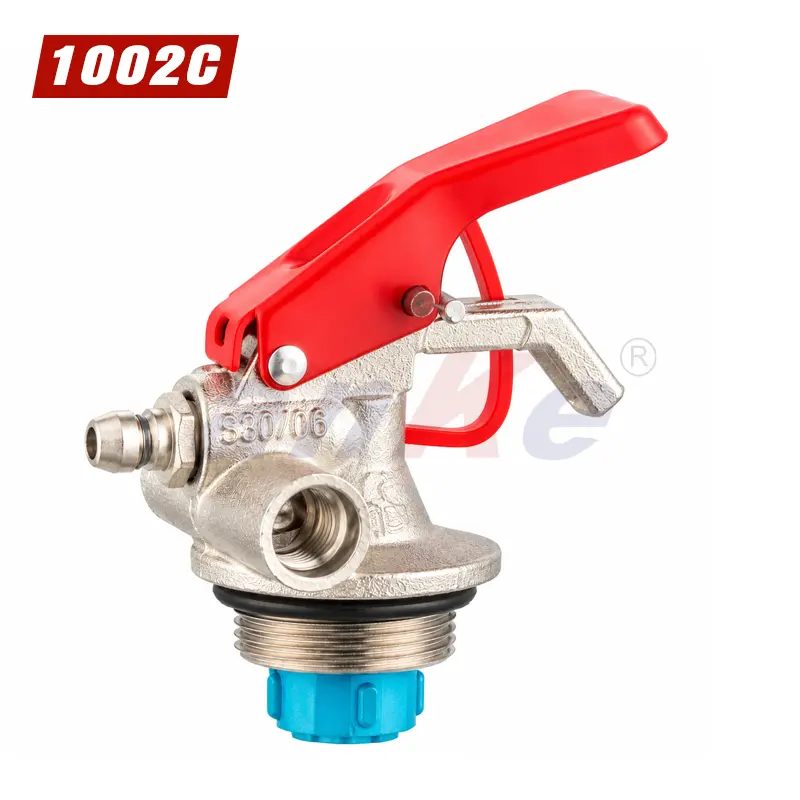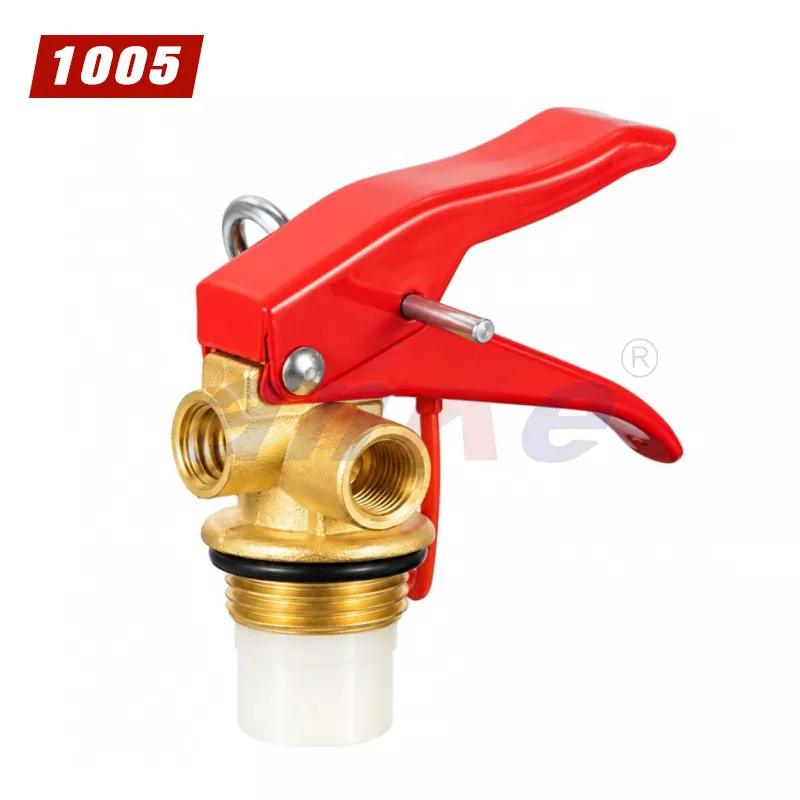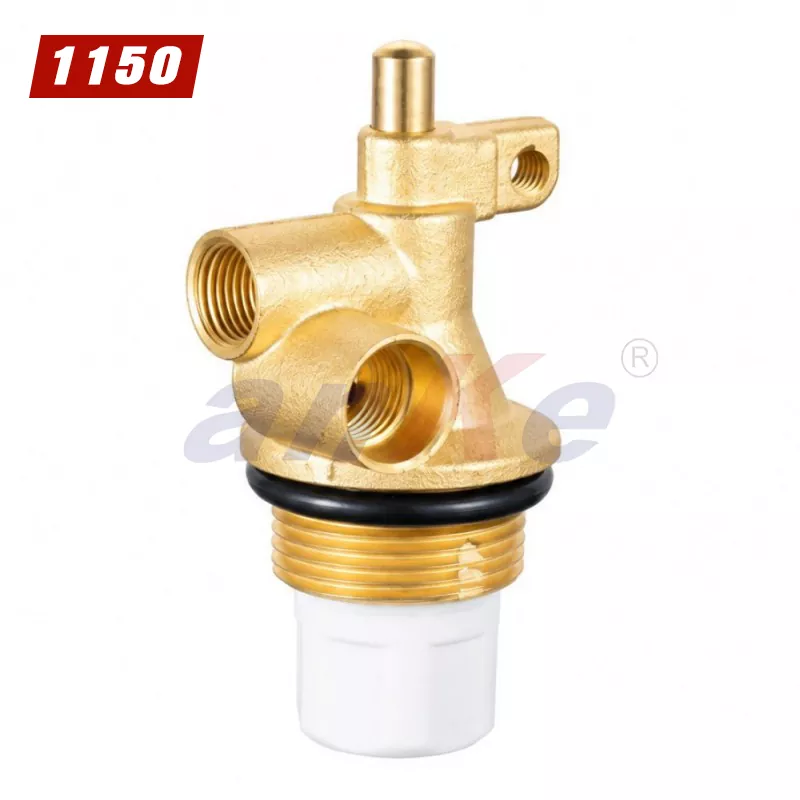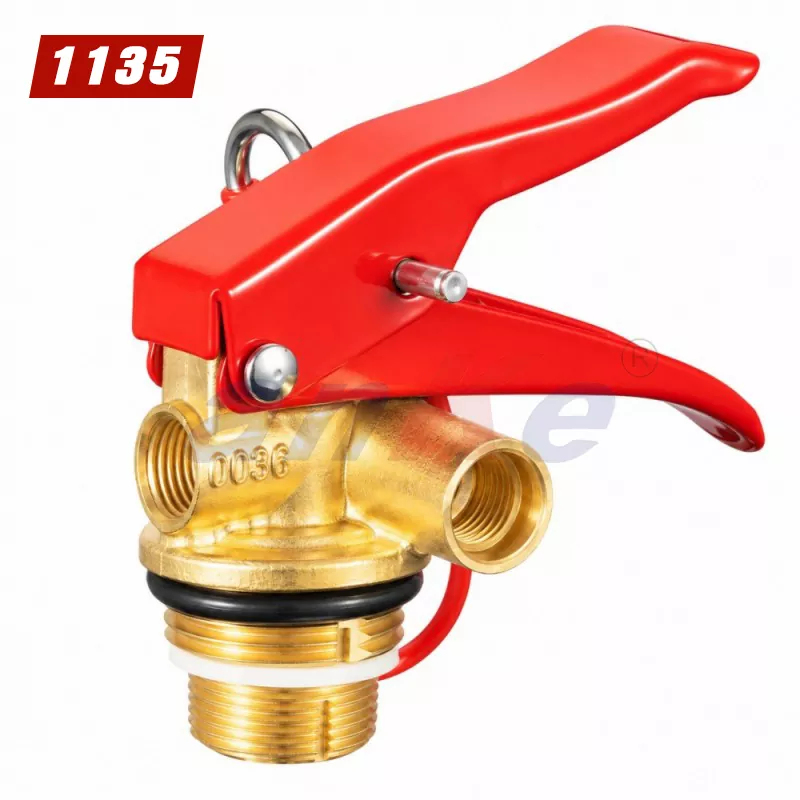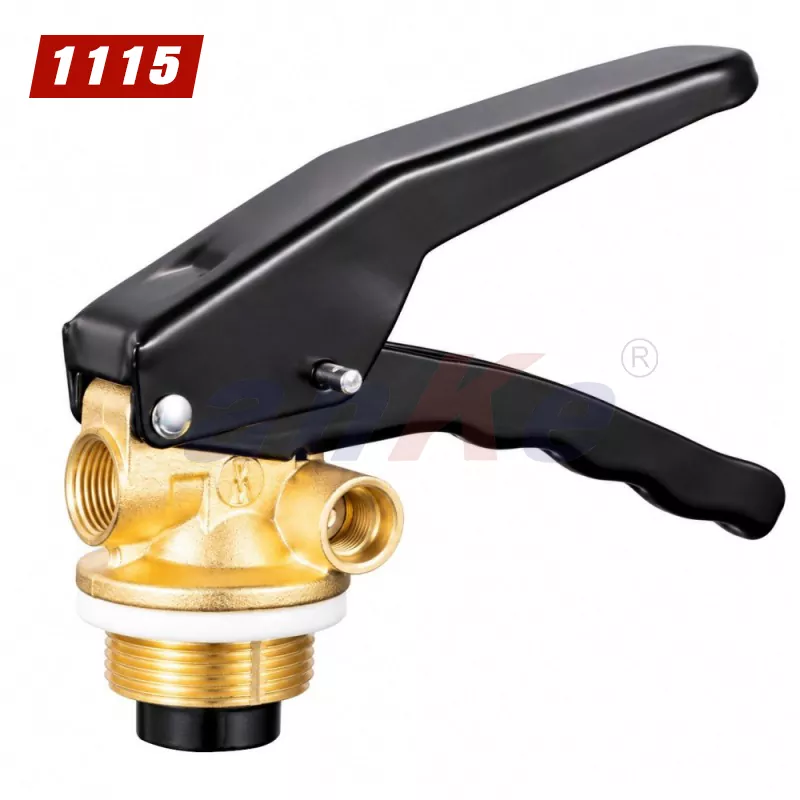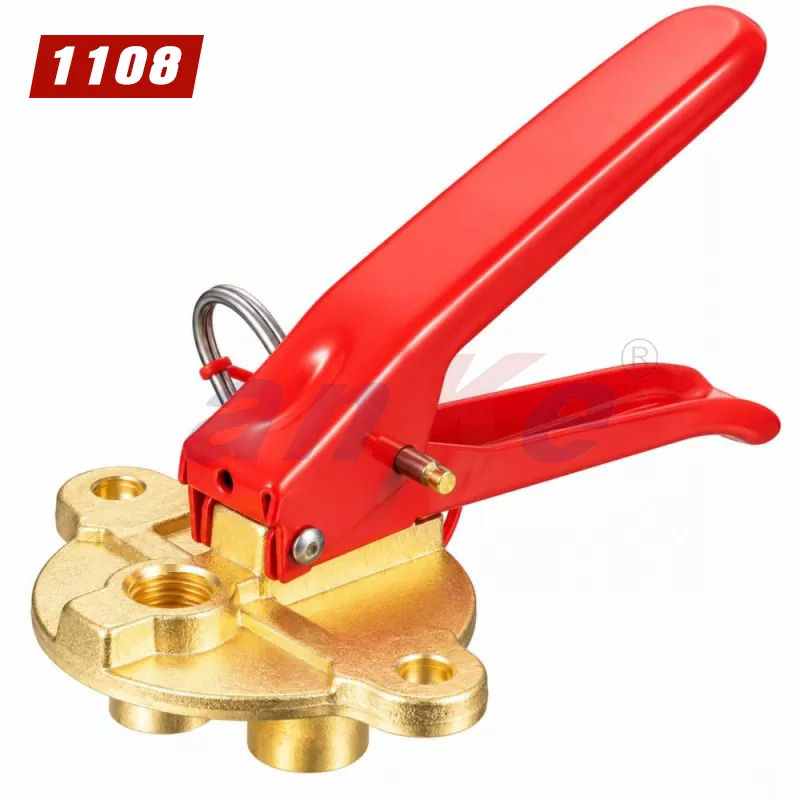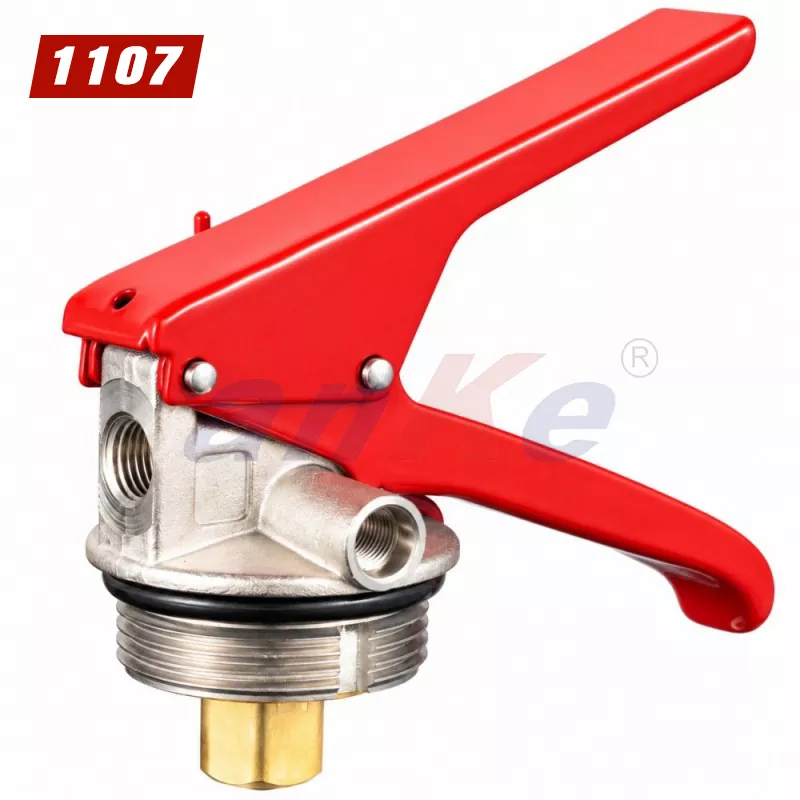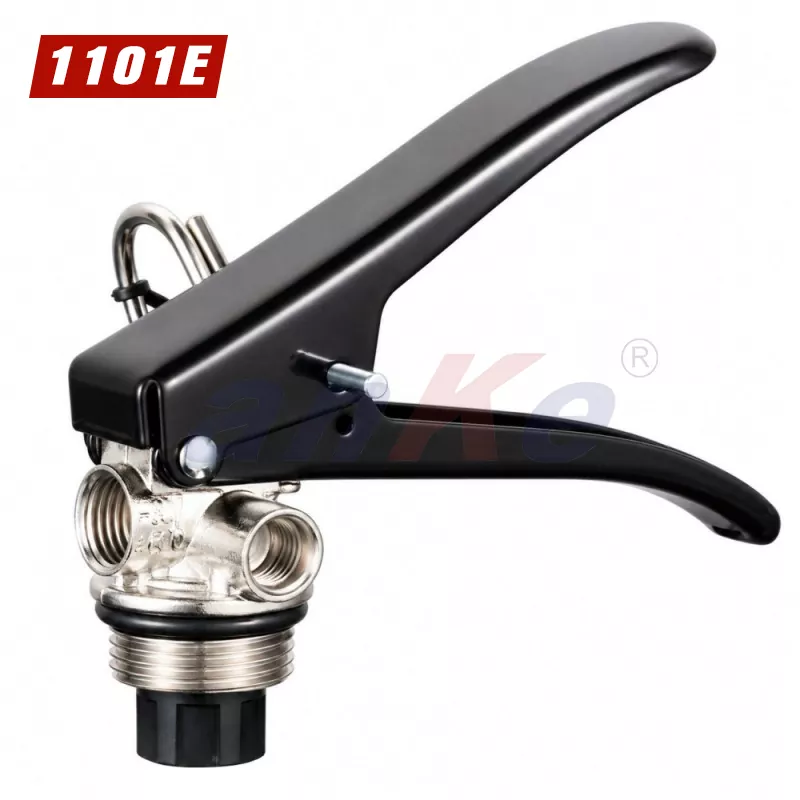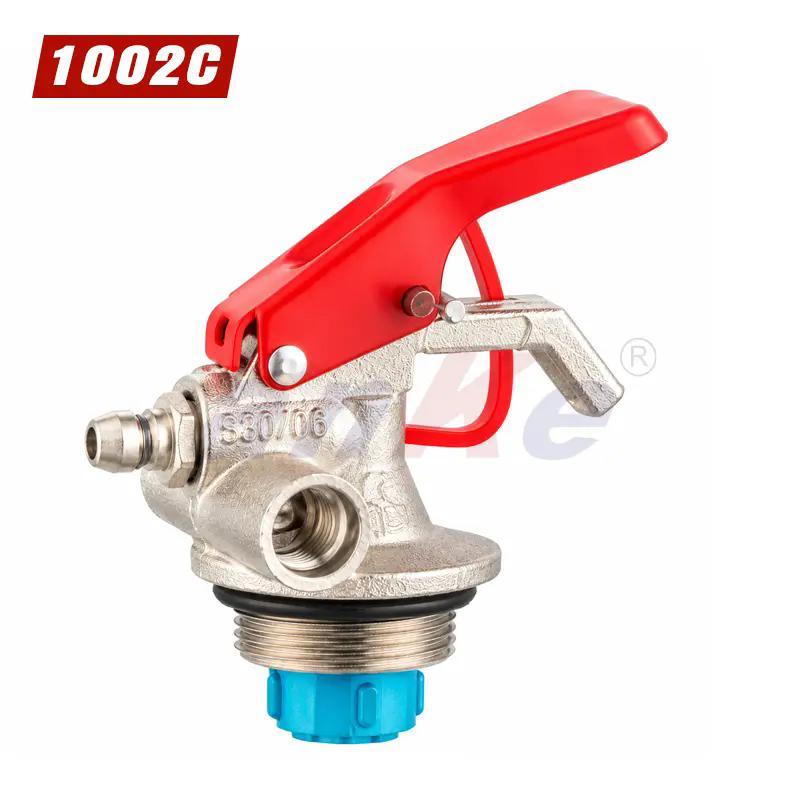
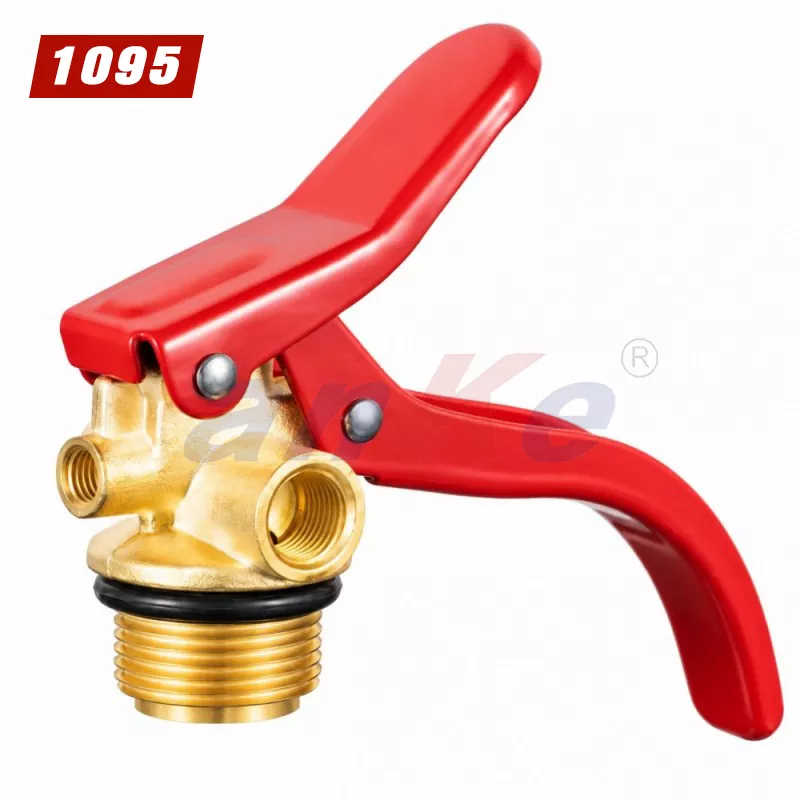
The 1-2KG Extinguisher Metal-plated Copper Valve features a robust forged copper body that withstands high internal pressures (12-18 Bar) without deformation. The surface plating process significantly enhances corrosion resistance, ensuring the valve remains operational even in harsh environments like coastal areas or industrial facilities. It is equipped with a precision-machined internal sealing system that eliminates the risk of gradual pressure loss, maintaining the extinguisher's readiness for years.
Compared to standard plastic or raw brass valves, the metal-plated 1095 model offers superior heat resistance and structural integrity. The ergonomic handle and trigger are designed for rapid activation, while the integrated safety pin and tamper seal prevent accidental discharge. Its standardized M24 thread ensures seamless compatibility with most international cylinder specifications, reducing assembly time and costs for fire safety providers.
This valve is ideal for compact fire safety solutions across multiple sectors. It is widely used in automotive fire extinguishers for cars and trucks, residential safety kits for kitchens and garages, and commercial fire protection for small offices. Whether for new equipment manufacturing or maintenance and refilling services, the Model 1095 ensures long-term reliability and compliance with safety standards.
| Material | Copper |
| Surface treatment | According to customer requirements (chrome/nickel plated) |
| Inlet thread | M24X1.5 |
| Outlet thread | ¢3 |
| Gauge thread | M10X1.5/NPT1/8 |
| Dip tube pipe thread | G3/8 |
The 12–18 bar figure in the product description describes the pressure range the valve body is built to contain in service. It should not be read as the cylinder’s test pressure or as the valve’s burst rating. For 1–2 kg stored-pressure powder extinguishers built to EN 3-7, published data consistently lists a working pressure of 14 bar at 20°C, a cylinder pressure test (PT) of 27 bar, and a safety valve setting between 20 and 26 bar[reference:0][reference:1]. The valve is fitted to a cylinder whose PT is roughly double the working pressure, and the safety device vents in a band above the working pressure but below the PT.
A valve rated for 12–18 bar working pressure is therefore consistent with that assembly context, provided the safety function in the finished extinguisher is set correctly against the cylinder’s PT. The valve body itself is also subject to a separate structural requirement: unless an overpressure protection device is already provided, a valve in the closed position is tested at 3.6 times the maximum working pressure for one minute without bursting. That figure addresses the valve body’s containment capacity, not its relationship to the cylinder’s test pressure. Buyers should confirm both relationships from the finished extinguisher’s pressure documentation rather than from the valve’s working-pressure range alone.
M24×1.5 is a metric fine parallel thread. It seals at a face or with a gasket, not on the thread flanks. The tightening torque therefore serves two functions: retaining the joint and compressing the gasket without deforming the neck or the copper body.
Published assembly data for comparable EN 3-7 powder extinguisher valves on an M30×1.5 neck lists a minimum of 40–45 Nm and a maximum of 68 Nm[reference:2][reference:3]. General mechanical fitting tables for M24×1.5 in copper sealing configurations list a higher value, around 100 Nm[reference:4]. The extinguisher-specific range is lower and narrower because a portable cylinder neck has a thinner wall and a different sealing-seat geometry from a general pipe fitting. Applying the general fitting torque to a 1–2 kg extinguisher neck can over-compress the gasket or distort the seat, and the damage may only appear at the next hydrostatic test. The applicable torque should come from the cylinder manufacturer’s assembly instruction, and the condition of the sealing face should be checked in the same step.
HPb59-1 is a leaded brass, and the lead content that makes the alloy free-cutting also complicates electroplating. Lead from the substrate can poison the plating bath and interfere with the formation of a well-bonded deposit, which is a recognised difficulty specific to leaded brass rather than a general plating issue[reference:5]. A plating line that produces sound nickel or chrome on a lead-free brass or steel part does not automatically produce the same adhesion on an HPb59-1 valve body without a pretreatment sequence adapted to the leaded surface.
For a metal-plated valve, the relevant evidence is not the brightness of the delivered finish. It is whether the coating passed an adhesion check on the actual substrate and whether the salt spray result cited applies to the specific coating stack. A cross-hatch or bend test on a production sample, together with the corrosion test result, gives a more reliable indication than visual inspection alone.
Under EN 3-7-aligned requirements, a complete extinguisher sample is subjected to 480 hours of neutral salt spray under ISO 9227. After exposure, the mechanical function of all components must remain unchanged, the operating force must stay within specification, the pressure indicator must continue to function, and there must be no corrosion of the extinguisher metal[reference:6]. This is a whole-assembly test, not a test of the bare valve body. The valve coating is one surface among several under assessment.
For a metal-plated valve intended for coastal or industrial service, the points worth confirming are whether the coating specification covers internal passages and threaded surfaces, not only the visible exterior, and whether the salt spray figure cited belongs to the valve as supplied or to the finished extinguisher. A valve coating that performs well on the body can still contribute to a failure if moisture collects in an uncoated thread or gauge port. The 480-hour cycle is the baseline; heavier nickel deposits, zinc-nickel, or zinc flake coatings are associated with longer salt spray endurance in published coating data, but the applicable value depends on the specific stack and substrate.
The safety pin and tamper seal are serviceable items, not permanent features. Published inspection checklists require the pull pin to be fully seated and the tamper-evident seal to be intact; a broken or missing seal indicates possible prior discharge or tampering[reference:7]. The seal is removed during annual maintenance specifically so that the pull pin can be checked for free movement, and a new seal is installed afterward[reference:8]. On a 1–2 kg compact unit, where the valve is often mounted in a vehicle bracket or a tight cabinet space, the pin and seal are also exposed to vibration and to accidental contact; their condition belongs in the same periodic check as the pressure gauge reading.
A1: Yes, we support customization services. Customers can choose from:
Surface Finishes: Chrome plating or nickel plating to meet different corrosion resistance and aesthetic requirements.
Thread Specifications: Customized to match customer cylinder interface requirements.
Product Specifications: Valve designs compatible with different extinguisher capacities.
For specific MOQ information, please contact our sales team directly.
A2: Our factory has a monthly production capacity of over 300,000 valves, capable of handling large-volume orders. With mature production management and a well-established supply chain, we typically deliver within agreed timelines. Exact lead times depend on order volume and customization requirements—please consult our sales team for accurate information.
A3: Our products are packaged in standard export-grade packaging to ensure they arrive in perfect condition during long-distance transportation. Customized packaging options (such as cartons, pallets, etc.) are available upon request. With extensive export experience, our products are shipped to dozens of countries worldwide, and we are well-versed in handling international logistics.
A4: No. M10×1.5 and M10×1 share the same nominal diameter but have different pitches, 1.5 mm and 1.0 mm respectively, and will not thread together correctly. M10×1 is the more common gauge thread on portable extinguishers, while M10×1.5 appears on some pressure gauge standards. The gauge specified for a finished extinguisher should be checked against the valve’s actual gauge thread with a thread gauge or the mating gauge body before assembly, not assumed from the nominal diameter.
A5: “¢3” typically denotes a nominal bore or orifice diameter of approximately 3 mm, not a threaded connection. If the finished extinguisher requires a threaded outlet for a hose or nozzle, the outlet configuration should be confirmed from the current dimensional drawing rather than from the parameter table alone. The outlet form and the discharge component should be matched as a pair.
A6: EN 3-7 1–2 kg powder extinguishers commonly operate at 14 bar, with a cylinder PT of 27 bar and a safety valve set between 20 and 26 bar. A valve built for 12–18 bar working pressure falls within that operating context, but suitability depends on the safety function in the finished assembly being set against the cylinder’s actual PT. The valve’s working-pressure range and the assembly’s pressure documentation should be read together.
A7: Not automatically. The lead content in HPb59-1 can poison the plating bath and interfere with adhesion, so the pretreatment sequence needs to be adapted to the leaded substrate. Adhesion should be confirmed by a test on the production material, such as a cross-hatch or bend check, rather than inferred from the appearance of the finished part.
Address
Factory: Huilong Village, Huangjiabu Town, Yuyao City, Zhejiang Province, China
Branch Office: Hengye Building 509, No.158 Tai'an Middle Road, Yinzhou District, Ningbo, Zhejiang, China
Tel