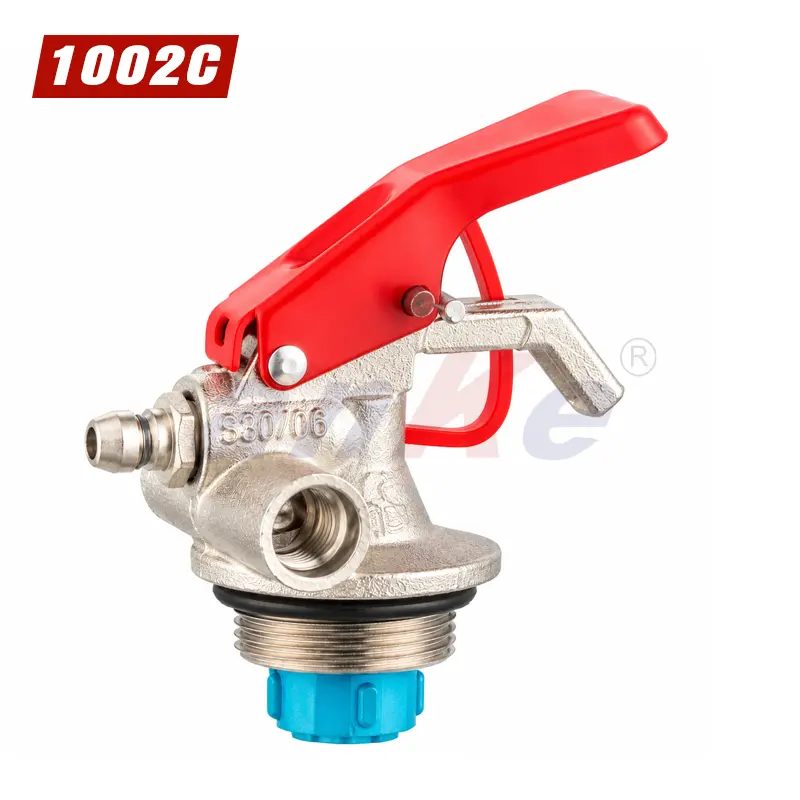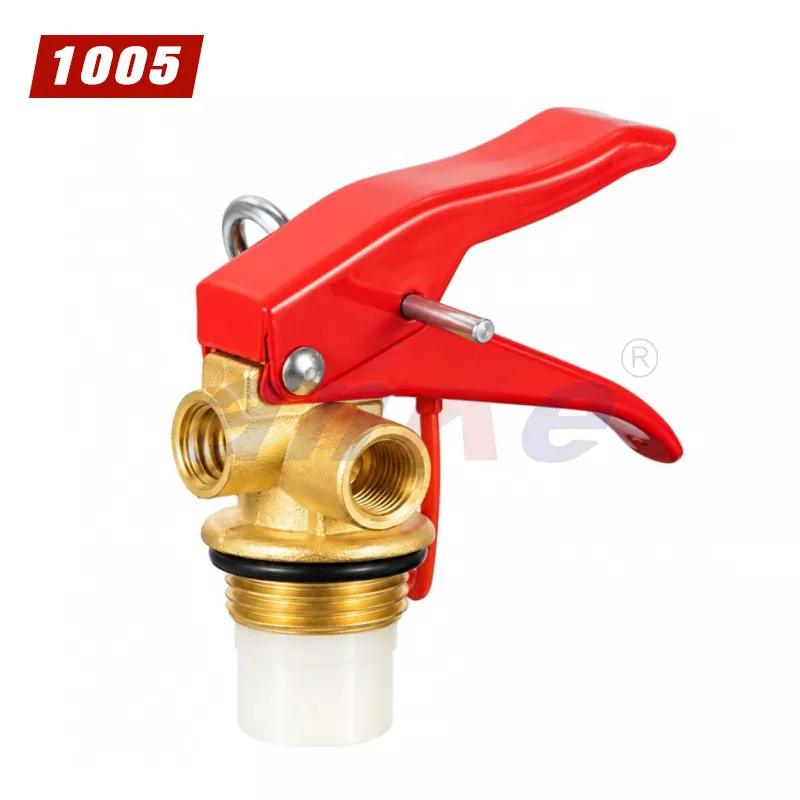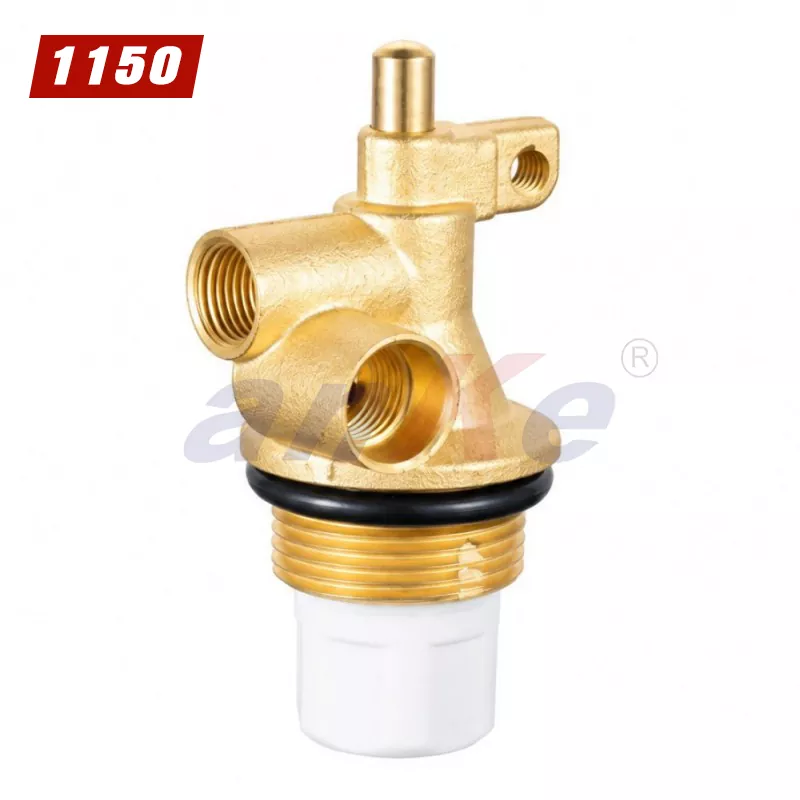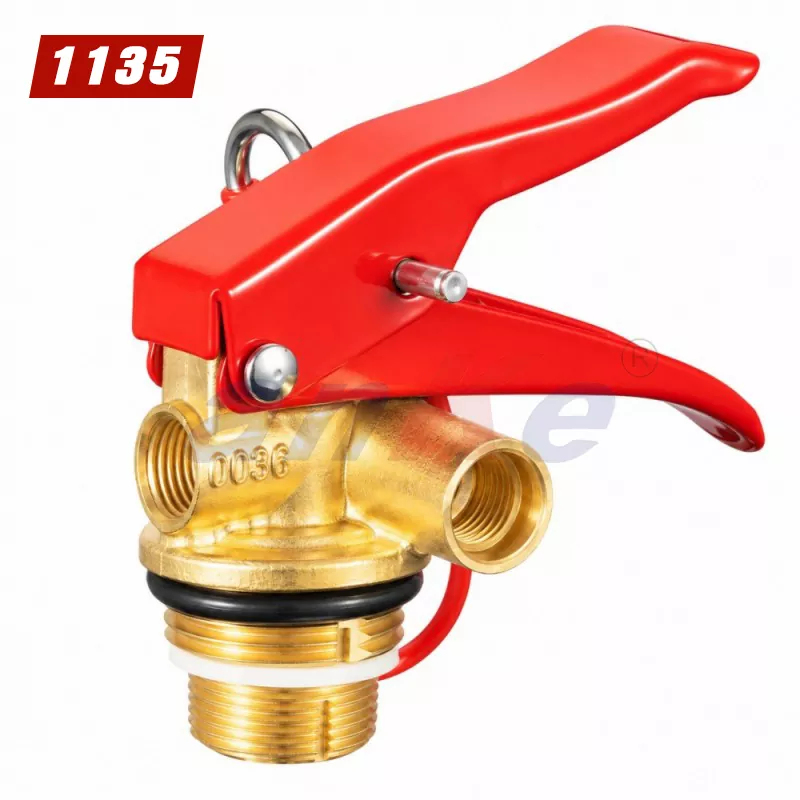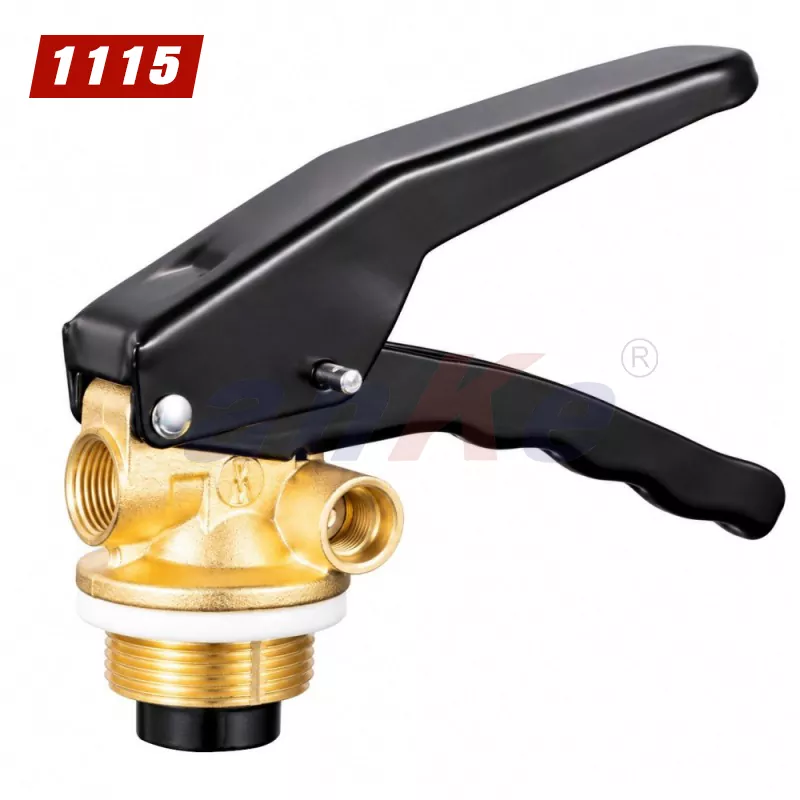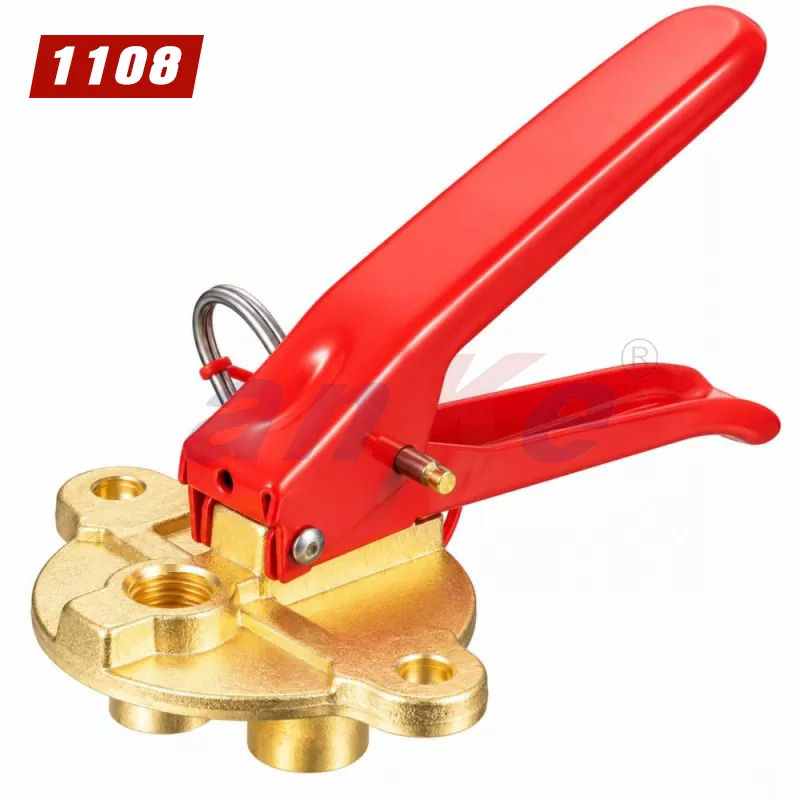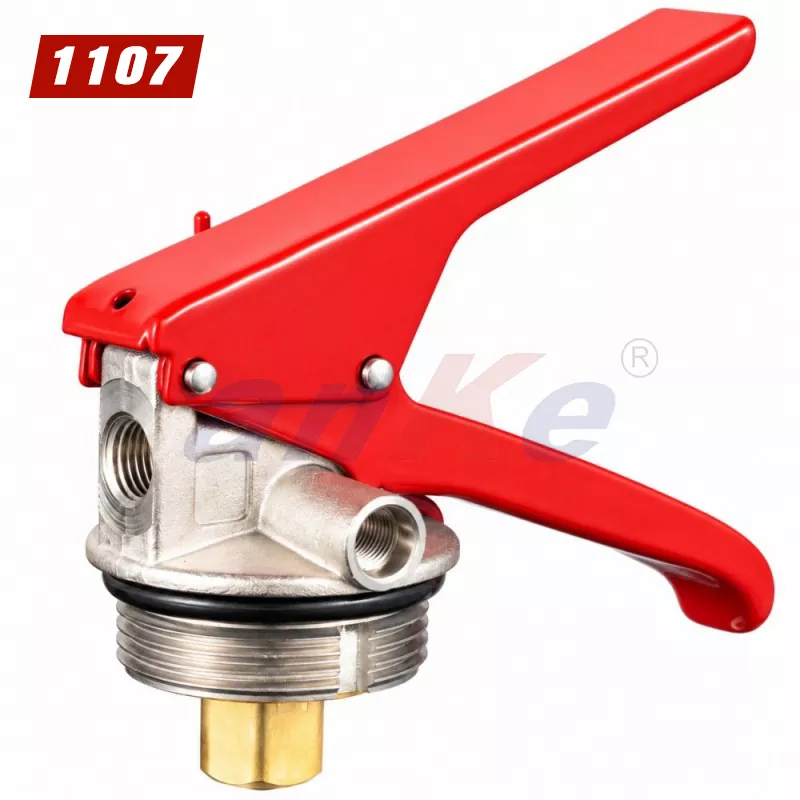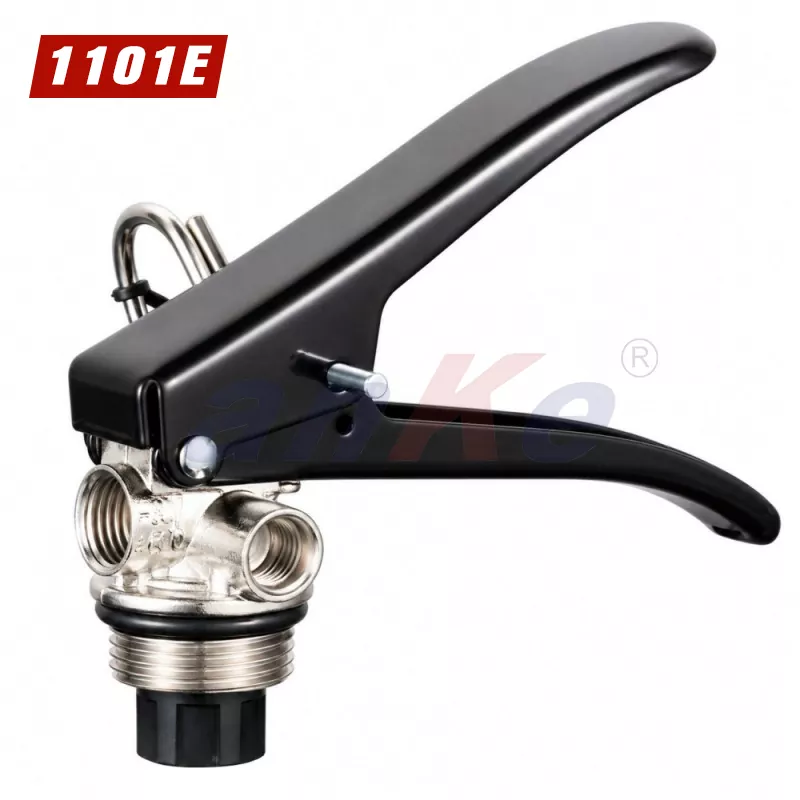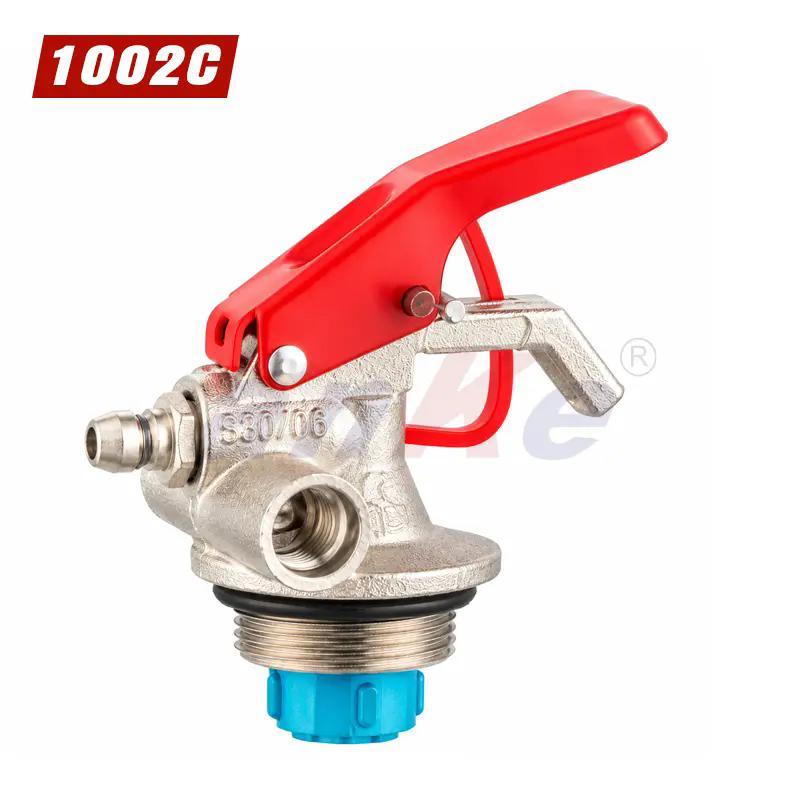
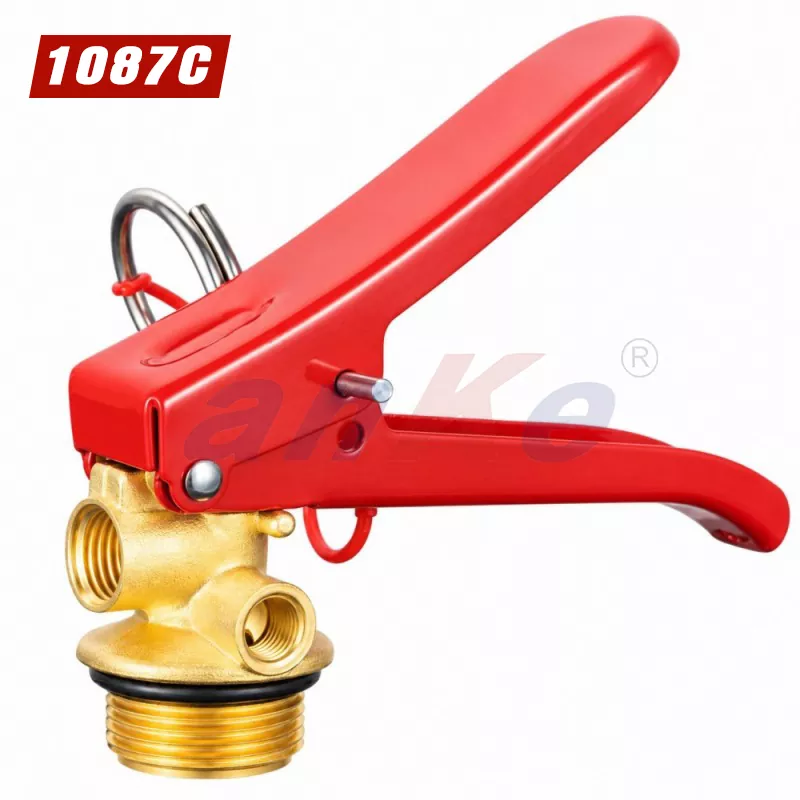
The 4-12kg Fire Extinguisher Metal Coating Valve main body is made of high-quality HPB 59-1 brass and is formed through high-temperature hot forging, resulting in a dense, pore-free structure and significantly enhanced pressure resistance. The M30×1.5 bottle neck thread and the M14×1.5 outlet thread are both machined on high-precision CNC lathes, ensuring strict thread tolerance matching and smooth, tight assembly.
After undergoing multiple pressure tests and airtightness tests, the product complies with CE and EN 3-7 European technical standards for fire extinguishers. We offer OEM/ODM customization services based on customer needs.
| Material | Copper |
| Surface treatment | According to customer requirements (chrome/nickel plated) |
| Inlet thread | M30X1.5 |
| Outlet thread | M14X1.5/G1/4 |
| Gauge thread | M10X1/NPT1/8 |
| Dip tube pipe thread | M22X1 |
Chrome and nickel plating on a brass valve are not interchangeable finishes chosen only for appearance. They serve different functions at different thicknesses, and the coating stack determines how the valve behaves under salt spray and in contact with the extinguishing agent.
Decorative chrome is a very thin layer, typically 0.2–0.5 μm, deposited over a nickel underlayer. The chromium layer itself provides wear resistance and a bright surface, but it is not the primary corrosion barrier. The corrosion protection comes from the nickel beneath it, which in engineering applications needs to be thick enough to be effectively pore-free, commonly 25 μm or more for sustained protection on brass. A thin decorative stack on a brass body will show a good finish at delivery but is not the same specification as a heavier nickel deposit intended for humid or coastal storage.
Where the service environment is more demanding, zinc-nickel plating offers a different performance band. Zinc-nickel deposits typically 10–15 μm thick have been shown to withstand on the order of 1,000 hours of neutral salt spray before red rust appears, which places the coating in a different category from a conventional decorative nickel-chrome finish. Zinc flake coatings, applied as thin as 4–8 μm, also exceed 1,000 hours of salt spray in published data and avoid hydrogen embrittlement because the process is non-electrolytic. These coating types are relevant where the valve is specified for coastal or offshore use rather than general indoor storage.
HPb59-1 is a leaded free-cutting brass, and the lead content that makes it machinable also complicates chrome plating. Lead does not dissolve readily in the conventional etching and activation steps used before plating, and residual lead at the surface can interfere with adhesion of the chromium layer. This is a substrate-specific issue, not a generic plating problem. A plating line that produces sound chrome on a lead-free brass or steel part does not automatically produce the same adhesion on HPb59-1 without an activation sequence adapted to the leaded surface.
For a buyer specifying a chrome finish on an HPb59-1 valve, the relevant question is not whether the part looks bright, but whether the coating passed an adhesion check and a corrosion test on the actual substrate. A cross-hatch or bend test on a production sample, together with salt spray results for the specific coating stack, gives a more reliable indication than visual inspection of the delivered finish.
Coating performance on the valve alone and corrosion performance of the finished extinguisher are two different assessments. Under the framework aligned with EN 3-7, a complete extinguisher sample is subjected to 480 hours of neutral salt spray in accordance with ISO 9227, and after that exposure the mechanical function of all components must remain unchanged, the operating force must remain within specification, and there must be no corrosion of the extinguisher metal.
That test is run on the complete unit, not on a bare valve body, so the valve coating is only one of the surfaces under assessment. A valve with a competent coating can still contribute to a failure if the coating does not extend into the threads, the gauge port, or the outlet where moisture collects. For the 4–12 kg metal-coated valve, the practical points to confirm are whether the coating specification covers internal and threaded surfaces, and whether the salt spray result cited is for the valve as supplied or for the finished extinguisher assembly.
A1: Not exactly. Fire extinguisher valves are our core products, but our business scope goes far beyond that.
As a National High-Tech Enterprise, we are committed to providing comprehensive fire valve solutions to our customers. Our product line includes:
Full Range of Fire Extinguisher Valves: Covering all kinds of extinguishers, including specialized valves for dry powder, water-based, CO₂, and other extinguishing agents.
Marine Cylinder Valves: Specially designed for shipboard fire protection systems, meeting the demanding requirements of marine environments.
Gas Valves: Specialized valves for gas transmission and pipeline systems.
Customized Valve Solutions: We can develop and customize valves with specific specifications, materials, and functions according to customer requirements.
In addition, we also supply complementary fire protection accessories and hardware products, offering our customers a one-stop purchasing experience.
With 41 patented technologies and over 25 years of industry experience, we are well-equipped to handle various custom requirements for fire valves. If you have specific product needs, please contact us—we will provide professional solutions tailored to you.
A2: Yes, we provide comprehensive ODM and OEM services.
As a National High-Tech Enterprise, we have a professional R&D team and technical service team capable of delivering full-process customized services from design to production. Our customization services include:
OEM Services: Based on customer-provided drawings, specifications, or samples, we strictly follow your requirements for production and processing, ensuring that the products fully meet your technical parameters and quality standards.
ODM Services: If you have new product concepts or functional requirements, our R&D team can participate in product design, provide innovative solutions, and complete the entire process from development to mass production.
Valve material customization (brass, aluminum alloy, stainless steel, etc.)
Thread specification customization (adapting to different fire extinguisher cylinder interfaces)
Surface treatment customization (chrome plating, nickel plating, electrophoretic coating, etc.)
Product specification adaptation (for all kinds of fire extinguishers)
All customized products are backed by our strict quality management system and comply with international certification standards including EU EN, CE, and ISO. With our independent R&D capabilities and 41 patented technologies, we have the expertise to transform your product concepts into mature solutions that meet international standards.
For more information about our OEM/ODM services, please contact us—we will provide professional customized solutions based on your specific needs.
A3: As a National High-Tech Enterprise, Kaituo Valve possesses strong in-house R&D capabilities:
Patent Portfolio: We hold 41 national patents covering various technical fields, including portable quick-install opposed valves, handwheel-type gas valves for gas transport, CO₂ valve assemblies, dry powder puncture valves, and high-power stored-pressure dry powder valves.
Innovative Designs: For example, our high-power stored-pressure dry powder valve features a separate design for dry powder and compressed gas, ensuring zero internal pressure during storage for enhanced safety, while facilitating batch filling and maintenance.
Continuous R&D: We maintain a dedicated R&D center and testing facility equipped with high-precision instruments, continuously improving processes and product performance.
A4: No. Decorative chrome is typically only 0.2–0.5 μm thick and serves mainly for wear resistance and appearance. The corrosion barrier in a chrome finish is the nickel underlayer, which needs to be thick enough to be effectively pore-free for sustained protection. Nickel plating alone, at engineering thickness, provides corrosion protection without the decorative chromium top layer.
A5: The finished extinguisher under EN 3-7-aligned requirements is tested for 480 hours of neutral salt spray under ISO 9227, and must show no metal corrosion and unchanged mechanical function afterward. For a coating specification beyond that baseline, zinc-nickel and zinc flake coatings are associated with salt spray performance in the 1,000-hour range in published data, but the applicable figure depends on the specific coating stack and the substrate.
A6: Yes, specifically for chrome plating. The lead content in HPb59-1 does not dissolve readily during conventional pre-plating activation, and residual surface lead can interfere with chromium adhesion. The activation sequence needs to be adapted to the leaded substrate, and adhesion should be confirmed by a test on the actual production material rather than inferred from appearance.
Address
Factory: Huilong Village, Huangjiabu Town, Yuyao City, Zhejiang Province, China
Branch Office: Hengye Building 509, No.158 Tai'an Middle Road, Yinzhou District, Ningbo, Zhejiang, China
Tel