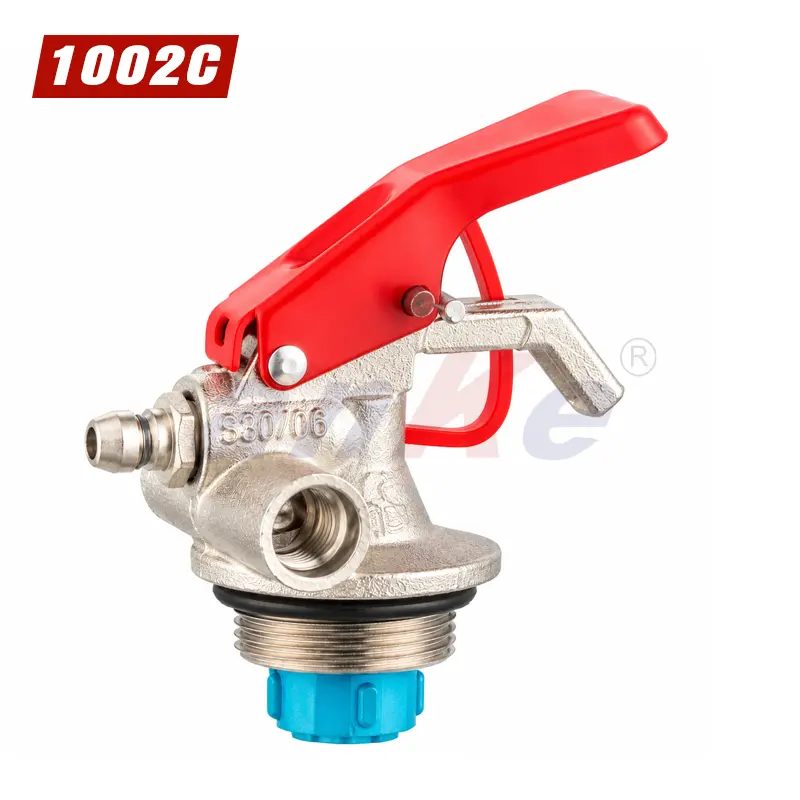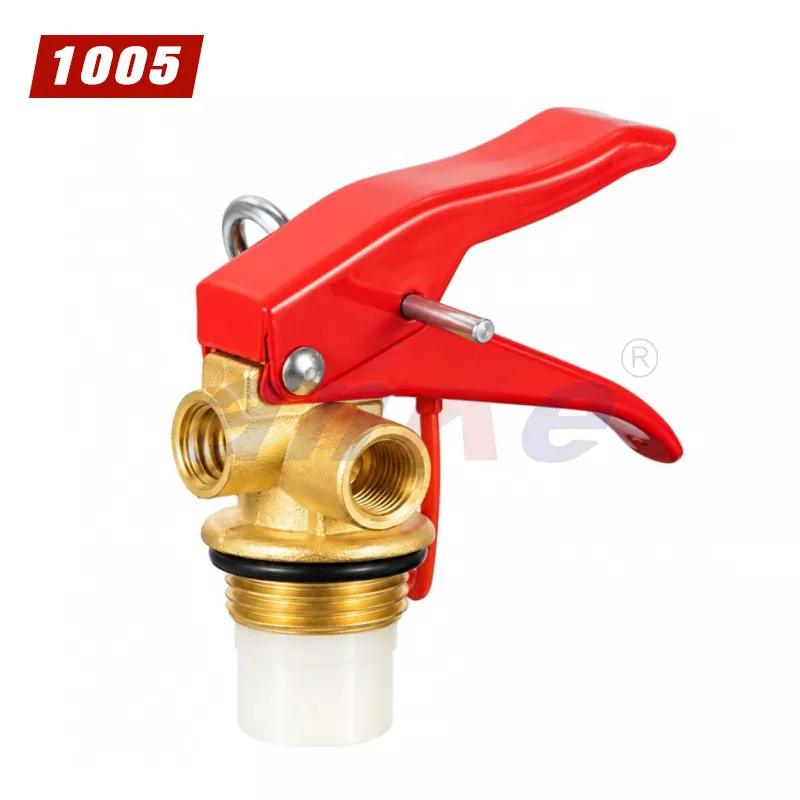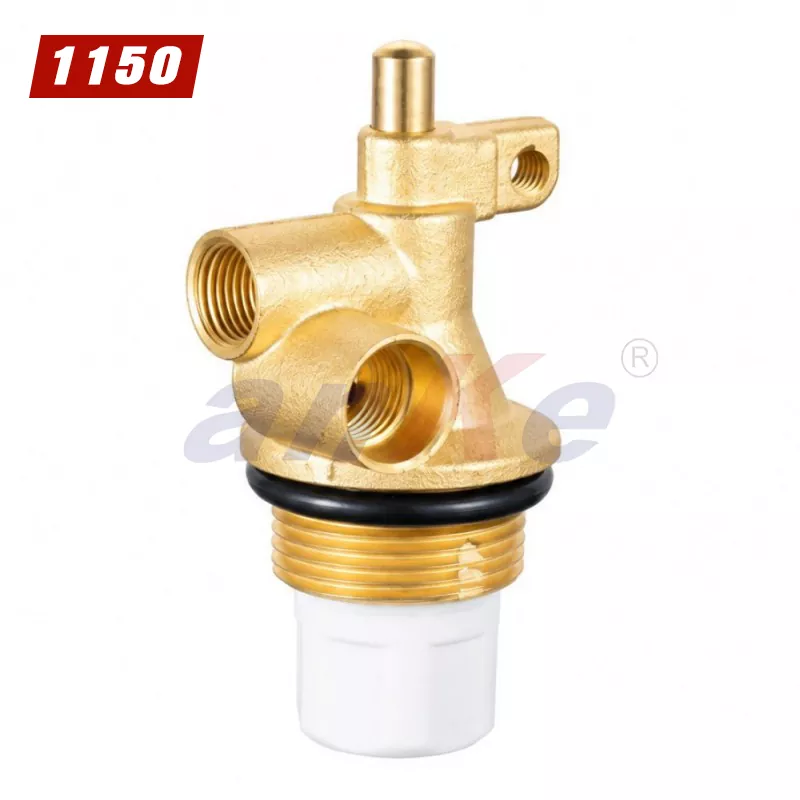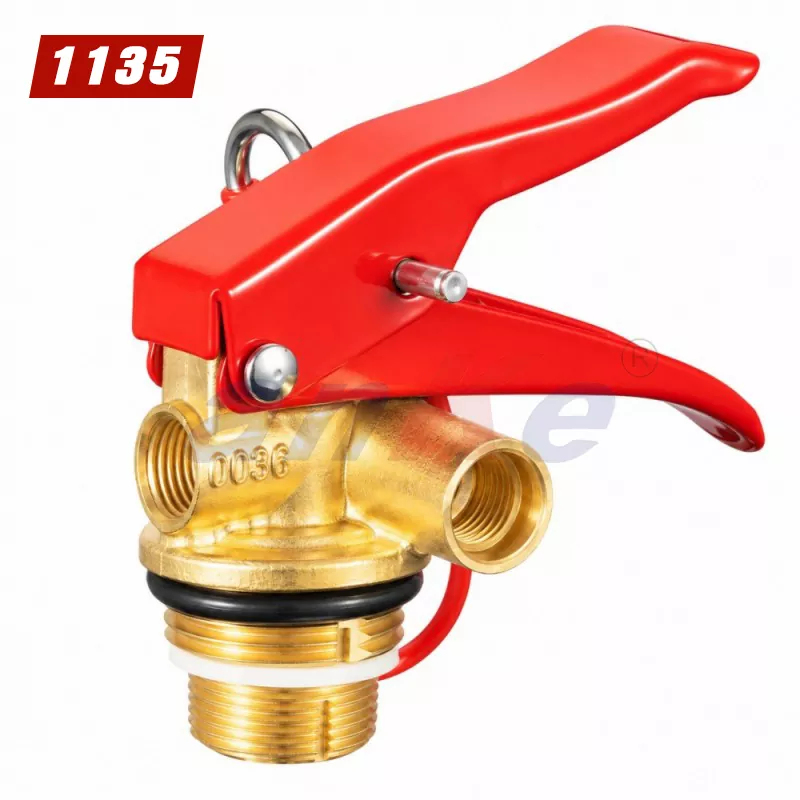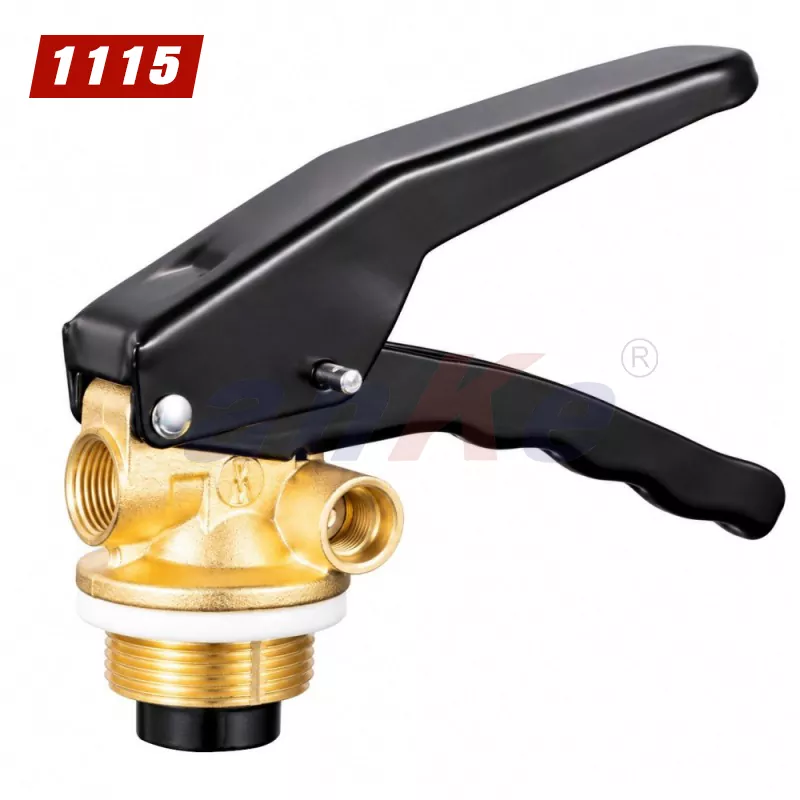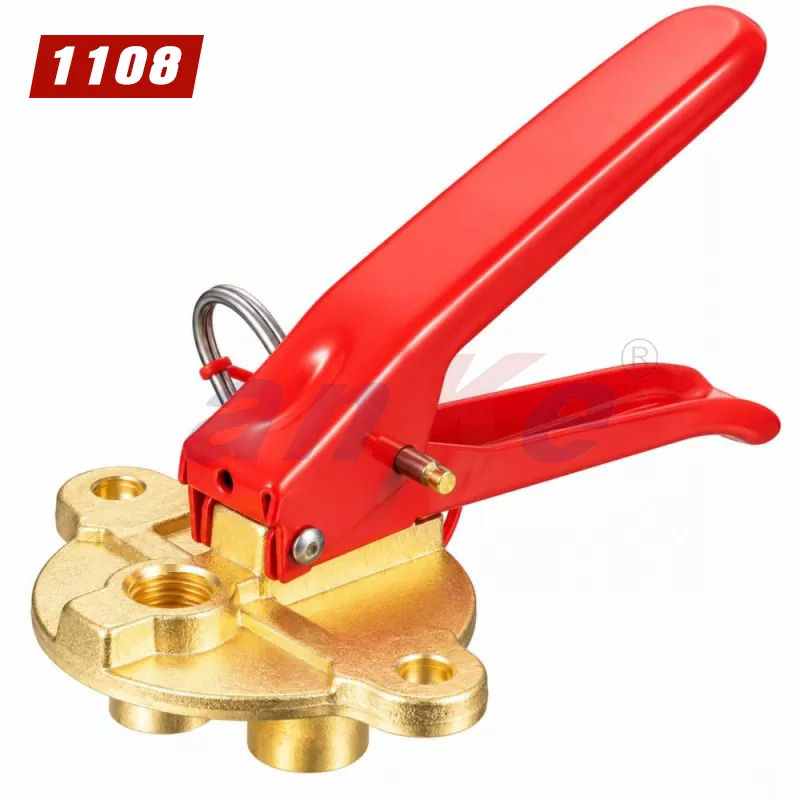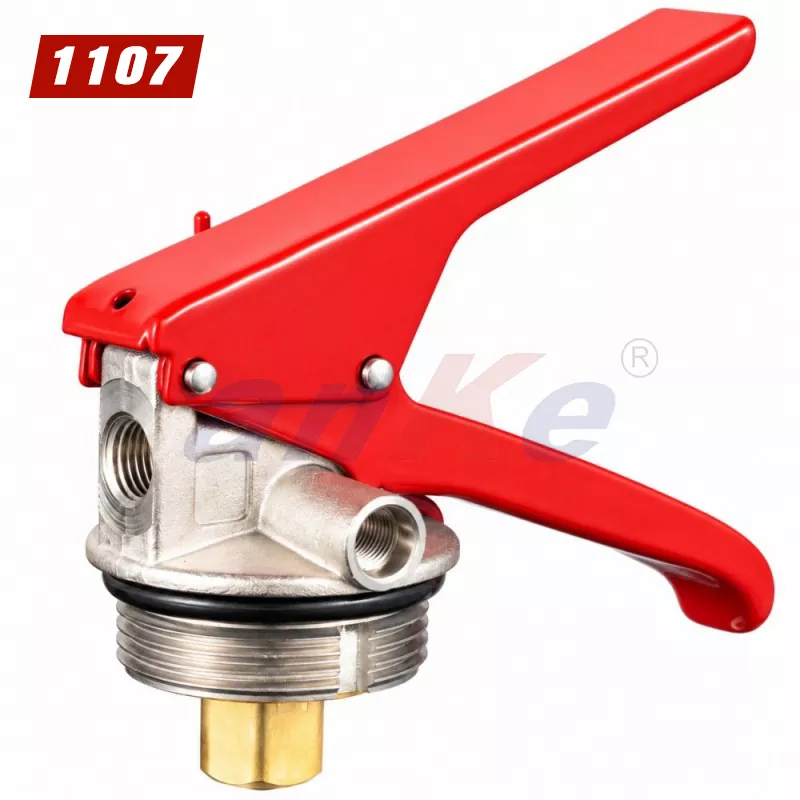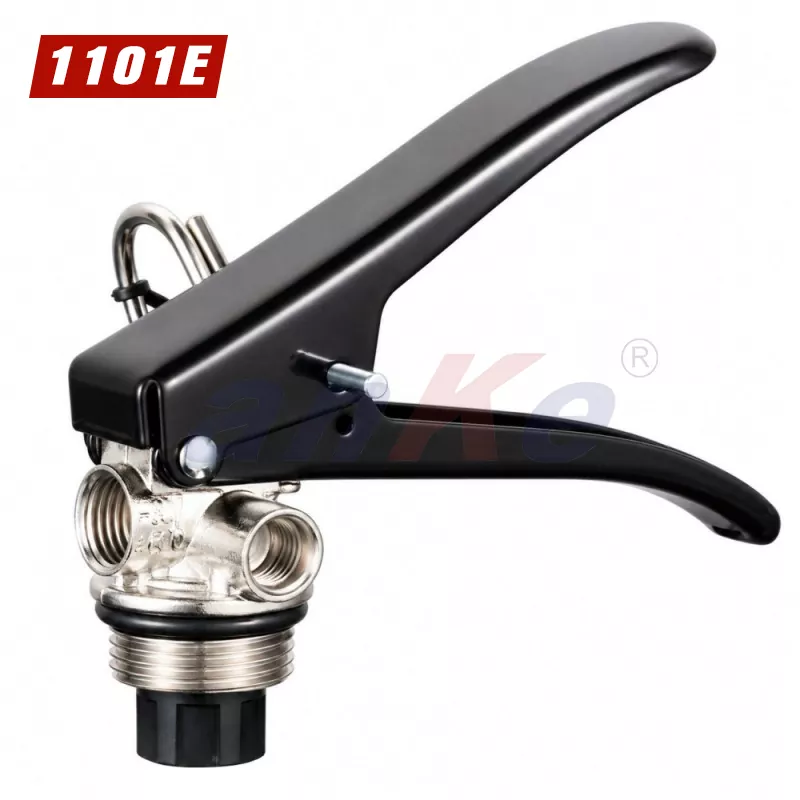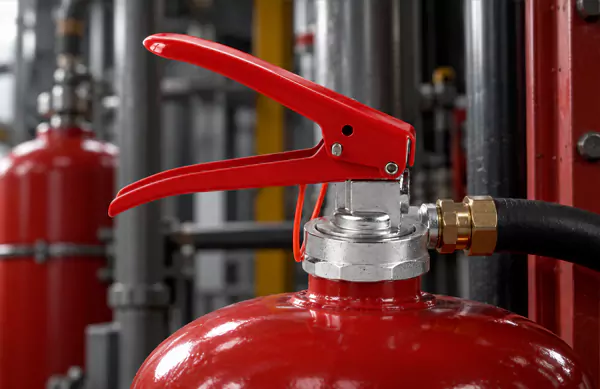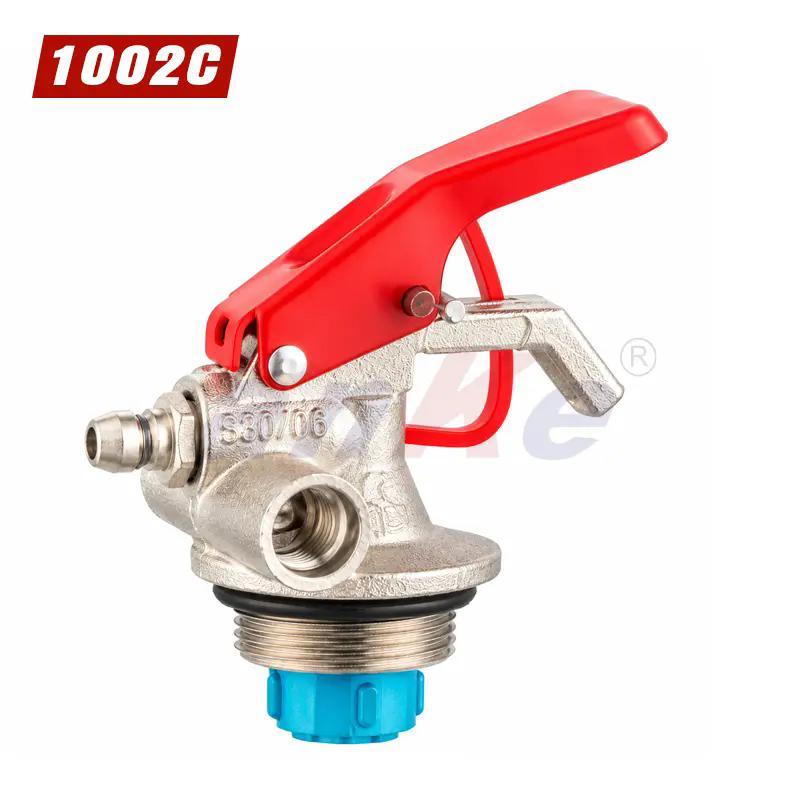
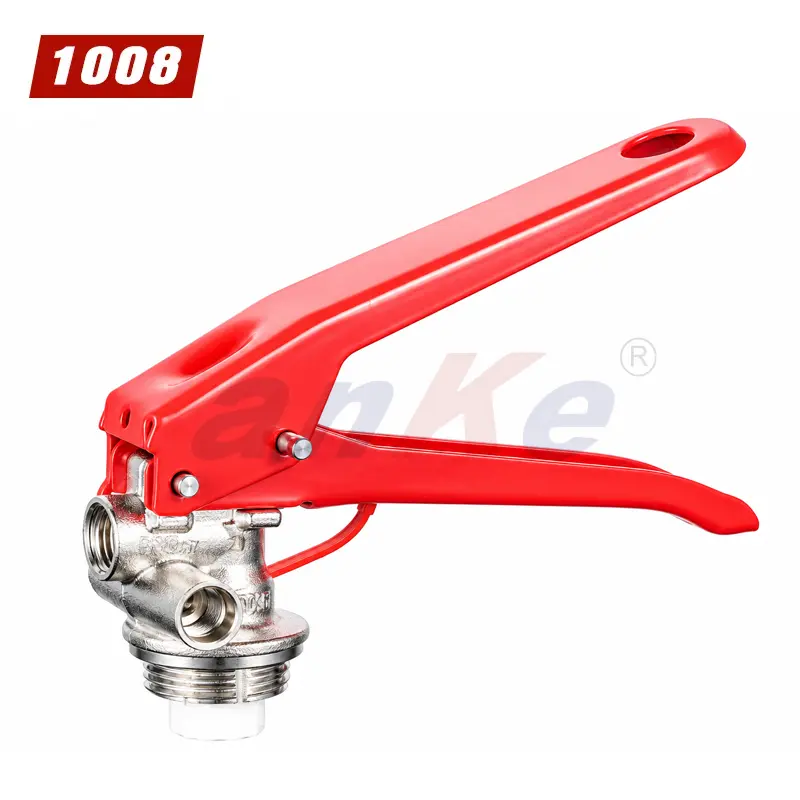
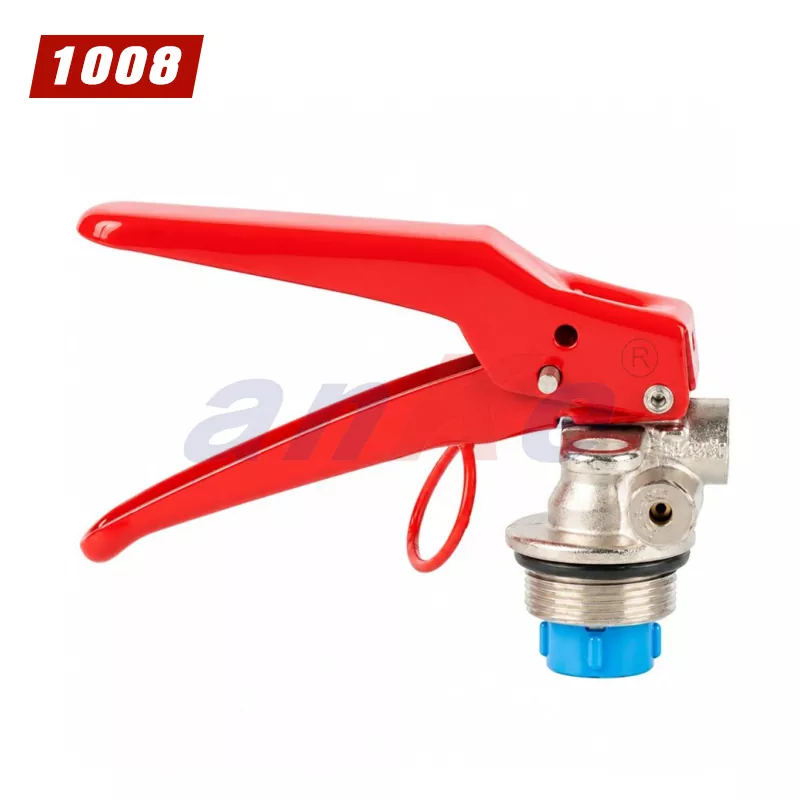
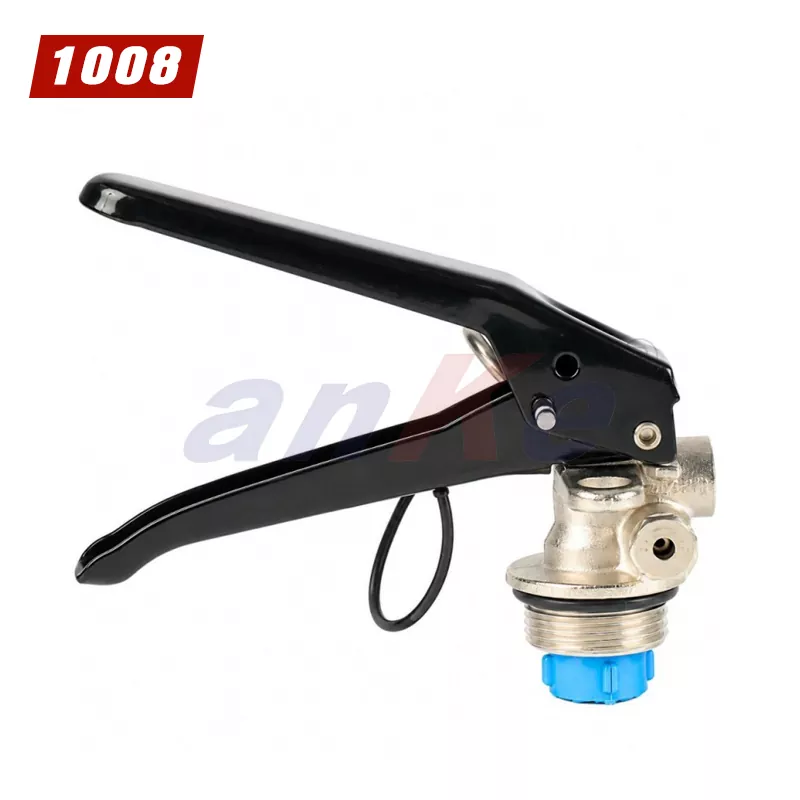
As a professional Chinese supplier, we can supply factory direct extinguisher valve with competitive price. This 4-12kg valve with red handle is a highly reliable core control component specifically designed for large capacity, portable ABC dry-powder fire extinguishers ranging from 4 kg to 12 kg. Featuring a highly recognizable, high-strength warning-red handle combined with a reinforced brass valve body, it offers both visual prominence and industrial-grade durability. It is widely used in high-risk fire prevention scenarios such as industrial plants, hazardous chemical warehouses, gas stations, heavy-duty construction machinery, and commercial buildings where strict requirements exist for discharge rate, seal reliability, and weather resistance.
| Item | Specification |
|---|---|
| INLET THREAD | M30*1.5 |
| OUTLET THREAD | G1/4-19/ M14*1.5 |
| GAUGE THREAD | M10*1-12.5 |
The red handle on a 4–12KG portable extinguisher is normally a glass-fibre reinforced polyamide, most commonly PA66 with 25–35% glass fibre content. The glass fibre raises stiffness and dimensional stability, which matters because the handle must transmit lever force to the valve stem without flexing or developing play at the pivot over years of storage. Industrial grades are formulated with UV stabilisers and flame retardants; glass-fibre reinforced PA66 with a phosphorus-based flame retardant can achieve UL 94 V-0 at 0.8 mm thickness, and UV-stabilised grades are specified where the extinguisher is exposed to daylight.
Exterior corrosion testing for portable extinguishers under the relevant framework includes 480 hours of saline fog exposure followed by a functional check, not merely a visual assessment of the body. For a handle, that functional check concerns whether the lever still moves through its full travel after exposure and whether the safety pin can be withdrawn without binding. A handle that passes a visual inspection can still have a pivot or stem interface that has stiffened, and that condition only appears when the operating force is actually measured.
In service, the handle should be examined for stress whitening, cracking at the pivot, and deformation after elevated storage temperature, in addition to surface discolouration. These are distinct from corrosion inspection of the brass body and belong in the same periodic service check.
M30×1.5 is a metric fine parallel thread. It seals at a face or with a gasket at the cylinder neck, not on the thread flanks. Assembly guidance for 4–12 kg dry powder extinguisher valves on an M30×1.5 neck is often stated as a sequence rather than a single torque figure: thread the valve on by hand until the sealing ring just contacts the cylinder opening, then apply the wrench through a further arc of approximately one-eighth to one-quarter turn.
That method exists because a portable cylinder neck has a thinner wall and a different sealing-seat geometry from a general pipe fitting. General mechanical torque data for M30×1.5 brass fittings is commonly quoted around 120 Nm, but that figure belongs to fittings with steel mating components and unlibricated threads. Applying it to a thin-walled extinguisher neck can compress the gasket beyond its elastic range or distort the seat. The cylinder manufacturer’s assembly specification remains the controlling value, and the condition of the sealing face — flatness, absence of scratches, freedom from corrosion — should be confirmed in the same step as the thread match.
G1/4 under ISO 228 is a parallel thread. It does not seal on the thread flanks. Pressure tightness is achieved at a shoulder face, with a bonded washer, or with a profile sealing ring seated against a machined surface. Applying an NPT-style thread sealant approach to a G1/4 port, or omitting the face washer, produces a joint that may appear tight but does not hold under pressure cycling.
Torque guidance for G1/4A ports with sealing washers in steel fittings commonly falls in the 23–26 Nm range. For brass and aluminium components, general assembly guidance calls for a reduction of roughly 35% relative to the steel reference value, which places a brass G1/4 joint in a lower band. The applicable figure should come from the discharge hose or nozzle manufacturer’s specification, and the washer material should be selected for the agent and ambient conditions rather than by thread size alone. The outlet and the hose assembly are a matched pair: the hose fitting’s sealing form must correspond to the valve outlet, and the hose bore and length should be consistent with the discharge characteristics intended for the cylinder capacity.
An ISO 9001 certificate addresses the quality management system of the named organisation and scope; it does not certify that a particular valve model meets a product standard or a purchase specification. A valid certificate and a product compliance claim are separate pieces of evidence, and a buyer relying on either should check what the document actually covers: the issuing body, the site named, the scope statement, and the validity dates.
For portable extinguishers placed on the EU market under the Pressure Equipment Directive, the finished vessel is classified at least in Category III, which requires notified body involvement rather than self-declaration. The valve as a pressure accessory is assessed within the assembly’s pressure and size parameters. A factory audit is useful for confirming that the production and inspection steps described in the quality system are actually carried out — traceability from incoming brass to finished valve, calibration status of torque and pressure test equipment, and the disposition of nonconforming lots — but the audit should be read alongside the product-level test records, not as a substitute for them.
Standard Packaging: Packed in cartons and palletized for ocean freight protection.
OEM Customization: Custom logo stamping on valve bodies, customized thread sizes, personalized color matching for handles, and tailored packaging labels available upon request.
Sample Policy: Rapid sample dispatch available for engineering compatibility tests and factory approval procedures.
To maintain optimum performance and safety compliance over time, we recommend the following maintenance protocols:
Quarterly Visual Check: Inspect the red plastic handle and valve body for physical damage, cracks, or severe chemical exposure. Ensure safety pins and tamper seals remain intact.
Annual Mechanical Test: Check the flexibility and spring-return action of the handle mechanism to ensure unobstructed movement during emergency activation.
Pressure Gauge Verification: Confirm pressure gauge readings match normal operating ranges. If a pressure drop is detected, perform leak testing on thread connection points.
Replacement Cycle: Replace valves immediately if cracking, thread deformation, or corrosion is visible, or during full cylinder hydro-testing cycles (typically every 5 years).
Engineered for continuous exposure to harsh industrial environments, the 4-12KG valve with Red Handle is widely deployed across:
Industrial & Hazardous Locations: Chemical warehouses, oil refineries, manufacturing plants, and fuel stations.
Heavy Commercial Logistics: Transport trucks, construction machinery, off-road equipment, and marine terminals.
Commercial Buildings: High-rise office towers, shopping malls, distribution hubs, and data centers.
A1: Yes, we provide comprehensive ODM and OEM services.
As a National High-Tech Enterprise, we have a professional R&D team and technical service team capable of delivering full-process customized services from design to production. Our customization services include:
OEM Services: Based on customer-provided drawings, specifications, or samples, we strictly follow your requirements for production and processing, ensuring that the products fully meet your technical parameters and quality standards.
ODM Services: If you have new product concepts or functional requirements, our R&D team can participate in product design, provide innovative solutions, and complete the entire process from development to mass production.
Valve material customization (brass, aluminum alloy, stainless steel, etc.)
Thread specification customization (adapting to different fire extinguisher cylinder interfaces)
Surface treatment customization (chrome plating, nickel plating, electrophoretic coating, etc.)
Product specification adaptation (for all kinds of fire extinguishers)
All customized products are backed by our strict quality management system and comply with international certification standards including EU EN, CE, and ISO. With our independent R&D capabilities and 41 patented technologies, we have the expertise to transform your product concepts into mature solutions that meet international standards.
For more information about our OEM/ODM services, please contact us—we will provide professional customized solutions based on your specific needs.
A2: As a National High-Tech Enterprise, Kaituo Valve possesses strong in-house R&D capabilities:
Patent Portfolio: We hold 41 national patents covering various technical fields, including portable quick-install opposed valves, handwheel-type gas valves for gas transport, CO₂ valve assemblies, dry powder puncture valves, and high-power stored-pressure dry powder valves.
Innovative Designs: For example, our high-power stored-pressure dry powder valve features a separate design for dry powder and compressed gas, ensuring zero internal pressure during storage for enhanced safety, while facilitating batch filling and maintenance.
Continuous R&D: We maintain a dedicated R&D center and testing facility equipped with high-precision instruments, continuously improving processes and product performance.
A3: Our quality management system covers the entire product lifecycle:
Raw Material Control: We select standard-compliant copper alloys, stainless steel, and other materials that offer corrosion resistance and high-pressure endurance.
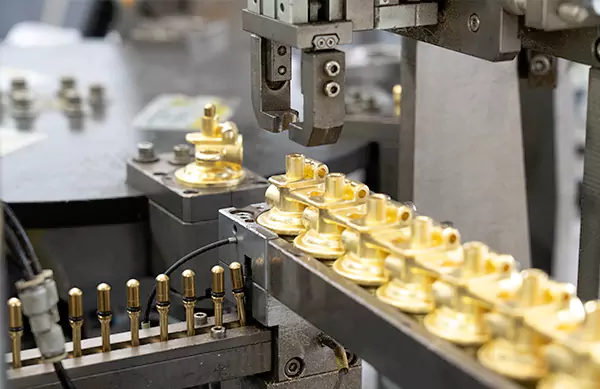
Precision Machining: Valve bodies undergo forging and precision machining, followed by anti-corrosion treatments such as passivation and electrophoretic coating, ensuring smooth and defect-free surfaces.
Multiple Testing Procedures: Products are subjected to hydrostatic pressure tests, sealability tests, overpressure protection device activation tests, and more, ensuring reliable performance.
International Certifications: Our products meet CE, EN, and other international standards, earning recognition from customers in dozens of countries worldwide.
A4: Assembly guidance for this valve class on an M30×1.5 neck is commonly stated as a sequence: thread the valve on by hand until the sealing ring just contacts the cylinder opening, then tighten through a further arc of approximately one-eighth to one-quarter turn with a wrench. General mechanical torque data for M30×1.5 brass fittings is higher, but a portable extinguisher neck has a thinner wall and a different seat geometry. The cylinder manufacturer’s specification remains the controlling value.
A5: Practical dry powder valve designs pair an elastomeric seat or O-ring with a PTFE stem seal, and some include a scraping lip ahead of the sealing element to clear powder from the stem as it moves. NBR is a common seat material, but a secondary PTFE seal at the dynamic stem interface reduces the risk of slow propellant loss. The specific seal arrangement and compound should be confirmed against the powder formulation and expected storage duration.
A6: Both are parallel threads and both seal at a face or with a washer rather than on the thread flanks, but the outlet seals against the hose or nozzle fitting rather than the cylinder neck. The washer form and the tightening torque should follow the discharge component manufacturer’s specification. G1/4A torque data for steel fittings is commonly in the 23–26 Nm range; for brass components general guidance calls for a reduction of roughly 35% relative to the steel reference.
A7: No. ISO 9001 addresses the quality management system of the organisation and scope named on the certificate. Product conformity to EN 3-7 or the Pressure Equipment Directive is a separate assessment. The certificate scope, issuing body, and validity dates should be checked, and product-level test records should be requested alongside the certificate rather than inferred from it.
Address
Factory: Huilong Village, Huangjiabu Town, Yuyao City, Zhejiang Province, China
Branch Office: Hengye Building 509, No.158 Tai'an Middle Road, Yinzhou District, Ningbo, Zhejiang, China
Tel