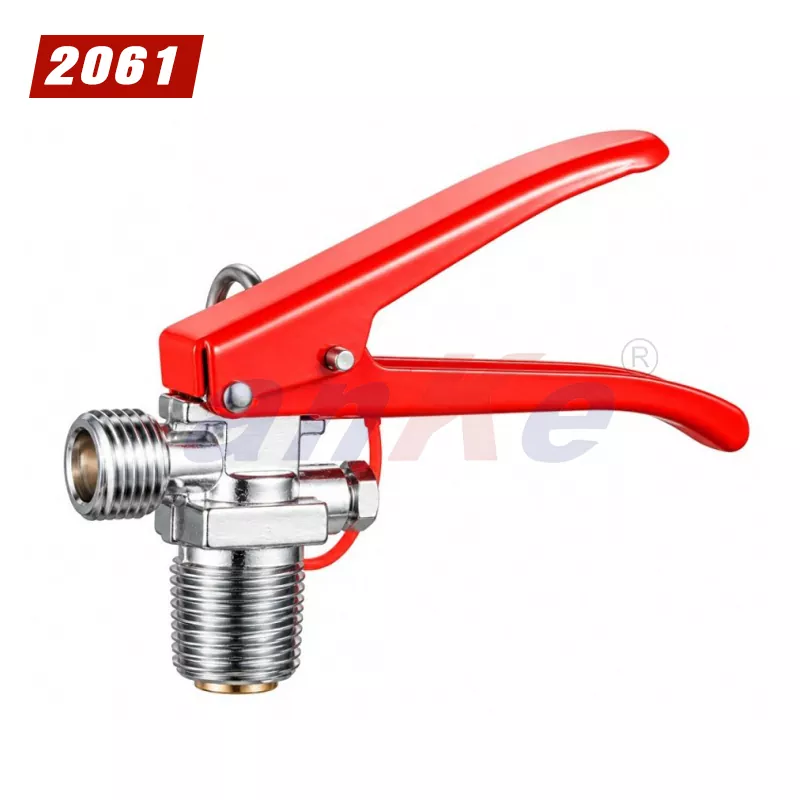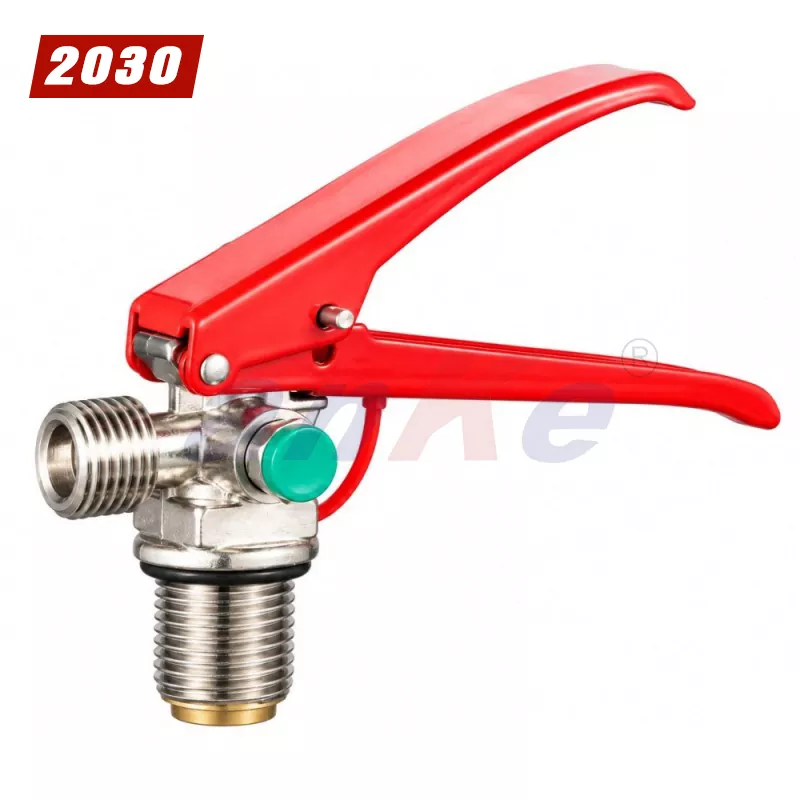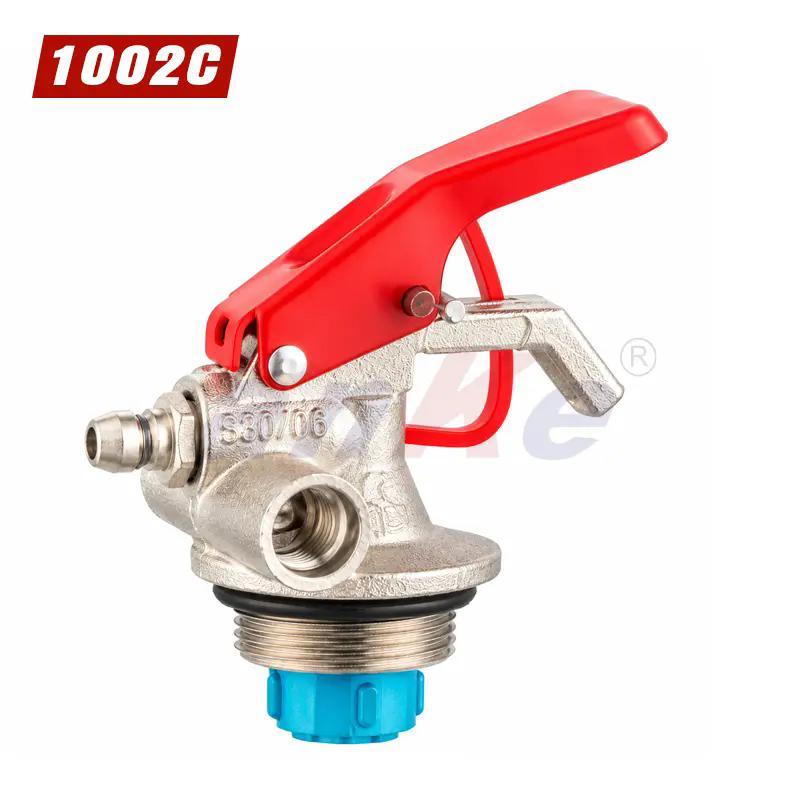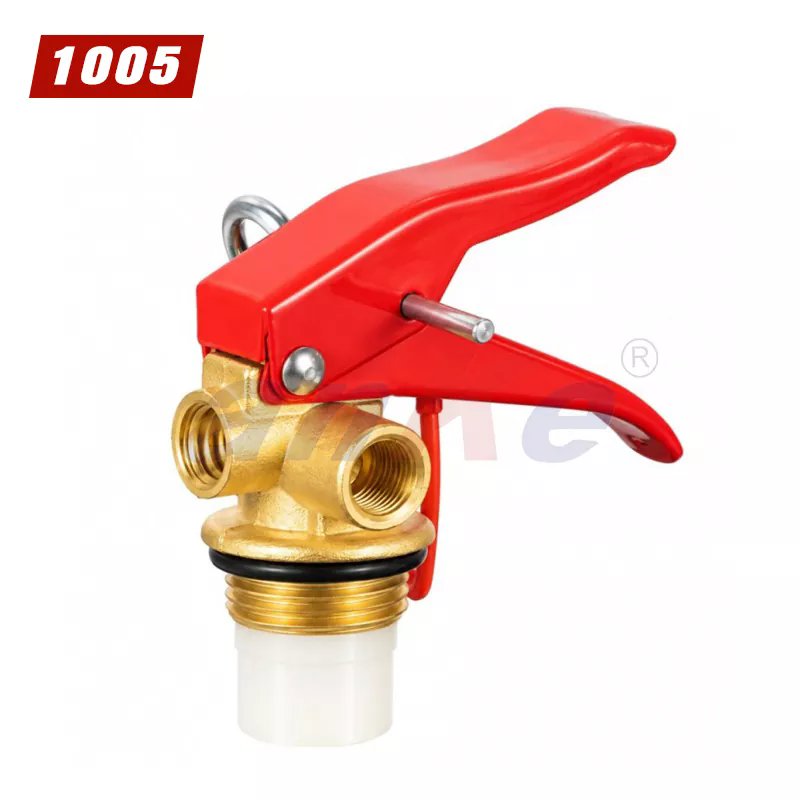
For a procurement manager sourcing Dry Powder Fire Extinguisher Valves, surface treatment is often treated as a cosmetic line item. It appears on the drawing as “nickel plated” or “chrome plated” and is rarely discussed beyond the price difference. That is a mistake. The surface treatment is the first barrier between the valve body and the environment, and in a fire extinguisher it also sits between the valve and the extinguishing powder. It determines whether the valve corrodes in a coastal warehouse, whether the threads gall during assembly, whether the sealing surfaces remain smooth after years of storage, and whether the valve still operates when it is needed. The treatment is not decoration. It is a functional specification that should be selected with the same care as the body material and the seal compound.
This guide is written for buyers who need to compare surface treatments for Dry Powder Fire Extinguisher Valves. It covers the common treatments—nickel plating, chrome plating, zinc-nickel plating, passivation, and organic coatings—and explains how each one affects corrosion resistance, wear, sealing, powder compatibility, and total cost. It is organized around the questions a procurement team should ask, and it includes the parameters and documentation that a reliable supplier should provide. Our factory at Ningbo Kaituo Valve Co., Ltd. manufactures Dry Powder Fire Extinguisher Valves with several surface treatment options, and the guidance below reflects the standards we apply to the products we supply.

Consider a shipment of Dry Powder Fire Extinguisher Valves delivered to a warehouse near the coast. The valves are stored for six months before assembly. The air contains salt mist, the humidity cycles between day and night, and the temperature swings. A valve with an inadequate surface treatment begins to show corrosion at the thread roots and the sealing surfaces. The corrosion is not always visible from the outside. It can appear as pitting under the plating, as a white or green deposit around the brass threads, or as a rough spot on the seat. When the valve is assembled and pressurized, the rough spot becomes a leak path. When the extinguisher is inspected a year later, the valve may fail the operation test. The surface treatment was the variable that determined whether the valve survived storage and service.
The failure chain is predictable. It begins with a discontinuity in the coating, a thin deposit at the thread crest, or a surface that was not properly cleaned before plating. Moisture reaches the base metal, corrosion begins, and the corrosion products occupy more volume than the metal they replace. The coating lifts, the thread dimension changes, and the seal surface is no longer flat. The table below summarizes the failure chain and the treatment properties that interrupt it.
| Failure Stage | What Happens | Treatment Property That Prevents It |
| Coating discontinuity | Moisture reaches base metal | Uniform coverage, good throwing power |
| Corrosion initiation | Base metal oxidizes under coating | Barrier protection, passivation layer |
| Coating lift | Corrosion products push coating away | Strong adhesion, adequate thickness |
| Thread dimension change | Assembly torque and fit are affected | Controlled deposit thickness, thread masking |
| Seal surface roughness | Leak path forms at the seat | Smooth deposit, post-plating inspection |
At anke, our factory treats surface preparation as part of the valve specification, not as a finishing step. We control the cleaning, the plating thickness, the adhesion, and the post-plating inspection for the Dry Powder Fire Extinguisher Valves we supply. The goal is to provide a valve that survives storage and service in the intended environment, not just a valve that looks bright on the day it is packed.
For a buyer, the practical lesson is to ask for the treatment specification and the corrosion test data before the order is placed. A supplier that states only “nickel plated” is giving you a label. A supplier that states the deposit thickness, the adhesion test result, and the salt spray hours is giving you a specification that can be verified.
Nickel and chrome are the two most common decorative and functional coatings for brass and copper alloy valves. They look similar from a distance, but they behave differently in a fire extinguisher application. Nickel plating is an electroless or electroplated deposit that provides a uniform barrier with good corrosion resistance and excellent adhesion. It is relatively ductile, so it tolerates the slight deformation that occurs when the valve is tightened. Chrome plating is harder and more wear-resistant, but it is also more brittle and can crack under impact. The cracks become paths for moisture, and the corrosion starts at the crack. The table below compares the two treatments for Dry Powder Fire Extinguisher Valves.
| Property | Nickel Plating | Chrome Plating |
| Typical thickness | 5 - 15 µm | 0.5 - 5 µm (decorative) |
| Corrosion resistance | Good | Moderate (cracks can expose base metal) |
| Wear resistance | Moderate | High |
| Ductility | Good | Low |
| Adhesion | Excellent with proper pretreatment | Good, but sensitive to surface defects |
| Typical use | Valve bodies, threads, sealing surfaces | Decorative trim, wear surfaces |
For a Dry Powder Fire Extinguisher Valve, nickel plating is often the better choice for the body and the thread areas because it provides a continuous barrier and tolerates the mechanical stress of assembly. Chrome plating can be used on the handle or the external trim where wear resistance is the priority, but it is less suitable for the pressure-containing body and the sealing surfaces. The selection should be based on the function of each surface, not on a single treatment for the whole valve.
Our factory at Ningbo Kaituo Valve Co., Ltd. offers both nickel and chrome plating for the Dry Powder Fire Extinguisher Valves we manufacture. We recommend nickel for the body and thread areas and chrome for the external wear surfaces, and we mask the sealing surfaces to avoid unnecessary deposit. The goal is to apply the right treatment to the right surface, not to apply a single finish to the entire valve.
For a buyer, the comparison should include the thickness, the adhesion test, and the salt spray result. A nickel deposit at 10 µm with good adhesion will outperform a chrome deposit at 2 µm with microcracks in a humid environment. Ask the supplier for the coating specification and the test report for each surface.
Zinc-nickel plating and passivation are the treatments that matter most when the valve will be exposed to salt spray. Zinc-nickel is an alloy deposit that provides sacrificial protection to the base metal. If the coating is scratched, the zinc in the alloy corrodes preferentially and protects the steel or brass underneath. Passivation is a chemical treatment that removes free iron from the surface and enhances the protective oxide layer. It is not a coating; it is a surface condition. The combination of zinc-nickel plating and passivation can deliver salt spray performance that far exceeds decorative nickel or chrome. The table below shows the typical salt spray results for different treatments.
| Treatment | Typical Salt Spray Hours to White Rust | Typical Salt Spray Hours to Red Rust | Suitability for Coastal Storage |
| Decorative nickel | 48 - 96 hours | 96 - 200 hours | Moderate |
| Decorative chrome | 24 - 72 hours | 72 - 150 hours | Low to moderate |
| Zinc-nickel + passivation | 500 - 1,000 hours | 1,000+ hours | High |
| Passivation only (no coating) | N/A | 200 - 500 hours | Moderate |
For a Dry Powder Fire Extinguisher Valve that will be stored or used in a coastal environment, zinc-nickel plating with passivation is the treatment that provides the highest confidence. The salt spray hours are not a marketing number. They are a test result that can be verified, and they translate directly into the valve's ability to survive a humid warehouse, a marine installation, or a rainy construction site.
Our factory at Ningbo Kaituo Valve Co., Ltd. offers zinc-nickel plating and passivation for the Dry Powder Fire Extinguisher Valves we supply. We verify the coating thickness and the salt spray performance on samples from each production batch. The goal is to give buyers a treatment option that matches the storage and service environment, not a single finish that is applied regardless of conditions.
For a buyer, the salt spray report is one of the most useful documents in the supplier package. Ask for the test standard, the hours, and the appearance of the sample after the test. A supplier that provides this data is a supplier that understands the environment the valve will face.
Surface treatment affects three functional areas of a Dry Powder Fire Extinguisher Valve: the sealing surfaces, the threads, and the internal surfaces that contact the powder. The sealing surface must be smooth and flat. A coating that is too thick or uneven will change the seat dimension and create a leak path. The threads must maintain the specified fit. A coating that builds up on the thread crest will change the torque and the engagement. The internal surfaces must be compatible with the powder. A coating that reacts with the powder or sheds particles will contaminate the extinguishing agent. The table below summarizes the effects and the treatment controls.
| Functional Area | Effect of Surface Treatment | Control Measure |
| Sealing surface | Thick or uneven coating changes seat flatness | Mask sealing surfaces, inspect flatness after plating |
| Threads | Coating buildup changes fit and torque | Control deposit thickness, use thread masking or post-plating chase |
| Internal powder contact | Coating reaction or particle shedding | Use compatible coating, verify adhesion, clean after plating |
| Valve operation | Coating in the bore affects stem movement | Mask bore, verify operation after plating |
For a Dry Powder Fire Extinguisher Valve, the most common treatment-related failure is not a dramatic corrosion perforation. It is a slow leak caused by a sealing surface that was not protected during plating, or a thread that no longer engages correctly because the deposit was too thick. These failures are preventable through masking and inspection. A supplier that masks the critical surfaces and inspects the valve after plating is a supplier that understands the functional consequences of the treatment.
Our factory at Ningbo Kaituo Valve Co., Ltd. masks the sealing surfaces and the internal bore of the Dry Powder Fire Extinguisher Valves before plating, and we verify the operation and the leak tightness after plating. The goal is to ensure that the treatment protects the external surfaces without compromising the internal function of the valve.
For a buyer, the treatment specification should state which surfaces are coated and which are masked. A general statement such as “nickel plated” is not sufficient. The drawing or the specification should identify the sealing surfaces and the threads as masked areas, and the inspection report should confirm that the valve operates correctly after plating.
The final comparison for Dry Powder Fire Extinguisher Valves should include cost, lead time, and compliance, not just the treatment name. A zinc-nickel treatment costs more per valve than decorative nickel, but it may reduce the total cost by avoiding corrosion-related returns and warranty claims. A chrome treatment may be cheaper at the purchase price but may require more careful handling to avoid cracks. The lead time also varies: zinc-nickel and passivation add process steps, and masking adds labor. Compliance is the third dimension: the treatment must meet the applicable standard, and the supplier must provide the test reports that demonstrate it. The table below provides a procurement comparison framework.
| Comparison Factor | Nickel Plating | Chrome Plating | Zinc-Nickel + Passivation |
| Relative cost | Moderate | Low to moderate | High |
| Corrosion protection | Good | Moderate | Excellent |
| Lead time impact | Low | Low | Moderate |
| Masking requirement | Yes | Yes | Yes |
| Typical application | General purpose | Decorative/wear | Coastal/humid storage |
| Documentation to request | Thickness, adhesion, salt spray | Thickness, crack inspection | Thickness, salt spray, passivation verification |
At Ningbo Kaituo Valve Co., Ltd., we help buyers compare these factors for the Dry Powder Fire Extinguisher Valves they are sourcing. We provide the coating specification, the test reports, and the lead time impact for each treatment option. The goal is to make the comparison transparent so that the buyer can select the treatment that matches the storage environment and the cost target.
For a buyer, the comparison should be based on the total cost of ownership, not the unit price alone. A valve that fails in storage or service costs far more than the difference between nickel and zinc-nickel. The treatment selection is a risk management decision, and the documentation is the evidence that the risk has been addressed.
Surface treatment affects Dry Powder Fire Extinguisher Valves across corrosion resistance, wear, sealing, thread fit, powder compatibility, cost, and lead time. Nickel plating provides a good general-purpose barrier. Chrome plating offers wear resistance but is less tolerant of impact and moisture. Zinc-nickel plating with passivation delivers the highest salt spray performance and is the appropriate choice for coastal or humid storage. The treatment must be applied to the right surfaces, with masking on the sealing surfaces and the threads, and it must be verified with thickness, adhesion, and salt spray data. Our factory at Ningbo Kaituo Valve Co., Ltd. manufactures Dry Powder Fire Extinguisher Valves with these treatment options and provides the documentation that buyers need to compare them. If you are sourcing valves and need to select the right surface treatment, contact our team to request the coating specification and test reports for your application.
Question 1: Which surface treatment is best for dry powder fire extinguisher valves used in coastal areas?
Answer: Zinc-nickel plating with passivation is the best choice for coastal areas. It provides sacrificial protection and achieves salt spray performance in the range of 500 to 1,000 hours to white rust, which is significantly higher than decorative nickel or chrome. The passivation step enhances the protective oxide layer and removes surface contaminants. For a coastal warehouse or a marine installation, this treatment provides the highest confidence that the valve will survive storage and service.
Question 2: What is the difference between nickel plating and chrome plating on a valve?
Answer: Nickel plating is a ductile barrier coating with good corrosion resistance and excellent adhesion. It tolerates the mechanical stress of assembly and is suitable for valve bodies and threads. Chrome plating is harder and more wear-resistant, but it is brittle and can crack under impact, creating paths for moisture. For a dry powder fire extinguisher valve, nickel is generally preferred for the pressure-containing body and sealing areas, while chrome may be used on external wear surfaces.
Question 3: Does surface treatment affect the extinguishing powder inside the valve?
Answer: Yes, surface treatment can affect the powder if the coating reacts with the powder or sheds particles. The internal surfaces that contact the powder should be coated with a compatible material, and the coating adhesion should be verified. The valve should be cleaned after plating to remove any loose particles. Masking the internal bore and inspecting the valve after plating are the controls that prevent powder contamination.
Question 4: How many salt spray hours should I require for a dry powder fire extinguisher valve?
Answer: The requirement depends on the storage and service environment. For general indoor storage, 96 to 200 hours to red rust may be sufficient. For humid or coastal storage, 500 to 1,000 hours to white rust is a more appropriate target. The salt spray report should state the test standard, the hours, and the appearance of the sample. A supplier that provides this data is giving you a verifiable specification.
Question 5: Does a more expensive surface treatment always increase the valve price significantly?
Answer: Not always. The price difference depends on the treatment, the masking requirement, and the order quantity. Zinc-nickel with passivation costs more than decorative nickel, but the increase is often modest compared with the cost of corrosion-related returns. The buyer should compare the total cost of ownership, including the risk of storage failure and warranty claims, rather than the unit price alone. Request a quotation for each treatment option and compare the delivered cost.
Contact Ningbo Kaituo Valve Co., Ltd. today to request the surface treatment specifications, salt spray reports, and sample valves for your Dry Powder Fire Extinguisher Valve application.
-