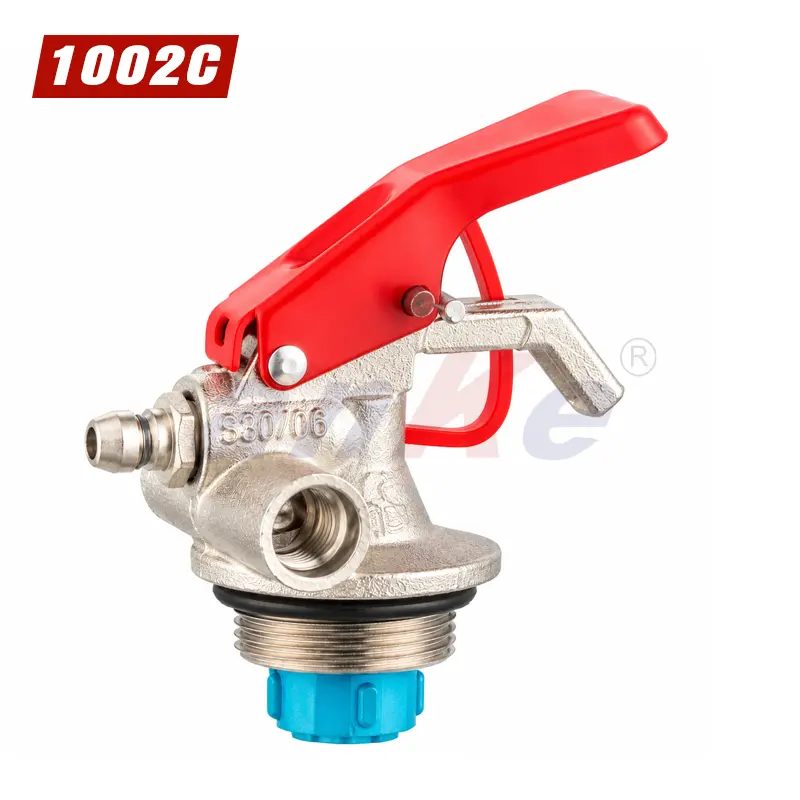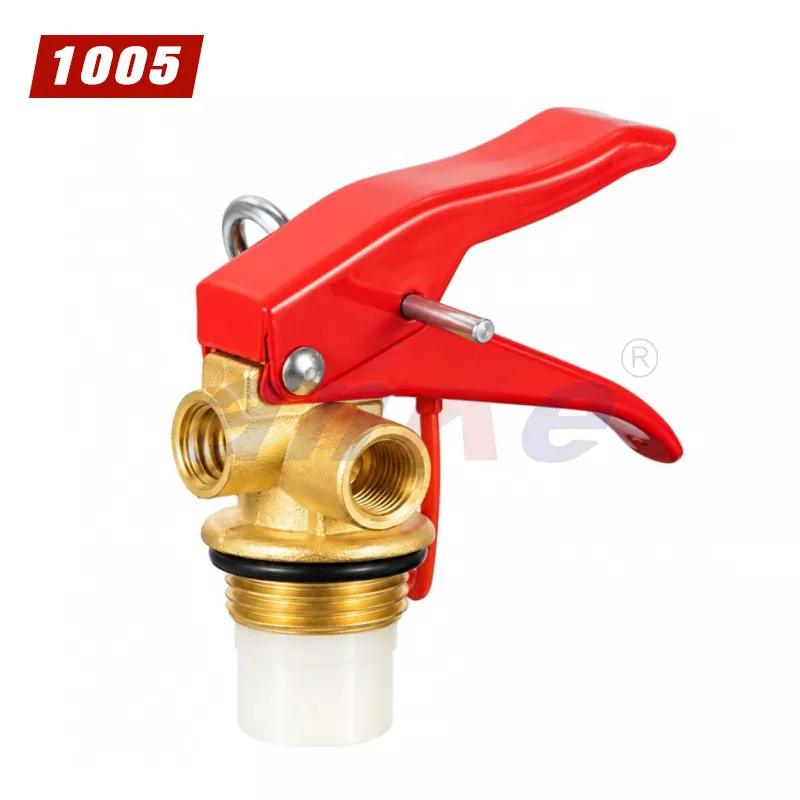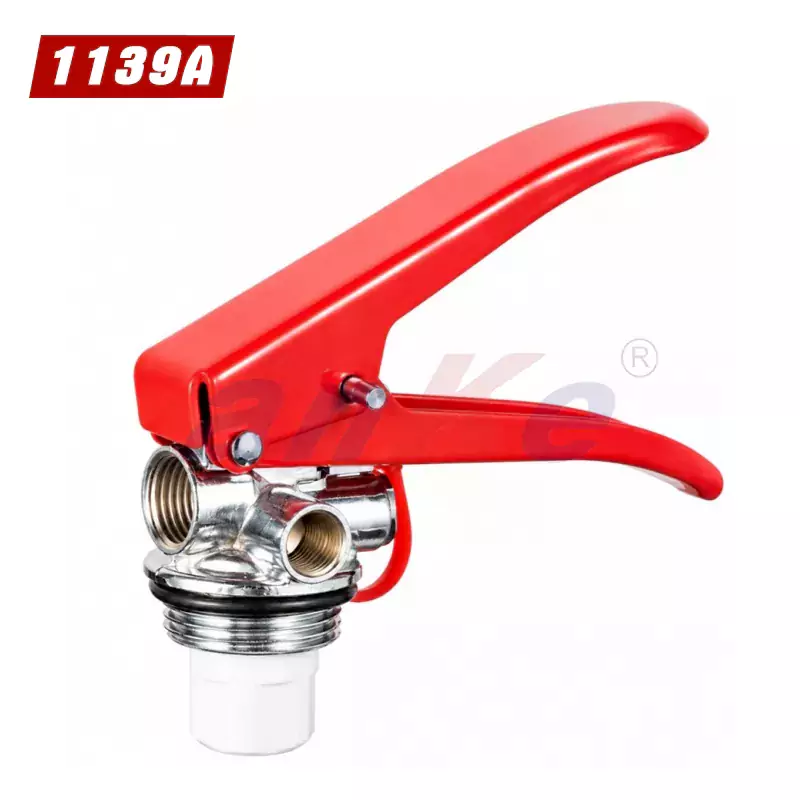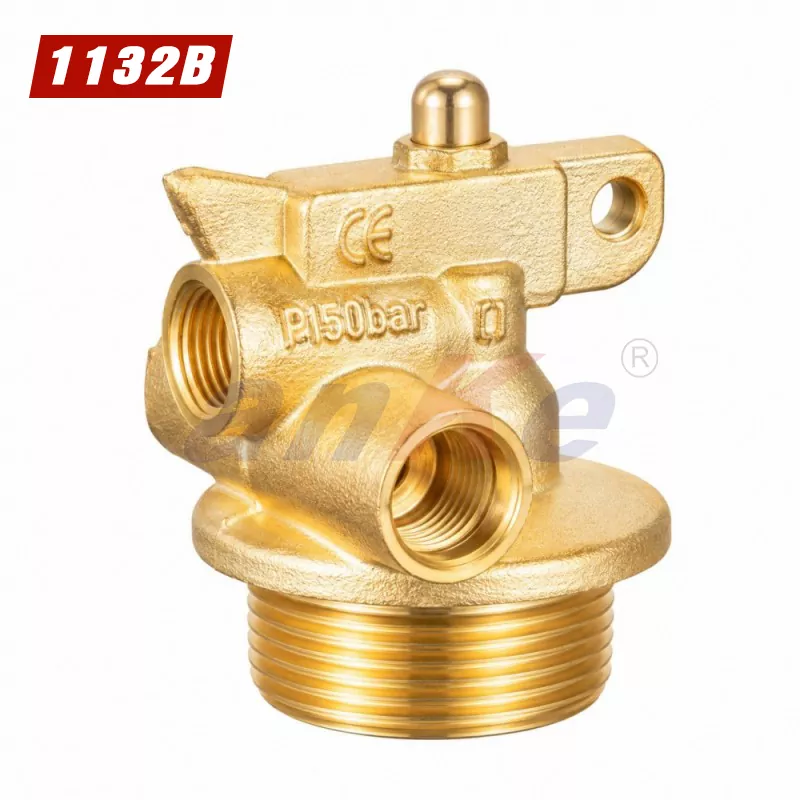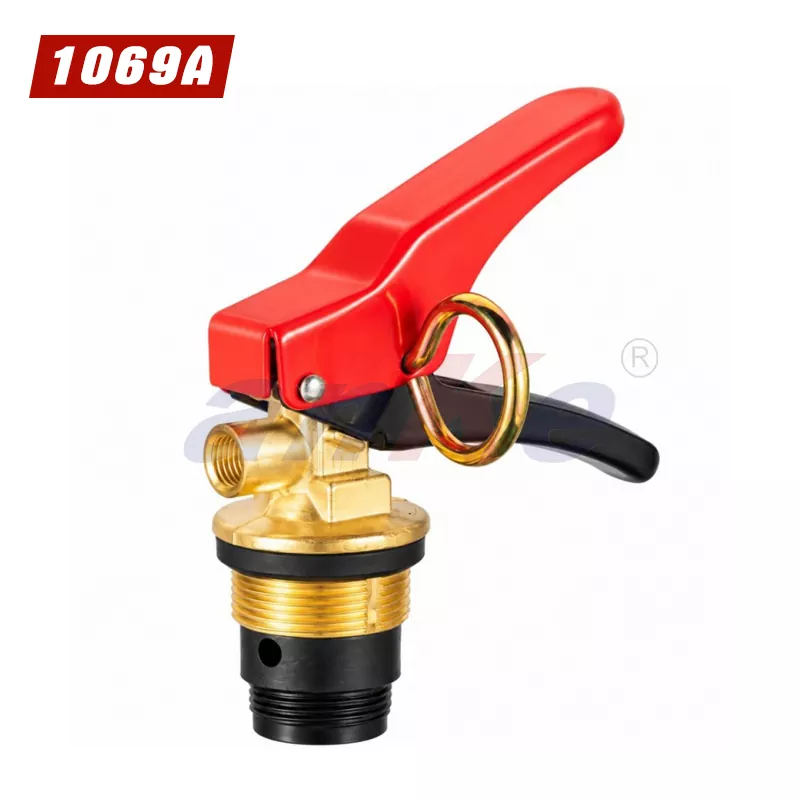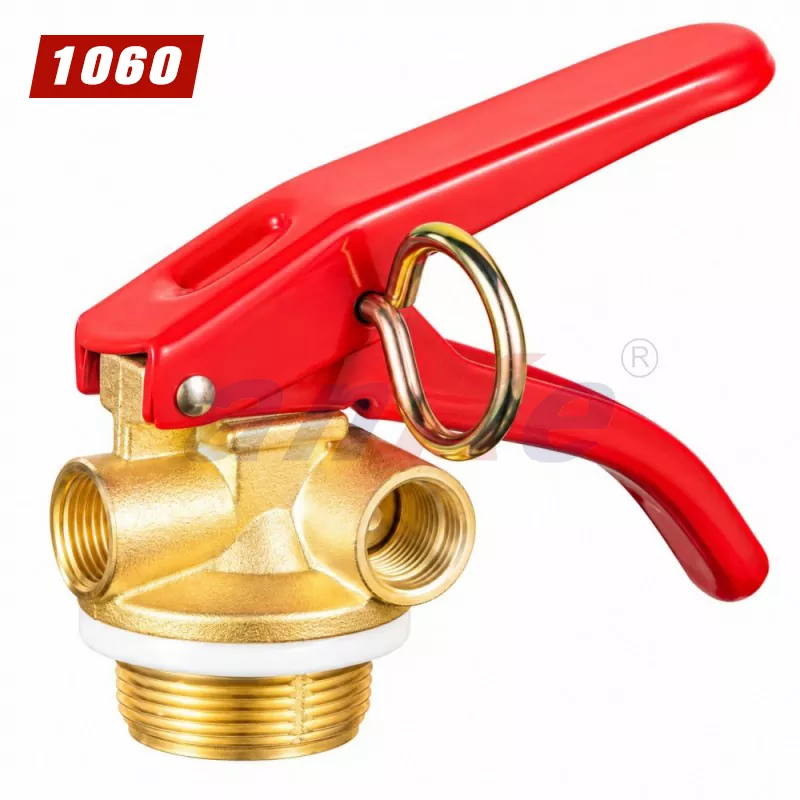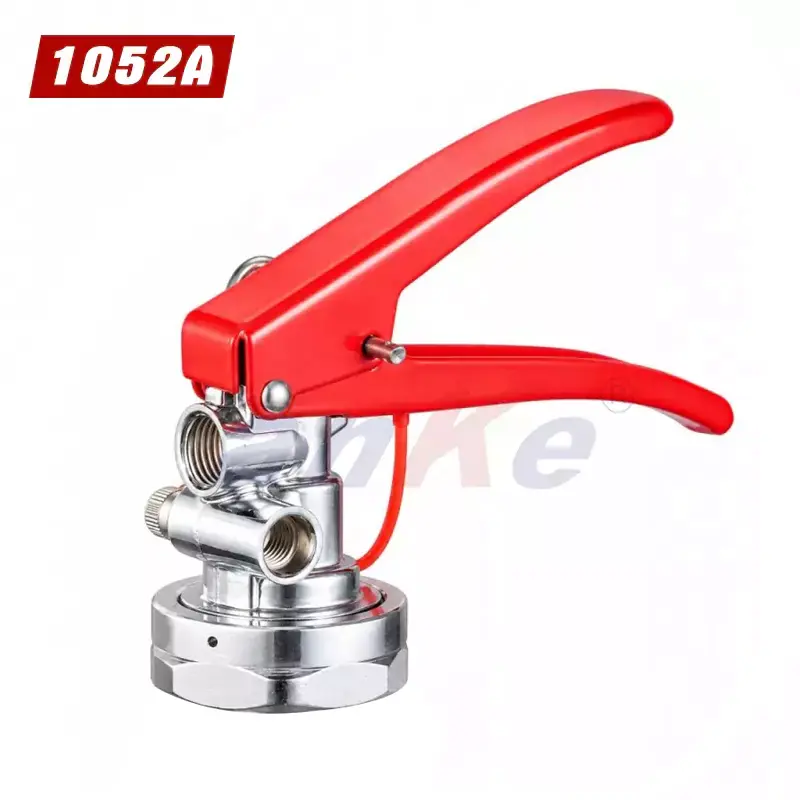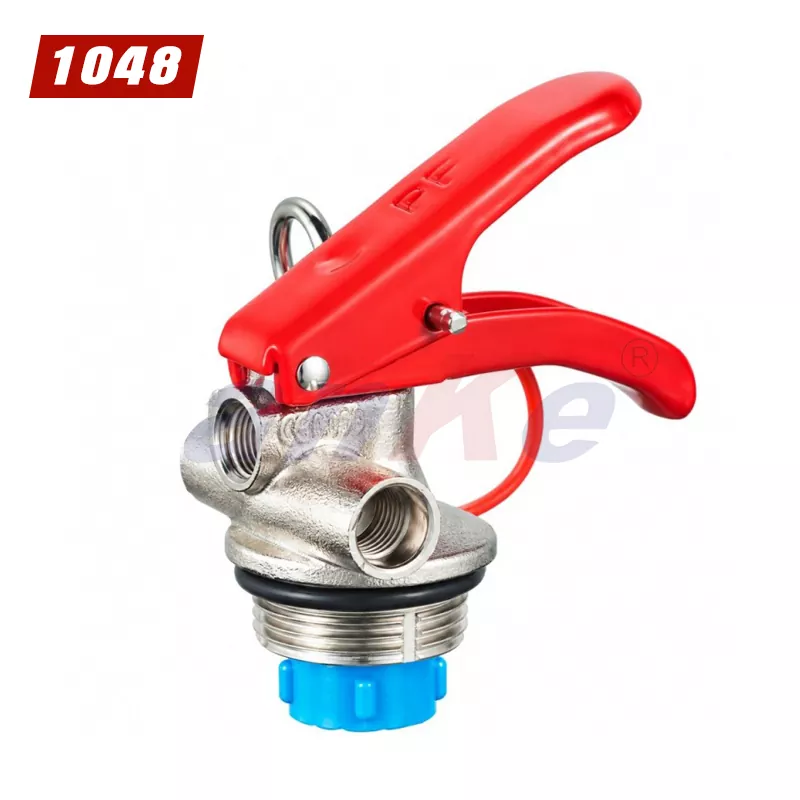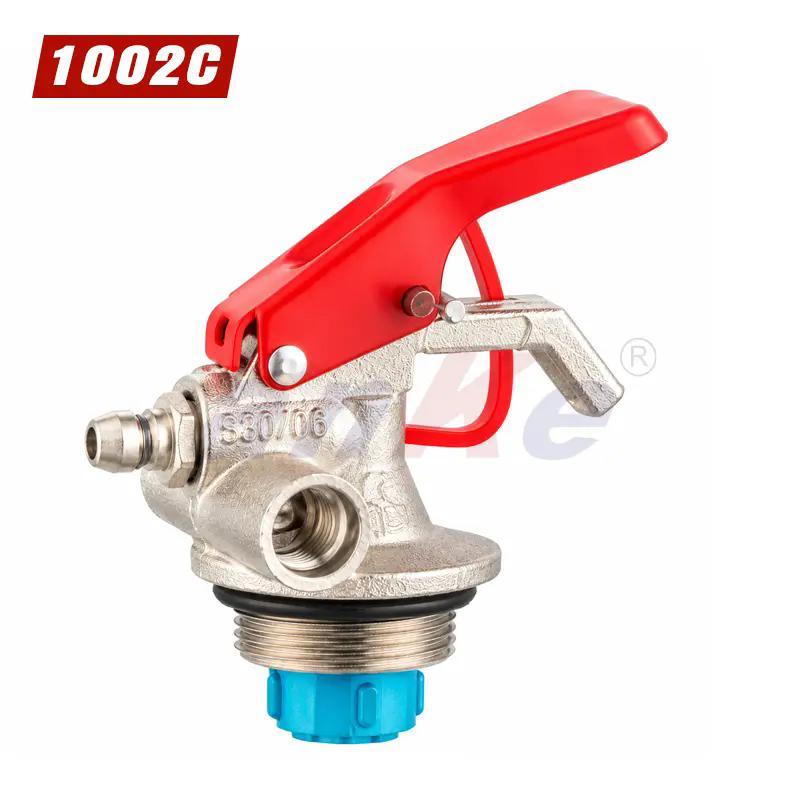
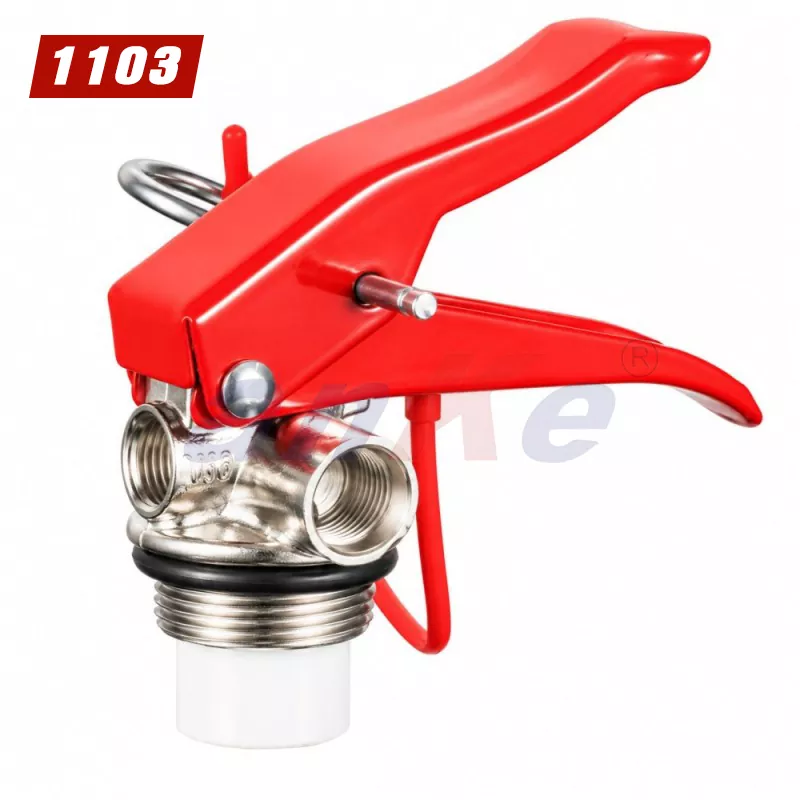
The 1-2KG Chrome Plated Foam Fire Extinguisher Valve 1103 is a compact foam extinguisher valve where the external surface is one of the key product characteristics.
Fire extinguishers may be stored for long periods and can be exposed to dust, humidity, handling and temperature changes. For this reason, the condition of the valve surface is not only an appearance issue. It can affect cleaning convenience and long-term external protection.
The 1103 uses chrome or nickel plating according to customer requirements. The supplied information specifically emphasizes surface smoothness, wear resistance, weather resistance and ease of cleaning.
| Parameter | Specification |
| Valve Type | 1-2KG Chrome Plated Foam Fire Extinguisher Valve |
| Material | High-quality Copper |
| Surface treatment | According to customer requirements (chrome/nickel plated) |
| Inlet thread | M24X1.5 |
| Outlet thread | G1/8 |
| Gauge Connection thread | M10X1-12.5 |
| Dip tube pipe thread | M16X1.5 |
| Safety Device (Bar) | 22-26 |
| Check Valve | No |
| Applicable Cylinder | 1-2 KG fire extinguishers |
| Customization | Thread configuration, surface finish, handle style, and other parameters upon request |
The plated surface is described as easy to clean. This is useful for extinguishers installed in environments where dust, dirt or other contaminants may accumulate.
The valve as suitable for humid and high-temperature environments and emphasizes weather resistance.
The actual environmental performance should, however, be verified against the customer's required environmental test standard when a project has specific corrosion or temperature requirements.
The improved surface wear resistance as a product characteristic. This can be relevant when the extinguisher is frequently handled, transported or inspected.
Decorative chrome is typically 0.2–0.5 μm thick, deposited over a nickel underlayer. The chromium layer itself provides wear resistance and a smooth surface, but it is not the primary corrosion barrier. The corrosion protection comes from the nickel beneath it, which needs sufficient thickness to be effectively pore-free for sustained protection. Nickel plating at engineering thickness provides corrosion protection without the chromium top layer.
Where the service environment is more demanding, zinc-nickel and zinc flake coatings sit in a different performance band and are associated with longer salt spray endurance than a conventional decorative nickel-chrome finish. For the 1103, the relevant question is whether the coating specification covers internal passages and threaded surfaces, not only the visible exterior.
Foam extinguishers carry a concentrate diluted with water, and the chemistry of that solution interacts with the elastomeric seals over the service life of the unit. For foam service, EPDM is the elastomer most commonly specified in components that contact the foam solution, including hoses, seating elements and O-rings.
NBR, which is common in dry powder and plain water valves, is not the default choice for foam contact because certain concentrate formulations — particularly AFFF and AR-AFFF types — can cause swelling or extraction in nitrile over extended exposure. The seal compound should be confirmed against the specific foam concentrate the finished extinguisher will carry, rather than assumed compatible from a general “foam” classification. Where the buyer's concentrate is already fixed, that information should accompany the valve enquiry so the seal compound can be matched at the specification stage.
Under the framework aligned with EN 3-7, a complete extinguisher sample is subjected to 480 hours of neutral salt spray under ISO 9227. After exposure, the mechanical function of all components must remain unchanged, the operating force must stay within specification, and there should be no corrosion of the extinguisher metal. This is a whole-assembly test, not a test of the bare valve body.
For a plated valve intended for humid or coastal service, the points worth confirming are whether the coating specification covers internal passages and threaded surfaces, not only the visible exterior, and whether the salt spray result cited belongs to the valve as supplied or to the finished extinguisher. A coating that performs well on the body can still contribute to a failure if moisture collects in an uncoated thread or gauge port.
M24×1.5 is a metric fine parallel thread and does not seal on the thread flanks. The joint depends on a sealing face or gasket at the cylinder neck. Published assembly data for comparable EN 3-7 powder extinguisher valves on an M30×1.5 neck lists a minimum of 40–45 Nm and a maximum of 68 Nm. General mechanical fitting tables for M24×1.5 in copper sealing configurations list a higher value, around 100 Nm, but those figures come from general mechanical fittings rather than from portable extinguisher necks.
A portable extinguisher neck has a thinner wall and a different sealing-seat geometry from a general pipe fitting. Applying a general fitting torque to a 1–2 kg neck can over-compress the gasket or distort the seat, and the damage may only become apparent at the next hydrostatic test. The applicable torque should come from the cylinder manufacturer’s assembly instruction, and the condition of the sealing face should be checked in the same step.
The 22–26 bar safety device setting is a relief value, and its suitability depends on the cylinder it protects. For 1–2 kg foam extinguishers, published data commonly lists a working pressure of 14 bar, a cylinder pressure test (PT) of 27 bar, and a safety valve setting between 20 and 26 bar. A 22–26 bar setting falls within that band and below the test pressure, which is the intended relationship.
The figure should not be transferred to a cylinder with a different test pressure without checking the relationship. What matters is that the safety device opens before the cylinder is exposed to a pressure approaching its test value. The controlling references are the stamped PT on the cylinder and the finished extinguisher’s pressure specification, read together with the valve setting rather than in isolation.
On foam units, the safety device has an additional inspection dimension that is easy to overlook. Foam solution that has weeped past a seal or been spilled during filling can leave residue on the relief port. A port partially blocked by dried concentrate may not vent at the intended pressure. During periodic service, the relief passage should be checked for obstruction in addition to confirming that the device has not previously vented and failed to reseat.
The dip tube and outlet passage can also retain dried concentrate residue if the unit has been discharged and left before recharge. This residue can restrict flow on the next activation. The hose bore and nozzle orifices are part of the same discharge path and should be checked alongside the valve, since a restriction downstream produces the same symptom as a valve fault.
When choosing a 1-2KG Chrome Plated Foam Fire Extinguisher Valve, the valve's external appearance is only one consideration.
For the 1103, buyers should pay particular attention to the M24X1.5 inlet because the cylinder-neck interface is different from some other compact valve configurations.
The full matching relationship should include:
● Cylinder → M24X1.5 inlet
● Gauge → M10X1-12.5 connection
● Dip tube → M16X1.5 connection
● Discharge assembly → G1/8 outlet
● Safety system → 22-26 bar specification
This makes dimensional verification important before purchasing replacement valves or launching an OEM production run.
The product information specifically emphasizes cleanability.
For routine maintenance, the valve surface can be wiped or washed according to the appropriate service procedure. A clean external surface makes it easier for technicians to visually identify:
● Corrosion
● Scratches
● Mechanical damage
● Leakage traces
● Thread abnormalities
This is particularly useful when extinguishers are installed in public, commercial or industrial locations where regular visual inspection is required.
Customers can request:
● Chrome plating
● Nickel plating
● Thread configuration changes
● Handle-style changes
● Other customized parameters
For projects where corrosion resistance or appearance is particularly important, the required surface-treatment specification should be confirmed before production.
A1: 1-2KG foam fire extinguishers.
A2: Its supplied product information emphasizes surface durability, cleanability, weather resistance and wear resistance.
A3: M24X1.5.
A4: No.
A5: 22-26 bar.
A6: Yes.
A7: Yes. Thread configuration, surface finish, handle style and other parameters can be customized.
A8: Not automatically. EPDM is the elastomer most commonly specified for foam contact because of its compatibility with a broad range of concentrate types. NBR, which is common in dry powder and plain water valves, is not the default choice for foam service because certain AFFF and AR-AFFF formulations can cause swelling or extraction. The seal compound should be confirmed against the specific concentrate the finished extinguisher will carry.
A9: Published assembly data for comparable EN 3-7 powder extinguisher valves lists 40–68 Nm. General mechanical fitting tables for M24×1.5 list a higher value, but a portable extinguisher neck has a thinner wall and a different sealing-seat geometry. The cylinder manufacturer’s assembly instruction is the controlling value.
A10: The relief passage should be confirmed free of dried concentrate residue, since a partially blocked port may not vent at the intended pressure. The dip tube and outlet passage should be checked for retained foam residue if the unit has previously been discharged. The hose and nozzle are part of the same discharge path and should be inspected alongside the valve.
Address
Factory: Huilong Village, Huangjiabu Town, Yuyao City, Zhejiang Province, China
Branch Office: Hengye Building 509, No.158 Tai'an Middle Road, Yinzhou District, Ningbo, Zhejiang, China
Tel