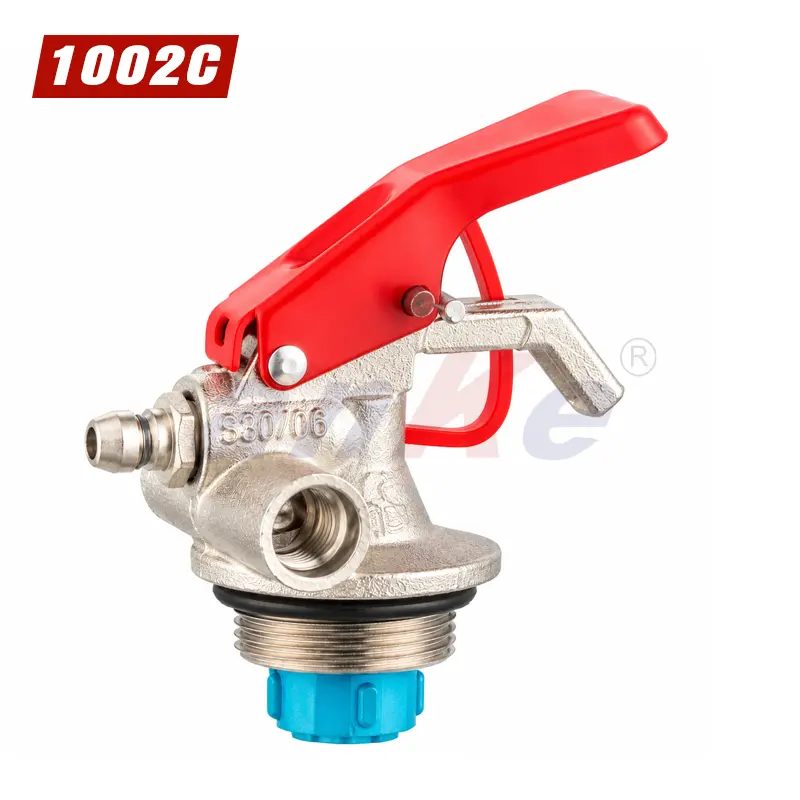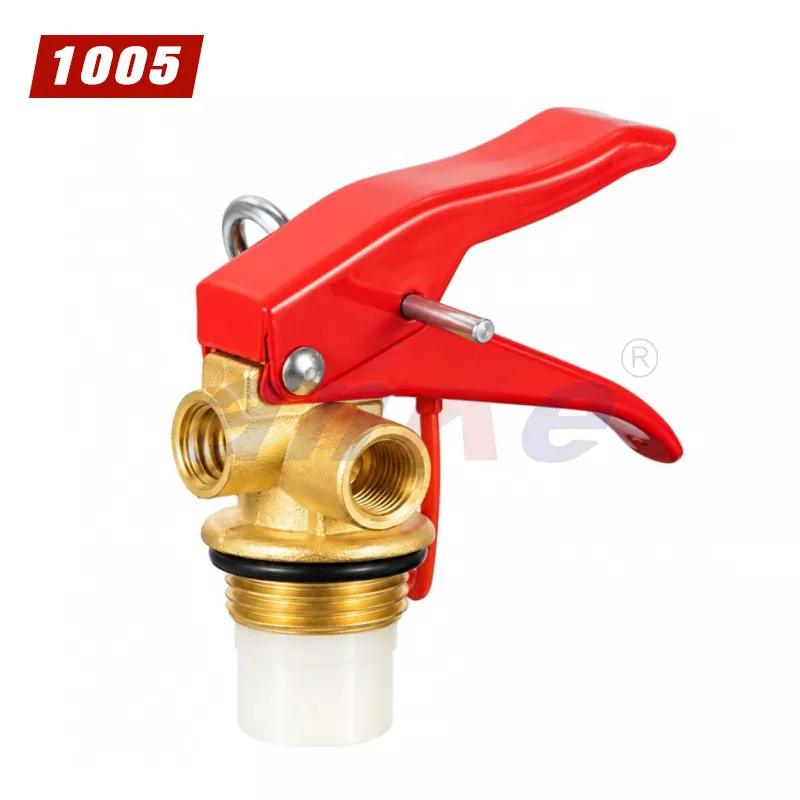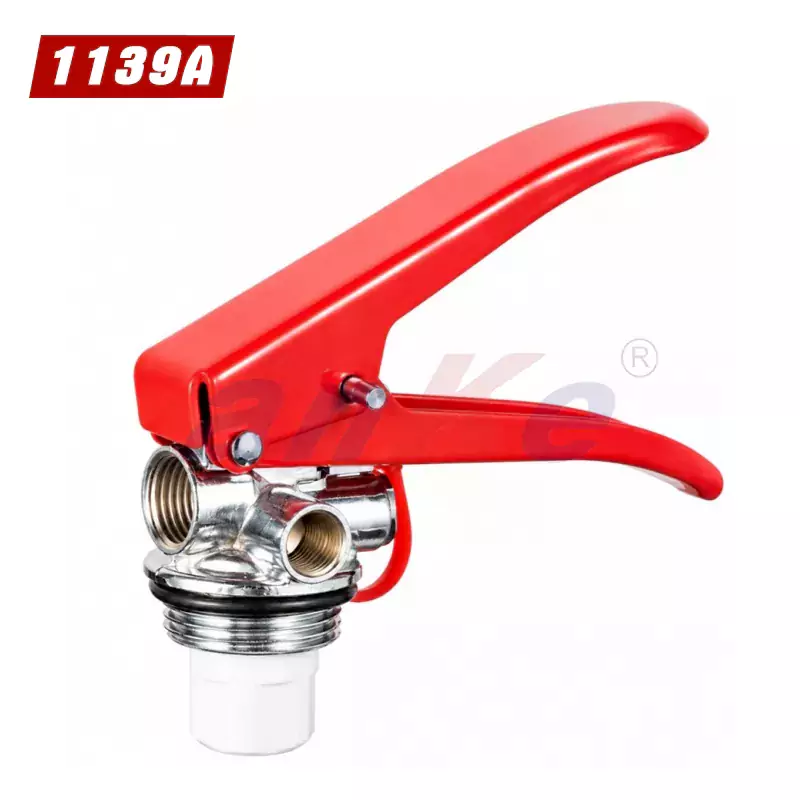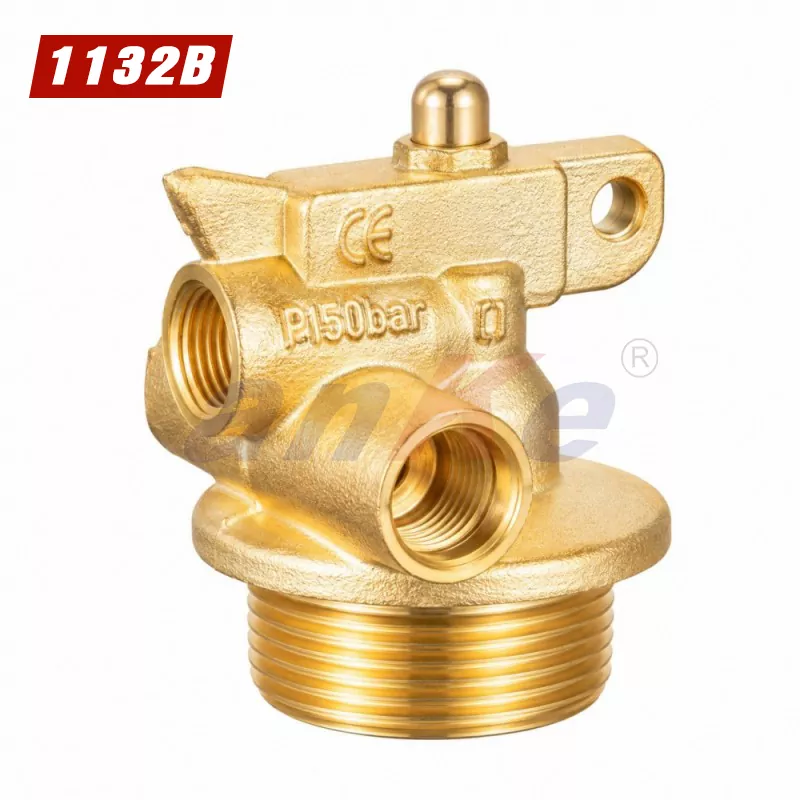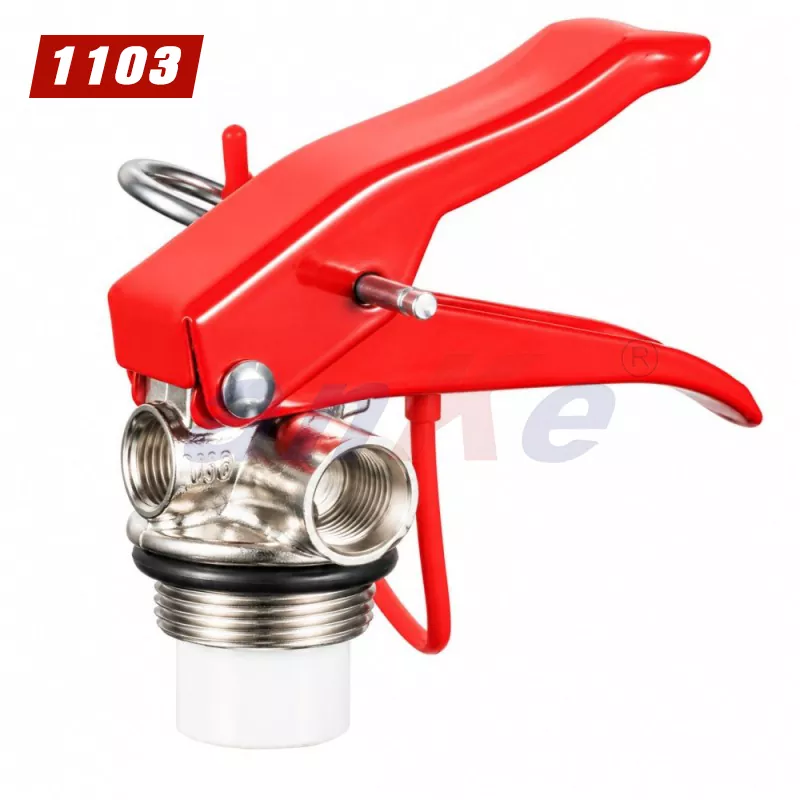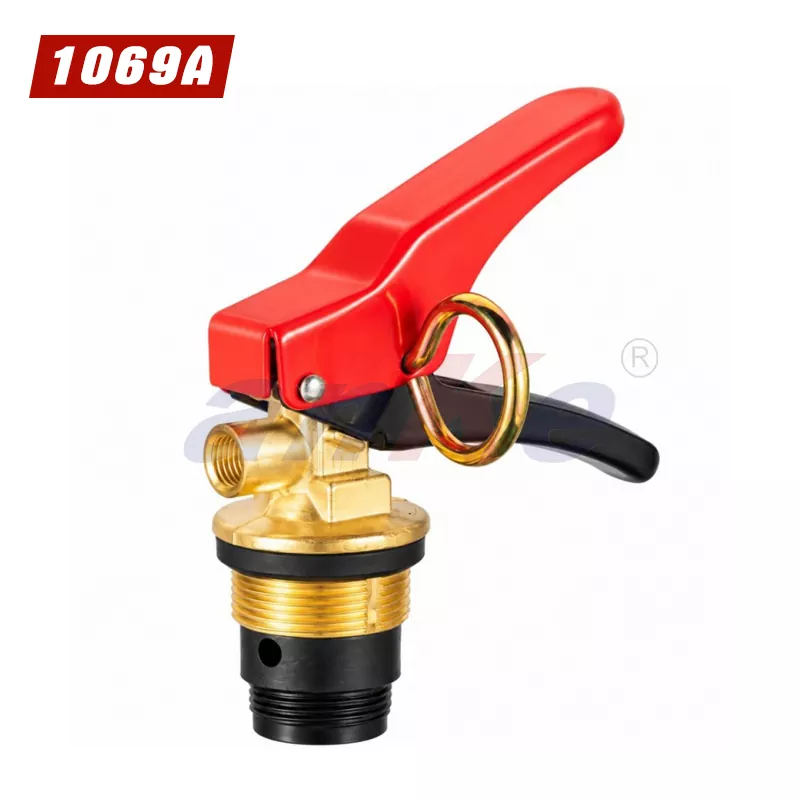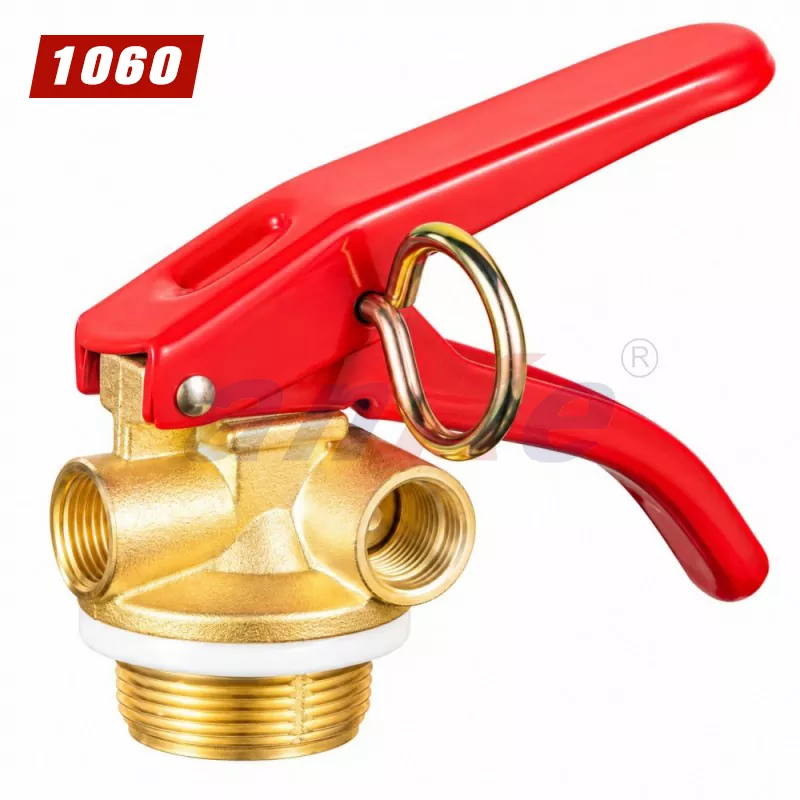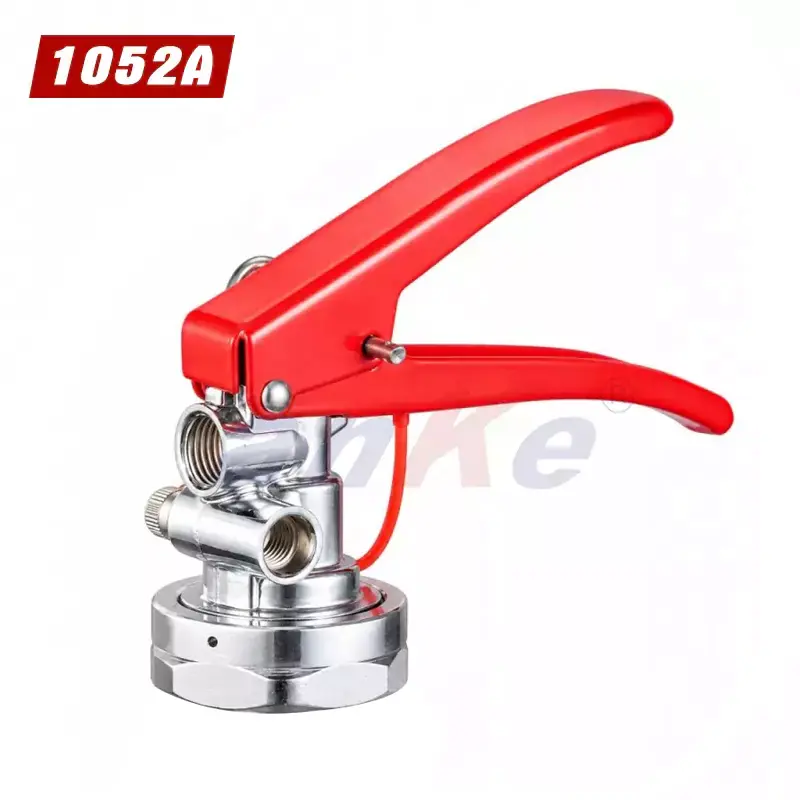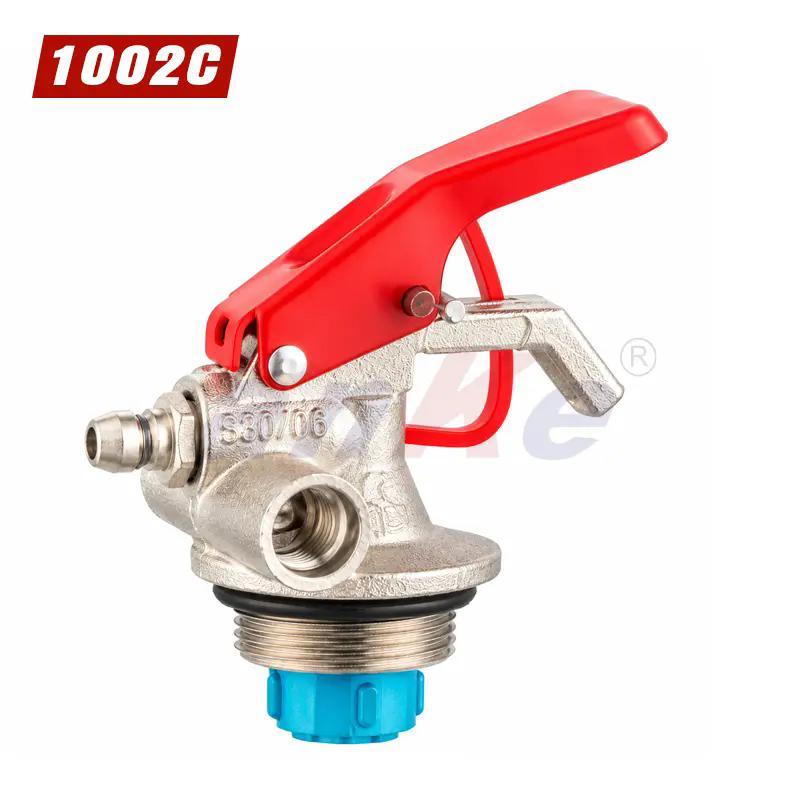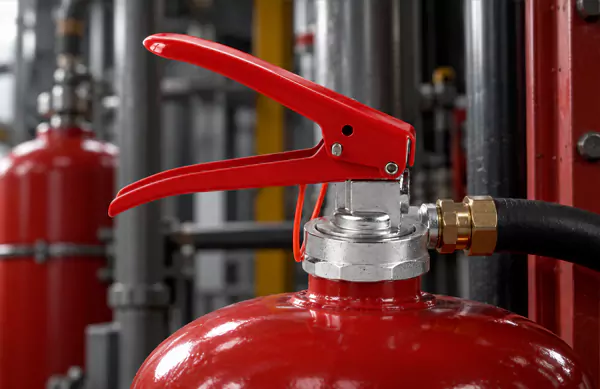
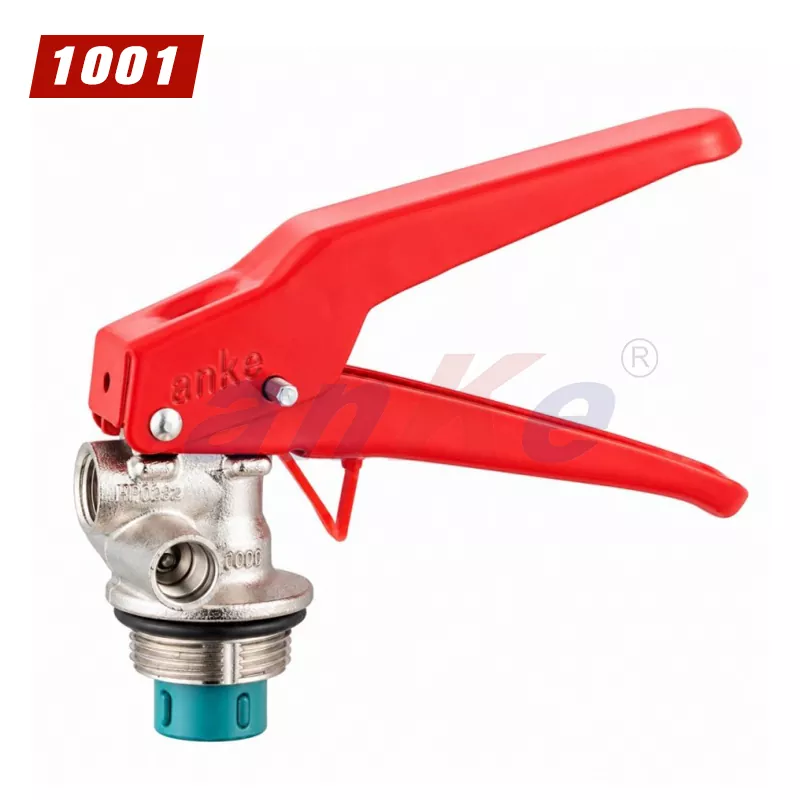
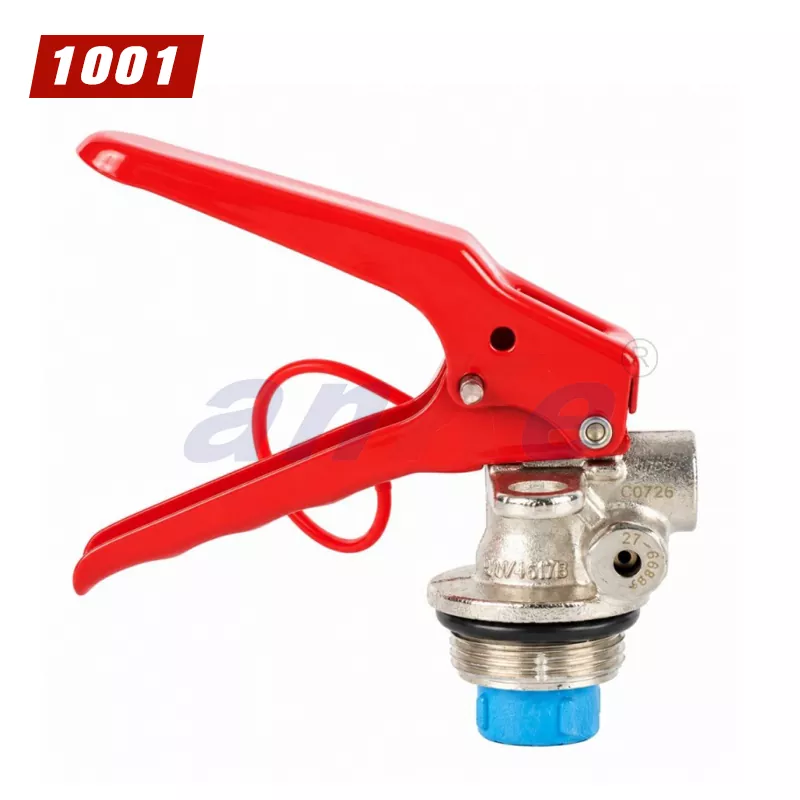
As a professional manufacturer, we are able to provide comprehensive customization services. Ningbo Kaituo Valve Co., Ltd. factory price 4-12KG Foam Fire Extinguisher Valve,is made of brass or aluminum, which is resistant to high temperature and corrosion. As the core component of a fire extinguisher, it contains the foam extinguishing agent and, when a fire breaks out, rapidly releases the solution when the handle is pressed down, enabling precise, efficient, and rapid fire suppression.
Made from high-quality HPb59-1 brass through a single-piece hot-forging process, it offers excellent pressure resistance.
The surface can be nickel-plated or chrome-plated according to customer requirements. The valve body features a built-in precision overpressure relief safety valve that automatically releases pressure when internal pressure rises abnormally, preventing the cylinder from bursting.
The interior features a high-quality sealing ring paired with a stainless steel spring, ensuring instant opening upon pressing even under prolonged pressure.
| Item | Specification |
|---|---|
| Material | Copper/Aluminium |
| Surface treatment | According to customer requirements (chrome/nickel plated) |
| Inlet thread | M30X1.5 |
| Outlet thread | G1/4 |
| Gauge thread | M10X1-12.5 |
| Dip tube pipe thread | M16X1.5 |
| Valve with safety pressure relief device | (24±2BAR) |
Foam extinguishers differ from dry powder and plain water units in one respect that directly affects valve specification: the extinguishing agent is a concentrate diluted with water, and its chemistry can interact with elastomeric seals over the service life of the extinguisher.
For foam service, EPDM is the elastomer most commonly specified in components that contact the foam solution, including hoses, seating elements, and O-rings. Foam system valve specifications commonly list EPDM seating and gaskets as the standard material for compatibility with a broad range of foam concentrate types. NBR, which is common in dry powder and plain water valves, is not the default choice for foam contact because certain concentrate formulations — particularly AFFF and AR-AFFF types — can cause swelling or extraction in nitrile over extended exposure.
The practical implication for the 4-12KG valve is that the seal material should be confirmed against the specific foam concentrate the finished extinguisher will carry, not against a general “foam” category. Fluorine-free foam concentrates, protein-based foams, and AFFF formulations do not impose identical demands on elastomers, and a valve supplied with NBR for water service is not automatically suitable for a foam fill without the seal material being reviewed. Where the buyer’s foam concentrate is already fixed, that information should accompany the valve enquiry so the seal compound can be matched at the specification stage rather than discovered at filling.
Under EN 3-7, portable extinguishers with more than 3 kg or 3 L of extinguishing medium must be provided with a hose assembly, and the flexible portion must be at least 400 mm long. The entire 4–12KG range falls above that threshold, so the G1/4 outlet on this valve will in practice be connected to a hose and nozzle assembly rather than a directly mounted nozzle.
The G1/4 outlet is a parallel thread under ISO 228 and seals at a face or with a washer, not on the thread flanks. The outlet connection and the hose assembly should therefore be confirmed as a pair: the hose fitting’s sealing method must match the valve outlet, and the hose bore and length must be consistent with the discharge characteristics intended for the cylinder size. A G1/4 outlet correctly matched to the hose on a 4KG unit does not automatically produce the intended discharge time on a 12KG unit, because the agent volume and the hose length change together across the range.
Foam extinguishers are also commonly fitted with air-aspirating nozzles, where the foam solution is drawn through the nozzle and air is entrained to generate the finished foam. The valve outlet itself does not perform the aspiration; its role is to deliver solution to the hose at the required flow, and the nozzle downstream is what determines expansion ratio and spray pattern. Buyers specifying a complete discharge assembly should confirm that the nozzle type — air-aspirating or non-aspirating — is consistent with the foam concentrate and the fire class the finished extinguisher is rated for, and that the G1/4 outlet is matched to the hose fitting that feeds that nozzle.
M30×1.5 is a parallel metric thread and does not seal on the thread flanks. The joint depends on a sealing face or gasket at the cylinder neck. General torque data for M30×1.5 threaded components in brass and steel assemblies commonly falls in the 100–120 Nm range, but those values come from general mechanical fittings and pressure equipment connections, not from portable extinguisher necks.
A portable extinguisher neck has a thinner wall and a different sealing geometry from a general pipe fitting. Applying a general fitting torque to a cylinder neck can compress the gasket beyond its elastic range or distort the neck seat, and the damage may not become apparent until the next hydrostatic test. The applicable torque should come from the cylinder manufacturer’s assembly instruction for the specific neck design. The condition of the sealing face — flatness, freedom from scratches, and absence of corrosion — belongs to the same assembly check as the thread match, particularly on foam units where the agent is water-based and the sealing interface remains wet in service.
The 24 ± 2 bar safety device setting is a relief value, and its suitability depends on the cylinder it protects. For foam and water-based portable extinguishers in this size range, cylinder data commonly shows a test pressure in the region of 25–27 bar, with the safety device intended to vent below that value. A 24 ± 2 bar setting is consistent with that relationship for a cylinder tested at 25 or 27 bar.
The figure should not be transferred to a cylinder with a different test pressure without checking the relationship. A cylinder tested at a higher value does not require a higher safety setting; what matters is that the safety device opens before the cylinder is exposed to a pressure approaching its test value. The controlling point is the stamped test pressure on the cylinder and the finished extinguisher’s pressure specification, read together with the valve setting rather than in isolation.
On foam units, the safety device has an additional inspection dimension that is easy to overlook. Foam solution that has weeped past a seal or been spilled during filling can leave residue on the relief port. A port partially blocked by dried concentrate may not vent at the intended pressure. During periodic service, the relief passage should be checked for obstruction in addition to confirming that the device has not previously vented and failed to reseat.
Foam extinguishers are commonly maintained on the same staged schedule as other water-based portable units: annual basic inspection, extended service involving discharge and recharge at an intermediate interval, and a longer-interval hydrostatic test. The valve’s inspection points differ from those of a dry powder valve in where attention is concentrated.
The sealing ring and the internal passage are exposed to foam solution throughout service, not to a dry powder. Swelling, softening, or surface degradation of the seal is therefore a relevant finding at extended service, and the seal should be assessed against the concentrate in use rather than replaced on a fixed schedule alone. The dip tube and outlet passage can retain dried concentrate residue if the unit has been discharged and left before recharge; this residue can restrict flow on the next activation. The hose bore and the nozzle orifices are part of the same discharge path and should be checked alongside the valve, since a restriction downstream produces the same symptom as a valve fault. The lever and safety pin should be checked for free movement, and the safety device relief passage should be confirmed unobstructed.
A1: Ningbo Kaituo Valve Co., Ltd. (also known as Ningbo Anke Fire Equipment Co., Ltd.) is a National High-Tech Enterprise specializing in the R&D, production, and export of fire extinguisher valves and fire protection accessories. Founded in 2001, we own the proprietary brand "anke" and hold 41 national patents, including utility model and invention patents. Our products obtained EN, CE and ISO certifications as early as 2007, meeting international quality standards.
A2: Our core products are fire extinguisher valves, covering a wide range of types and specifications:
CO2 Fire Extinguisher Valves: Made of copper alloy, equipped with safety pressure relief devices.
Dry Powder/Water-Based Fire Extinguisher Valves: Brass construction with optional chrome or nickel plating, featuring overpressure protection devices.
Trolley Fire Extinguisher Valves: Designed for 25-50KG large extinguishers.
Other Products: Marine cylinder valves, gas valves, and more.
A3: Not automatically. EPDM is the elastomer most commonly specified for foam contact because of its compatibility with a broad range of concentrate types, including AFFF and AR-AFFF. NBR, which is common in dry powder and plain water valves, is not the default choice for foam service. The seal compound should be confirmed against the specific concentrate the finished extinguisher will carry, because fluorine-free, protein-based, and AFFF formulations do not impose identical demands on elastomers.
A4: The valve outlet is G1/4 in both cases, but the discharge assembly should not be assumed identical across the range. EN 3-7 requires a hose of at least 400 mm on extinguishers above 3 kg, and the agent volume and hose length change together from 4KG to 12KG. The hose bore, length, and nozzle type should be selected against the specific cylinder size, and the nozzle — air-aspirating or non-aspirating — should match the foam concentrate and the fire class rating.
A5: General torque data for M30×1.5 threaded fittings in brass and steel falls in the 100–120 Nm range, but those are general mechanical fitting values. A portable extinguisher neck has a different wall thickness and sealing geometry. The applicable torque should come from the cylinder manufacturer’s assembly instruction, and the condition of the neck sealing face should be checked at the same time.
A6: The setting should be read against the cylinder’s stamped test pressure. Foam and water-based portable cylinders in this size range commonly carry a test pressure around 25–27 bar, and a 24 ± 2 bar relief setting sits below that, which is the intended relationship. It should not be used on a cylinder with a different test pressure without confirming that the relief still occurs before the cylinder approaches its test value.
A7: The seal should be assessed for swelling or softening against the concentrate in use, not replaced on a fixed calendar alone. The safety device relief passage should be confirmed free of dried concentrate residue. The dip tube and outlet passage should be checked for retained foam residue if the unit has previously been discharged. The hose and nozzle are part of the same discharge path and should be inspected alongside the valve, since a downstream restriction produces the same symptom as a valve fault.
Address
Factory: Huilong Village, Huangjiabu Town, Yuyao City, Zhejiang Province, China
Branch Office: Hengye Building 509, No.158 Tai'an Middle Road, Yinzhou District, Ningbo, Zhejiang, China
Tel