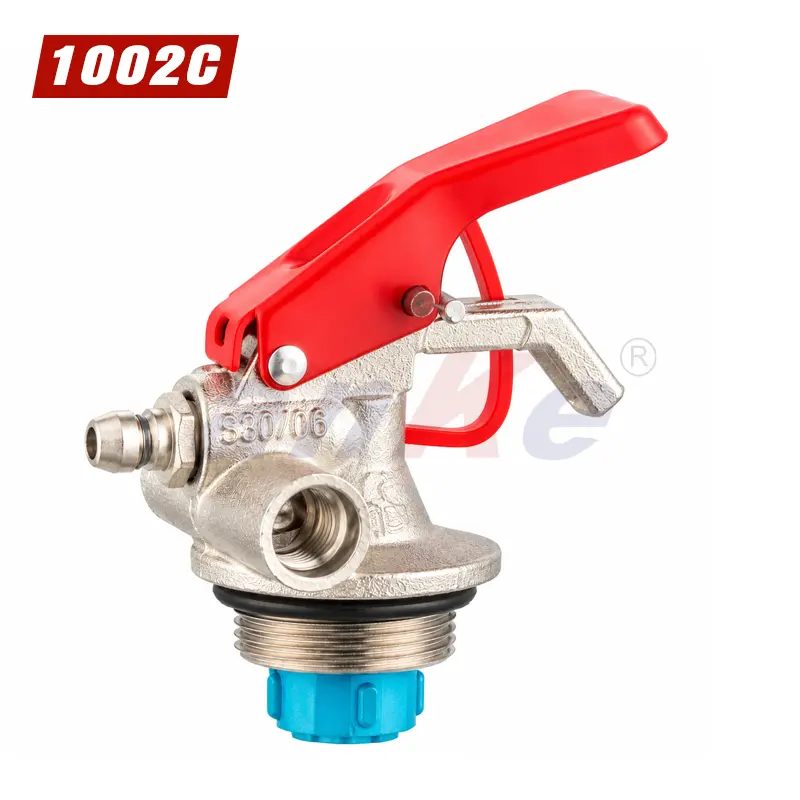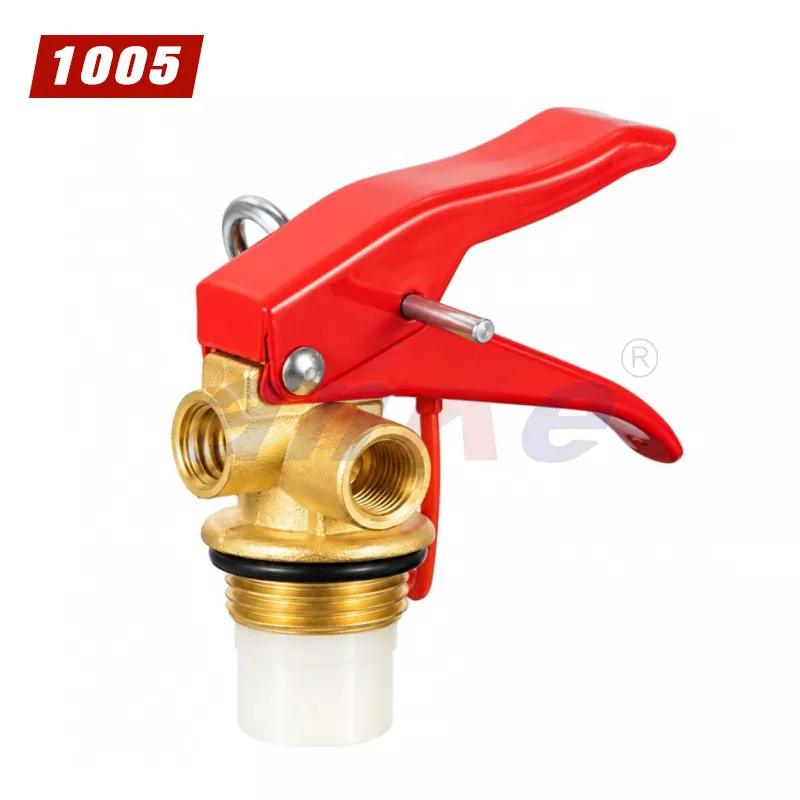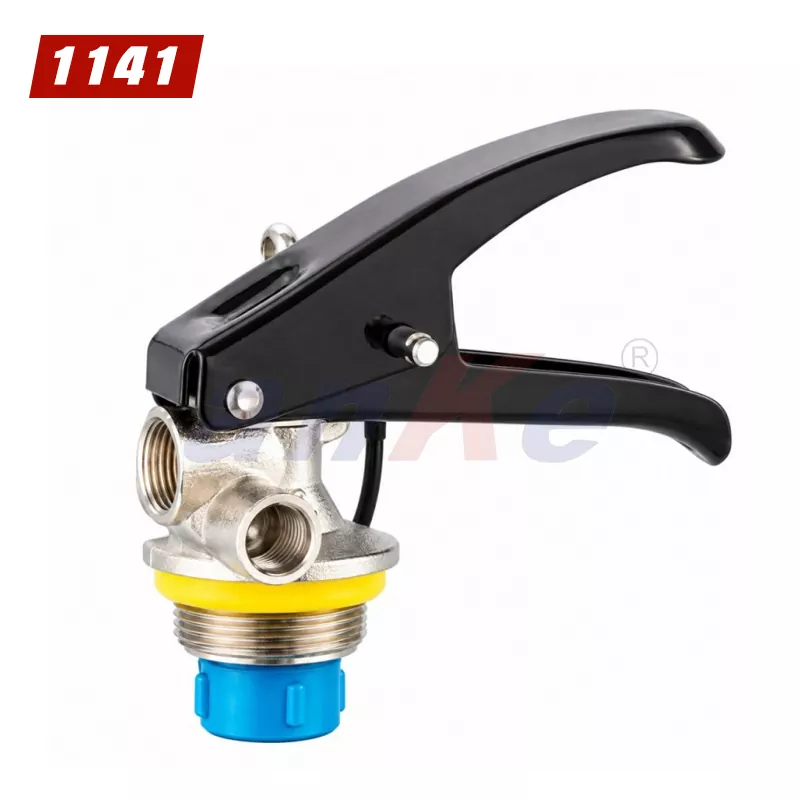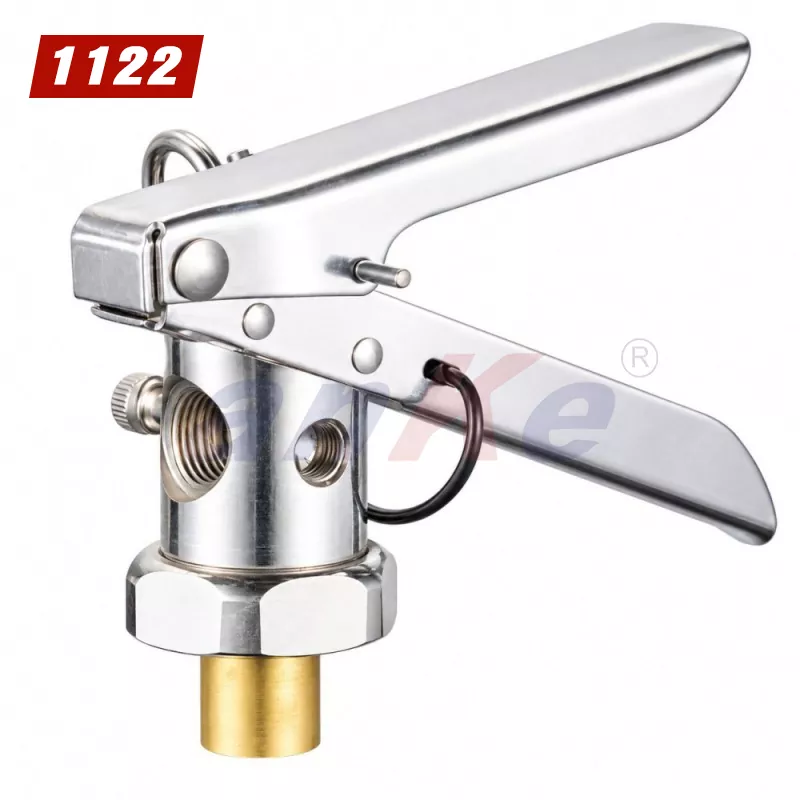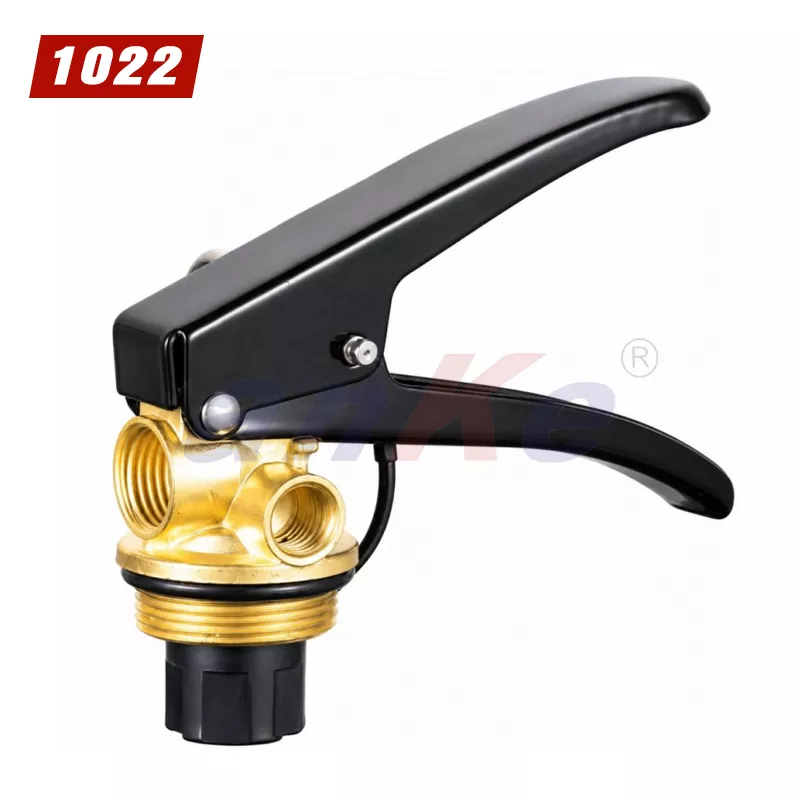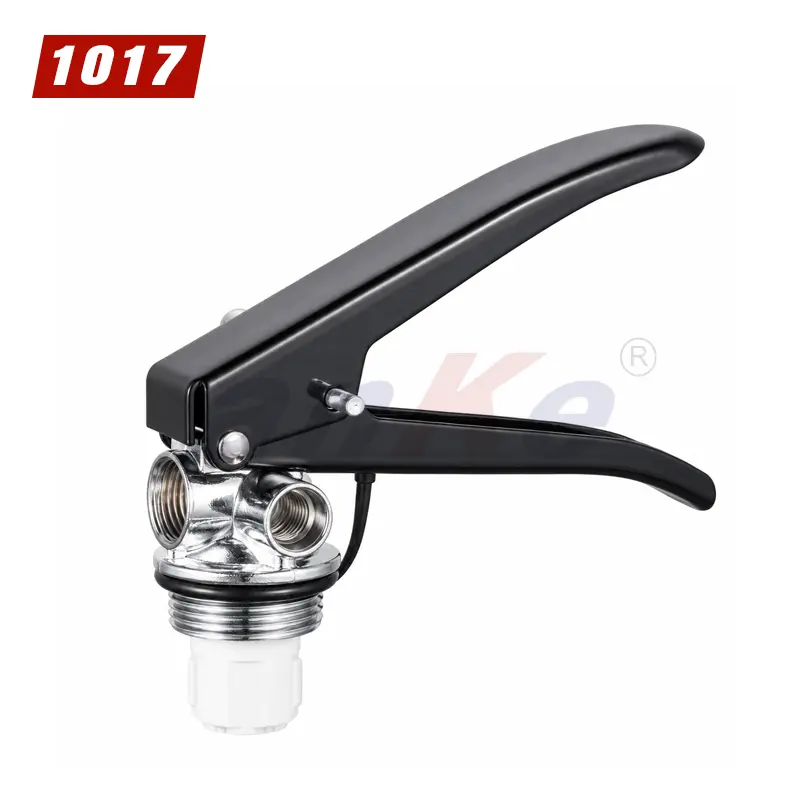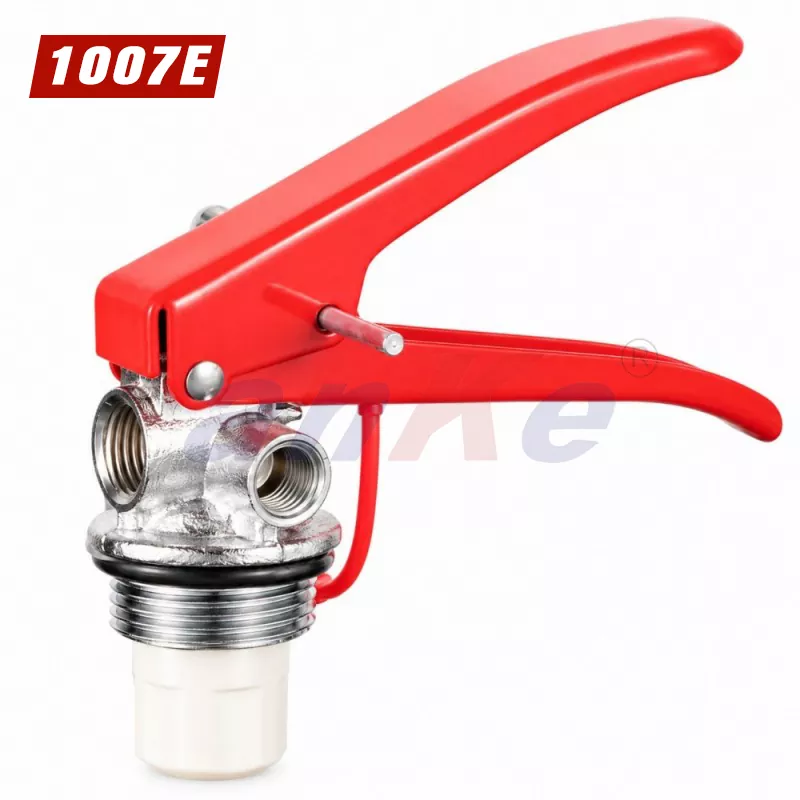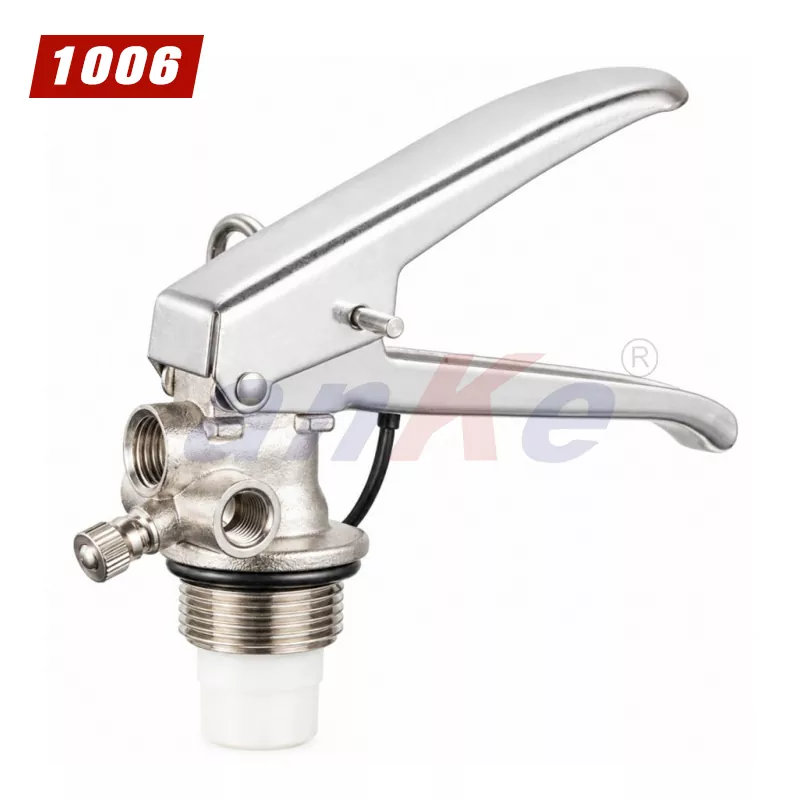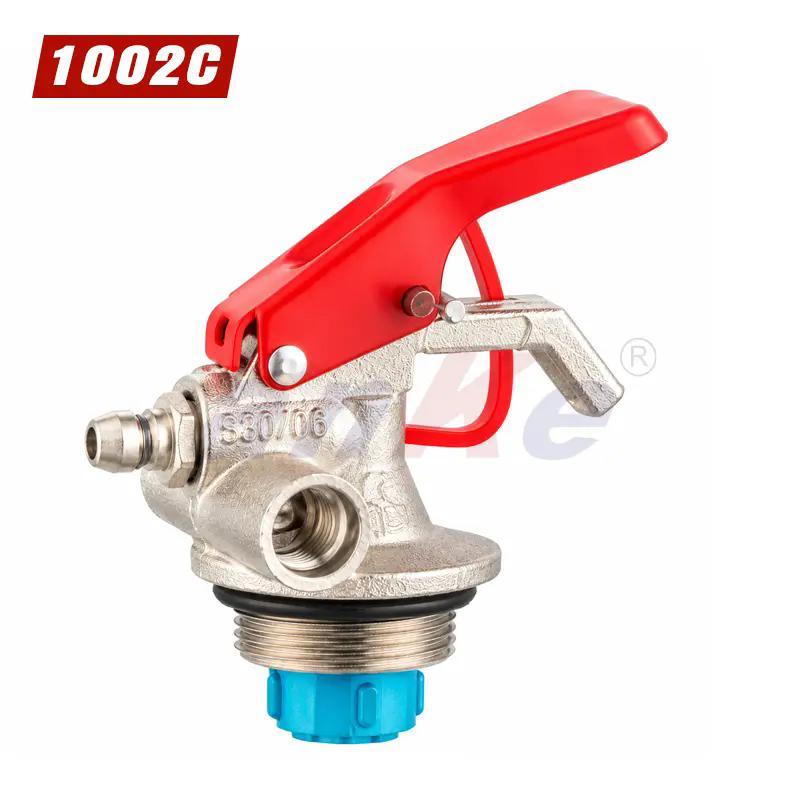
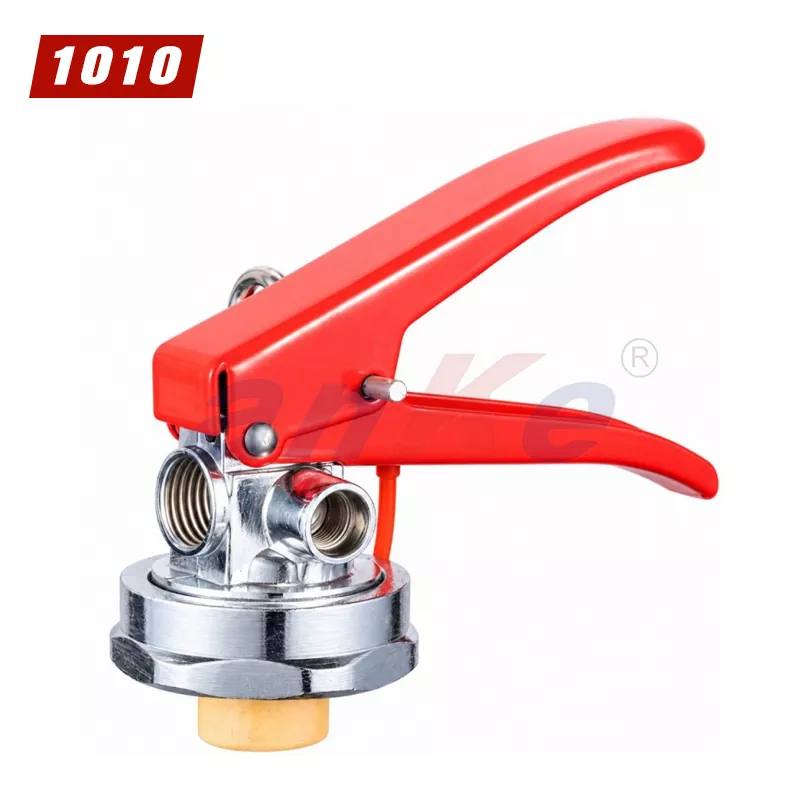
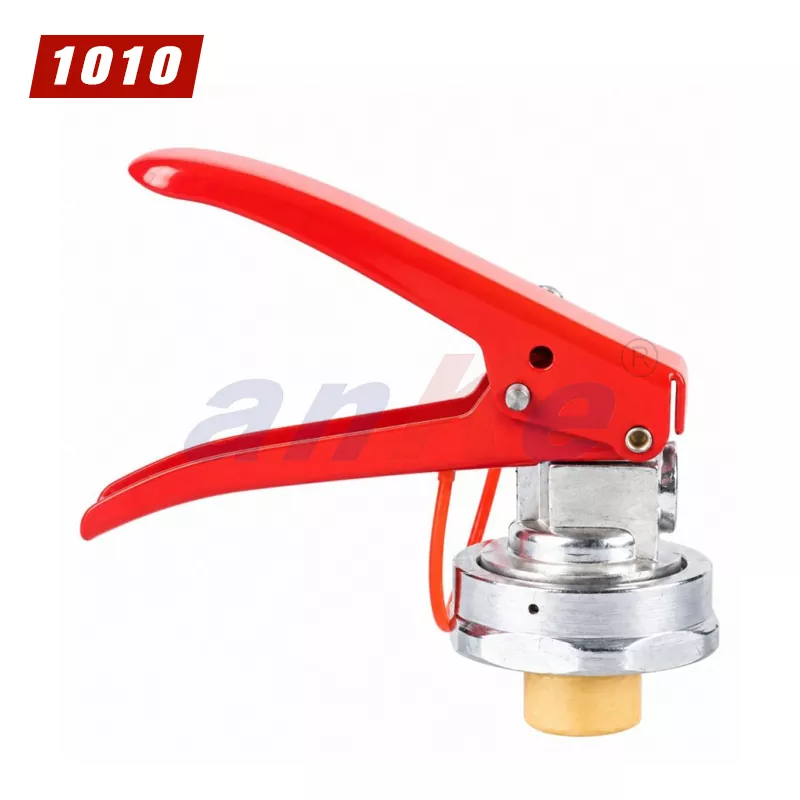
The 3-12KG water extinguisher valve 1010 is used for 3–12 kg fire extinguisher equipment. The valve acts as the central control component for retaining the extinguishing agent and releasing it when the extinguisher is activated.
The source document emphasizes pressure resistance, precise thread design, and sealing performance. These characteristics are important for extinguisher valves because the component must remain sealed during storage while also allowing controlled discharge during emergency use. A correctly manufactured and installed valve helps reduce the risk of unintended agent loss and supports the overall reliability of the extinguisher.
The valve body is made from high-quality copper. Its M45X1.5 inlet thread is intended for a compatible cylinder interface. The M16X1.5 outlet thread is designed for a matching discharge component, while the M10X1-12.5 gauge connection allows the use of a compatible pressure gauge.
|
Parameter |
Specification |
|
Valve Type |
3-12KG water extinguisher valve |
|
Material |
High-quality Copper |
|
Surface treatment |
According to customer requirements (chrome/nickel plated) |
|
Inlet thread |
M45X1.5 |
|
Outlet thread |
M16X1.5 |
|
Gauge Connection thread |
M10X1-12.5 |
|
Dip tube pipe thread |
M16X1.5 |
|
Safety Device (Bar) |
No |
|
Check Valve |
No |
|
Applicable Cylinder |
3-12KG fire extinguisher |
|
Customization |
Thread configuration, surface finish, handle style, and other parameters upon request |
The 3-12KG water extinguisher valve 1010 serves as the interface between the cylinder and the discharge system. A correct match requires more than selecting the capacity range. The buyer should verify:
1. Cylinder neck thread and sealing surface.
2. Valve inlet dimensions.
3. Outlet connection and discharge assembly.
4. Pressure gauge interface.
5. Dip tube connection and length.
6. Agent compatibility.
7. Approved operating and test pressure.
The 1010 is specified with an M45X1.5 inlet and M16X1.5 outlet, making the technical drawing particularly important for assembly planning.
M45×1.5 is a metric fine thread with a nominal major diameter of 45 mm and a pitch of 1.5 mm. Within portable extinguisher construction, this inlet size is associated with larger-capacity cylinders, which is consistent with the 3–12KG range the 1010 is intended for. The 45 mm nominal diameter is not a guarantee of interchangeability with every cylinder described as “M45”; the actual neck drawing, thread tolerance class, and engagement length remain the controlling dimensions.
The M45×1.5 inlet is distinct from the M30×1.5 inlet used on many smaller water extinguisher valves, and from G7/8 or other British or UNF thread forms used in specific regional cylinder designs. A valve correct for one inlet standard will not assemble correctly onto a cylinder cut to a different standard, even where the nominal diameter appears close. The inlet specification should therefore be read together with the cylinder neck drawing, not in isolation.
Published assembly data for EN 3-7 water extinguishers of comparable size lists a valve tightening torque in the range of approximately 40–60 Nm, with some foam variants specified at 45–68 Nm. These ranges are cylinder-specific. Applying torque above the cylinder manufacturer’s value can deform the neck or damage the sealing seat; applying insufficient torque can leave the joint loose or allow the seal to migrate under pressure. The correct figure belongs to the finished extinguisher’s assembly instruction, not to the valve in isolation.
M45×1.5 is a parallel metric thread, and parallel threads do not seal on the thread flanks. Pressure tightness is achieved at a sealing face, an O-ring, a bonded washer, or a gasket at the cylinder neck. The condition of that sealing surface, and the selection of a seal material compatible with the specific water-based agent, belong to the same verification step as the thread match. Water-based agents with additive packages can affect elastomer swelling or extraction differently from plain water, so the seal material should be confirmed against the agent formulation rather than a general “water-based” classification.
The parameter table records the safety device and check valve as “No”. This describes the valve itself. It does not establish that the finished extinguisher operates without overpressure protection or without an anti-backflow function. Water-based portable extinguishers of this capacity commonly require a pressure-relief arrangement somewhere in the assembly, and the 1010 relies on that function being provided by another component, or by a cylinder design that incorporates it.
Before releasing an order, the buyer should confirm where the overpressure protection is located in the finished assembly, what pressure range it operates in relative to the cylinder pressure test value, and whether the discharge path includes a check valve elsewhere. Common EN 3-7 water and foam extinguishers list cylinder test pressures around 27 bar and safety devices opening in the approximate 20–27 bar band, but the specific cylinder and filling conditions determine whether a given arrangement is coherent. The 1010 should be selected only when the complete assembly documentation shows that these functions are present and correctly matched.
The 3–12KG designation covers a four-fold span in nominal charge. Within that span, the cylinder internal depth changes, and the dip tube must change with it. A dip tube matched to a 3KG cylinder will not produce the intended discharge behaviour in a 12KG cylinder, and vice versa. The M16×1.5 dip tube connection defines the fitting, not the tube length, cut angle, or bottom clearance.
Buyers specifying across the full range should request the dip tube dimension separately from the valve part number, and should confirm the internal clearance against the actual cylinder drawing. The outlet thread is also listed as M16×1.5, the same nominal size as the dip tube thread; the two connections serve different functions and should be identified individually in the assembly drawing to avoid confusion during build.
Water-based portable extinguishers maintained under schedules aligned with EN 3-7 commonly follow a three-stage pattern: basic service annually, extended service with test discharge at 5 years, and overhaul with hydraulic test at 10 years. Valve replacement is most typically associated with the 10-year overhaul, or with an earlier intervention where inspection finds corrosion at the sealing seat, deformation of the inlet threads, a leaking gauge connection, or an operating mechanism that does not return cleanly.
Because the 1010 is supplied without an integrated safety device, the service check at the 5-year and 10-year points should also verify that the overpressure protection provided elsewhere in the assembly remains present and unobstructed. A safety function that has been painted over, corroded, or previously vented is a replacement matter for that component, and the 1010 passing its own visual inspection does not by itself confirm the assembly is serviceable.
This valve may be relevant to buyers who need:
1. A 3–12KG water extinguisher valve.
2. A larger M45X1.5 inlet.
3. An M16X1.5 outlet and dip tube connection.
4. An M10X1-12.5 gauge interface.
5. A copper valve with customizable surface treatment.
6. A supplier able to review the complete assembly before production.
The source material describes the 3-12KG water extinguisher valve 1010 as having pressure resistance and sealing performance. In practical terms, these functions depend on several factors:
1. Correct copper material and machining
2. Accurate thread dimensions
3. Suitable sealing components
4. Correct assembly torque
5. Proper cylinder and valve matching
6. Appropriate pressure rating of the complete system
A: M45X1.5.
A: No. The cylinder interface, pressure requirements, agent type, and other dimensions must be confirmed.
A: It refers to the valve's intended ability to prevent unintended leakage under the applicable conditions. Actual performance should be supported by the factory's test records.
A: Chrome or nickel plating is listed according to customer requirements.
A: No. The “No” entry describes the valve body only. Overpressure protection may be provided by another component in the finished assembly, or by the cylinder design. The location and operating range of that protection must be confirmed from the complete assembly documentation before the valve is selected.
A: There is no single length across the 3–12KG range. The M16×1.5 connection defines the fitting, not the tube dimensions. Dip tube length, cut angle, and bottom clearance should be specified against the actual cylinder drawing for the intended charge size.
A: Both are metric fine threads, but M45×1.5 has a nominal diameter of 45 mm and M30×1.5 has a nominal diameter of 30 mm. They are not interchangeable. The larger inlet is associated with larger-capacity cylinder necks, which corresponds to the 3–12KG range this valve addresses.
Address
Factory: Huilong Village, Huangjiabu Town, Yuyao City, Zhejiang Province, China
Branch Office: Hengye Building 509, No.158 Tai'an Middle Road, Yinzhou District, Ningbo, Zhejiang, China
Tel