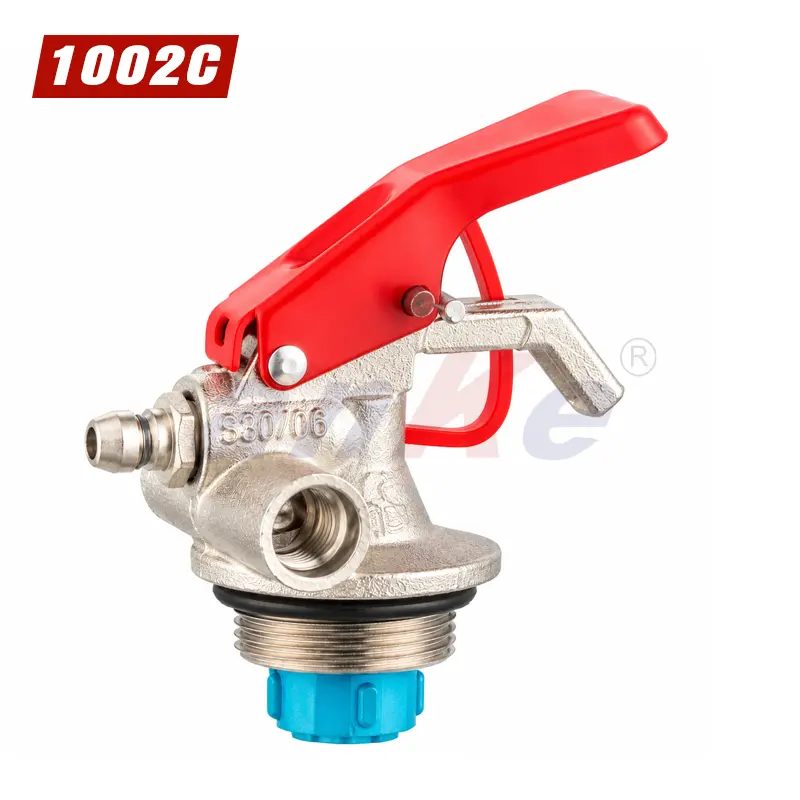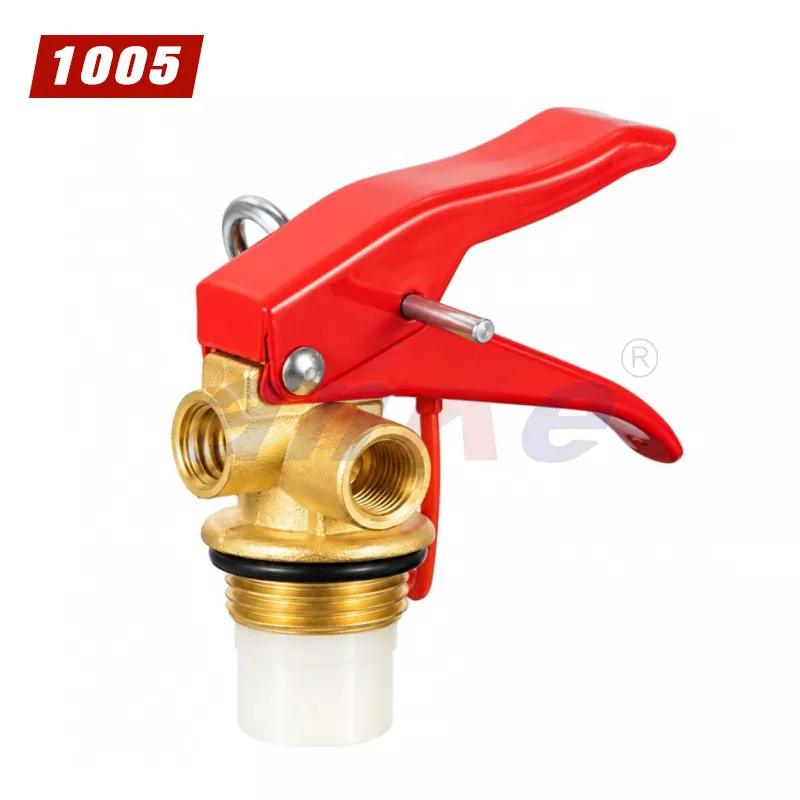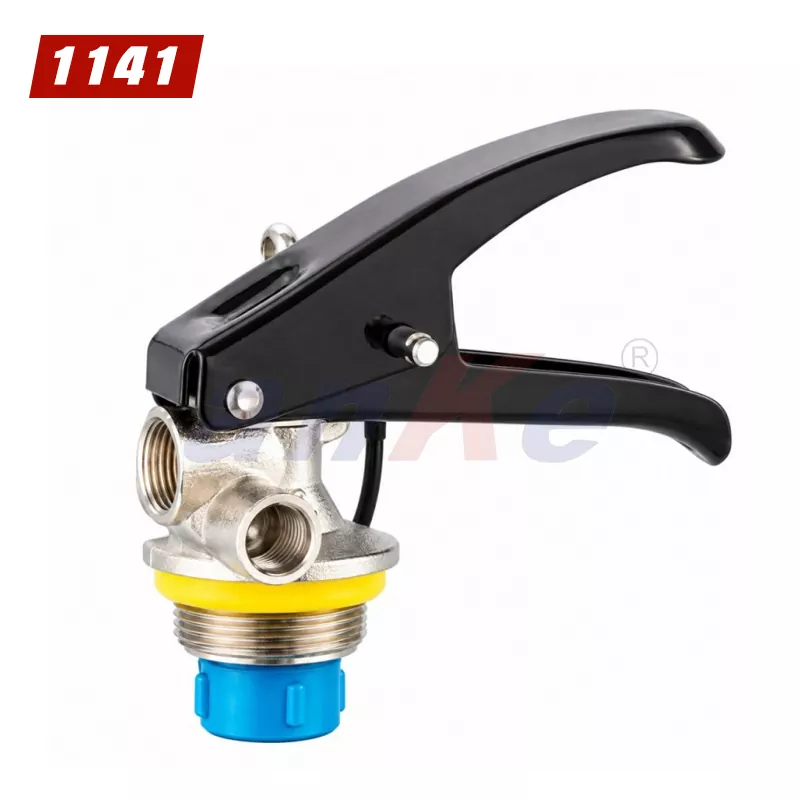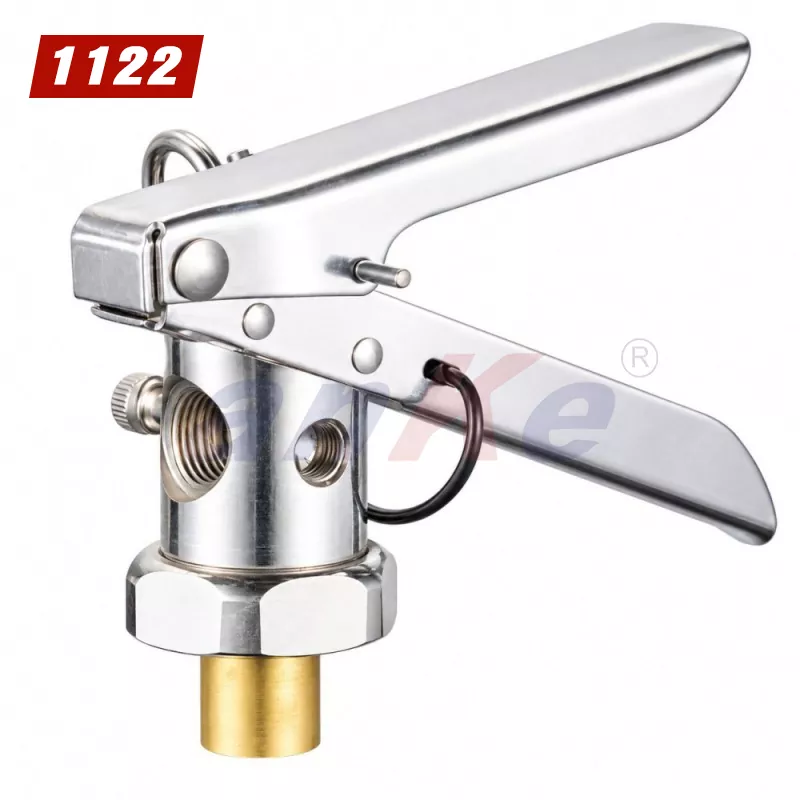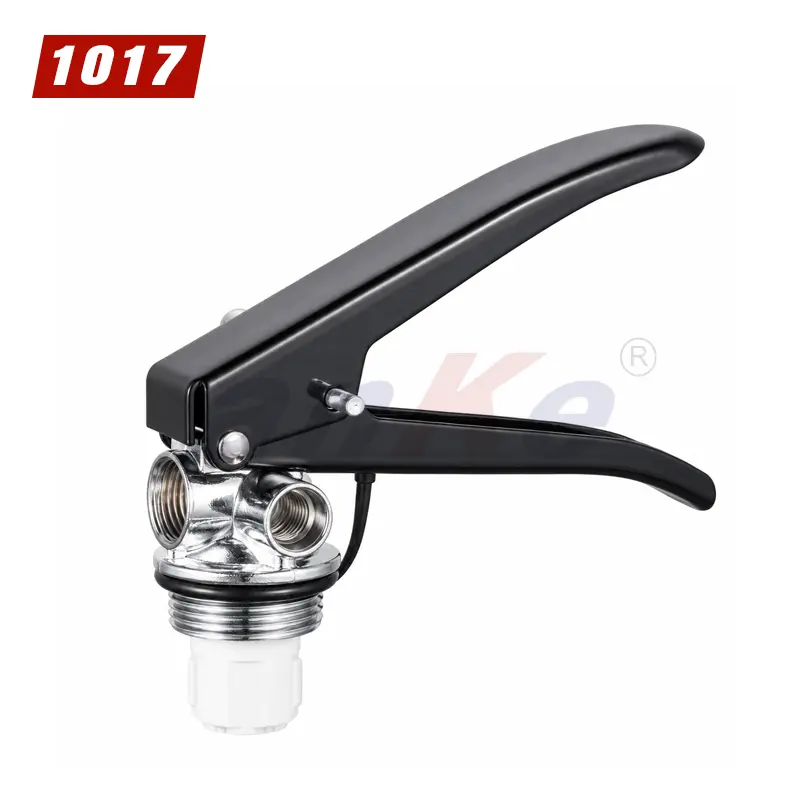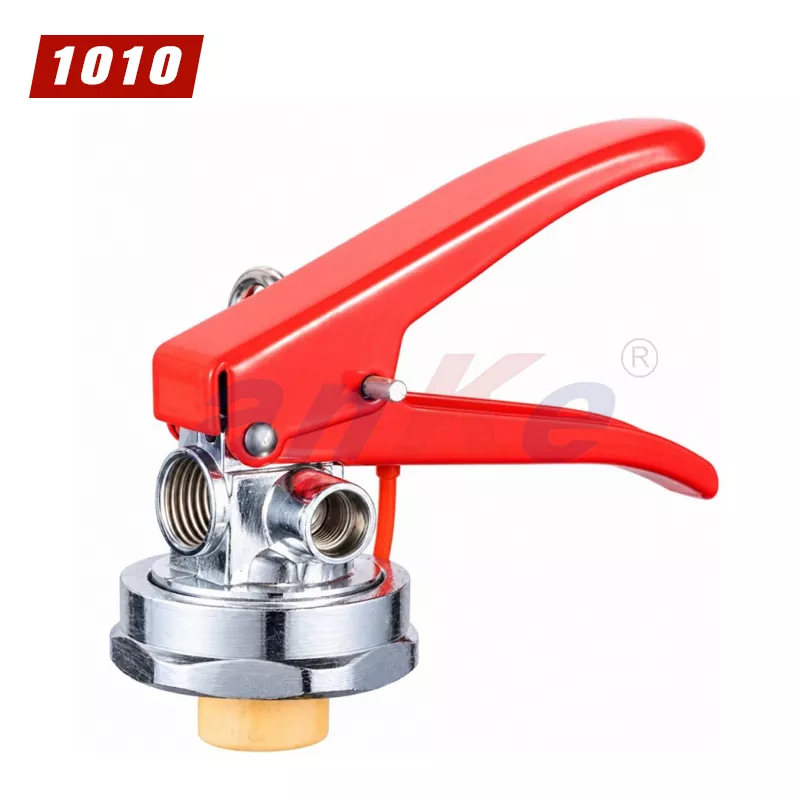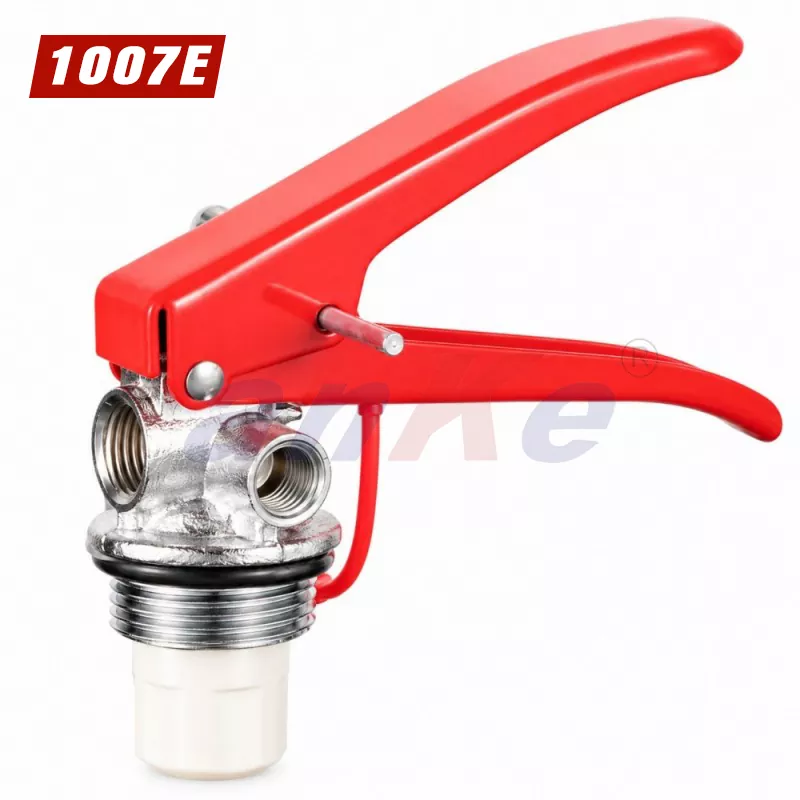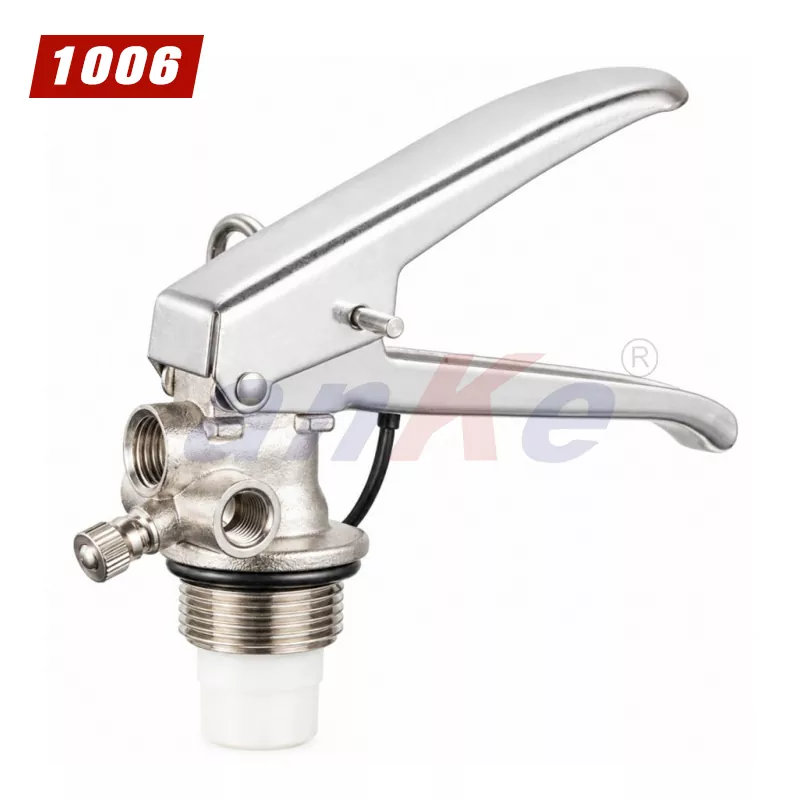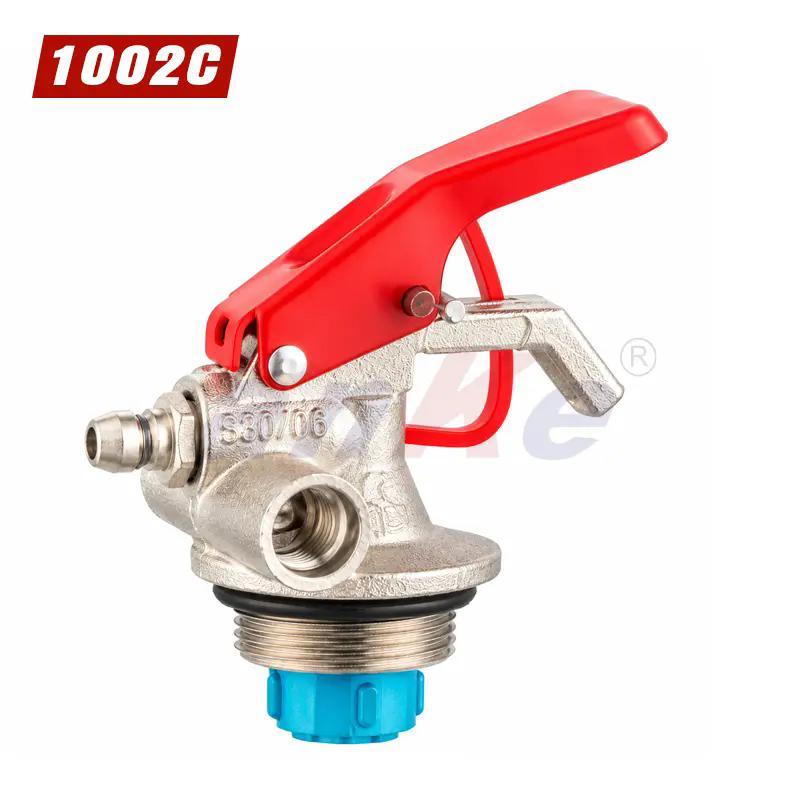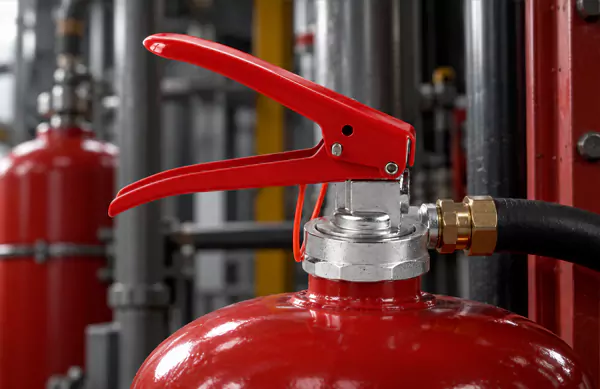
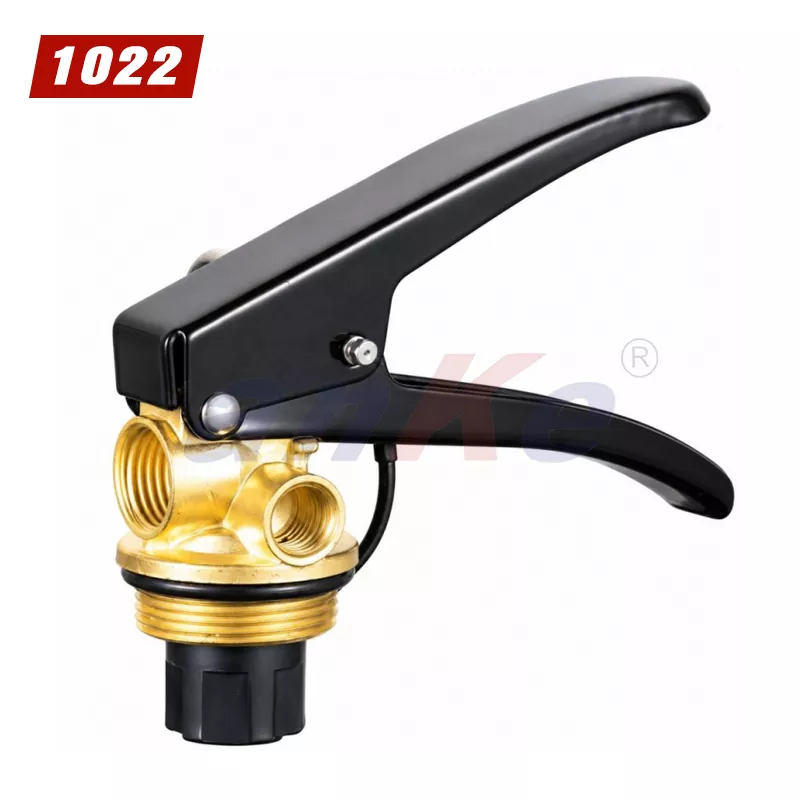
The 3-6KG water extinguisher Valve 1022 is designed for 3–6 kg fire extinguisher cylinders. It is used to control the retention and release of the extinguishing agent and to connect the cylinder with the gauge, discharge assembly, and dip tube.
The source document highlights corrosion-resistant copper and refers to use in situations involving grease, oil, or flammable liquids. However, the valve itself does not determine the fire classification or extinguishing capability of the complete extinguisher. The actual application must be based on the extinguishing agent, cylinder filling, extinguisher certification, and complete equipment design.
The M30X1.5 inlet thread is intended for a compatible cylinder neck. The M16X1.5 outlet thread can be matched with a suitable discharge assembly. The 1/8 NPT gauge connection supports a compatible pressure gauge, while the M16X1.5 dip tube connection is used for the internal tube.
|
Parameter |
Specification |
|
Valve Type |
3-6KG water extinguisher Valve |
|
Material |
High-quality Copper |
|
Surface treatment |
According to customer requirements (chrome/nickel plated) |
|
Inlet thread |
M30X1.5 |
|
Outlet thread |
M16X1.5 |
|
Gauge Connection thread |
1/8 NPT |
|
Dip tube pipe thread |
M16X1.5 |
|
Safety Device (Bar) |
No |
|
Check Valve |
No |
|
Applicable Cylinder |
3-6KG fire extinguisher |
|
Customization |
Thread configuration, surface finish, handle style, and other parameters upon request |
Copper is used for the 3-6KG water extinguisher Valve 1022 body because it can be machined into precise threaded and sealing surfaces while providing useful corrosion resistance. The optional chrome or nickel finish may be selected according to the appearance, environmental, and purchasing requirements of the customer.
For humid, dusty, oily, or industrial environments, the valve should be evaluated as part of the complete extinguisher assembly. Storage conditions, cleaning chemicals, exposure to salt or corrosive substances, and routine maintenance can all influence long-term performance.
A fire extinguisher valve is part of a system. For the 3-6KG water extinguisher Valve 1022, the buyer should confirm the following relationship:
Cylinder neck → M30X1.5 valve inlet → internal dip tube → M16X1.5 connection → discharge assembly → compatible pressure gauge
The intended extinguishing agent should also be confirmed. This model as a water extinguisher valve. If a buyer intends to use another agent, the compatibility of the valve body, seals, internal components, and complete assembly must be verified.
M30×1.5 is a metric fine parallel thread. It seals at a face or with a gasket, not on the thread flanks. The pressure-tightness of the joint therefore depends on the flatness of the cylinder neck sealing face, the gasket material and compression, and whether the tightening torque falls within the range the neck was designed for.
Published reference torque data for copper M30×1.5 fittings is around 120 Nm. That figure comes from general fitting data and should not be transferred directly to a specific extinguisher neck. The wall thickness, neck-seat geometry, and sealing-face design of a 3–6KG water extinguisher neck vary between manufacturers, and the applicable torque should come from the cylinder manufacturer’s assembly specification. Insufficient torque can leave the gasket under-compressed or allow the joint to loosen in service; excessive torque can plastically deform the copper body or the neck threads, and that damage is often only discovered during a later maintenance intervention.
The M30×1.5 inlet, the M16×1.5 outlet, and the M16×1.5 dip tube connection share similar nominal sizes on the same body. The assembly documentation should identify all three ports separately to prevent mix-ups between workstations.
The gauge port on the 1022 is 1/8 NPT, while the inlet and outlet are metric parallel threads. The two sealing mechanisms are different and should not be handled with the same assembly logic.
NPT is a 60° tapered pipe thread. It relies on axial displacement during tightening to create interference between crest and root, combined with a sealant — PTFE tape or sealing paste — to complete the seal. A metric parallel thread has no taper, and the fastening function is separated from the sealing function; sealing must come from a face gasket or an O-ring. Using a parallel-thread gasket approach on a 1/8 NPT gauge port, or relying on thread sealant alone on a metric port, can both produce leakage under repeated pressure cycles.
The interference seal of NPT also has its operating limits: over-tightening can crack the valve port, while under-tightening fails to establish metal-to-metal contact. Gauge installation torque should follow the gauge manufacturer’s specification, not the valve or cylinder torque value.
The parameter table lists both the safety device and the check valve as “No”. This describes the 1022 body itself, which does not integrate those functions. It does not mean the finished extinguisher can operate without overpressure protection.
A useful distinction can be drawn from published trolley extinguisher valve requirements: unless an overpressure protection device is already provided, the valve itself should withstand 3.6 times the maximum working pressure for one minute without bursting. That requirement addresses the structural integrity of the valve. The function of an overpressure protection device — venting at a set pressure — is a system-level design matter that must be provided by the cylinder, the valve, or another component at the level of the complete assembly.
When selecting the 1022 without an integrated safety device, the points to confirm are therefore: where in the finished design the overpressure protection is located, whether its operating pressure is consistent with the cylinder’s hydrostatic test value, and whether that configuration is already covered by the assembly’s certification scope. A valve passing a burst test on its own does not establish that the assembled extinguisher has overpressure protection.
Water-based portable extinguishers maintained under an EN 3-7 framework are commonly handled in three stages: annual basic inspection, 5-year extended service involving agent replacement and internal examination, and 10-year hydrostatic test. At the 10-year point the valve is usually replaced together with the hydrostatic test rather than only visually inspected.
The 5-year extended service is the other check point with practical significance. The valve is not necessarily replaced at this stage, but the following should be confirmed: that the M30×1.5 inlet sealing face shows no corrosion or indentation, that the 1/8 NPT gauge port still holds pressure, and that the operating mechanism moves through its full travel without binding. Because the 1022 does not integrate a safety device, if the assembly’s overpressure protection is provided by another component, that function should be verified separately at both the 5-year and 10-year points. The valve appearing normal on its own is not sufficient evidence that the complete extinguisher remains serviceable.
Before placing an order, buyers should prepare:
1. Cylinder capacity and neck drawing.
2. Required inlet and outlet threads.
3. Gauge model and thread.
4. Dip tube dimensions.
5. Extinguishing agent.
6. Operating and test pressure.
7. Surface finish.
8. Required certification or market documentation.
This information helps prevent a common purchasing error: choosing a valve by capacity while overlooking the cylinder interface.
A: 3–6KG fire extinguishers.
A: 1/8 NPT.
A: The specification states “No” for the safety device and “No” for the check valve
A: Yes. Chrome or nickel plating is listed according to customer requirements.
A: Provide the cylinder neck drawing, thread details, and assembly requirements for technical confirmation.
A: No. The “No” entry only indicates that the 1022 body does not integrate a safety device. Whether the finished extinguisher needs overpressure protection elsewhere depends on the cylinder design, the filling conditions, and the applicable certification requirements. Valve structural integrity — for example, the ability to withstand several times the maximum working pressure without bursting — and system-level relief of overpressure are two separate requirements and should be confirmed separately.
A: General reference data for copper M30×1.5 fittings is around 120 Nm, but the permissible torque for an extinguisher neck depends on the cylinder material, neck wall thickness, and sealing-face design, and should come from the cylinder manufacturer’s assembly specification. In the absence of a cylinder specification, the general fitting torque should not be used directly as an extinguisher assembly torque.
A: NPT is a tapered thread and is designed to seal through thread interference combined with a sealant, not through a flat face gasket. A flat gasket on an NPT port generally does not produce an effective seal and can mask insufficient thread engagement. The gauge side should use a sealing method matched to the NPT taper.
Address
Factory: Huilong Village, Huangjiabu Town, Yuyao City, Zhejiang Province, China
Branch Office: Hengye Building 509, No.158 Tai'an Middle Road, Yinzhou District, Ningbo, Zhejiang, China
Tel