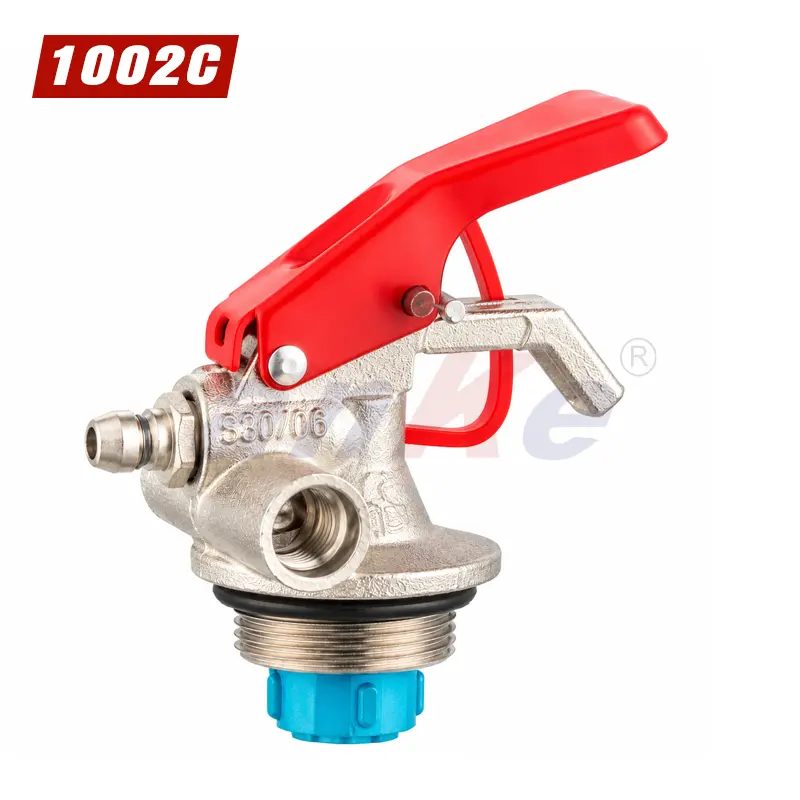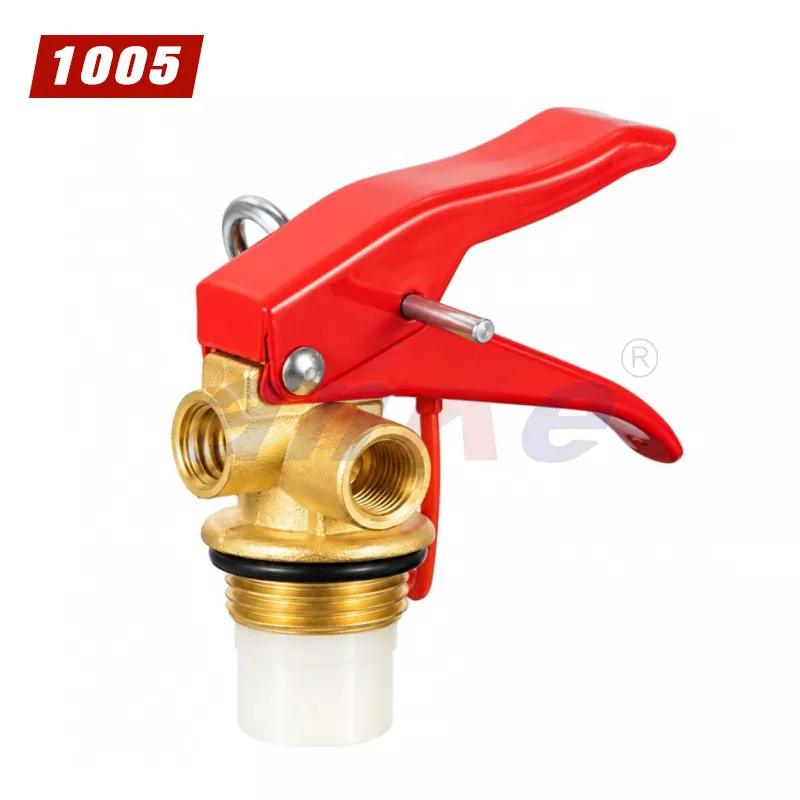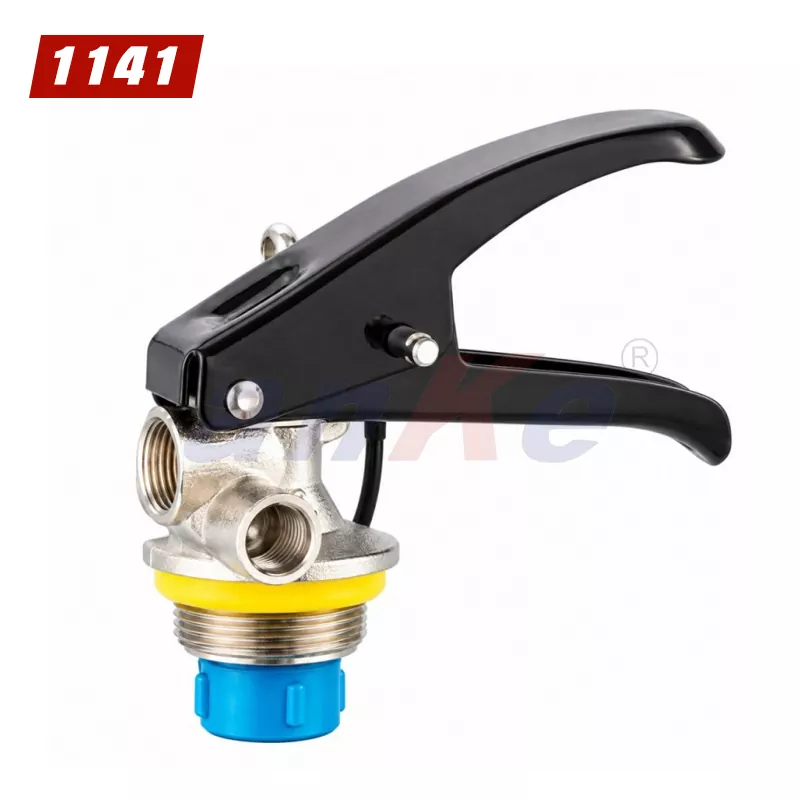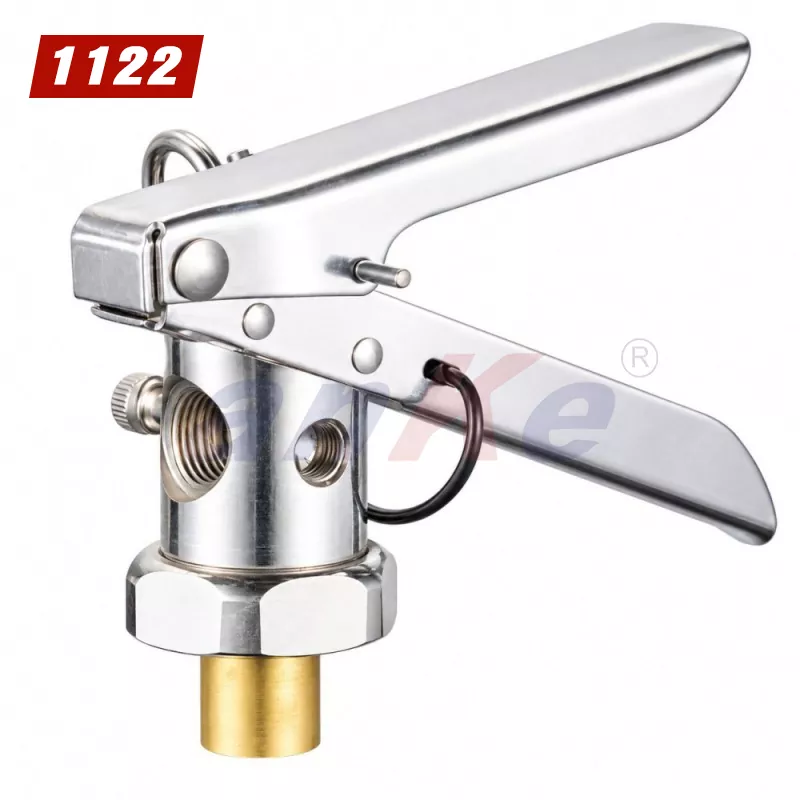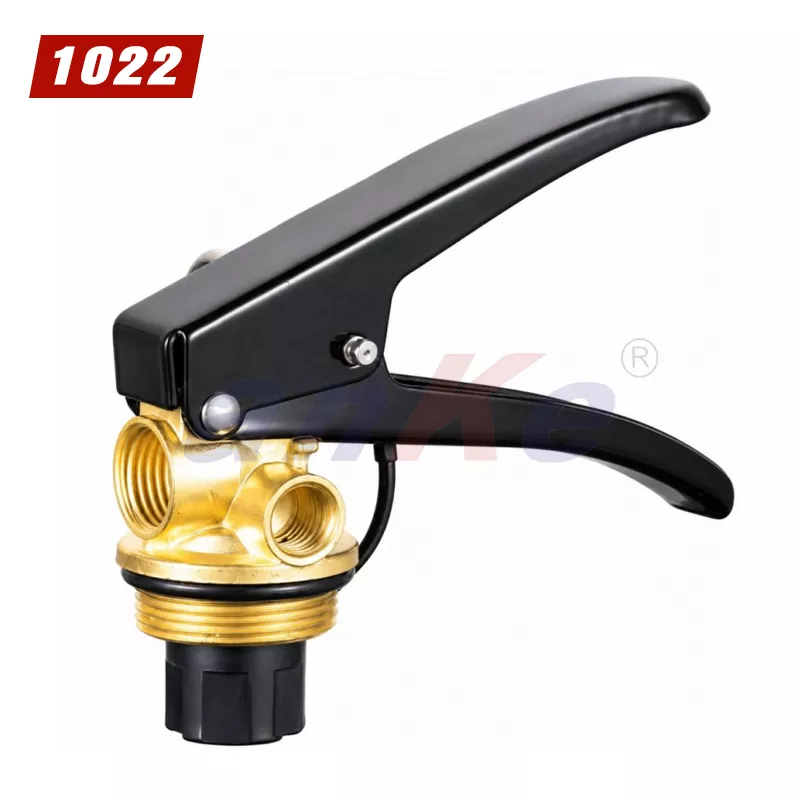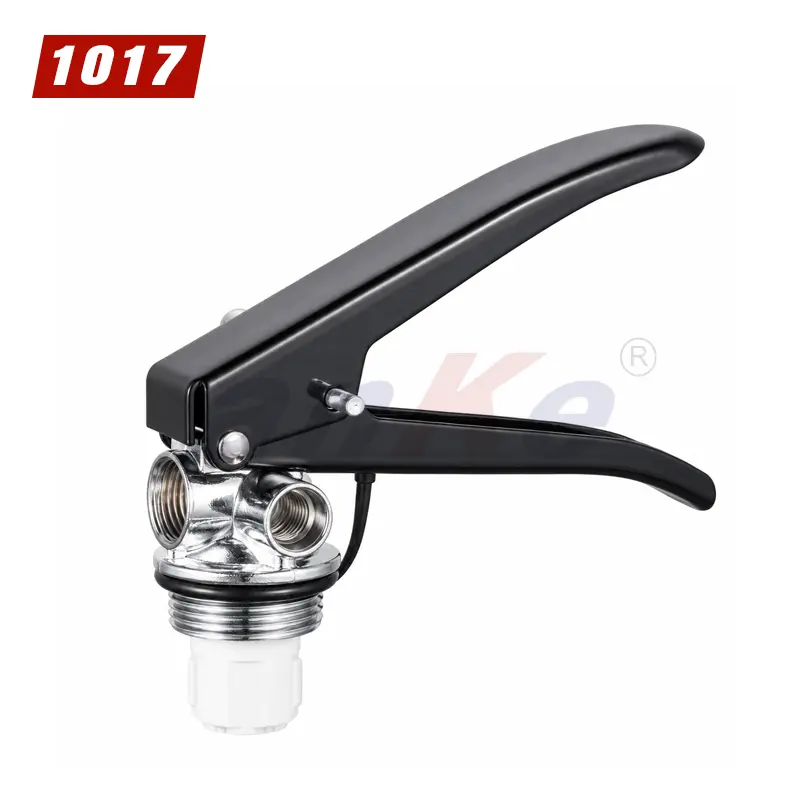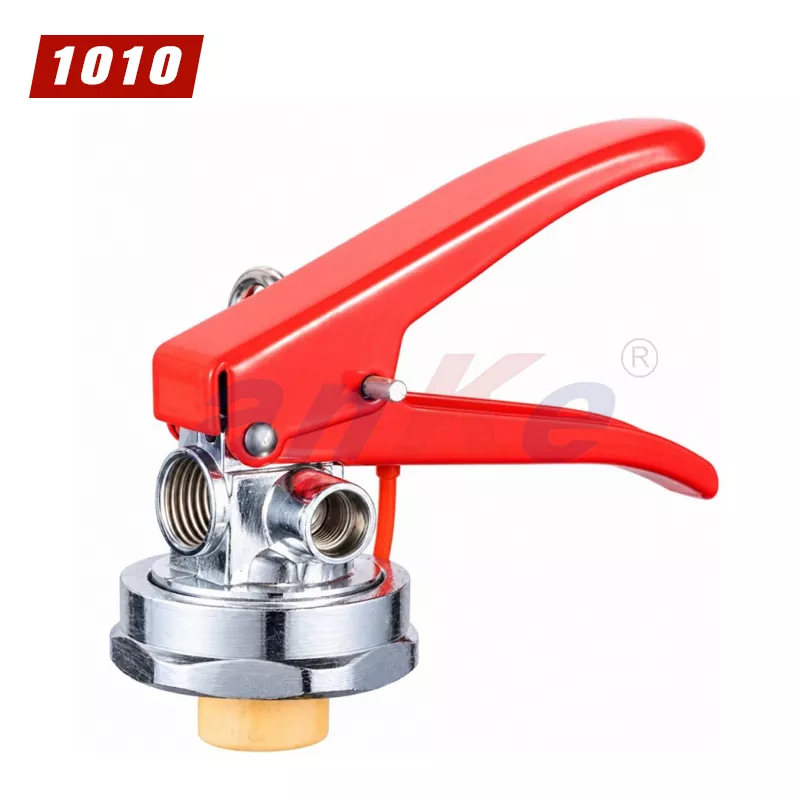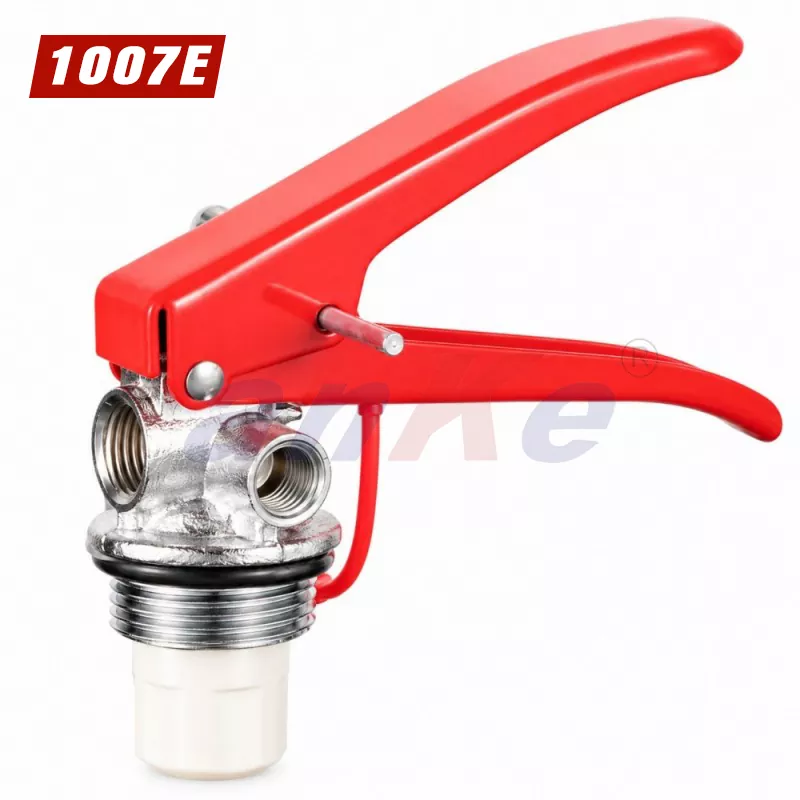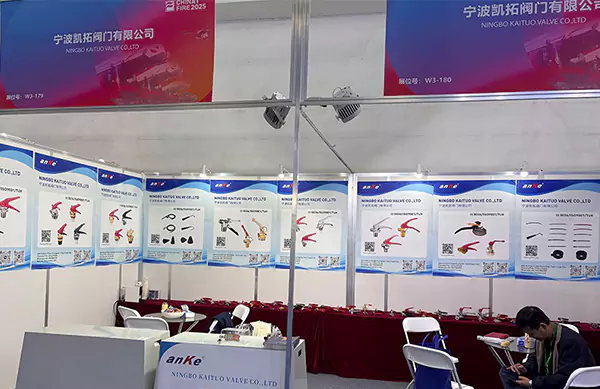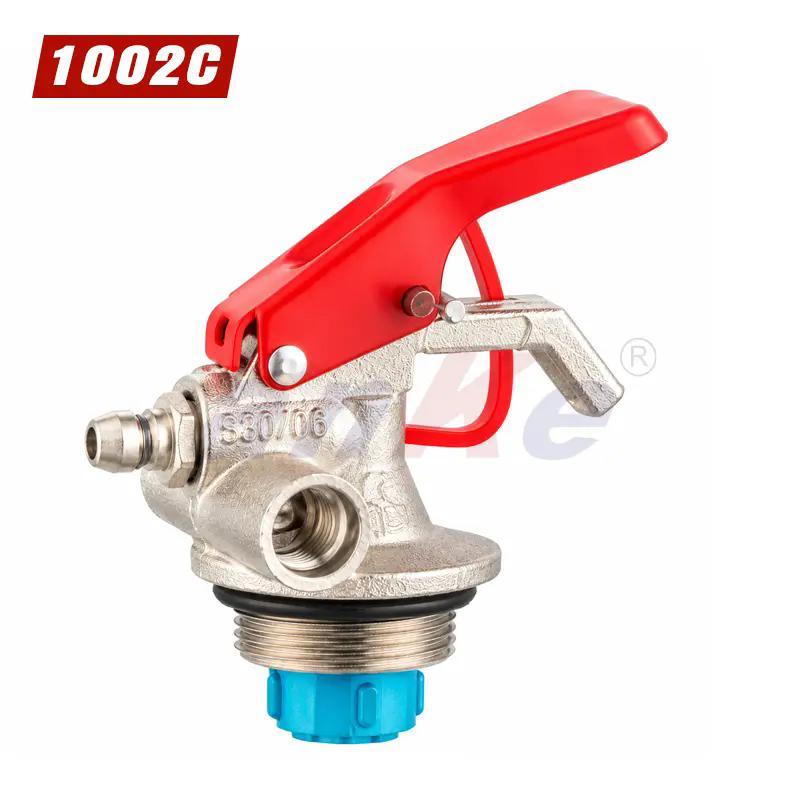
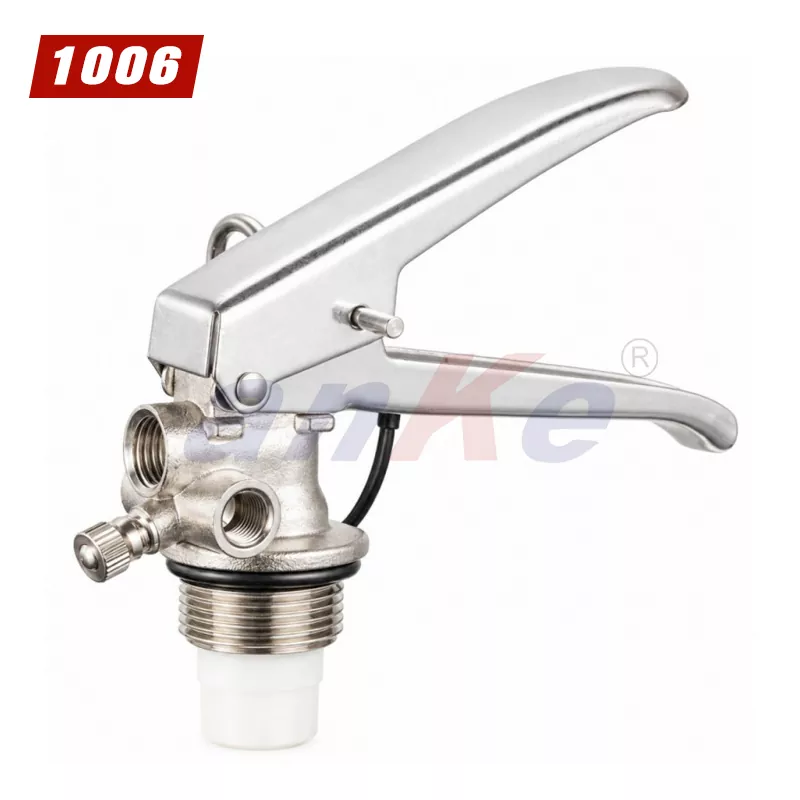
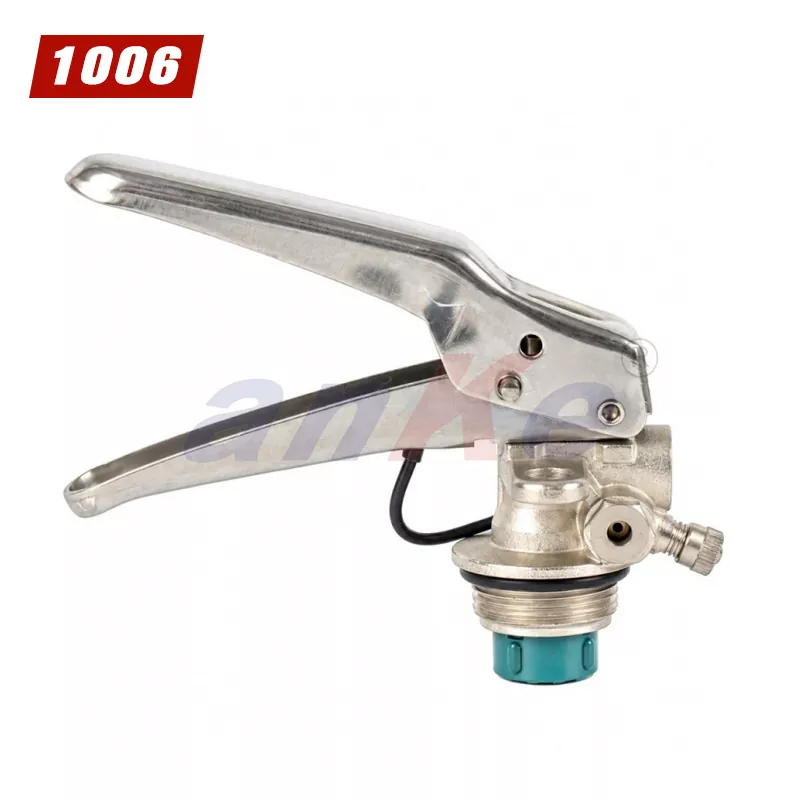
As a professional manufacturer, Ningbo Kaituo Valve Co., Ltd. (Anke Fire) are able to provide comprehensive customization services. Our high quality 4-12L water Extinguisher Valve,The air inlet thread part is designed in accordance with the international standard G7/8 or M30x1.5, ensuring that the product can be reliably connected to various fire extinguisher cylinders and has good versatility and adaptability.
The air outlet thread is 9/16UNF or M14x1.5, which is suitable for various types of nozzles and output pipe interfaces.
The 4-12L water Extinguisher Valve body design is equipped with a pressure gauge thread 1/8NPT or M10x1-12.5, which is used to install a standard pressure gauge to monitor the internal pressure of the fire extinguisher in real time and help users understand the use status of the fire extinguisher.
| Material | Copper |
| Surface treatment | According to customer requirements (chrome/nickel plated) |
| Inlet thread | M30X1.5 |
| Outlet thread | M14X1.5 |
| Gauge Connection thread | M10X1-12.5 |
| Dip tube pipe thread | M16X1.5 |
| Safety Device (Bar) | 22-26 |
The valve specification alone does not establish compliance of the finished extinguisher. Water-based portable extinguishers commonly operate at a working pressure around 15 bar at 20°C, with a cylinder pressure test value near 27 bar and a safety valve opening range typically between 22 and 27 bar. The 22–26 bar safety device setting for this valve falls inside that common band, but the finished extinguisher designer still needs to confirm that the specific cylinder, filling ratio, and propellant combination produce a coherent overpressure protection scheme.
Thread dimensions and material grade define fit and basic durability, not the pressure rating or approval status of the assembled unit. The cylinder drawing, valve drawing, and assembly test record remain the documents that establish the actual service limits.
Thread size alone does not confirm installation adequacy. For the M30×1.5 inlet, the cylinder neck drawing should be checked for thread tolerance, engagement length, and the condition of the sealing seat. G7/8 is a parallel pipe thread and M30×1.5 is a metric thread; they should not be treated as interchangeable without confirming the matching neck specification. The G1/8 or 1/8NPT gauge port, the M14×1.5 or 9/16UNF outlet, and the M16×1.5 dip tube connection each carry their own engagement requirements, and the assembly sequence should follow the extinguisher manufacturer’s procedure.
Comparable water extinguisher assemblies commonly use a valve tightening torque in the range of 40–60 Nm, with the actual value depending on cylinder material and neck design. Torque outside the cylinder manufacturer’s range can distort the neck or compromise the seal. Sealing material selection should also be checked against the actual extinguishing medium; NBR is common for water-based agents, but additive packages and concentration ranges still need confirmation.
Valve replacement is not normally an annual action. Water-based portable extinguishers are commonly maintained on a staged schedule: basic annual inspection, extended service with test discharge at around 5 years, and overhaul with hydraulic test at around 10 years. The valve is inspected at each stage, and replacement or overhaul is usually tied to the 5-year or 10-year intervention, or to observed corrosion, seal degradation, or damage to the operating mechanism.
Because this valve carries a 22–26 bar safety device, the condition of that device belongs to the same inspection scope. A safety device that has vented, been painted over, or shows corrosion should be assessed against the finished extinguisher’s maintenance documentation rather than assumed to remain serviceable. The dip tube length, cut angle, and internal clearance should also be checked at the extended service stage, since discharge performance depends on the tube matching the cylinder depth.
A1: Our core products are fire extinguisher valves, covering a wide range of types and specifications:
CO2 Fire Extinguisher Valves: Made of copper alloy, equipped with safety pressure relief devices.
Dry Powder/Water-Based Fire Extinguisher Valves: Brass construction with optional chrome or nickel plating, featuring overpressure protection devices.
Trolley Fire Extinguisher Valves: Designed for 25-50KG large extinguishers.
Other Products: Marine cylinder valves, gas valves, and more.
A2: Kaituo Valve is committed to providing comprehensive after-sales support:
Professional Technical Support: Our sales and technical teams are always ready to assist with product selection, installation guidance, and usage inquiries. You can contact us via our website, phone, or email, and our expert team promises a response within 12 hours.
Customization Services: We can customize thread specifications, surface finishes, compatibility with different extinguisher models, and more according to customer requirements.
Quality Assurance: Our products are certified with EU EN, CE, and ISO9001 quality system certifications, with strict implementation of quality management systems.
Stable Supply: With a monthly production capacity exceeding 400,000 valves, we ensure reliable delivery for large-volume orders.
A3: Not automatically. The setting must be evaluated against the cylinder pressure test value, the intended working pressure, and the filling conditions. Common water extinguisher designs place the safety valve range between 22 and 27 bar against a cylinder test value near 27 bar, which is consistent with the 22–26 bar band, but final suitability depends on the specific cylinder assembly and the applicable assessment.
A4: Only if the cylinder neck is designed for the respective thread form. G7/8 is a parallel pipe thread; M30×1.5 is a metric thread. They share a nominal size range but are not interchangeable at the thread level. The cylinder drawing determines which inlet version applies.
A5: The cylinder neck thread and engagement drawing, the required outlet and gauge port configuration, the intended safety device setting relative to the cylinder test value, and the surface finish and seal material against the actual extinguishing medium. A current dimensional drawing should be requested for the specific inlet and outlet combination, since the G7/8 and 9/16UNF variants follow different thread standards from the M30×1.5 and M14×1.5 versions.
Address
Factory: Huilong Village, Huangjiabu Town, Yuyao City, Zhejiang Province, China
Branch Office: Hengye Building 509, No.158 Tai'an Middle Road, Yinzhou District, Ningbo, Zhejiang, China
Tel