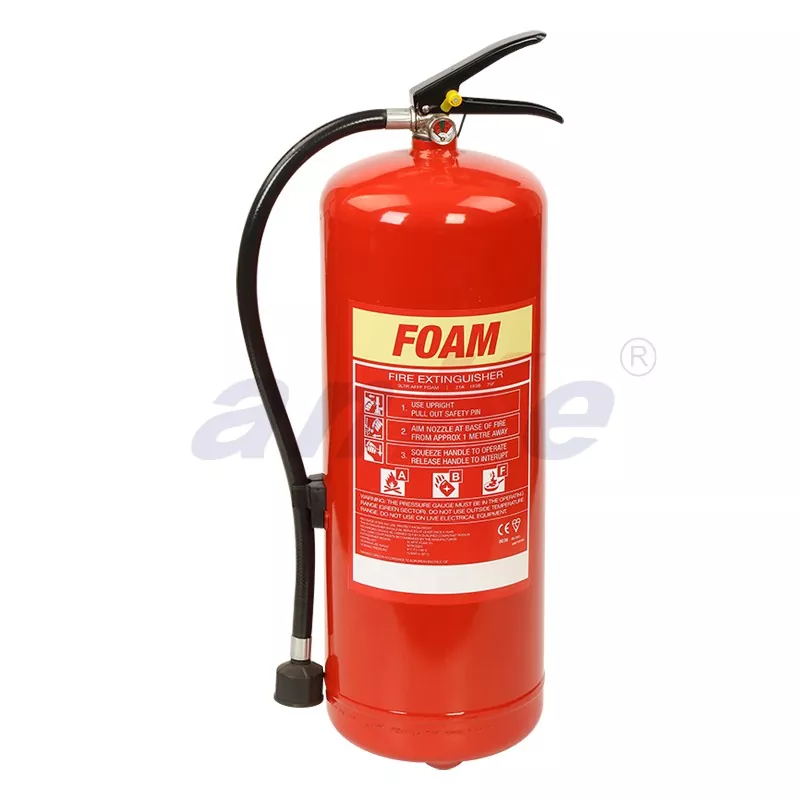
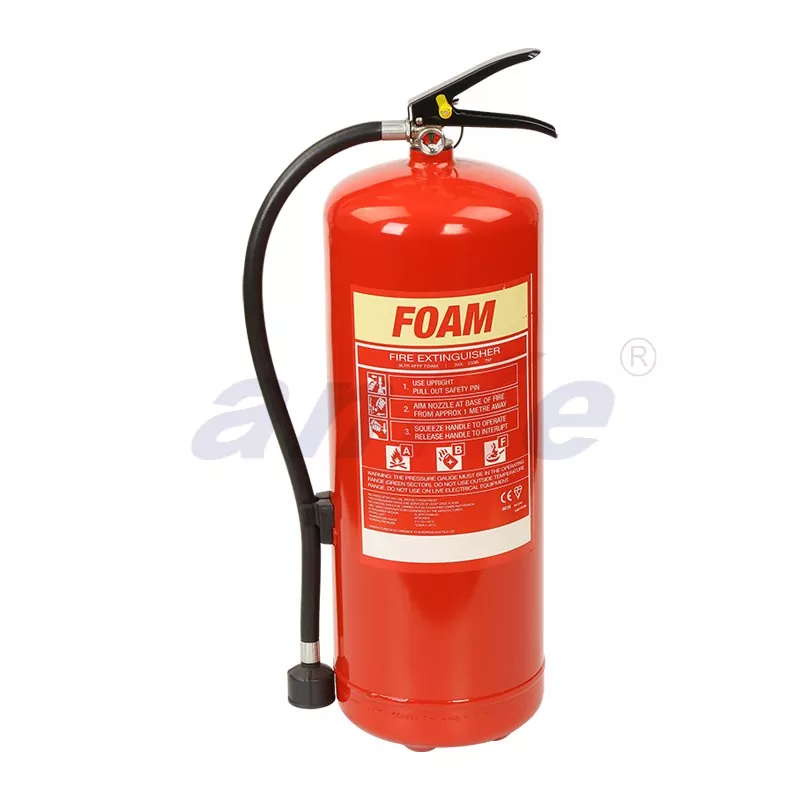
Foam fire extinguishers provide a different firefighting approach from conventional water and dry powder products.
When discharged, the foam solution can form a layer over suitable burning surfaces. This layer helps suppress flammable vapors and separate the fuel from the surrounding air. The water component also contributes to cooling.
The 9L Portable Foam Fire Extinguisher is intended for applications where this type of extinguishing action is appropriate.
Foam formulations vary, and not every foam extinguisher is suitable for every flammable liquid or material. The product's approved fire rating and agent specifications should guide its application.
Foam extinguishing agents work through a combination of mechanisms.
Depending on the formulation and fire type, foam can:
● Form a covering layer over suitable burning liquid surfaces
● Help reduce the release of flammable vapors
● Separate the fuel surface from surrounding air
● Provide a cooling effect through its water content
These characteristics make foam extinguishers relevant to selected Class A and Class B fire protection applications.
Foam extinguishers are often considered in environments where compatible flammable liquid hazards are present.
l Commercial workshops
l Vehicle maintenance facilities
l Storage areas handling compatible liquids
l Industrial premises
l Selected fuel-handling environments
l Commercial buildings with suitable fire hazards
The suitability of the specific foam agent is important, particularly when alcohol-based or other water-miscible liquids are involved.
Foam is not a single universal formulation. Different products may use different concentrate technologies and chemical compositions.
Some foam formulations are intended for general hydrocarbon fire hazards, while others are developed for additional applications.
The extinguishing agent must be matched to the expected fuel type and the product's approved use. Buyers should not assume that every foam extinguisher is suitable for every flammable liquid.
The portable format makes this product relevant to locations where firefighting equipment needs to be positioned at accessible points.
For facility operators, practical considerations include visibility, accessibility, suitable mounting, and the ability to identify the extinguisher's intended application.
Clear identification is particularly useful in environments where several types of extinguishers are installed together.
Foam discharge can leave liquid and foam residues on surfaces and equipment.
After an incident, the affected area may require cleaning and appropriate waste handling. The procedures depend on the foam formulation, the discharged quantity, and the environment.
For businesses using foam extinguishers, understanding the agent's handling and disposal instructions is part of responsible equipment management.
The 9L Portable Foam Fire Extinguisher is a portable firefighting product for applications where a compatible foam agent is appropriate. Its foam discharge mechanism can help suppress suitable flammable liquid fires through vapor suppression and surface coverage, while also providing cooling. Correct agent selection is essential to ensure the extinguisher matches the intended fire hazards.
A water extinguisher primarily cools burning materials. A foam extinguisher combines cooling with foam coverage that can help suppress flammable vapors on suitable liquid fires.
No. Alcohol and other water-miscible liquids may require specially formulated foam agents. The product's approved rating and agent type must be checked.
Yes. Foam discharge can leave liquid and foam residues, and the affected area may require cleaning after use.
Address
Factory: Huilong Village, Huangjiabu Town, Yuyao City, Zhejiang Province, China
Branch Office: Hengye Building 509, No.158 Tai'an Middle Road, Yinzhou District, Ningbo, Zhejiang, China
Tel